BAID Students' Smart Pillbox Wins National Third Prize
The national finals of the AI for Youth Supporting Older Adults ESG Competition recently concluded in Shenzhen. Jointly organized by Shenzhen X-Institute and the United Nations Global Leadership and ESG Programme (UNGLEP), the competition awarded third prize to BAID students Ma Zihan and Mao Yuanyuan. Their technical expertise and insight into social needs distinguished their project among outstanding entries from across China.
With AI for Youth Supporting Older Adults as its theme, the competition addressed the parallel developments of population aging and increasingly intelligent technology. It encouraged young people to use artificial intelligence to develop innovative solutions to challenges in social services for minors and older adults.
The competition was jointly organized by X-Institute, which continues the educational reform traditions of Tsinghua University's Qian Xuesen Mechanics Class, and UNGLEP, the United Nations Institute for Training and Research's first specialized initiative in the Asia-Pacific region dedicated to global leadership and ESG capacity building. It attracted many teams from primary and secondary schools, as well as universities across China.
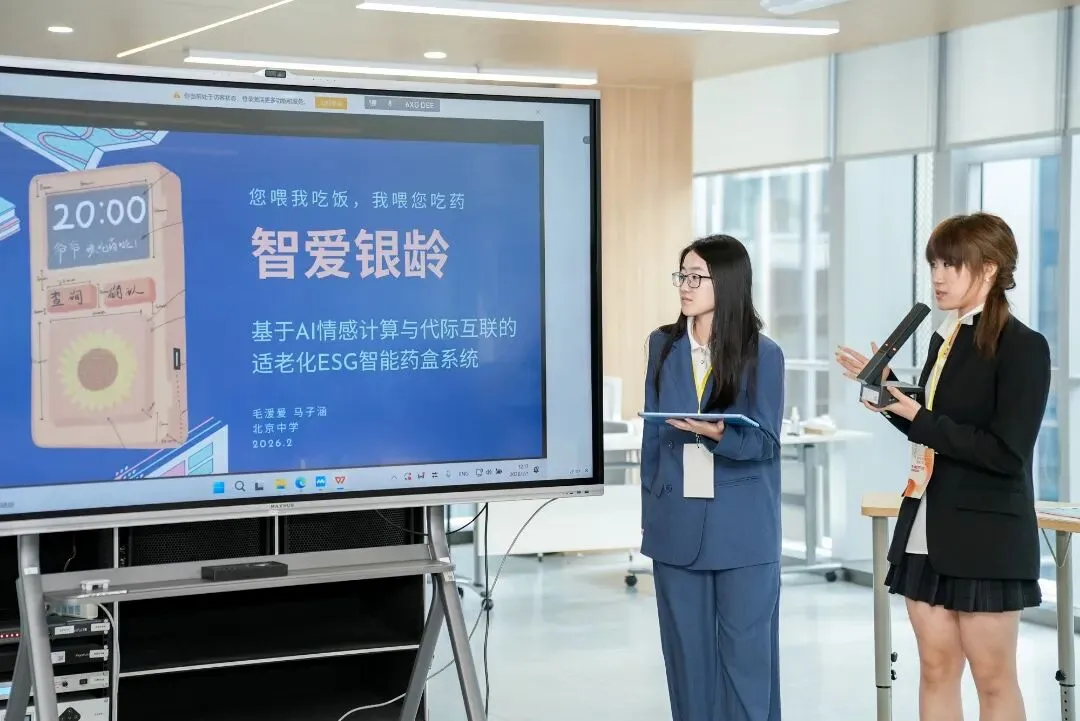
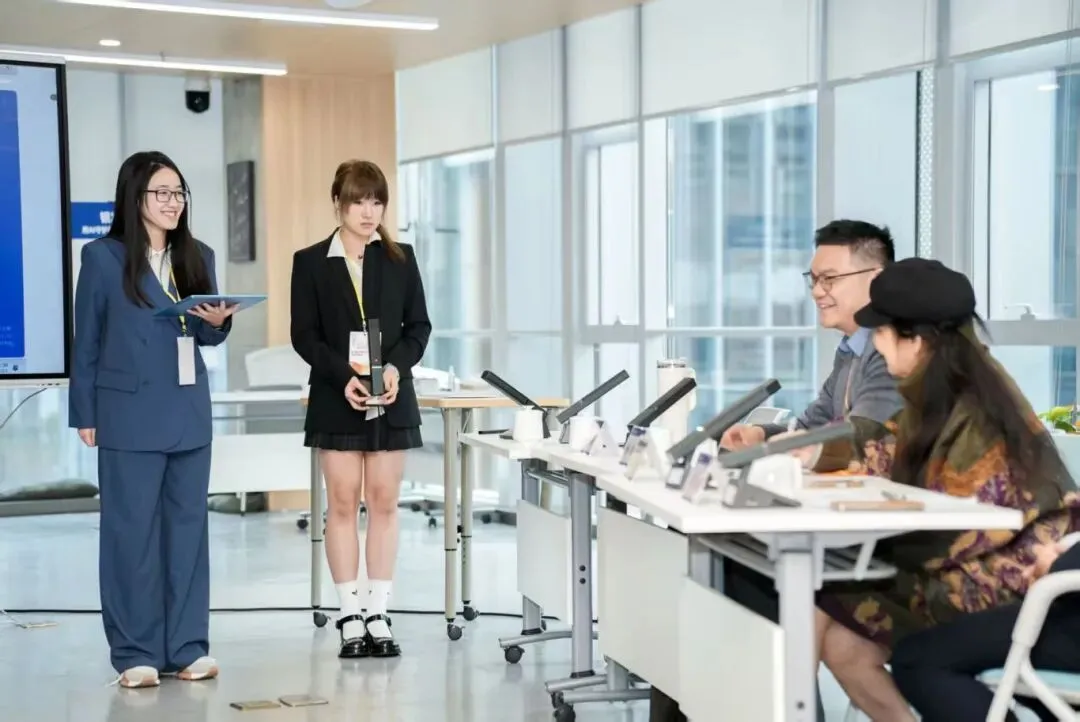
Following rigorous preliminary screening and evaluation, Ma Zihan and Mao Yuanyuan advanced to the national finals with their smart pillbox project, recognized for its technical feasibility and social value, along with its potential for practical implementation. On February 1, the team traveled to the AI + Social Innovation Laboratory at X-Institute's Nanshan headquarters in Shenzhen to compete alongside leading teams from across China. Their presentation consisted of a 15-minute project report and a three-minute demonstration, followed by ten minutes of judges' feedback and questions. They demonstrated BAID students' innovative spirit and sense of responsibility.
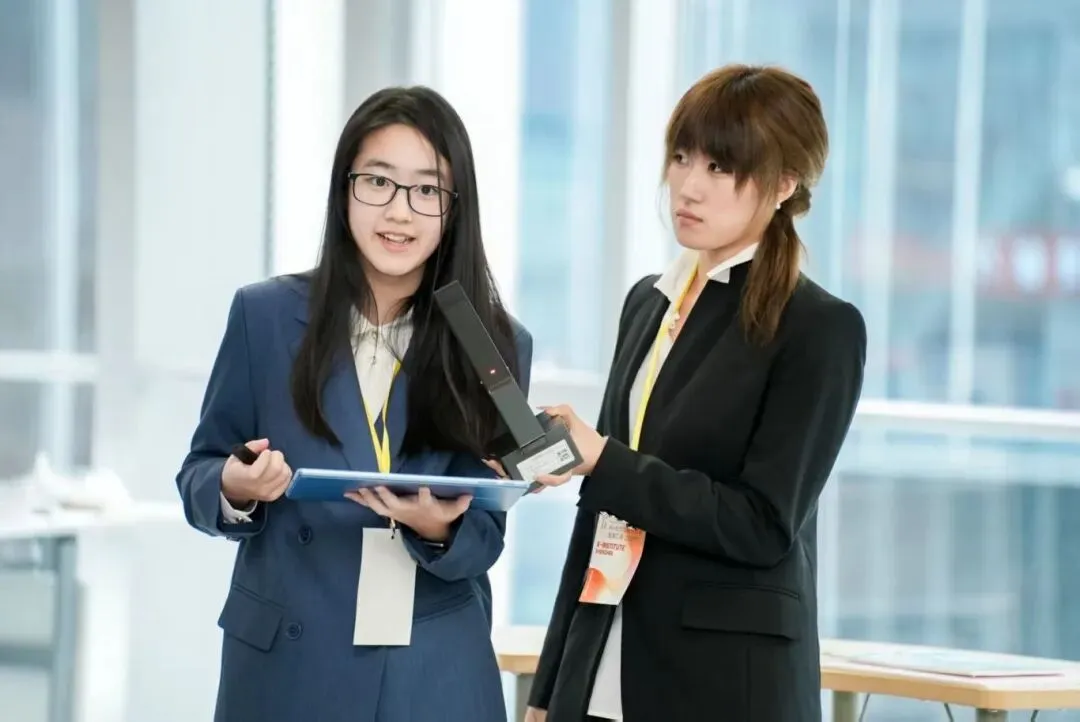
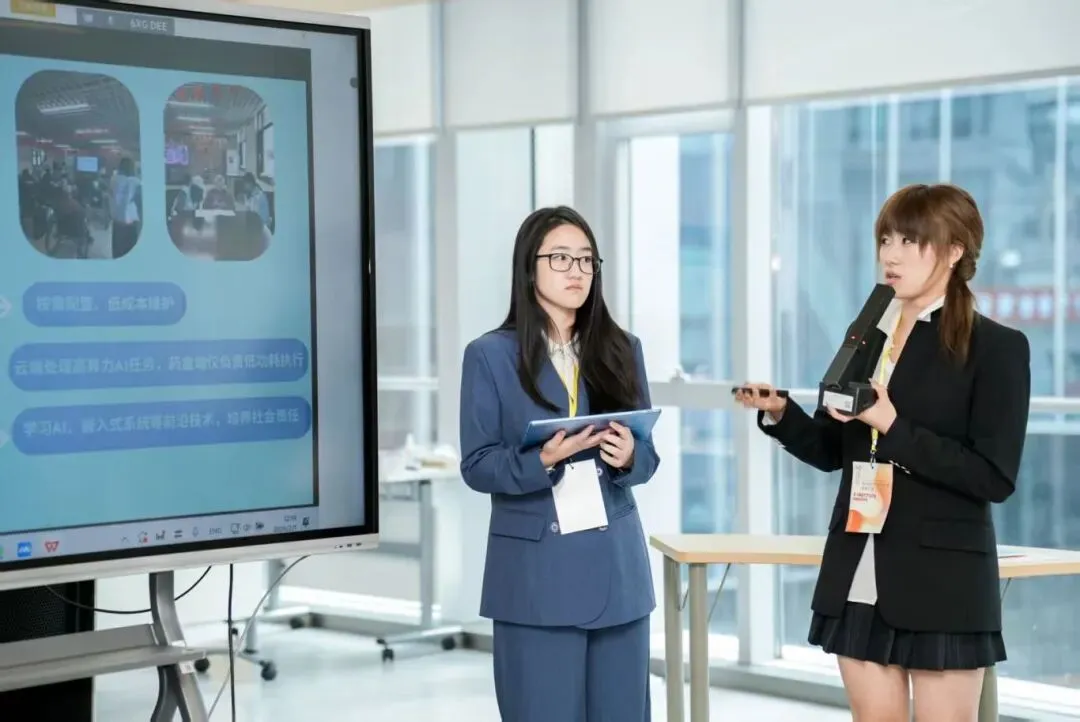
This award marks another achievement by BAID students in social innovation and the use of technology to benefit others. It provides an opportunity for further progress. We hope more students will follow their example and pursue technology for social good, developing innovative ideas at school and contributing their insight and creativity to society.
Student Reflections
Ma Zihan
Our idea for a smart pillbox for older adults began with close observation of the older people around us. We frequently saw missed doses and medication errors caused by declining memory, among both older residents without family support in care homes and elderly relatives at home. After studying relevant academic papers and conducting extensive research on competing products, our team developed an innovative approach centered on modular design and configurations tailored to individual needs.
Our design allows modules to be freely combined, much like LEGO bricks. The idea originated in the Future Stars Program for Accessibility and Innovation, a collaboration between our school and Tsinghua University.
- Affordable Essentials: Older adults with straightforward medication routines can choose a basic medication compartment with voice reminders and scheduled opening, substantially reducing the cost of use.
- Personalized Care: We offer customized modules for patients with specific needs. For example, the compartment designed for people with Parkinson's disease includes a six-axis sensor. It assists with retrieving medication and records hand tremor data to support intelligent health management.
This design combines affordability for a broad range of users with support for individual needs. At the AI for Youth Supporting Older Adults social innovation competition in Shenzhen, the judges unanimously praised our distinctive modular approach. We learned a great deal through the competition. The mentors affirmed our ideas and offered detailed suggestions for future commercialization and technical improvements. We will build on this experience to continue refining our product and use technology to provide thoughtful support for older adults.
Mao Yuanyuan
As a high school student, participating alongside older students from Shenzhen X-Institute and other institutions was one of my most memorable experiences this winter holiday. We presented Zhiai Yinling, the smart pillbox system we had developed ourselves, to demonstrate our technological achievement and communicate an idea: technology can provide caring support and companionship.
We designed a service platform for older adults that incorporates a smart pillbox with AI affective computing and connections between generations. Its modular design and AI voice cloning, together with multisensory interaction, aim to offer a safe and caring solution that can support long-term use by older adults who struggle with medication because of declining vision or memory. Particularly meaningful to us, the system encourages young people to assemble and configure the equipment for their elders themselves. Through practical work with technology, they can express care for older family members and take responsibility for solving real problems.
While preparing for the competition, I learned skills such as embedded systems development and AI model training from the people around me. I also learned how to write software that provides considerate services. We repeatedly simulated older adults' usage scenarios and refined the voice interactions to make them more approachable. This process taught me that innovation depends on a deep understanding of people and care for their needs.
I initially felt nervous presenting to judges from academia and industry, along with the nonprofit sector. When we demonstrated a real scenario in which the smart pillbox used voice reminders to help an older adult take medication on time, I saw many judges respond with approval, and my nervousness gradually eased.
Ultimately, the judges gave us high praise and encouragement. This recognition belongs to our team and to all the elders who deserve care and kindness as they age.
For me, participating offered much more than the experience of a competition. It showed me how closely technology can support people's lives and how much care innovation can express. I am grateful to Shenzhen X-Institute for this opportunity and to our mentors and judges for their insights. I also appreciate the efforts of my teammates and myself: a shared vision brought us together, and our shared commitment helped us grow.
We will continue developing Zhiai Yinling as an open-source project and building a community around it, bringing it to more households and communities. We believe that even a small technological improvement can help someone, and that successive generations' acts of kindness can contribute to a more inclusive and caring future.