Global Vision · Knowledge in Action: MFP Research on the UN Sustainable Development Goals
From May to July 2025, BAID completed a new round of MFP (Major Foundation Program) final defenses and an academic exhibition under the theme Global Vision · Knowledge in Action. Global Vision encourages students to consider sustainability issues shared worldwide. Knowledge in Action draws on the Chinese philosophical idea of connecting knowledge with practice, emphasizing a full process from understanding to social action. Guided by the UN Sustainable Development Goals (SDGs), students pursued interdisciplinary projects that connected their academic interests with social concerns. Their work demonstrated development in research and creative thinking, reflecting BAID's commitment to an international outlook and practical engagement.
A Research Course Guided by Students' Interests
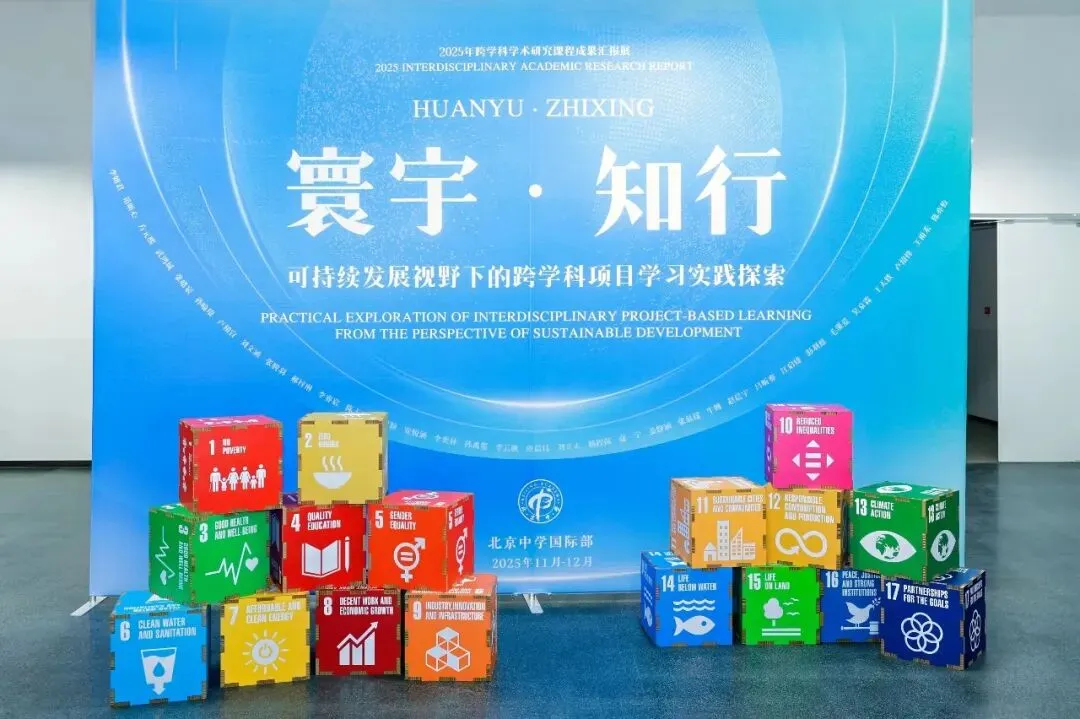
MFP is an interdisciplinary research course connecting students' interests and future academic directions with the SDGs. Students formulate their own questions and follow rigorous methods, aiming for results with academic and social significance. Groups receive individual guidance from mentors as they review literature and design experiments, conduct surveys and analyze data. They complete the process from identifying a question to writing a paper and propose solutions grounded in theory and practical needs.
Key Features
- SDGs as a framework: Students identify practical research questions within global issues, connecting local concerns with international perspectives.
- Interdisciplinary methods: Students combine knowledge and research approaches across fields to develop broad analysis and systematic problem solving.
- Academic rigor: Writing and research standards guide every stage, supporting logical communication and critical thinking, together with careful scholarship.
Building Research Foundations
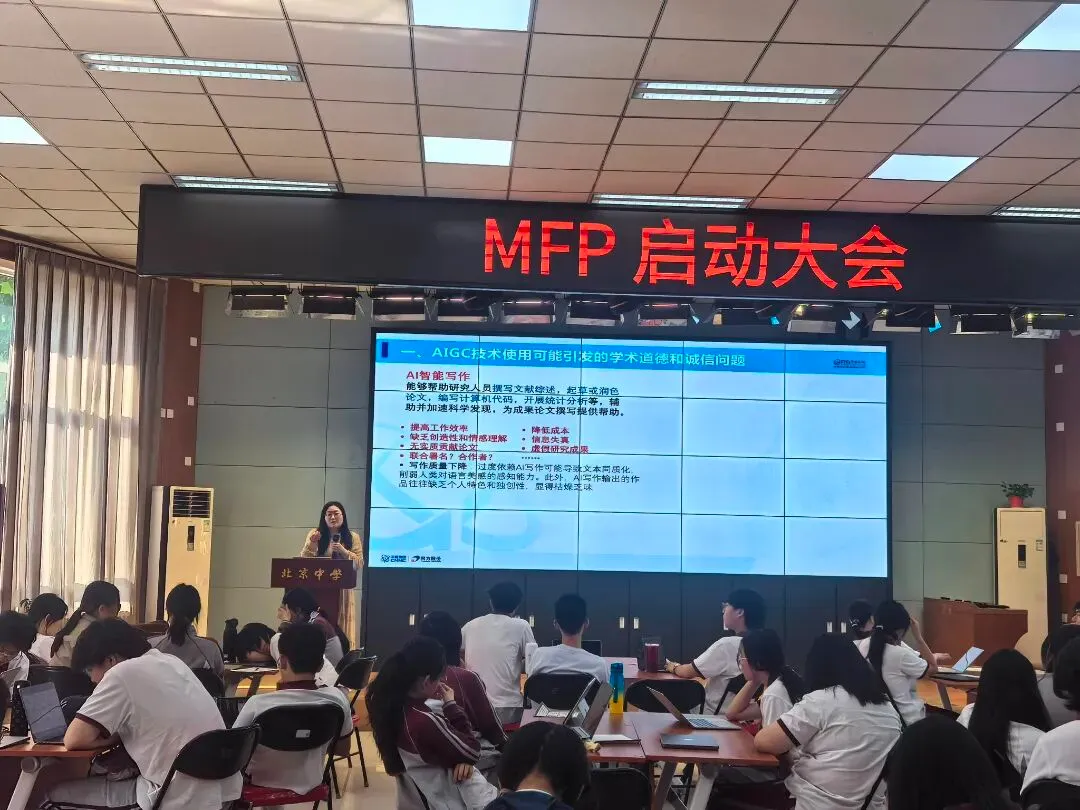
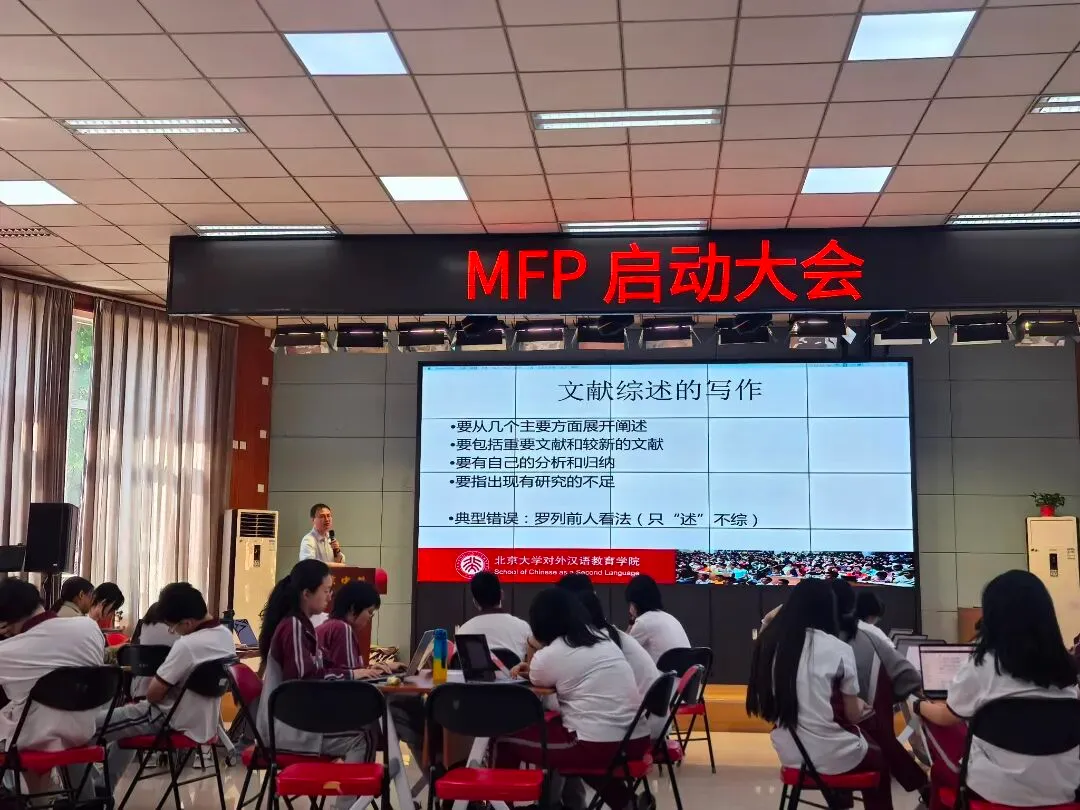
The launch included workshops on research tools. Associate Professor Yao Jun from Peking University's School of Chinese as a Second Language led an Academic Writing Workshop, explaining approaches and tools for writing rigorous papers. CNKI specialists discussed AI-generated content tools in research, similarity checking and AI-content detection, alongside responsible AI use. AP Environmental Science teacher Xin Yu and AP Economics teacher Wang Ye helped students analyze the SDGs and develop topics. Students learned to refine questions and search literature, write reviews and begin using AI to support research design and data analysis.
Students then chose supervisors in relevant fields through mutual selection, considering their academic interests and future direction. Seventeen teachers supervised projects spanning Psychology and Physics, Mathematics and Public Policy, Environmental Science and Computer Science, among other subjects. Their expertise supported a diverse range of research.
Following the Research Process
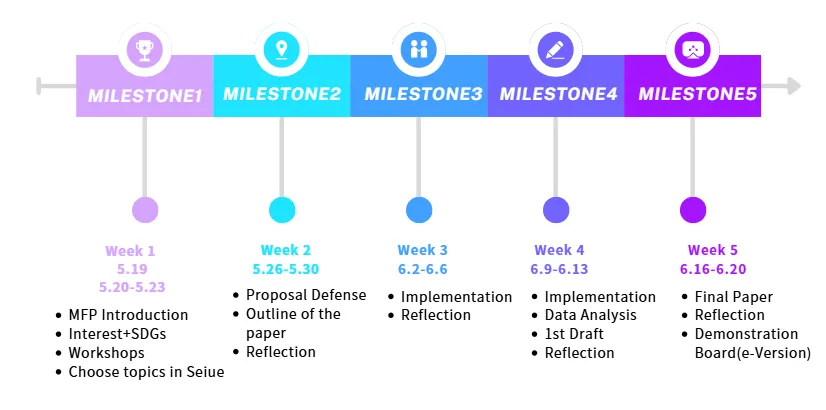
MFP established the following milestones:
- Topic and Method Design: Connect the SDGs with individual interests and subject knowledge to formulate a researchable question. Plan an investigation or experiment.
- Research: Review literature and gather data through experiments or fieldwork.
- Analysis: Use statistical tools or qualitative methods to develop conclusions.
- Paper and Final Defense: Write a coherent, carefully reasoned paper following academic standards. Present findings to an expert panel and answer questions.
Throughout the process, students retained responsibility for their decisions and academic work. Investigating real questions developed their ability to identify problems and design approaches, then communicate results.
Research and Exhibition Results
Ninety-three students worked in eight larger groups and completed 54 independent research projects. Final defenses and expert review determined the award-winning projects.
Topics addressed several SDGs, including Climate Action and Quality Education, Sustainable Cities and Communities and Responsible Consumption and Production, as well as Life Below Water. Their results combined theoretical depth and rigorous methods with attention to practical issues.
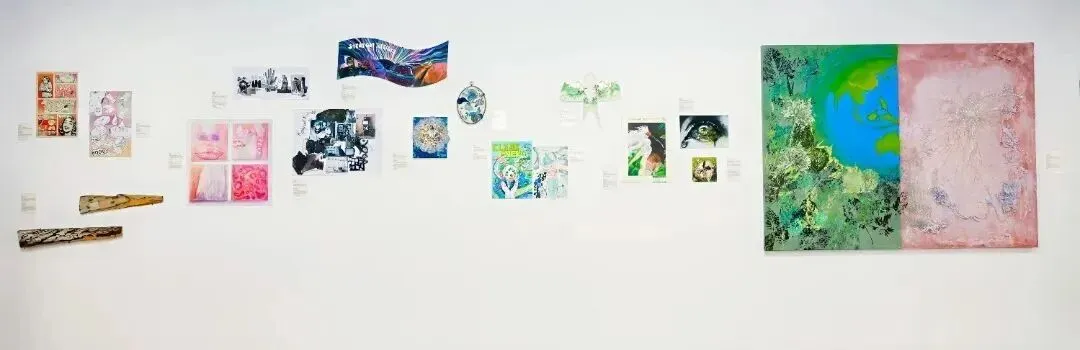
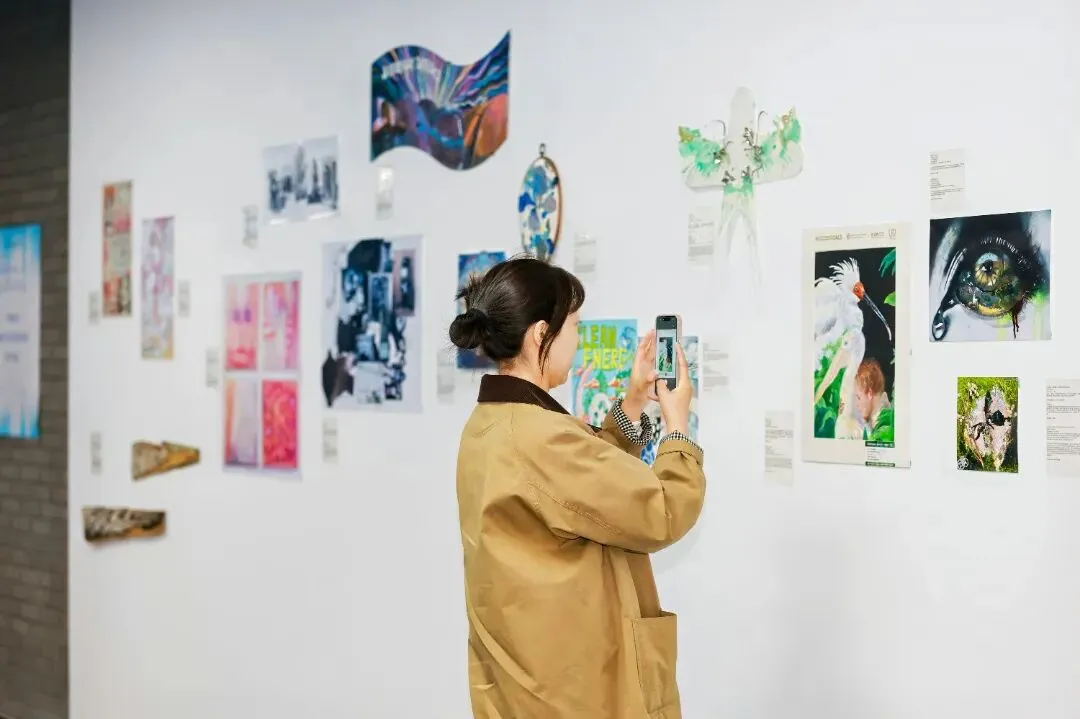
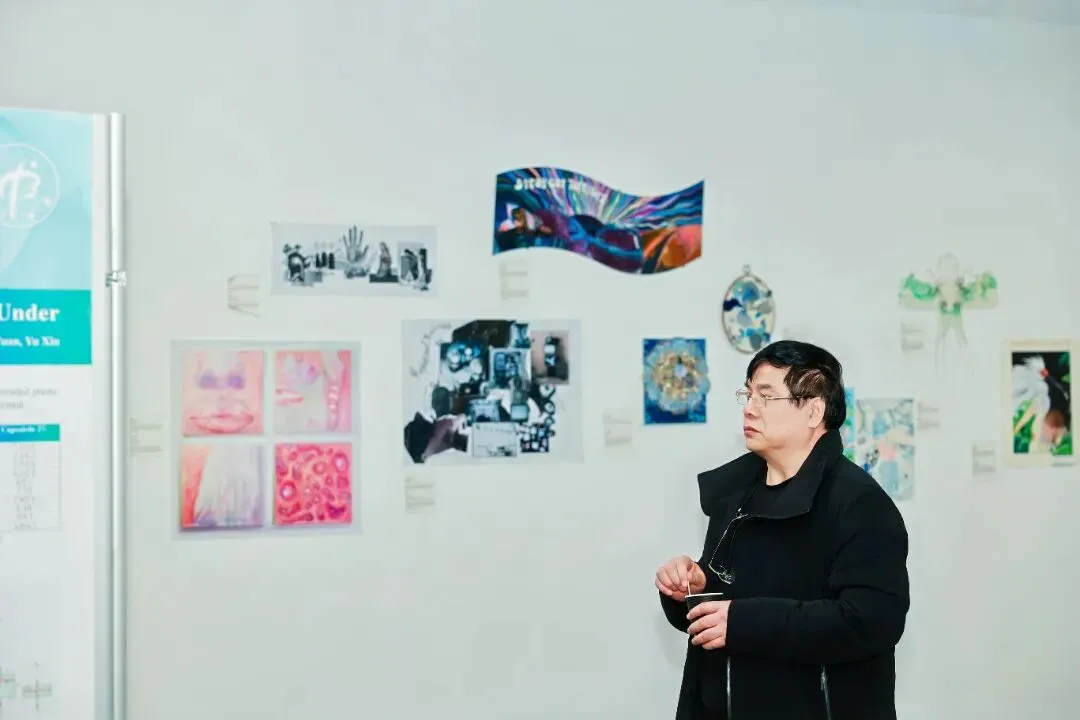
Students and teams also contributed 17 artworks, including digital and easel paintings, alongside videos, interpreting the SDGs visually. Together with the research, they formed Global Vision · Knowledge in Action—An Interdisciplinary Project-Based Courses Practice from the Perspective of Sustainable Development. The exhibition later featured in the Towards the Future · Accelerating the Sustainable Development Goals Youth Dialogue, hosted by Beijing Academy for the United Nations' eightieth anniversary. Guests from China and abroad praised the work.
Student Reflections
Zhang Tengyu
MFP gave me space to explore a possible academic field independently and follow my interests in choosing a research direction. Students can pursue Psychology or Physics, Mathematics or Policy, among other fields. Physics teacher Ren Jing and Mathematics teacher Zhang Mingming guided me attentively as I worked on my project. I independently designed and developed a compact, low-cost robotic arm based on Arduino Nano, with extensive customization. I experienced design and hardware assembly, followed by programming and debugging.
Tang Mengxi
Last October, the school invited artwork on the 17 SDGs for an exhibition associated with a United Nations conference. I was eager to participate. I chose Goal 13, Climate Action, and Goal 12, Responsible Consumption and Production. Through a two-sided artwork, I presented two possible futures for Earth. On one side, I printed layers of leaves in different shades around a mainly blue and green planet, depicting ecological diversity and a healthy, sustainable environment. On the other, a clay base represented the desert left by environmental destruction. Discarded metal objects represented materials that persist for hundreds of years, and plastic flowers drew attention to synthetic plastics. Their attractive appearance accompanied a warning about damage to ecological balance and the hidden costs of unsustainable production and consumption. I called the work Mirror Planet. Its two sides ask us to consider the consequences of destruction and the possibilities of responsible action. I hope we can work together for a sustainable, flourishing planet.
MFP connects academic training with reflection on global issues and social responsibility, alongside young people's contributions. BAID will continue developing interdisciplinary project learning to help students become thoughtful and compassionate global citizens with the abilities to act.