
BAID Celebrates Pi Day with Games, Film and Creative Designs
For mathematics enthusiasts, March 14 is Pi Day, a celebration of π and its infinite, non-repeating decimal expansion: 3.14159...
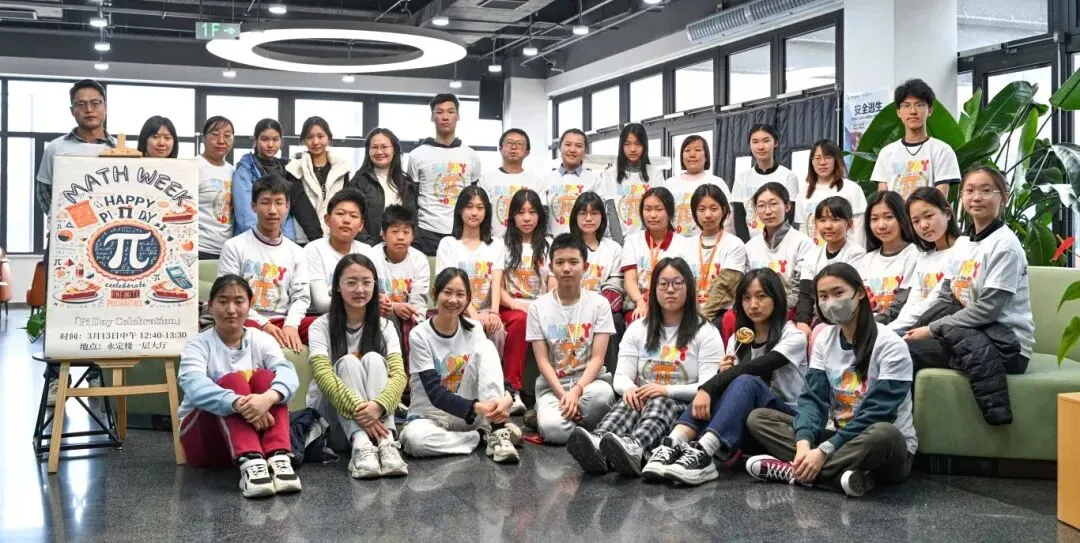
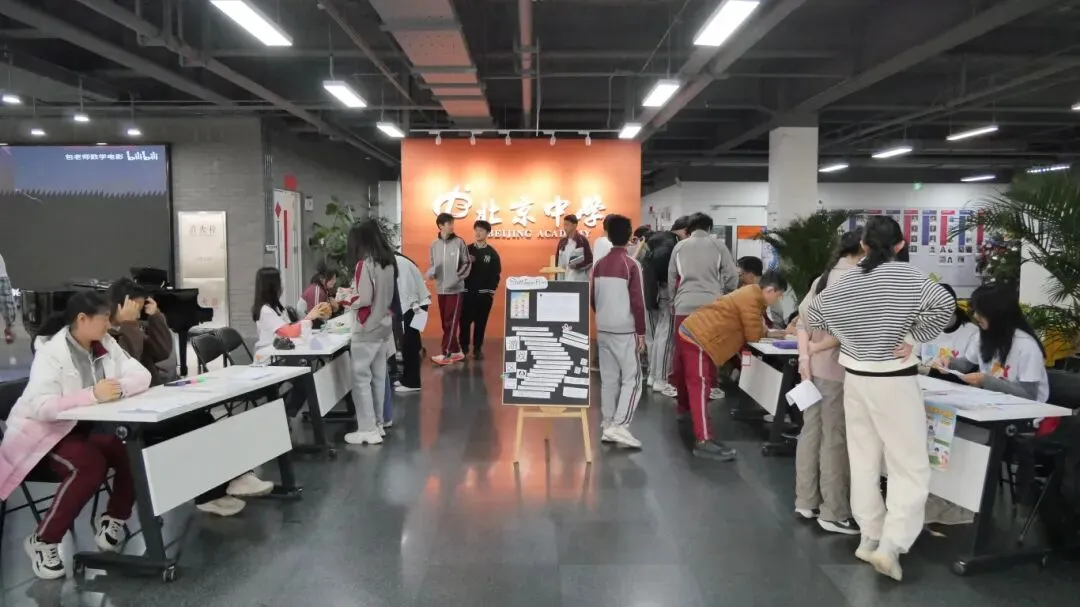
At BAID, the first-floor lobby of the Yongding Building hosted a Pi Day celebration combining creative challenges with sweet rewards. Activities connected mathematics with other subjects through practical experiences and logical thinking, encouraging students to explore the world mathematically.
Game Zone: Fifteen Ways to Explore Mathematical Reasoning
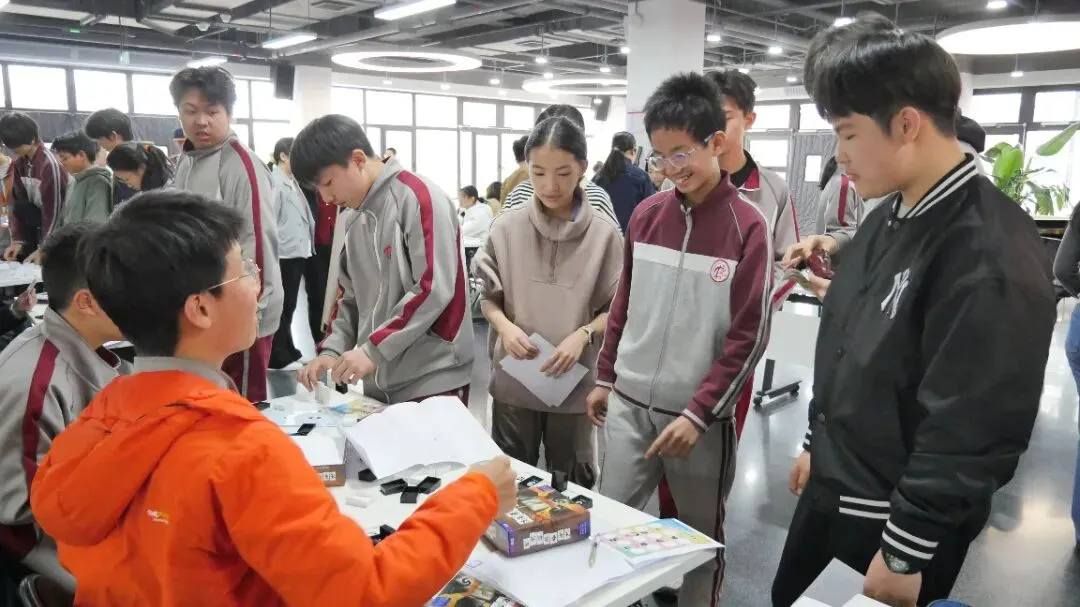
The student-led Game Zone was central to the event. Fifteen student hosts designed the games and explained and upheld their rules.
Students planned and built all fifteen games themselves, incorporating π and mathematical reasoning into engaging activities. Participants could choose individual challenges or games involving teamwork and strategy.
Problem Break
Hosts prepared puzzles that looked difficult to solve but contained clues to a clever approach. Players worked through the reasoning step by step and enjoyed the moment when an answer became clear.
The Da Vinci Code
Using deduction and memory, players inferred the numerical codes held by opponents from limited clues. The game combined permutations and combinations with psychological strategy.
Race to Pi
Players calculated quickly, then raced to positions corresponding to the decimal digits of π. The game challenged both accuracy and speed, combining movement with mathematical thinking.
The Pi Lab
Hosts supplied unusually shaped objects and asked participants to measure their circumferences and diameters. Working with actual measurements, players investigated how closely their results could approximate π.
Hold the Pie
Participants built structures from limited materials to support a pie. They applied spatial geometry and experienced physical principles through construction.
Collect Stamps and Earn a Pie
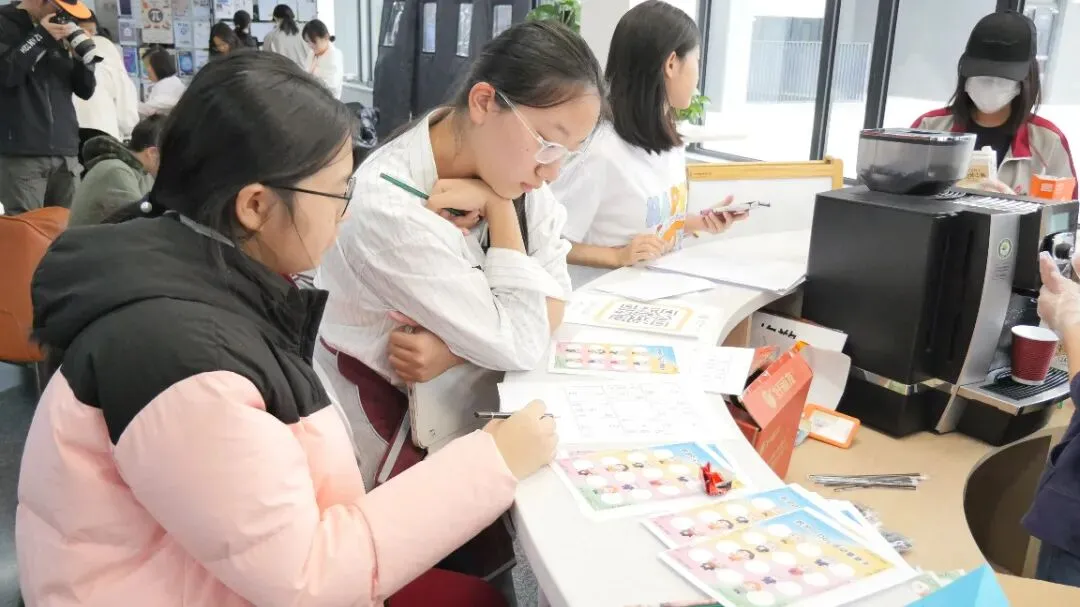
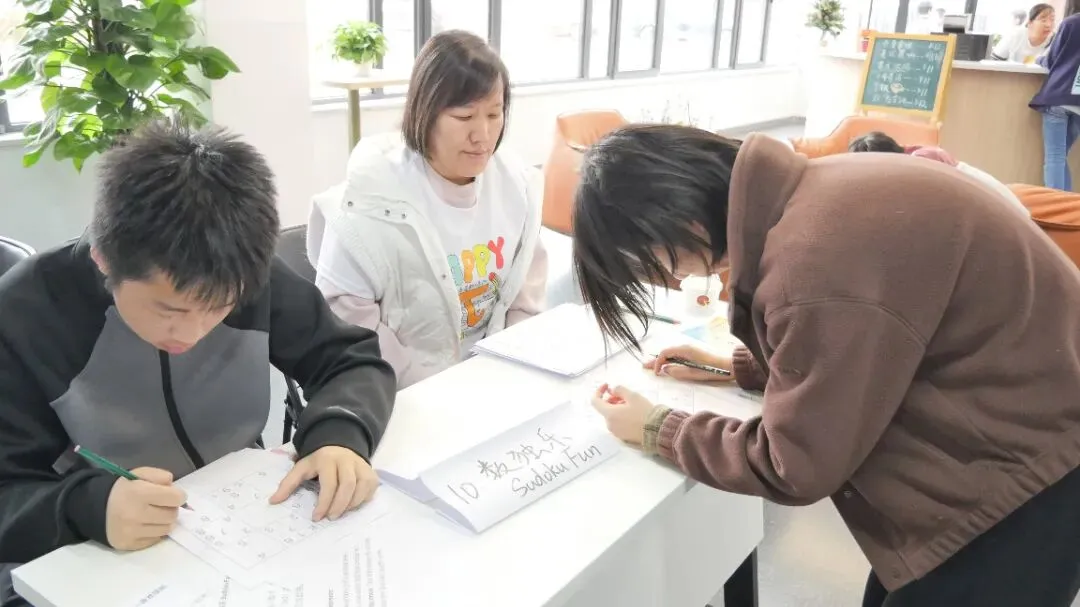
Each student received a card and earned a mathematical-symbol stamp for completing a challenge. Collecting seven stamps meant trying seven different approaches to mathematical thinking. Ms. Hou, Head of the Math Department, exchanged completed cards for chocolate pies. The reward added to the satisfaction of solving demanding problems.
Film Screening: The History of Mathematics
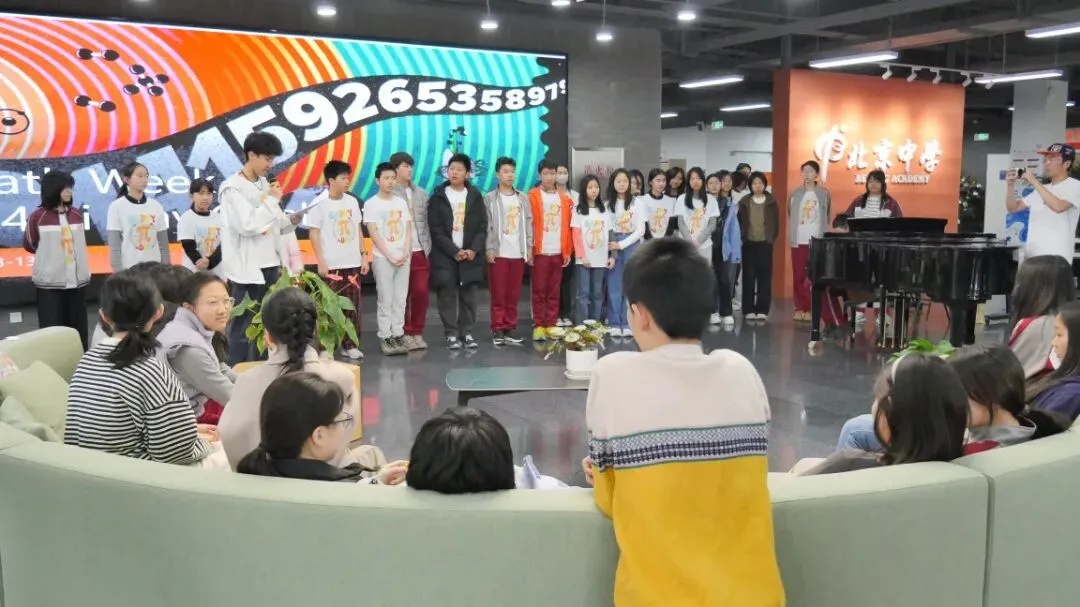
The screening area offered a place to sit and reflect.
Students watched The Story of π, a documentary beginning with the classic problem of squaring the circle. Through this question, the film explored thousands of years of mathematical development.
The documentary traced Archimedes' approximations in ancient Greece and Zu Chongzhi's use of inscribed polygons in ancient China, followed by modern computers calculating ever more digits of π. Questions and stories made abstract mathematical ideas accessible. Anecdotes about mathematicians who devoted their lives to pursuing these questions also introduced the human experiences behind the formulas.
Vision·Infinity: Mathematical Poster Exhibition
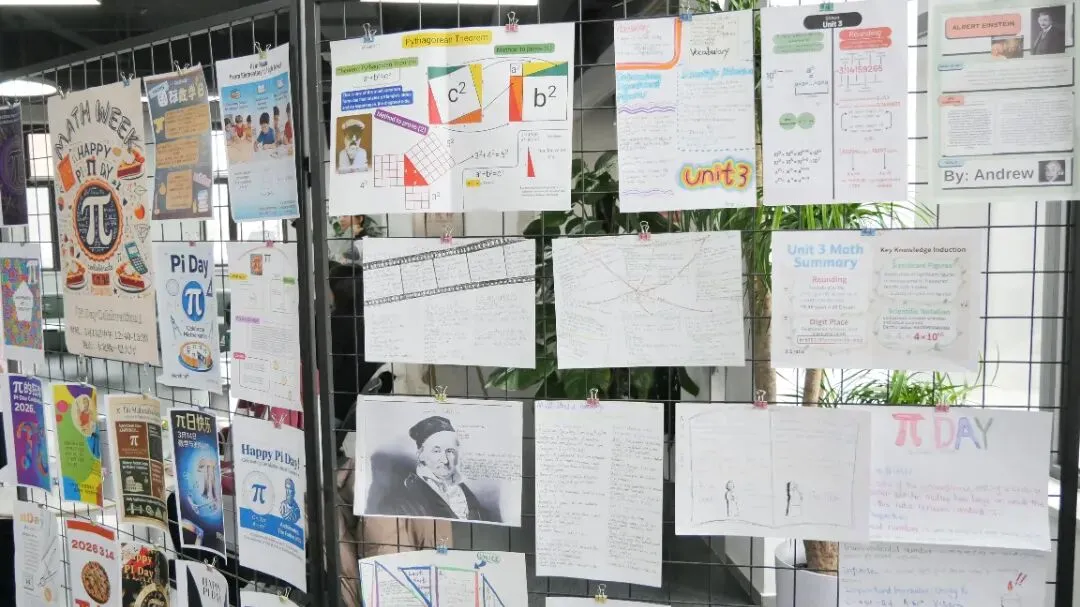
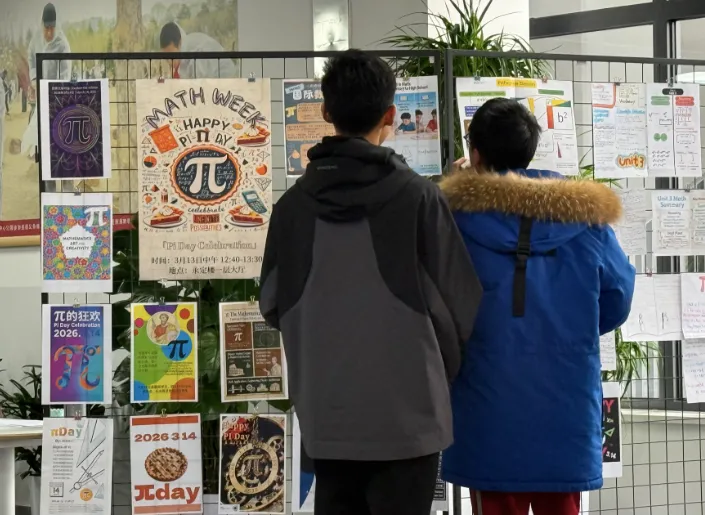
Near the main entrance, the Vision·Infinity Design Exhibition displayed posters students had created for Pi Day.
The colorful, carefully composed posters expressed students' understanding of mathematics visually. Some arranged dozens of digits of π in lettering that formed a city skyline. Others used geometry to examine the Mona Lisa and explore the golden ratio's relationship to beauty. Other designs connected π's infinite, non-repeating expansion with the universe's vastness and unknowns. Each offered an individual perspective and drew teachers and students to stop and look. The display demonstrated the Math Department's work across disciplines.
Exploring the World Through Mathematics
We believe education should inspire curiosity and a desire to learn.
Games and a film screening, together with design activities, helped students discover that:
- Mathematics connects closely with history and art, as well as everyday life.
- Mathematics offers a rigorous, elegant language for logical thought.
- Learning mathematics opens many possibilities for discovery.
Future activities will give students more opportunities to observe the world mathematically and solve problems through reasoning. We hope they become lifelong learners who remain curious about the future.
Student Reflections
Chai Mutian
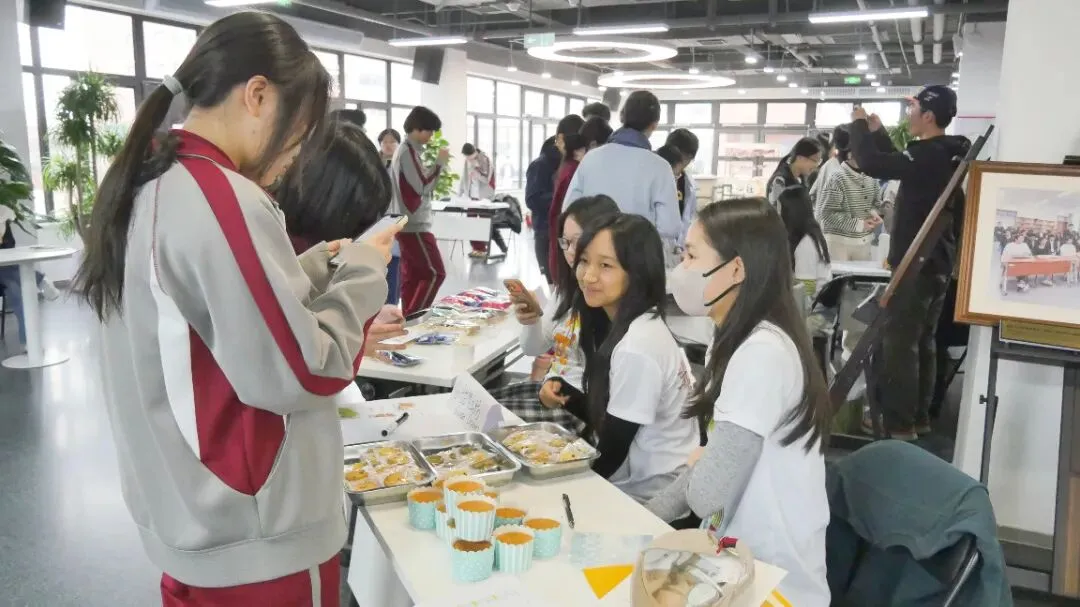
I learned a lot at the March 14 Pi Day event. There were many activities, and the dessert area was especially popular. Grade 8 students had made cakes and cookies, which I tried and really enjoyed. Completing seven different activities earned enough stamps for a chocolate pie, so I gave each challenge my full attention. Sudoku demanded the most patience. I spent a long time on several parts and considered giving up, but eventually completed it.
Another challenge involved building a structure from wooden sticks to hold a pie plate. After several attempts, I succeeded and felt thrilled when the plate stayed securely in place. Pi Bingo and the 3.14-Second Challenge were also enjoyable. Once I had seven stamps, I collected my chocolate pie. Each game involved mathematics, and playing them felt like advancing through challenges for fun. The event helped me appreciate how enjoyable mathematics can be.
Wang Xinchi
The March 14 Pi Day event was lively and rewarding. Students prepared games that incorporated mathematical ideas into interactive challenges. We thought through problems and cooperated as we played, finding formulas and theorems easier to understand through the activities. Students also brought snacks to share. After completing games, we ate together and exchanged ideas, laughing as we talked.
The event helped me enjoy mathematics and appreciate the pleasure of participating together. In a relaxed atmosphere, I reinforced what I knew and developed friendships with classmates. I am grateful to the teachers and students who prepared it. Learning through play and exchanging ideas made the experience rewarding, and I look forward to another event like it.