Beijing Culture Exploration Program: Students Create AI City Guides
Imagine an international visitor with 72 hours in Beijing during a transit without visa stay. How could they get to know the city through the knowledge of local residents?
In a PBL project, BAID students took on the work of product managers and cultural ambassadors to create a City Tour Guide AI Agent. They explored Beijing's culture and used vibe coding, developing software through AI-assisted instructions, to design guides attentive to international visitors' needs.
Students completed the full process from inquiry to practical development. They formed teams and examined concepts, conducted field research and used AI tools, then refined their prototypes.
Phase 1: Building Teams and Exploring Ideas
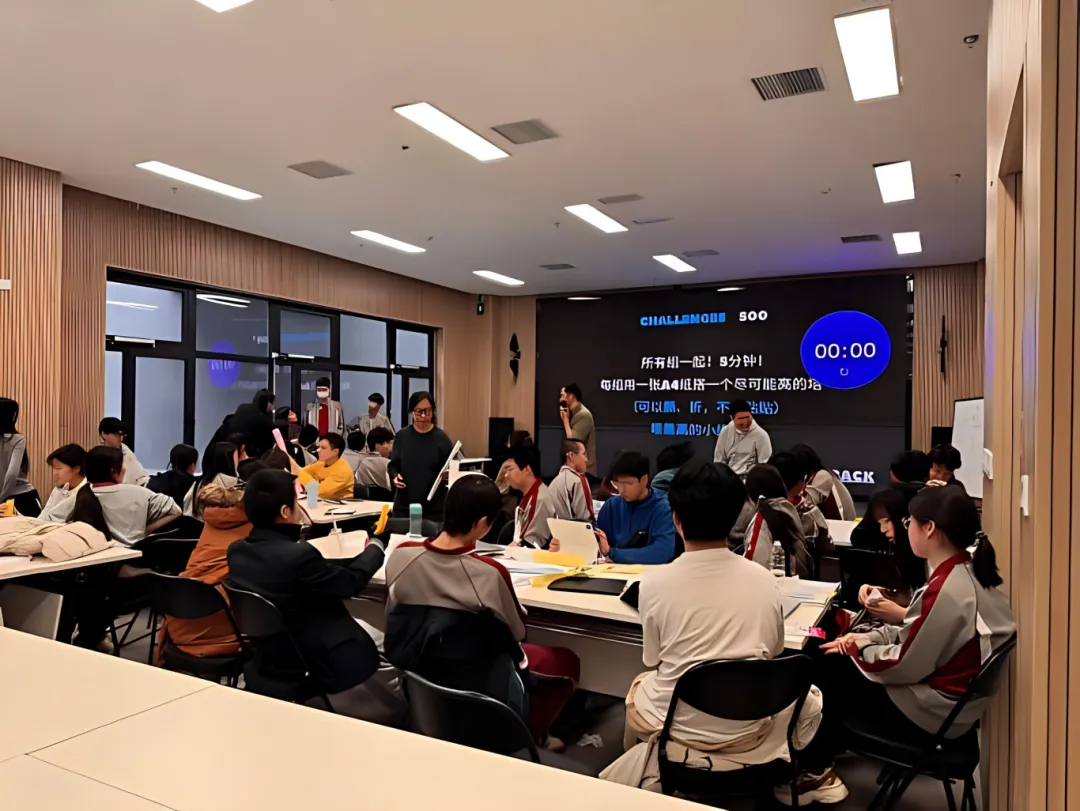
A competitive Jeopardy group quiz helped students get to know their teammates. Each group then brainstormed ways to share Beijing's culture.
Students generated NTK (Need to Know) questions on sticky notes covering their posters. Questions ranged from "Which foods are international visitors most hesitant to try?" to "How could a prompt get AI to speak with a Beijing accent?" These questions directed their investigations.
Phase 2: Understanding Visitors' Experiences
Field Research
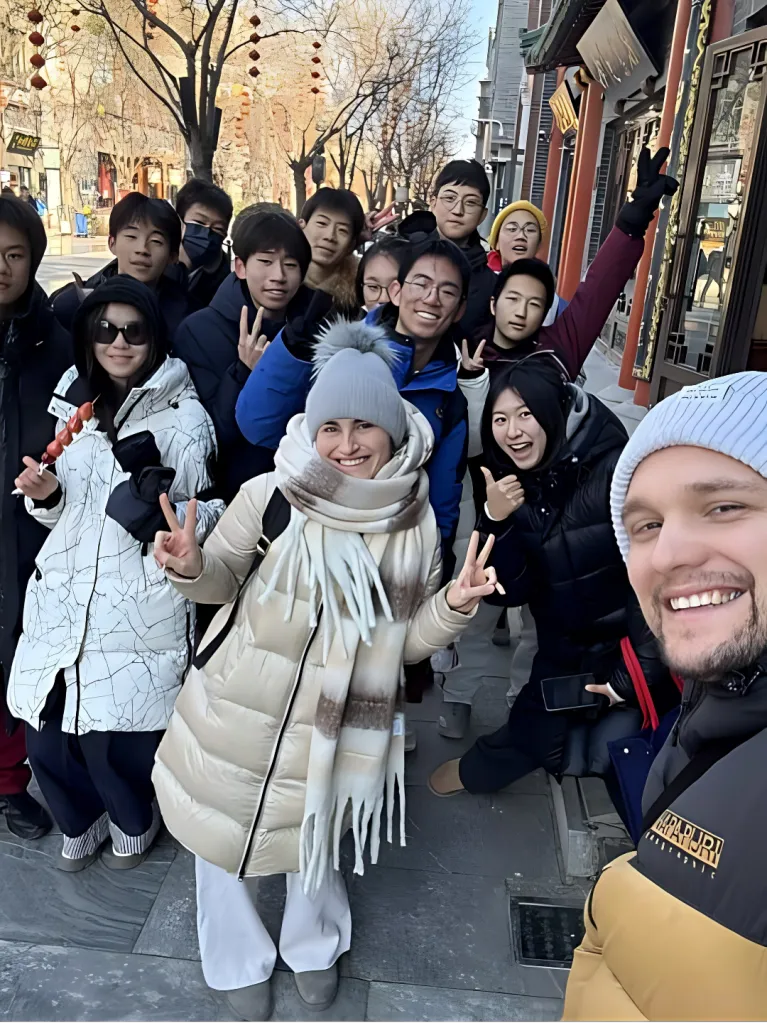
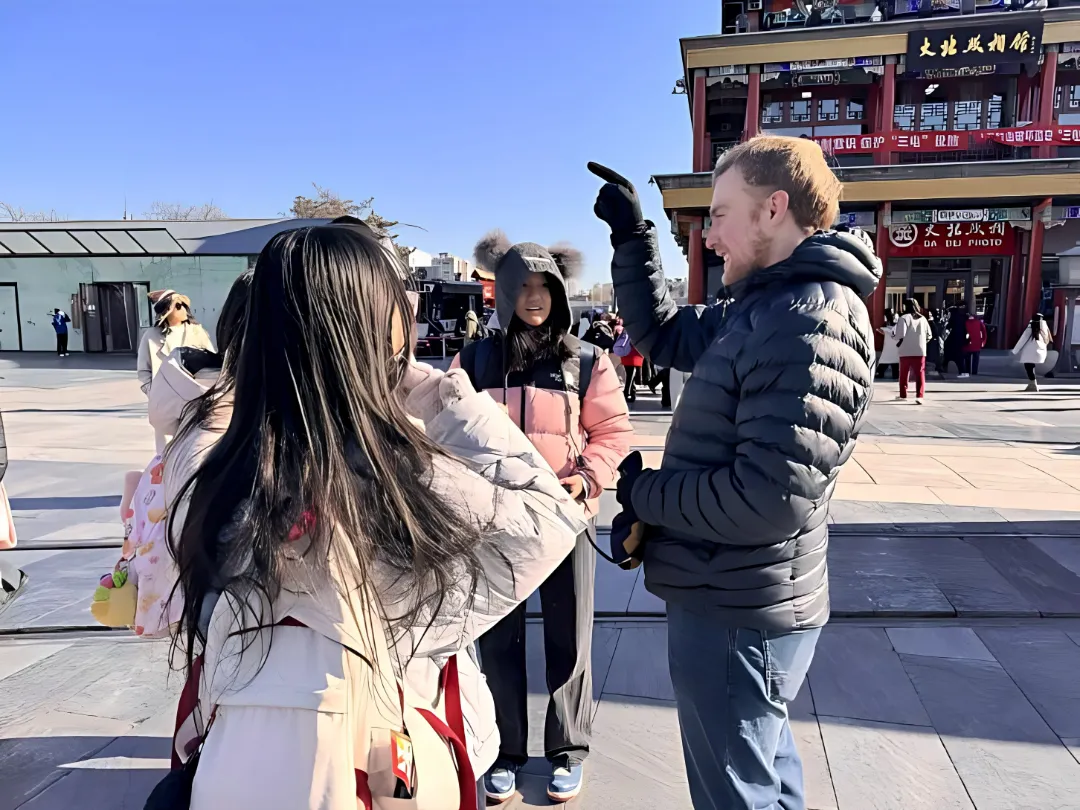
The next day, students took task lists into the city and interviewed international visitors at popular attractions. They also explored existing apps from the perspective of an English-speaking visitor without Alipay, trying to plan a locally authentic route. They encountered confusing navigation and difficulty finding long-established businesses, along with crowded restaurants whose food disappointed them.
The result was a set of detailed user experience maps. Students learned that effective products anticipate the difficulties users encounter.
Phase 3: Analyzing Research with AI
Students then worked intensively through their notes and photographs, along with videos. They learned advanced tools through practical work:
- NoteLM and Lark Minutes: Students used AI to summarize extensive interview recordings and notes, identifying central ideas and organizing observations into reasoned arguments.
- Fishbowl Discussion: An inner circle debated project directions while an outer circle used a rubric to identify gaps in reasoning. Observing their thinking helped students examine ideas more critically.
- White Papers and Infographics: Each team explained the problem it would address and its reasons for taking it on. Mind maps and afternoon plans on the walls made progress visible and helped everyone stay accountable.
Phase 4: Refining and Presenting the Projects
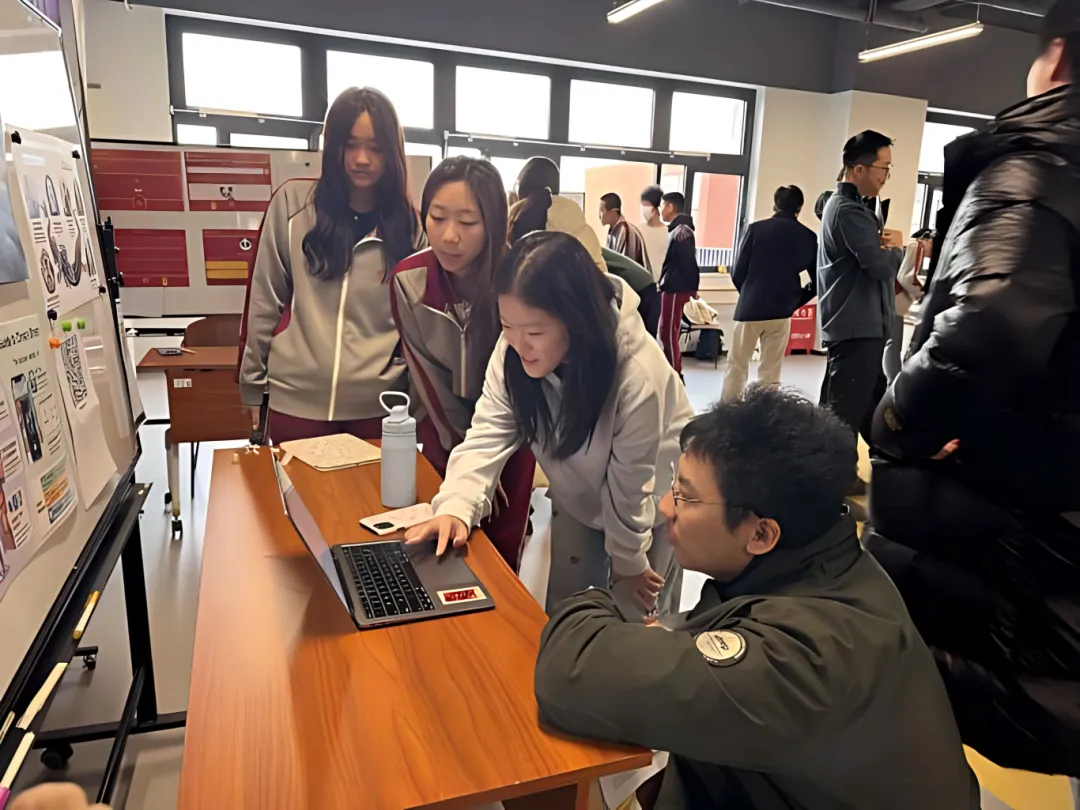
The final phase emphasized repeated improvements and a willingness to learn.
- Expert Office Hours: Each group received focused feedback in a ten-minute consultation.
- Prototype 3.0: Students developed sketches into functional prototypes and considered how their interactions could convey a thoughtful experience.
- Recorded Presentations: Teams recorded videos of up to five minutes, explaining the process from identifying a difficulty to designing a solution.
Teams applied their learning to city guidance and services across cultures, producing practical and creative projects. Selected examples follow.
lorelens
- Faculty Advisor: Dong Zhiyu
- Team Members: Wang Zitong, Jiang Yifan, Shi Shangshang, Dong Jiahao, Zhang Jinnan
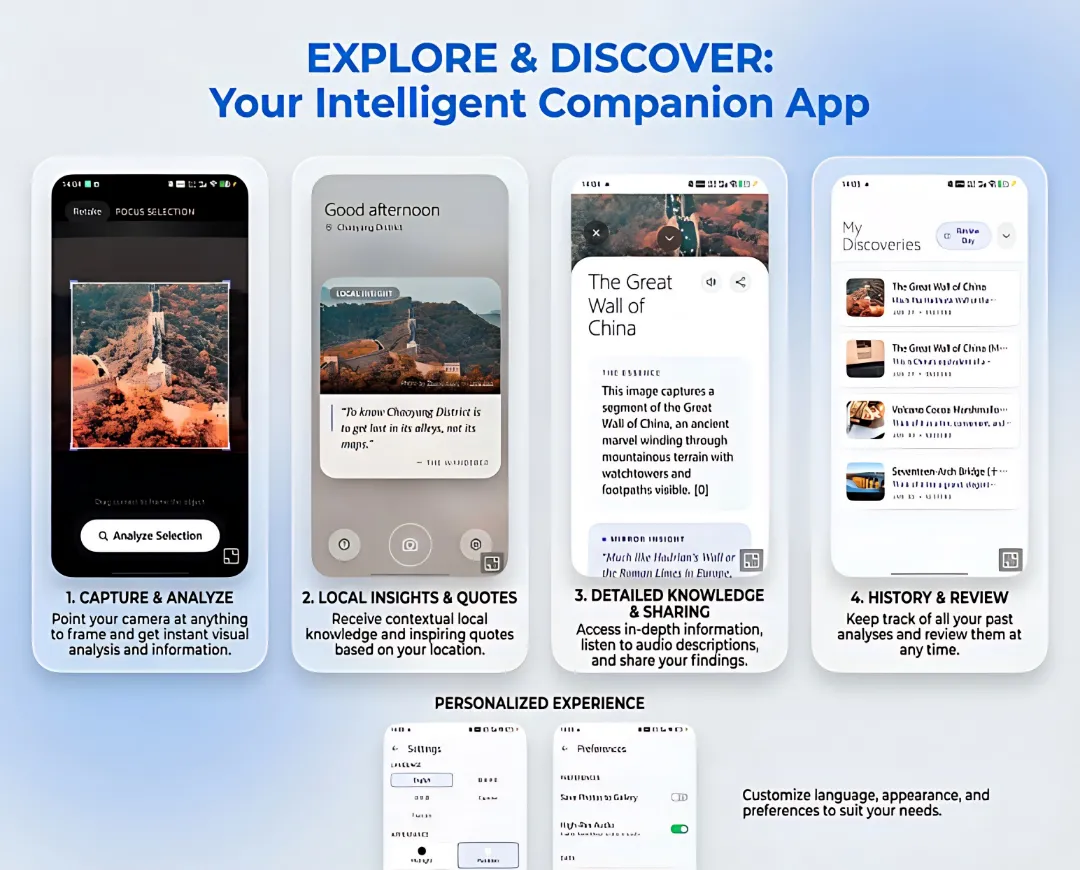
This city exploration app addresses the difficulties international visitors face when navigating unfamiliar places and cultures. It has four main features:
- CAPTURE & ANALYZE: Point the camera at a landmark or object to receive immediate recognition and illustrated explanations.
- LOCAL INSIGHTS & QUOTES: Location-based information and cultural quotations introduce the stories associated with nearby streets.
- DETAILED KNOWLEDGE & SHARING: Read detailed information or listen to commentary, then save discoveries and revisit or share them.
- HISTORY & REVIEW: Previous analyses are automatically saved in a personal archive.
Designed for international visitors and independent travelers, including those exploring local culture, the app combines image recognition and recommendations with saved information. It helps people understand an unfamiliar city and keep records of their experiences.
Beijing Lens
- Faculty Advisor: Wang Pengyu
- Team Members: Han Yunxi, Hong Qihan, Zhang Xinyan, Hu Sitong, Wu Yuxin, Qi Lu, Han Qunhao, Zhou Genghenan
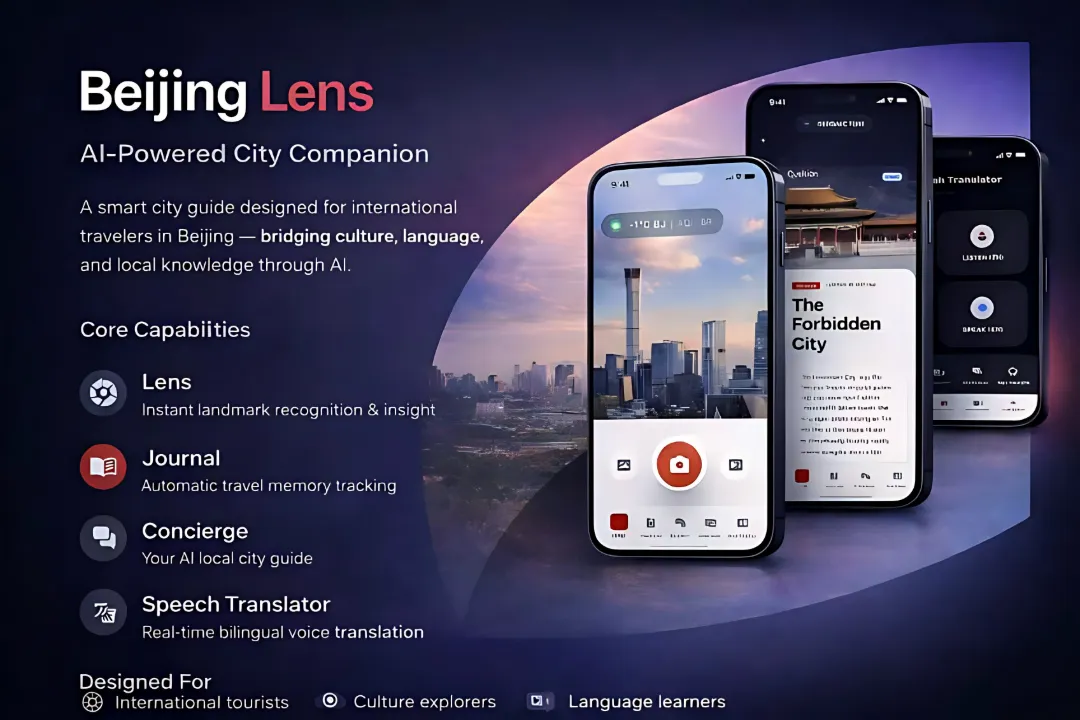
Beijing Lens supports international visitors facing language and cultural differences. The city companion connects cultural explanations with language support and local information through four main features:
- Lens Smart Camera: Recognize landmarks instantly and learn the cultural stories behind buildings through a photograph.
- Journal: Record travel routes automatically and create a personal map of the journey.
- Concierge: Receive personalized recommendations from a digital local guide.
- Speech Translator: Translate speech between two languages in real time.
For international visitors and cultural explorers, along with language learners, the app uses AI to make exploring the city engaging and accessible.
JingEcho
- Faculty Advisor: Hu Mingbo
- Team Members: Deng Jia, Wan Wuxuan, Shen Junran, Wang Zhengbo, Liu Handan
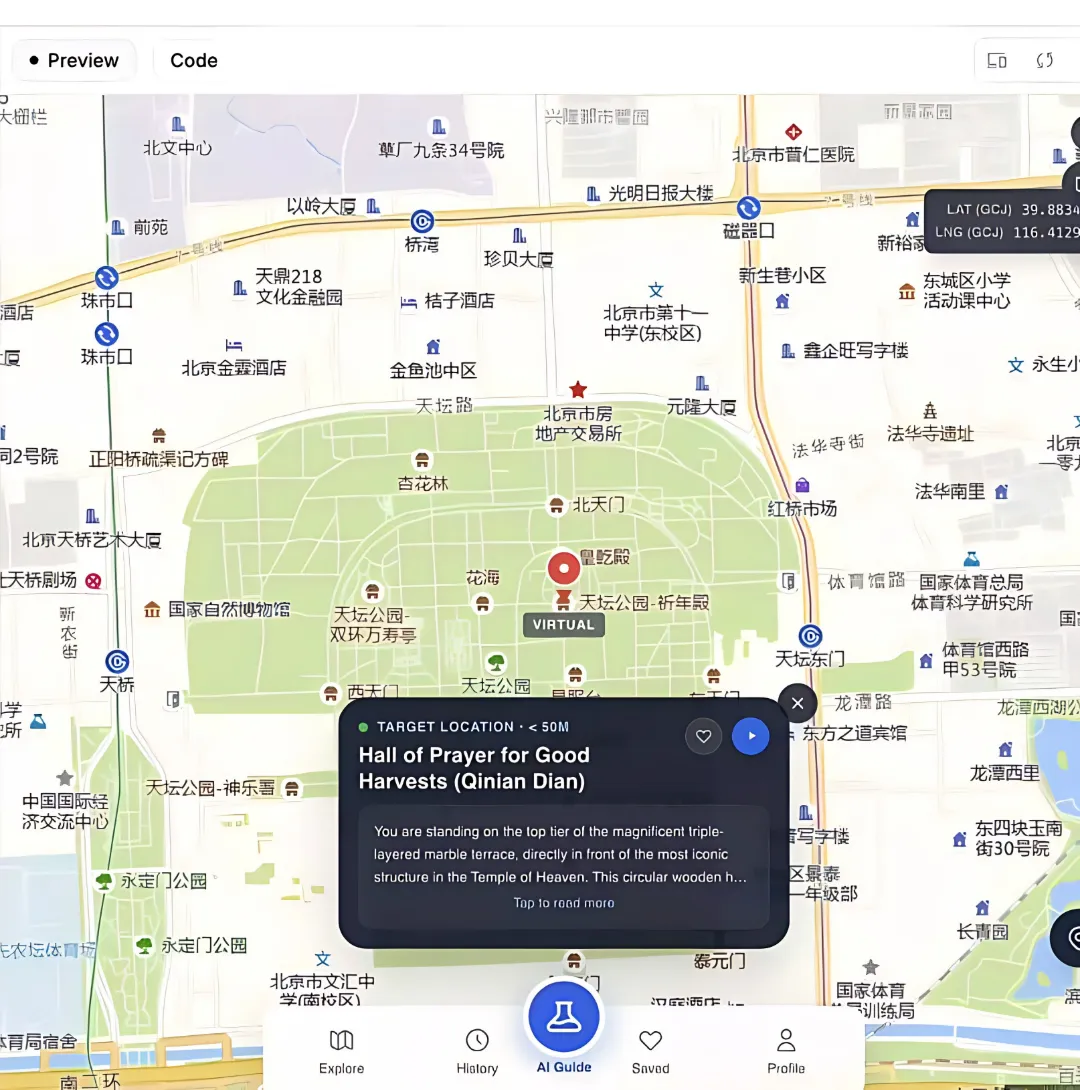
JingEcho is a multilingual AI guide to Beijing's history and culture. It provides live commentary in 14 languages and uses precise location information to trigger detailed explanations when users reach a site. Commentary covers historical background and the cultural stories associated with each place. Weather updates and air quality information, along with directions to nearby amenities, support visitors' practical needs and make the ancient capital's culture more accessible.
B-Live
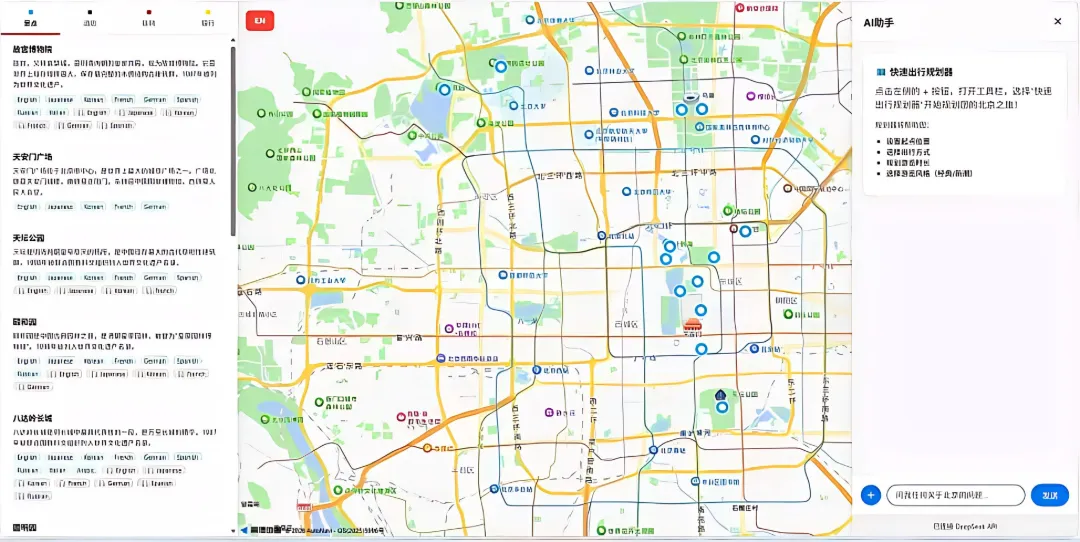
- Faculty Advisor: Hu Mingbo
- Team Members: Li Mingjia, Li Haowen, Wang Qizheng, Wang Tianyi, Mao Runqing, Li Zhixiao
B-Live helps international residents navigate everyday life in China. The AI guide covers six common situations, including medical visits and public transport, dining and government services. Alongside live translation in multiple languages, it provides cultural explanations and etiquette guidance suited to users' backgrounds. It also offers itinerary planning and emergency help, together with local updates, to support more convenient and inclusive experiences.
AI Food and Travel Guide for Foreign Tourists
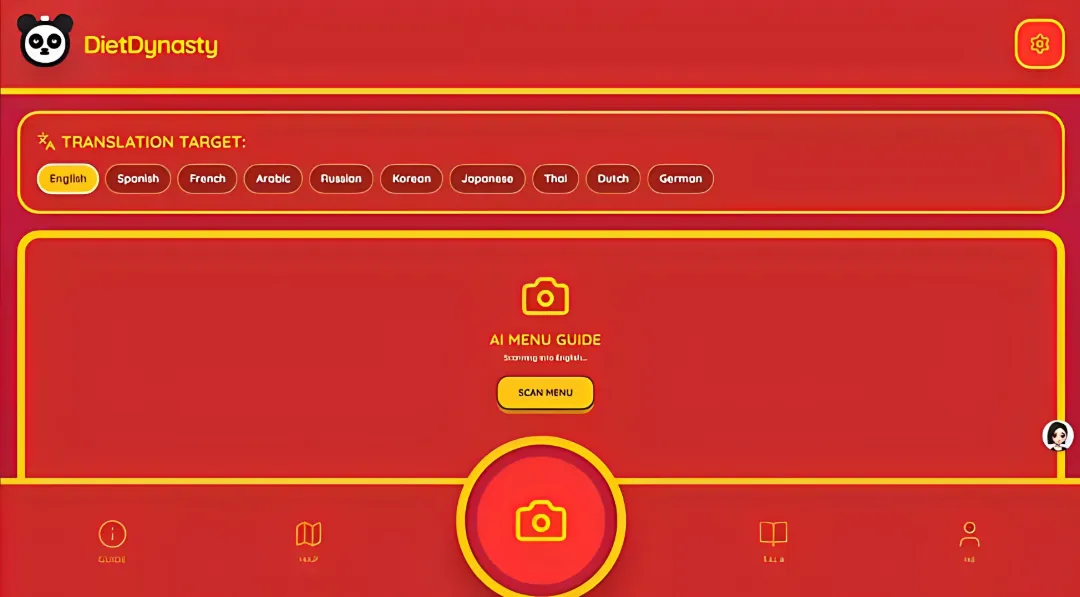
- Faculty Advisor: Zhang Shaojing
- Team Members: Li Xiaoyao, Nie Ruize, Wang Zixuan, Jiang Siyu, Zhou Ziqi
This app helps international visitors find suitable food and order meals in Beijing. Users enter preferences or restrictions such as vegetarian or halal food, avoiding seafood, vegan meals or gluten-free options. The app recommends restaurants accordingly. AI Menu Guide scans menus using OCR and provides live translations and dish descriptions in more than ten languages. GUIDE and MAP cover recommendations and navigation; TALK and ME provide voice translation and profile management. These features support visitors from choosing a restaurant through ordering, with attention to convenience and dietary needs.
Multilingual Smart Cultural Travel Guide Assistant
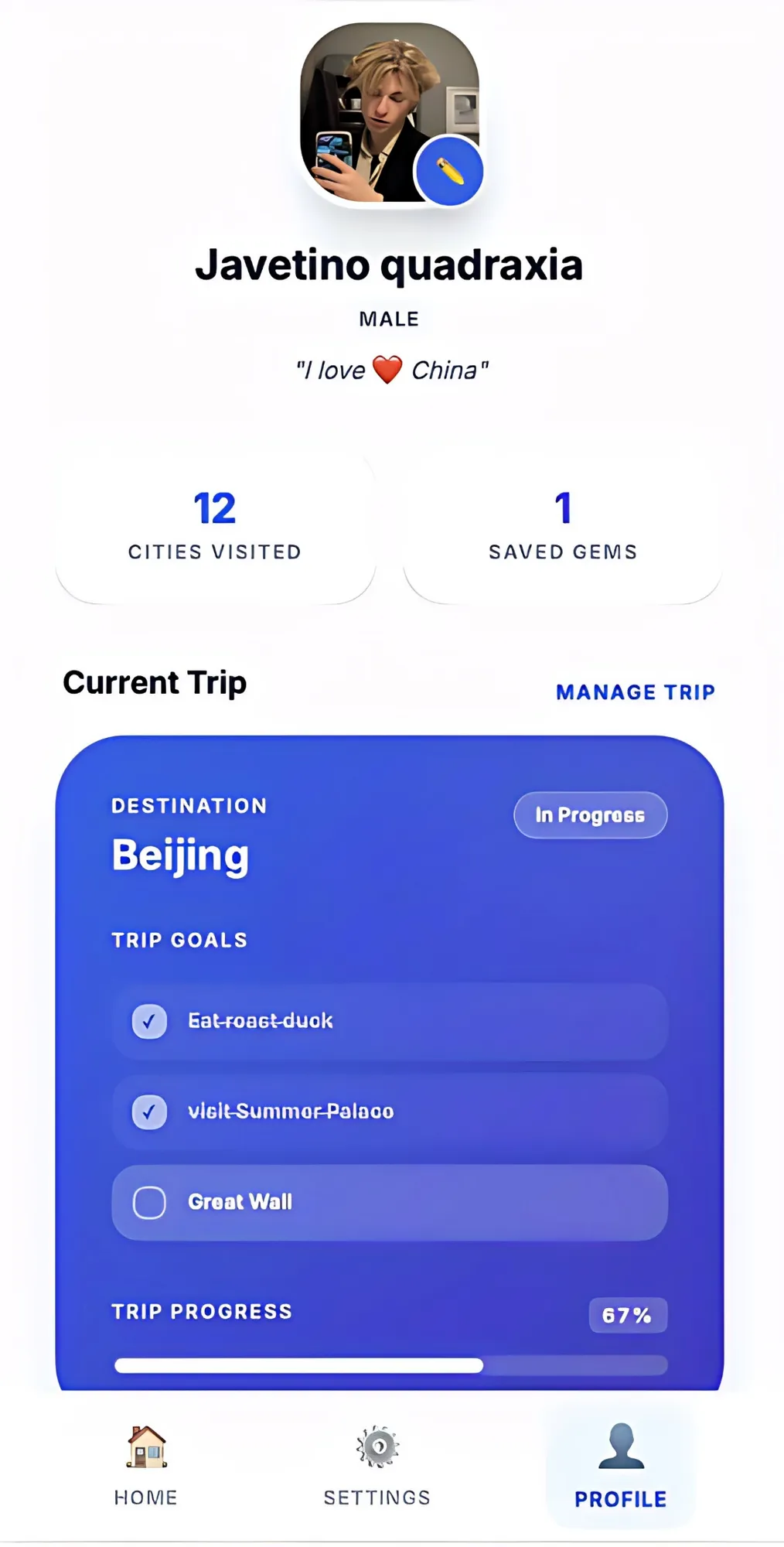
- Faculty Advisor: Zhang Shaojing
- Team Members: Feng Yancheng, Jiang Nan, Zuo Siyan, Li Yitang, Huang Ziming
The app has two main modules designed around travelers' practical needs:
- Community Forum: Post in multiple languages and browse topics such as food or transportation, as well as technology. Share travel accounts and landmark visits, along with dining experiences, in a community across cultures.
- Trip Planner & Progress Tracker: Set destinations and goals, such as trying Peking duck or visiting the Summer Palace. The app tracks completed goals and combines visited locations with saved favorites to create a visual travel record.
For visitors to China and cultural exchange groups, including people on short stays, the app combines simple social features with itinerary management. Users can explore the city and record their own experiences.
These examples represent the broader project on city guidance and services across cultures. Students used real needs to guide their work and applied classroom learning to practical problems faced by international visitors and residents. The projects developed their practical and creative abilities, along with a sense of responsibility.
Student Reflections
Hu Sitong
This Beijing Culture Exploration Program project deepened my understanding of AI applications in industry. I had already explored AI in everyday life, and the project matched my interest in technology while introducing methods and tools used by professionals.
We used vibe coding to develop a guide for international visitors to Beijing. As a beginner in programming and computing, I found it remarkable that I could help build working software. Previously, my strengths had been managing resources and coordinating a project, including organizing and analyzing data. AI enabled me to implement ideas myself for the first time. I learned NotebookLM and AI Studio, and our team built the project from scratch: we planned it and designed its interface, created the main architecture and deployed the model, then corrected problems. We used technology to put our ideas into practice and address real needs.
Since the new semester began, I have continued applying what I learned about NotebookLM and AI Studio, along with Gemini, to other subjects and questions.
Wang Zitong
Creating an AI guide in Beijing Culture Exploration Program gave me the experience of developing a project from scratch. It also strengthened my creativity and communication.
Early in development, I worked with AI through repeated conversations to explore ideas. Learning new tools and refining prompts helped me progressively implement features that had begun as vague concepts. I also took our prototype to Qianmen Street to speak with international visitors. I learned to manage my nervousness and begin conversations, adjusting my questions to each person's background and responding more flexibly.
For the final presentation, I practiced communicating the project's purpose clearly. Within the team, I listened and coordinated discussions to reach agreement, learning to welcome others' suggestions and improve my work. The project taught me the importance of problem solving in learning with AI. LoreLens records my development from someone who uses technology to someone who creates with it. Continuing conversations and feedback helped me refine my ideas.
Deng Jia, Wan Haoxuan, Shen Junran, Wang Zhengbo, Liu Handan
The project gave us a deeper understanding of Beijing's culture. Through vibe coding, we created an audio guide to help visitors learn about it. We explored an additional approach to programming and considered its practical possibilities, together with AI's role in cultural projects. Combining technology and the humanities, the project was enjoyable and challenging and encouraged us to think about the future.
Our group developed an AI-powered travel guide. We learned the importance of combining technology with cultural understanding. Alongside learning AI tools, we needed field research to connect our ideas with visitors' feedback and actual demand, considering experiences from other people's perspectives.
Using AI and the AutoNavi (Amap) Maps API, we developed a program that provides spoken guidance based on a user's location. Product discussions and development, followed by checks of functionality and promotion, helped us understand the full process from an initial proposal to release.