
#GraduateStory | Star Li: Passion Is All You Need
University | University of Oxford |
Major | Mathematics and Computer Science |
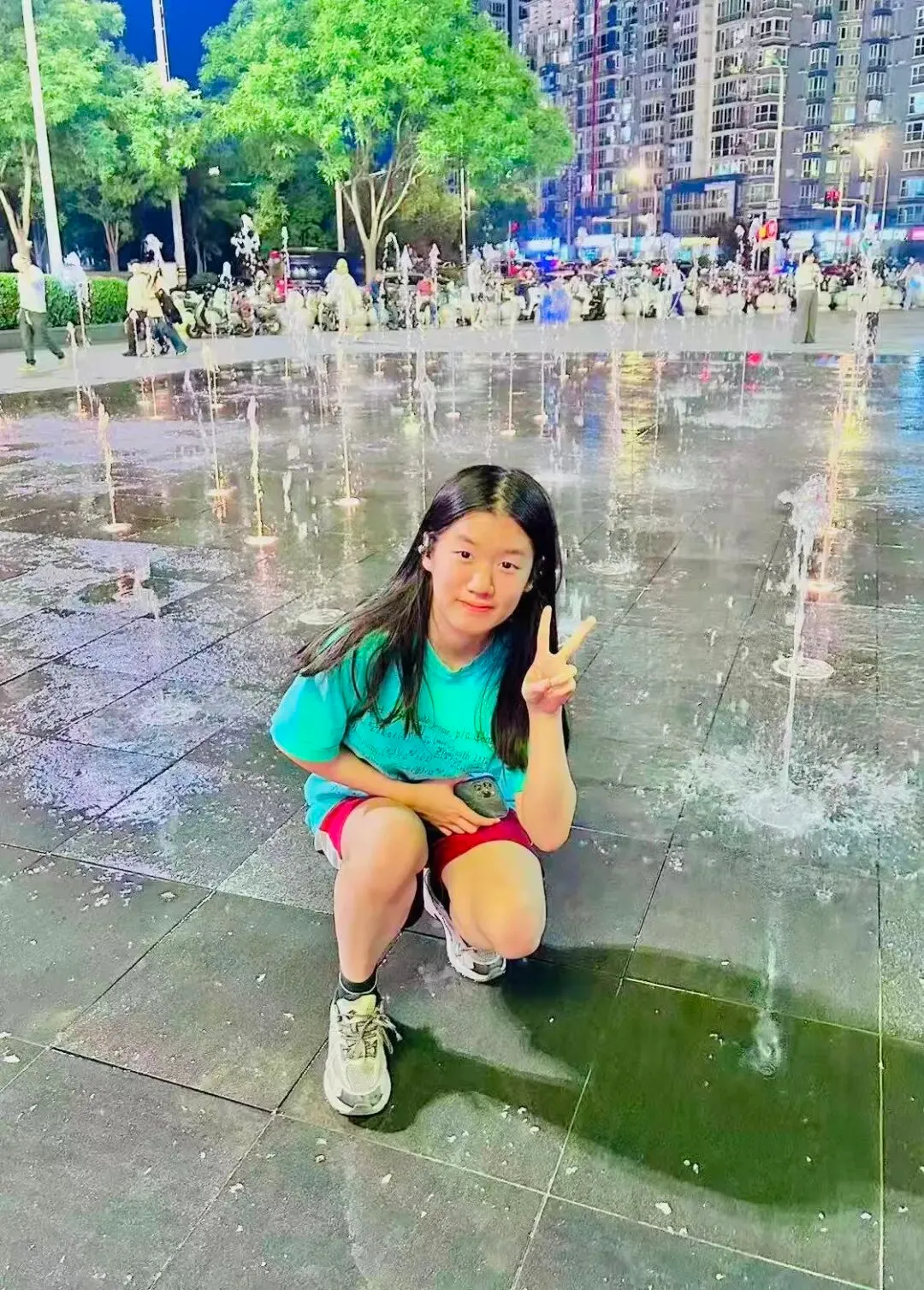
I'm Star Li from Grade 11, Class 1 at Beijing Academy. This year, I received an offer from the University of Oxford to study Mathematics and Computer Science.
I'm extremely passionate about Math and Computer Science.
University of Oxford · Mathematics and Computer Science
Part 01: Making Time for What I Loved
Mathematics and computer science have interested me for many years, and they are the subjects I now plan to study.
My interest in mathematics began with primary school Olympiad classes. I remember wondering how a subject could be so fascinating. I spent considerable time entering competitions and teaching myself middle and high school mathematics. Computer science interested me from Grade 5, when my father enrolled me in a programming class during a period when children's coding courses were popular. Soon, I wanted to explore beyond class. I still remember recreating the popular Jump Jump game in Scratch as my first project.
Less than a year later, I began teaching myself Python independently. Small games led to more ambitious projects. Through CSDN, I met two or three peers, and we spent a summer developing an open-source tool. Frequent online lessons at home during middle school gave me further time to explore.
I studied C++ and algorithms, working through a thick textbook page by page. I also learned through development projects, beginning full-stack work and building a homework management system for my class. A simple page gradually developed into a complete system with frontend and backend, a database and network architecture. A friend and I also built a chat room with many features, initially inspired by wanting to chat during lessons without being noticed.
This was before today's large language models and vibe coding. I wrote every line myself and searched Google or Stack Overflow when problems arose. I now spend less time typing code, and the knowledge I built during those two years remains essential to my later learning.
After Grade 8, I had more time available. During Grade 9 winter break, I began studying machine learning and soon realized how much mathematics I needed to learn. Over a year, I systematically studied twenty traditional machine learning algorithms and wrote a tutorial series of about 300,000 Chinese characters. I still marvel at how much I produced in the first semester of Grade 10. My laptop and scratch paper accompanied me throughout school. That period was particularly significant: studying those algorithms greatly developed my mathematics and introduced me more deeply to AI, even though many now see little use in industrial LLM development.

In the second semester of Grade 9, I also began exploring deep learning and large language models. That summer, I contacted a research team and joined a project that continued through the first semester of Grade 10. I mainly handled experiments and later rebuttal work. It was intensive, with much to learn from the beginning. Alongside academic development, I discovered the field's professional community by attending conferences and building connections. With school support, I later joined a mathematics and AI summer program at Tsinghua University and learned with peers who shared my interests.
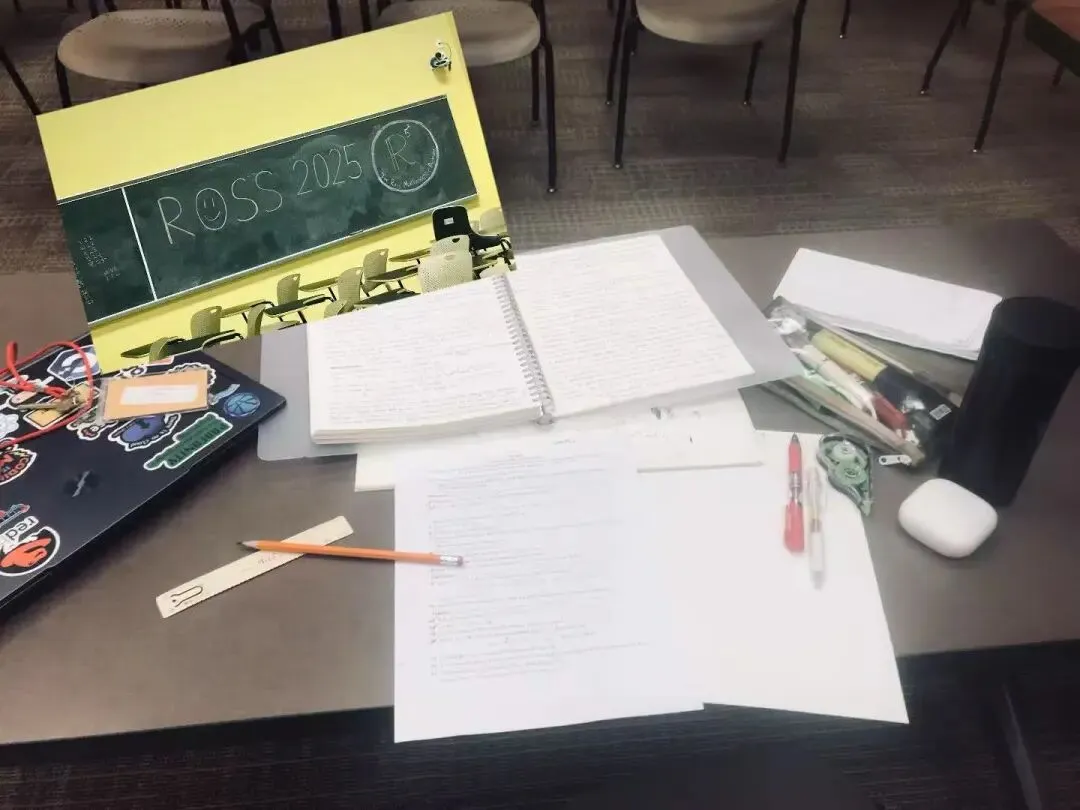
Grade 10 was busy. I began international courses, and my Homeroom Teacher Ms. Yuan often discussed my plans with me. My mathematics teacher Ms. Hou set high expectations and encouraged deeper exploration. During the first semester and winter break, I became a HiMCM Finalist, earned USACO Gold, and completed a development project. In the second semester, I investigated the Ross Mathematics Program with only eight days remaining before its deadline. I decided to apply and spent the following week writing sixty pages of solutions, working late into the night. My College Counselor Ms. Li carefully advised my essay, and I submitted hours before the deadline. After being waitlisted, I answered another application question and submitted an English translation of my machine learning tutorials. Eventually, I received an offer.
I spent forty days at Ross during the summer after Grade 10, immersed in number theory and abstract algebra proofs, developing ideas from first principles. Alongside that work, I completed another research project combining AI with another discipline.
In the first semester of Grade 11, I sought the school's support to apply to UK universities a year early. Applications were stressful, while preparing for mathematics admissions exams and interviews remained enjoyable. Teachers provided specific resources and guidance. After receiving my Oxford offer, I wanted to explore practical industrial applications beyond academia. I sought internships and secured a position in Tencent's Large Language Model department through the Qingyun Program during the second semester of Grade 11.
I continue exploring. There is a long future ahead, with many possibilities.
Part 02: The Challenges of Applying
My longstanding interests and future plans made choosing universities and courses straightforward. Oxford's Mathematics and Computer Science program became my main goal, and I also applied for several related courses at Imperial College London (IC).

The pace was more challenging. Over three months, I submitted UCAS and prepared for Oxford's written exam and interview, followed by IC's written exam, with barely a break. I had mainly prepared for U.S. applications, so adjusting to the UK process was demanding. Almost all my time went toward admissions exams, while I also fitted in summer program applications and standardized exams for the U.S. route.
The intense anxiety led my parents and me to reconsider assumptions. If Oxford rejected me, would I wait until Grade 12 and apply to both UK and U.S. universities? Or, with an Imperial offer, would I begin university immediately?
Six months earlier, I would confidently have chosen another application year. By then, I found the answer less certain. As AI changes productive work and people reconsider the advantages conferred by top universities, I wondered how to weigh university reputation against a year's time. That was the biggest question applications left me with. Perhaps the next decade will help us understand.
Part 03: Considering Wider Possibilities
My greatest change during high school was questioning limitations I had assumed were fixed. The world offers many possible directions. I believe sound character and a broad perspective deserve greater priority than IQ or grades. Understanding current events and identifying what we want to pursue over a lifetime can help us maintain the determination to change the world.
AI has created unprecedented opportunities. Anxiety about university rankings and application lists of ten activities and five honors can still absorb our attention. Selection criteria and educational routes are changing, and a résumé captures only part of a person. Highly educated, capable people are plentiful, while very few guide an era's development. I believe how we understand the world and our place within it will influence our future more profoundly than additional AP courses or a particular summer program.
In middle school, I was already certain I wanted to work in computing and made time to explore it. Yet I almost paused that work in Grade 9 to prepare for the possibility of attending high school in another district.
My parents intervened. They valued my enthusiasm for computing and mathematics above the Zhongkao, allowing me to remain at Beijing Academy and continue exploring. I still felt some regret because I had wanted strongly to study in another district, and I worried about making an unconventional choice.
I became increasingly grateful for that decision, particularly after moving from the Gaokao track to international courses. A wider perspective showed me ways to pursue my aspirations beyond the competitive routines I had accepted growing up. I could seek opportunities across different environments. AI's possibilities encourage courage in reconsidering conventional assumptions, many of which reflect self-imposed limits. I believe frontier AI will increasingly value ability directly. My aspirations offer a particularly meaningful account of who I am.
My ambition is Frontier AI. It excites me as a lifelong pursuit, extending beyond income or a career plan. Some ideas began in the first semester of Grade 10 and initially seemed unrealistic. Even ten years from now, success may remain uncertain. Today, however, I intend to pursue them seriously, believing they are possible and that I have an opportunity.
At seventeen, believe that you are “The Chosen One.” This period of rapid change offers opportunities to each of us.
Keep your determination to change the world.
Part 04: An Experience That Changed My Approach
Soon after moving to BAID in the second semester of Grade 9, I first learned about the Yau Award, the S.-T. Yau High School Science Award. Searching online mostly produced advertisements promising expert coaching and award-winning research. I felt anxious about how to begin and asked my parents to find an agency or prominent mentor. At home, they firmly urged me to find my own way. They felt dependence on outside assistance could lead me to value achievements that overstated my actual abilities. I initially struggled to understand and thought independent research almost impossible.
A little over a month later, during Grade 9 summer break, I asked AI communities I had joined whether anyone would mentor a middle or high school student. Fortunately, I found an opportunity. My first research experience was uneven, and it began helping me understand how the field worked. I attended conferences, gradually became comfortable introducing myself, and learned to seek opportunities confidently. Following my own interests felt increasingly possible, and I came to understand my parents' advice.
I appreciate the choices I made. Developing independence early prepares us to handle future challenges ourselves. Over time, challenges can also deepen commitment to what we love.
Part 05: Advice for Younger Students
What would I keep or change if I could begin high school again?
I would continue following my interests and carrying ideas through, managing time carefully and periodically considering developments in the field to adjust my direction.
I would change two things. First, I would listen more closely to advice. When I began AI in Grade 9, my parents sent interviews with leading researchers and encouraged attention to developments beyond technical details. I concentrated on formulas and recognized the value of following frontier developments only in Grade 11.
Second, I would seek opportunities more confidently. After Ross and further attention to frontier AI, I recognized assumptions that still limited me. Since Grade 9, I had met teachers and older students at conferences, yet rarely contacted them after exchanging WeChat details. My parents encouraged messages to those contacts and emails to laboratories or companies abroad, explaining my enthusiasm and asking to join. Embarrassment held me back, and I may have missed opportunities.
Take the initiative to introduce yourself and seek opportunities. I believe AI tools' increased productivity will create greater openness to capable young people. Try boldly: in AI and other emerging fields, being young offers considerable possibilities.
My advice for studying and applications, alongside everyday life, is:
Maintain your own direction amid the varied demands of international education. Giving your priorities appropriate attention can be difficult and particularly valuable.
I understand the anxiety of students beginning an international curriculum and wondering about activities, research and summer programs. Give yourself time to consider your interests carefully before committing to projects or coaching. Other people's social media posts offer only a partial account. Everyone develops at a different pace.
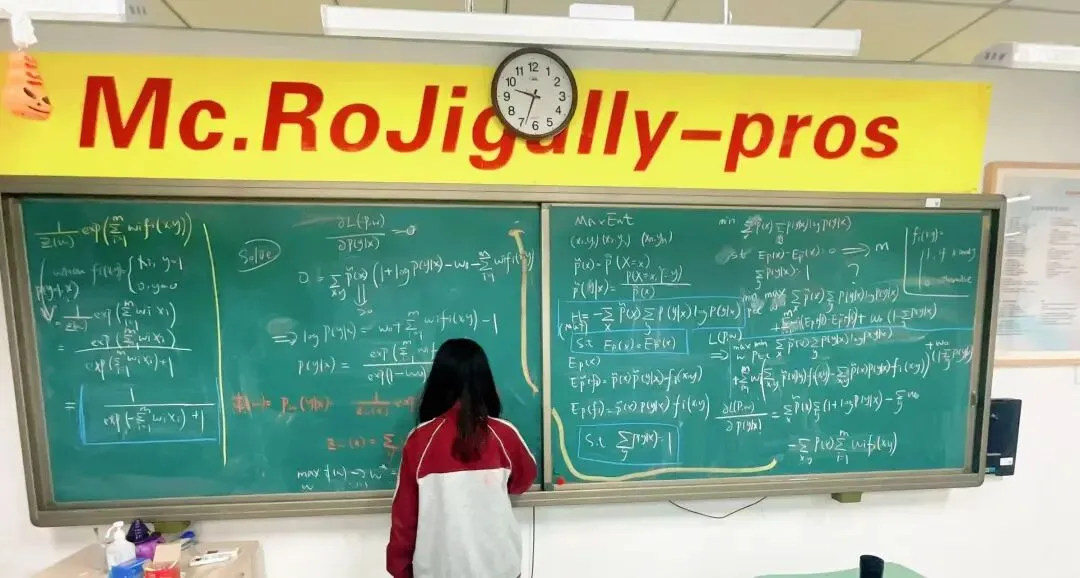
Explore gradually and independently. Learn to evaluate information and reach out to others, seek opportunities and reconsider your direction. Thinking five years ahead can change your perspective and help you focus on developing substantial abilities for the future.
I wish my classmates success in their future applications.