BAID Students Earn Major Honors at the International Mathematical Modeling Challenge
The International Mathematical Modeling Challenge (IMMC) recently announced its award results. This influential international competition invites students from around the world to investigate real social problems through mathematical modeling, using logical reasoning and collaboration. Its competitive field demands substantial skill.
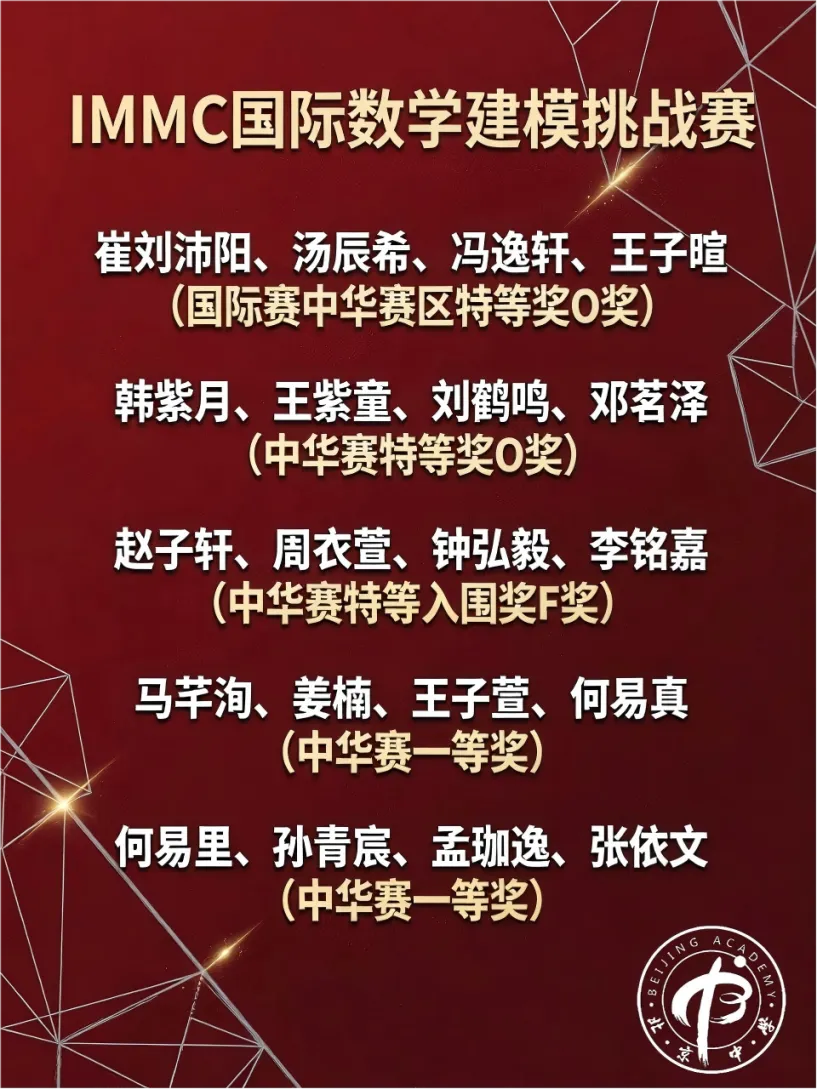
Five Beijing Academy teams received awards, drawing on strong mathematical knowledge and careful reasoning, innovative approaches and effective teamwork. Two teams earned Outstanding recognition, one in the China Regional Track of the International Round and one in the Mainland Round. Another received Finalist recognition, while two earned Meritorious distinctions.
These achievements reflect sustained preparation and repeated revisions, alongside the students' enthusiasm for their subject. Participants share their experiences below.
- China Regional Track of International Round, Outstanding: Cuiliu Peiyang, Tang Chenxi, Feng Yixuan, Wang Zixuan
- Mainland Round, Outstanding: Han Ziyue, Wang Zitong, Liu Heming, Deng Mingze
- Mainland Round, Finalist: Zhao Zixuan, Zhou Yixuan, Zhong Hongyi, Li Mingjia
- Mainland Round, Meritorious: Ma Qianxun, Jiang Nan, Wang Zixuan, He Yizhen
- Mainland Round, Meritorious: He Yili, Sun Qingchen, Meng Jiayi, Zhang Yiwen
Reflections from Participants
01 Feng Yixuan
While writing our paper, I studied our core DSSA algorithm closely, clarifying each formula and the relationships between formulas so that the reasoning from risk assessment to resource allocation was sound. Preparing for the defense was especially memorable. To show judges clearly how each resource provided protection within our model, I learned Manim animation and spent an entire weekend refining each frame of our explanation. I also prepared to explain the algorithm's principles and why we had selected it.
Some questions differed from what we anticipated. Understanding the model in such depth nevertheless gave us confidence to respond successfully. Modeling combines careful engineering reasoning with creative communication. The experience taught me that thorough understanding and clear explanation allow a model to contribute meaningfully. Thank you to my teammates. We will all remember our Outstanding award and the work that led to it.
02 Cuiliu Peiyang
IMMC taught me that modeling involves continually identifying problems and revising our approach. During the International Round, my teammates were also competing in IEO. I advanced the project during the day, then updated everyone on ideas and progress and allocated tasks at night. An initial misunderstanding led me in the wrong direction for two days before I recognized it and adjusted. I also learned to use AI more effectively for programming, running demonstrations and debugging. Clearly explaining our reasoning and objectives became essential.
We disagreed about using real or simulated data. We eventually used simulated data to check the model's reliability while processing real data on another powerful computer. Our paper included extensive simulated results and visualizations of real data, with a transparent account of our approach. Simulation can support legitimate analysis when the model is reasonable and its results can be interpreted.
We progressed from confusion through collaborative revision to an international award and recognition during the defense. I learned to think clearly under pressure and appreciate team communication and logical explanation, alongside engineering practice.
03 Tang Chenxi
Seeing our team on the winners' list was thrilling. I mainly wrote and formatted the paper. I had assumed formatting involved making pages look attractive. Presenting complex mathematical formulas and modeling ideas clearly and rigorously demanded far more patience than I expected.
My greatest lesson was collaboration. Our initial algorithm contained persistent flaws, so we gathered repeatedly to reconsider it, repair problems and adjust details. Working together so determinedly toward one goal was exciting.
Preparing for the final defense was demanding too. We deliberately challenged every variable and assumption in our paper and prepared numerous possible responses to the judges' questions.
Thank you to my teammates—this award belongs to all of us. Staying up late together and checking our reasoning carefully gave me one of my most cherished high school memories.
04 Wang Zixuan
This competition taught me new knowledge and broader lessons. Each of us worked hard to progress from unfamiliarity with modeling to independently writing a substantial paper.
We learned to analyze problems and build mathematical models, make predictions and write papers, and respond to judges during the defense. We also discovered the importance of collaboration.
Our success resulted from every team member's contribution.
05 Han Ziyue
IMMC gave me considerable modeling experience. As captain, I also developed a wider range of abilities.
Forming the team and choosing members, along with assigning tasks, each posed challenges. I felt anxious as the competition approached and began organizing preparations several months before the preliminary round.
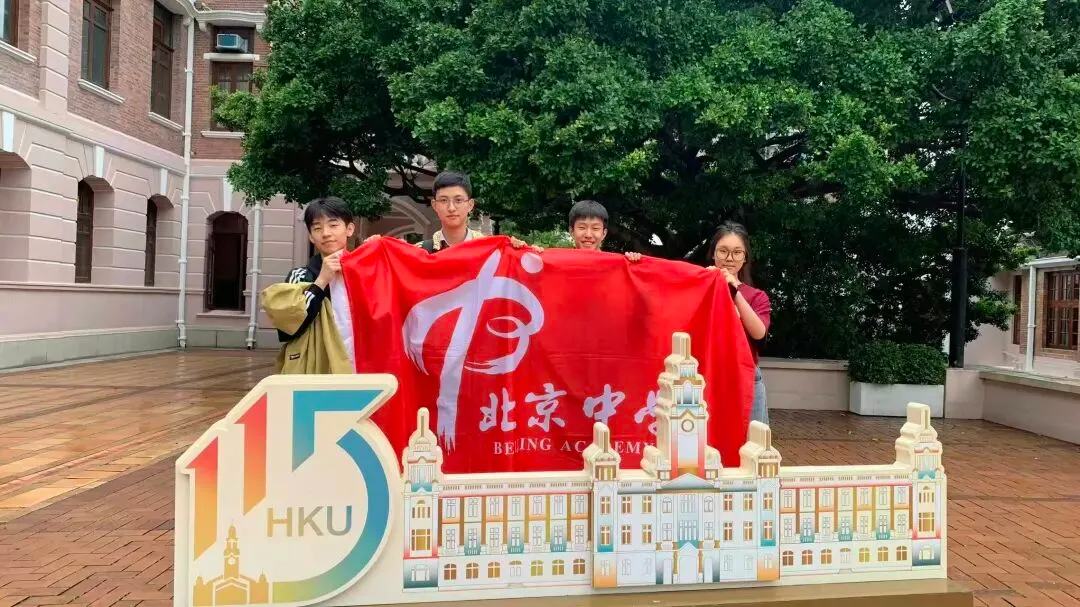
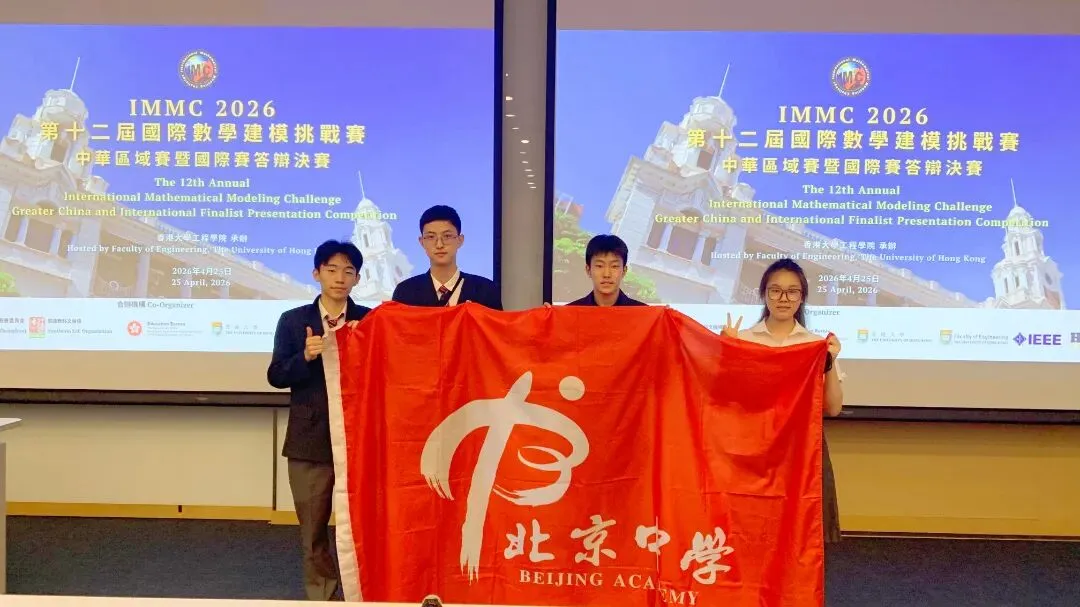
For the Mainland Winter Round, we chose carbon emissions because the topic was feasible to investigate and had significant social value. During the 96-hour competition period, we discussed ideas repeatedly and held several meetings before completing our paper. It qualified us for the defense at the University of Hong Kong.
The morning we learned we had advanced brought excitement and concern. We were in Grade 11 and preparing for May's AP exams, so we wondered whether we could manage a trip to Hong Kong SAR China to present to international experts. After discussing it, we decided to accept the challenge.
We had only two weeks to prepare the defense while keeping up with classes. Refining the paper and presentation required close coordination. A disagreement about how to present our work was resolved after we sought advice from older students. I greatly appreciated the school's support. Preparations progressed as the date approached, although confusion sometimes made me consider giving up. Our repeated eight-minute rehearsals still fell short of what we hoped for. I continued believing that working together gave us a chance to succeed.
After two intensive weeks, we arrived in Hong Kong SAR China. The night before the competition, we rehearsed repeatedly and adjusted slide details. One teammate developed a high fever, so we adapted and successfully completed the defense.
During two days at HKU, I spoke with university professors and met talented peers from different places who shared our interests.
Our paper ultimately received the Mainland Round Outstanding award, a rewarding conclusion to my first modeling competition. Thank you to my teammates and to the teachers and classmates who supported us.
06 Wang Zitong
This was my second modeling competition. Previous experience helped us write the paper with relatively few difficulties. We used AI language models for research and consultation, drawing on their broad knowledge throughout our work. They reduced the time spent programming and finding information, allowing us to focus more deeply on refining the model and investigating further questions. I believe working effectively with these tools will become an essential modeling skill.
After submitting the paper, we advanced to the final defense in Hong Kong SAR China. Presenting in person brought uncertainties beyond those of online or written assessment. We needed fluent delivery and careful timing, with clear responsibilities for each member. Before departure, we prepared an initial slide deck. The school offered thoughtful advice on both our presentation and slides. After repeated revisions and discussions with another team, we produced five or six versions before reaching a result we were satisfied with.
We also had to balance competition preparations with final exams. Planning the trip, including hotels and transport, required careful time management.
After checking into the hotel, a teammate developed a fever. We had prepared little for that possibility, and it disrupted our presentation assignments. We adjusted the slides and redistributed responsibilities, each taking on some of our sick teammate's work. Then we rehearsed the revised presentation repeatedly.
I felt nervous when we presented the next day. At the venue, we met the teacher accompanying students from Beijing Academy's Gaokao track and offered those students what assistance we could. Our defense ultimately went more smoothly than I expected.
It was also my first visit to Hong Kong SAR China. Afterward, we explored landmarks including Victoria Harbour. Another team participating in the International Round arrived the following day. Since we were close friends, I visited their hotel and shared what we had learned about the venue, other teams' presentations and the judges' questions.
This valuable experience will inform my future academic activities and paper writing, and it helped me develop a broad range of skills.
07 Liu Heming
Receiving an IMMC award recognized our work and concluded a particularly memorable experience.
Selecting our topic and developing the model, revising the report and preparing the defense involved repeated reconsideration. We faced anxiety and disagreements, along with demanding deadlines. Through them, I came to appreciate what being a team meant.
When a teammate became too ill to present, our concern for them outweighed concern about the competition. Redistributing responsibilities and learning additional material created considerable pressure, but we completed the presentation successfully. Onstage, I thought about our model and its reasoning, and also the nights we spent revising documents and discussing ideas with determination. Every person who persevered contributed to the result.
Thank you to my teammates for your trust and companionship. IMMC taught me to solve complex problems and to take responsibility while supporting others through uncertainty and pressure. The medal represents our achievement and development.
08 Deng Mingze
IMMC was challenging. Despite difficulties, our team completed a paper we were proud of. I had hesitated and considered withdrawing, but my teammates' encouragement and patience persuaded me to continue. We wanted to encounter a wider world and hear different perspectives.
My time in Hong Kong SAR China was difficult: I developed a fever the day before the defense and had to miss it. Fortunately, my teammates took over the sections I had planned to present. Writing the paper had already taught me how significant collaboration was. Combining our individual strengths allowed us to achieve more together.
I hope the next group of Beijing Academy modeling students will continue this record of achievement.
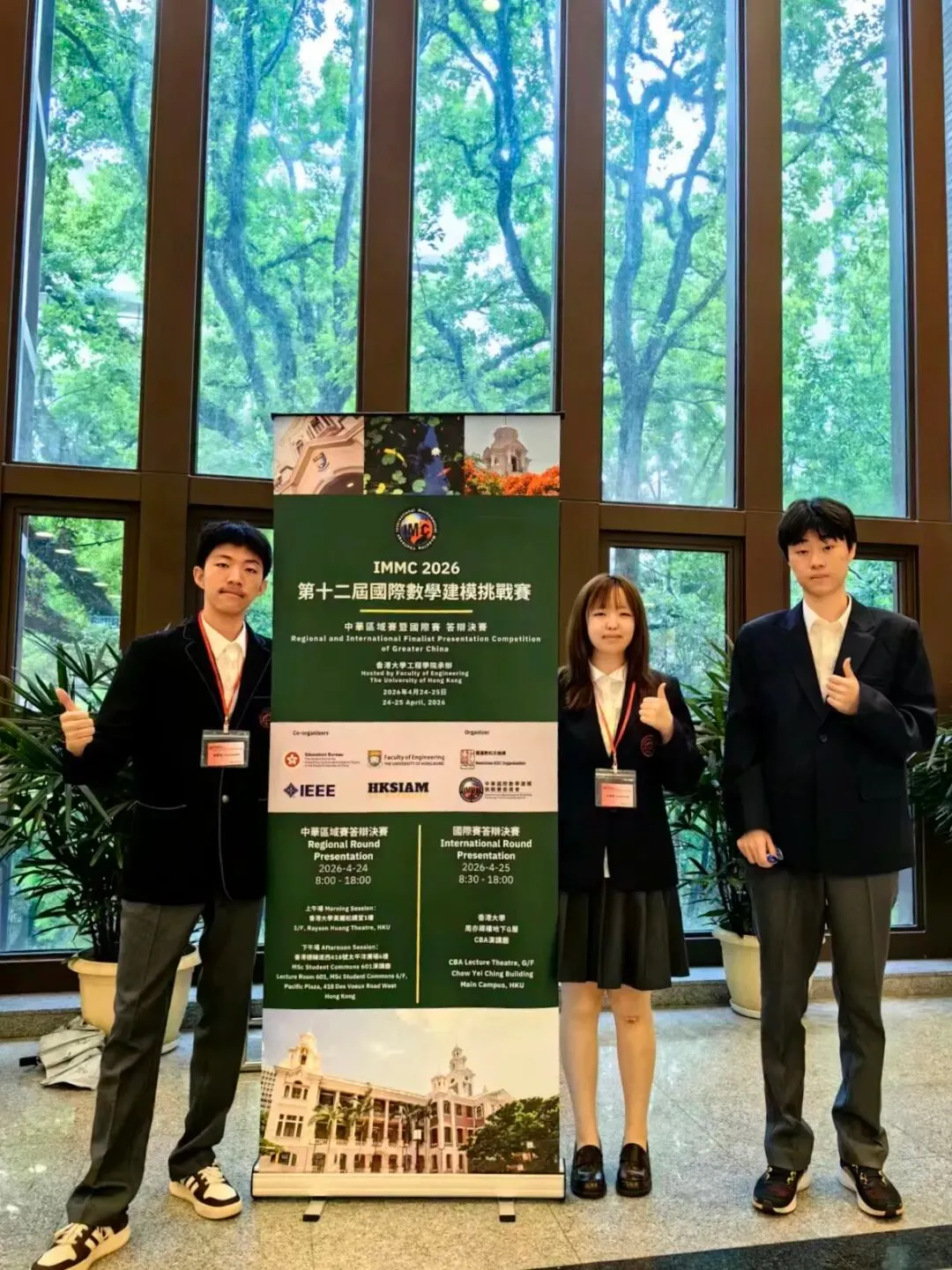
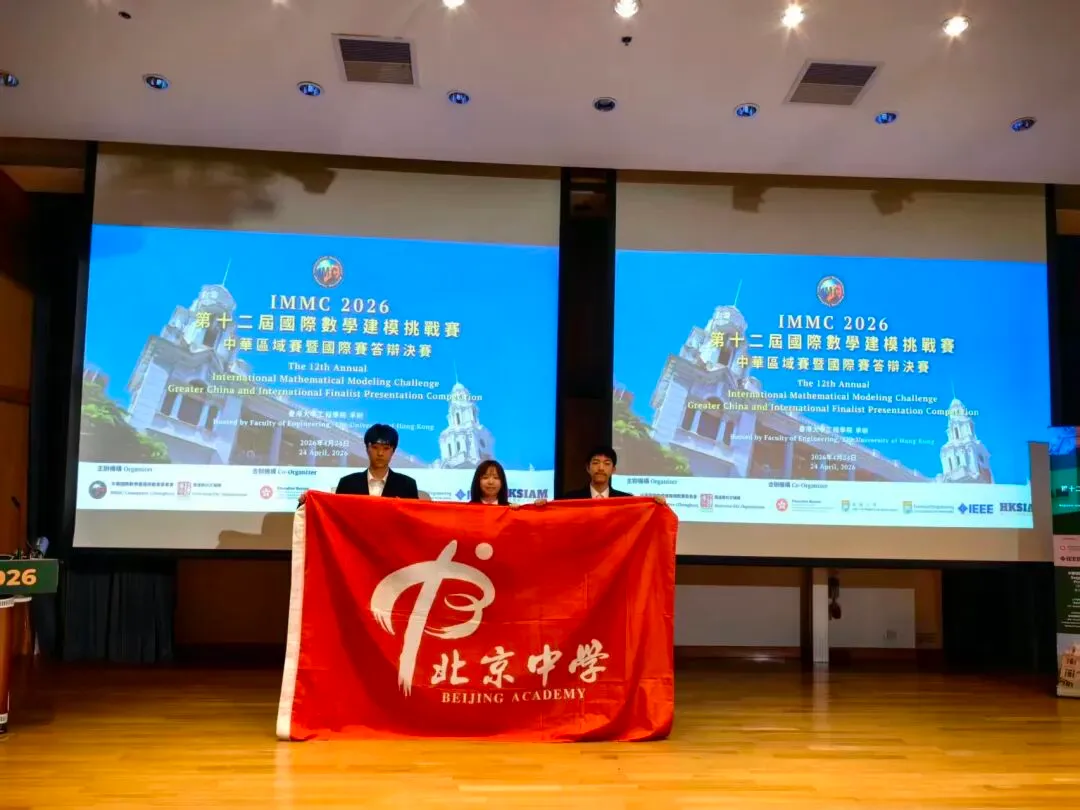
These IMMC awards recognize the students' development and encourage further exploration. Beijing Academy will continue investing in science and innovation education, offering varied opportunities for competition and practical work. By applying learning beyond textbooks and pursuing new ideas, students can develop their mathematical abilities and advance their interests through hands-on projects.