#GraduateStory | Vicky Zhang: Through the Lens, Answers Still Unspoken
University | University College London |
Major | Environmental Geoscience |
Part 01
An Interest That Began with a Camera
I have chosen environmental science. My interest began while using a camera.
I was filming a documentary beside the mangroves in Hainan, breathing the slightly salty, humid air. The camera captured a peaceful-looking ecosystem. The morning tide had receded, leaving tiny holes across the mudflats. Occasionally, creatures living on the bottom darted into the sediment, leaving barely visible traces. Farther away, tree roots intertwined. It was beautiful, yet explaining the scene revealed how much I still needed to understand about its significance.
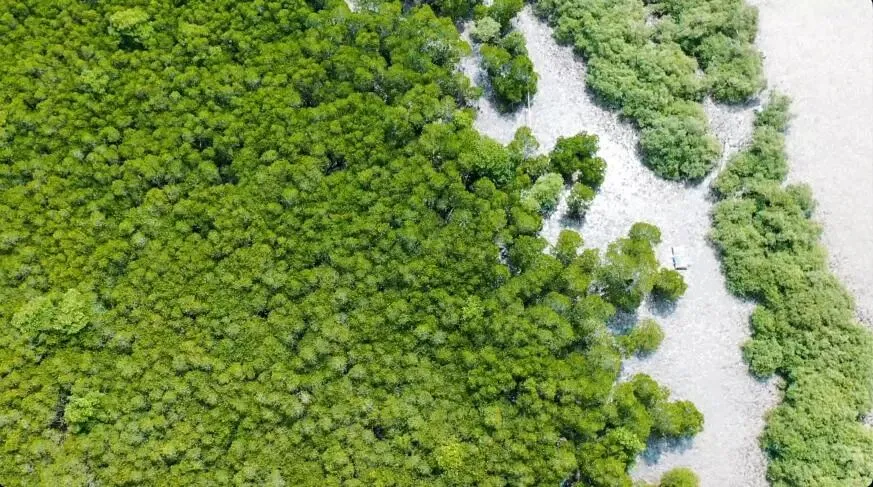
That gap between observation and explanation intensified my curiosity about the mechanisms behind what I saw. I began appreciating the different demands of identifying a problem and understanding it.
Part 02
Discovering My Direction
I now approach problems with responsibility and a willingness to explore them through practice. Those qualities developed gradually.
My understanding grew through encounters with environmental problems. AP Environmental Science introduced me to the subject, and I later explored specific concerns such as biodiversity and microplastics. I noticed that discussion often established awareness of a problem while leaving the work of finding solutions unfinished. That next step increasingly interested me.
During China Thinks Big, my teammates and I worked on Census of Microplastics. We noticed that people knew little about microplastics despite their presence in daily life. They are difficult to observe personally, especially compared with widely discussed issues such as coral bleaching. We hoped greater awareness would encourage people to use fewer plastic products. We began building a system that estimated microplastic intake from a person's lifestyle. What initially seemed a straightforward educational tool soon presented difficulties: incomplete data and incompatible units, alongside results that explained too little. We reconsidered the problem through diet and environmental exposure, as well as habits. Each variable influenced the estimate, and their relationships were more complex than simple addition. Repeatedly discarding models and rebuilding their logic taught me how demanding it is to define a problem in terms that people can understand and analyze.
Other experiences reinforced that lesson. At Xieyuda Tea Plantation in Anhui during Beijing Academy's Experiential Course, my teammates and I designed soil sampling procedures and systematically analyzed pH and organic matter, particle structure and erosion rates. Soil conditions depended on several interacting factors, including climate and planting practices, as well as human intervention. In Beijing Academy's MFP project on urban river pollution, I combined pollution data with policy analysis to assess the effectiveness of management measures. I came to understand environmental problems as questions of science and decision-making, including the management of complex systems.
Over two years, I explored different ways to communicate environmental issues. In the laboratory, I researched algae-based biomaterials as possible alternatives to plastic. With Eco-Sprout Club, I helped create seed-paper bookmarks and artistic activities that invited people to participate in environmental action. For an ocean-themed exhibition, we used clothing designs to visualize coral bleaching and the effects of oil films. Through documentaries, I recorded sustainable fishing practices and people's roles within ecosystems. Courses and lectures continued expanding my knowledge and expertise. Together, these projects helped me recognize how research and communication can work together to bring environmental concerns to wider audiences.
Part 03
Application Season: Working Through Uncertainty
I initially approached university choices through organized comparisons. I grouped schools by rankings and resources, as well as location, and compared programs and courses in spreadsheets. I expected more complete information to bring a clear answer. Looking closely at programs complicated that confidence: I understood their curricula, yet struggled to imagine what I would actually do there.
I then focused on my essays. Early drafts assembled experiences much like a résumé, with too little connection to convey who I was. Revising meant finding relationships among particular moments: my difficulty explaining the mangroves, pausing after discarding a microplastics model, and hesitating when field data differed from expectations. Despite occurring in different contexts, they revealed a recurring inclination to investigate what still needed explaining.
My university criteria evolved too, with personal fit gaining importance alongside resources. Environmental science became a clear choice because its uncertainty and interacting variables suited the way I approached questions. My judgments gradually aligned; some options lost relevance, while others became clearer. I began with a question about where to go and finished by considering how I would keep investigating situations with open-ended answers.
Give yourself time to pursue questions deeply. Competitions and activities can enrich a résumé, and their greatest value comes from sustained investigation and willingness to revise your conclusions as you learn.
Part 04
Acknowledgments
Thank you to Ms. Xin Yu for guiding my academic direction through two years of environmental science projects, from which I learned a great deal. I am grateful to my Homeroom Teacher Ms. Lin Xuejiao, who regularly discussed my applications and helped me manage my emotions. My College Counselor Ms. Tan Laiyuan also met with me regularly and offered frank, thoughtful professional advice.
My friends repeatedly offered support and comfort, helping me reach this point. My parents wholeheartedly supported my choices and decisions, giving me a sense of security. Thank you for that care and encouragement. I am also grateful to the apparently ordinary environments and individuals that gave me opportunities to observe and understand, then communicate in my own way.
Many questions remain open. I now feel more willing to keep exploring them and continue with determination.