

#GraduateStory | David He: Until I Stopped Chasing Kites
University | University of Maryland, College Park |
Major | Sociology |
Part 01
Discovering Sociology Through Everyday Life
I have chosen to study Sociology.
Before entering the international curriculum, I knew almost nothing about sociology. My interest may have begun at the dinner table: throughout childhood, CCTV-12's legal programs played during our evening meals, encouraging me to pay close attention to life around me. Later, I immersed myself in Chinese history, trying to understand social change through what I read. Writing short papers and developing small inventions for science competitions were further attempts to answer one question: How does our world work?
Looking back, I pursued that question eagerly, sensing an answer somewhere ahead and running toward it.
My first direct encounter with sociology happened almost by chance. In Grade 10, anxious about applying for research projects, I chose sociology from a collection of intimidating topics because it seemed relatively approachable. What appeared to offer a straightforward beginning soon introduced me to a world I had scarcely understood.
My project investigated how soundscapes affect residents' well-being, using Beijing's Shichahai as a case study. I chose the area because of a memory from Beijing Culture Exploration Program during winter break. Yuhe and Jiaxu walked beside the lake with me as we held hot sesame-paste buns and looked at the water, red tiles and gray walls. Its combination of natural beauty and cultural character suggested an appealing place to live and prompted my research.
Fieldwork challenged my initial impressions. I first felt awkward around older Beijing residents, whose manner was direct and sometimes sharp. After bringing friends for encouragement and spending a month in the hutongs, I began appreciating their personalities and kindness.
Everyday encounters revealed what sociology involved. Alongside interviews, my recorder captured toads by Xihai whose calls kept residents awake. My notes described an older woman's frustration when urban management officers confiscated the vegetables she carefully grew in foam boxes. Nearby, neatly arranged municipal flower boxes stood empty.
The most disturbing moment came on the final day of fieldwork. An elderly person lay on a stretcher outside their home, while an ambulance remained stranded dozens of meters away because the hutong was narrow and blocked by illegally parked cars. Theory suddenly became painfully concrete. Sociology required direct engagement with people's particular difficulties, followed by a broader understanding of how those difficulties might be addressed.
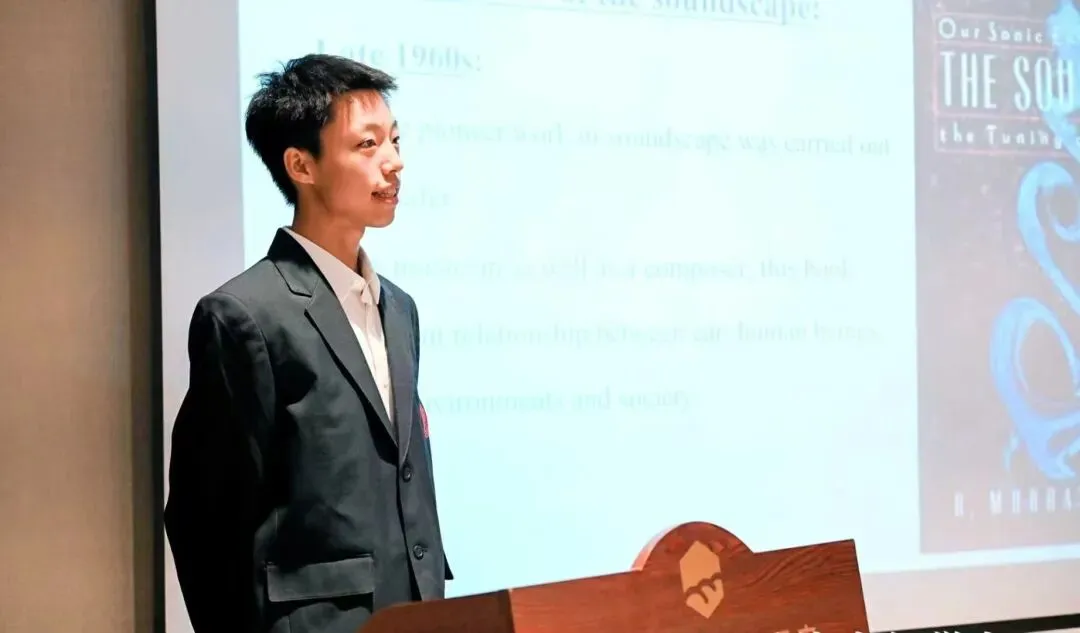
I recognized how my abstract curiosity about the world connected with everyday realities: the calls of toads, vegetables in foam boxes, and an ambulance unable to reach someone. These experiences gave substance to the questions I had been pursuing.
Sociology, which I had chosen almost accidentally, became a way for me to understand the world.
Part 02
Applying with Honesty
Before application season, I had become absorbed in my GPA and exam scores, including TOEFL and SAT. Long stretches of effort led to disappointing results, frustration and attempts to recover, only for the cycle to begin again. Every point seemed essential to securing my future.
Changes before application season helped me recognize college applications as one part of a much longer life. Undergraduate education would provide a beginning for further development. What I could achieve afterward would depend on the perspective and courage I had gained, along with my ability to motivate myself. Understanding that helped me approach applications with composure and see more possibilities ahead.
Sincerity best describes my application season. I encountered agencies offering carefully designed activities intended to impress admissions officers and create an ideal applicant image. I felt that meaningful exploration had to arise from my own interests and concerns to contribute to lasting development. I wanted admissions officers abroad to encounter an actual person, including my limitations and the experiences that made me who I was.

Applying became a period of direct reflection. I began by considering universities carefully from different perspectives, then wrote intensively before each deadline. Every word and experience came from my actual three years at Beijing Academy.
Honesty involved accepting that my abilities and unpolished account of myself might lead to a different outcome from the one conventionally considered ideal. Closing my laptop brought an unfamiliar sense of freedom. Whatever the decisions, I had presented myself openly and could accept what followed.
Part 03
Reflecting on My Development
Over three years, I gradually simplified my priorities and learned to understand myself.
In Grade 10, I was determined to prove myself to others. I followed plans precisely, measuring progress through my GPA and TOEFL results. There was reassurance in working methodically, and I assumed that maintaining tight control would deliver the future I wanted.
That first year's relative predictability may have encouraged me to take on too much in Grade 11. AP courses and competitions, activities and standardized exams arrived together. I tried to seize every opportunity and do everything perfectly.
Exhaustion followed. I finished tasks imperfectly, then felt dissatisfied and guilty, and doubted myself. Nearing burnout prompted me to question whether accumulating more experiences necessarily meant developing as a person. In pursuing so much, I had lost sight of what each undertaking meant.
In Grade 12, the sudden death of a close relative led me to reconsider my priorities. Social obligations and ambitions for status seemed much less significant beside that direct encounter with loss.
I have since learned to accept uncertainty while attending carefully to what I can do. I want to express myself honestly and carry out smaller responsibilities with care and determination.
I recognize conflicting desires within myself: ambition and a need for reassurance, curiosity about distant possibilities and attachment to familiar life. I am learning to accept those feelings and allow events to develop, with greater trust in what lies ahead.
Most significantly, I have learned to appreciate affection again. I now give family members time that anxiety once consumed. Caring for people close to me helps me develop the capacity to contribute further afield.
Part 04
Songs I Recommend
I would like to share songs that express what I learned over these three years. Each of you may connect with them differently.
- Wheat — Hamburger Yellow

“All I need is to be me.” For me, the central lesson is developing confidence in who we are. This song encourages reflection and personal development. Beijing Academy offers many choices, and I hope you will follow your interests and pursue what you want to try. Application season occupies a small part of life. Develop a clear sense of yourself so you can explore freely and express your own ideas.
- Anjiu — Lao Wang Band
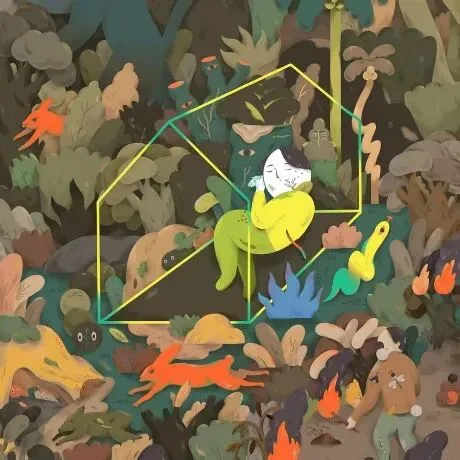
“Those years of contentment brought boundless freedom.” This song reassured me throughout application season. Applications involve many interconnected considerations. One disappointing AP result or competition outcome has little decisive influence over a whole life. Lao Wang Band expresses the simplicity that can follow reflection. Accepting imperfection can give us a greater sense of freedom and control, allowing us to continue with less strain.
- Natural Environment — Chen Li
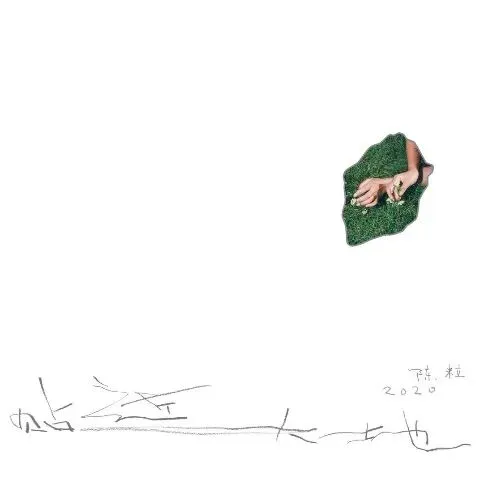
“You give me dreams, play alongside me, and let me breathe freely in reality.” Beijing Academy offers a wonderful community within a much larger world. Take opportunities to meet people doing inspiring work beyond your usual circles; new encounters can quickly broaden your thinking. Create a healthy social environment that welcomes change and helps you retain a sense of freedom under everyday pressures. That freedom can coexist with care for others.
Part 05
Acknowledgments
I have many people to thank. Although space limits how many small acts of kindness I can describe, I hope these words convey my gratitude.
Thank you to every classmate who helped me in daily life. Your kindness and acceptance helped me become more comfortable connecting with people, something I had initially found difficult.
I especially thank my closest friends. Being with you felt like a second home when life elsewhere seemed overwhelming. Our jokes and evening study sessions, along with your companionship during difficult times, gave me far more strength than I expected. You offered reassurance and a place to belong. As I began paying attention beyond distant goals, I recognized how much support was already beside me.
A special thank-you to Chen Yiyou for writing my peer recommendation with such care during a particularly stressful period of Grade 11. I will always treasure your kindness.
Beijing Academy's caring, responsible teachers contributed profoundly to my experience. As I prepare to leave, I want to thank several individually, in no particular order.
Thank you to my Head of Grade Ms. Liang, College Counselor Li Hui, and Homeroom Teacher Xin for guiding me through uncertainty. I am also grateful to Mrs. Hou, Ms. Ren, Ms. Zhang Mingming, Ms. Shuai, Mr. Michael, Mrs. Lisa, Ms. Hu Jie, and Ms. Jin Yang. Alongside knowledge, your example taught me how to conduct myself.
My deepest thanks go to my parents. Heartfelt words can be difficult to say to those closest to us. Thank you for accepting my imperfections and occasional mischief, expressing love through meals waiting for me at home, and conveying concern in pauses during phone calls. Your support has been present in countless ordinary days. Over time, I came to understand love as the reassurance that wherever I go and however I change, your care will continue supporting me. Being your child is my greatest good fortune.
To everyone who has loved me, and to the world I love in return, thank you.