

#GraduateStory | Han Zhiheng: Through a Thousand Turns, Back to Where My Heart Began
University | Imperial College London |
Major | Economics, Finance, and Data Science |
Part 01
Exploring Data Science and Its Human Consequences
I received offers for Economics, Finance, and Data Science at Imperial College London and Economics and Data Science at the London School of Economics and Political Science (LSE). Both combine data science with economics and finance. These are emerging programs: Imperial's first cohort graduates in 2026, and LSE's program is newly established.

My interest in data science began with mathematical modeling at Beijing Academy's Xibahe Campus in Grade 7. At thirteen, I encountered a large dataset for the first time and built a simple linear regression model to predict GDP. I was amazed that numbers could capture a country's development. I began to see data science as a way to understand how the world works and examine economic patterns clearly and reliably.
In 2021, when I was in Grade 8, the Double Reduction policy prompted a change in my thinking. The tutoring institutions I had attended since childhood seemed to disappear almost overnight. I wondered whether a policy intended to reduce students' workload would also affect Beijing's economy. I could think of two approaches: analyze public economic data and distribute questionnaires to people directly affected.
Liu Lianli guided us through both approaches. We analyzed categories such as Beijing's per capita spending on education and cultural activities, concluding that the policy's effect on overall city GDP was negligible. We also collected more than 300 valid questionnaires from parents and students, as well as former tutoring teachers, across income groups and districts. Reading the responses brought specific people and places to mind: a physics tutor who had lost a job and later faced enforcement for running private lessons, and closed tutoring centers in Shilibao and Dongsi Shitiao, Lianhuaqiao and Haiwen Building. Places where Beijing children had spent their weekends had become chain restaurants and furniture stores.
The contrast between our findings made us ask what had happened after the policy took effect and who had experienced the greatest disruption. Policies affect ordinary people's lives directly, beyond their representation in economic models.
Citywide economic data showed that disruption in one industry could have little effect on a megacity's overall GDP. The contrast with individual experiences changed how I understood data science. I began using it to investigate people's circumstances and the human consequences of economic change. Broad patterns can conceal the distinct experiences of individuals.
Economists can too readily dismiss unusual observations as statistical errors and overlook the limited account of reality that data provides. Responsible data scientists must guard against that tendency. This research profoundly changed my understanding by connecting my analysis with people's daily lives.
What draws me to data science now is working with the complicated data of everyday life and discovering the experiences it records. The human circumstances represented by numbers deserve close attention. I am especially interested in questions that connect measurement with ethical judgment: how should we quantify social welfare, and what might the pursuit of efficiency overlook? Understanding requires engagement with people's actual experiences and careful attention to the lives represented in our analyses.
Part 02
Choosing a Program That Suits Me
In high school, I continued studying data science and statistics, which guided my university and program choices. In the second semester, I transferred from the Gaokao track to the international curriculum. That spring, with a relatively light workload before demanding AP courses and exams, I spent considerable time investigating university programs.
Many U.S. undergraduate data science programs I examined emphasized technical subjects such as machine learning, with limited attention to the humanities. I noticed Imperial's new Economics, Finance, and Data Science program and attended its online information session. Its combination of practical data science and economics' attention to people suited my interests. Independent research and projects offered opportunities to build practical skills. I learned that its first intake had approximately twenty applicants per place, making admission even more competitive than computer science. It became my firm goal.
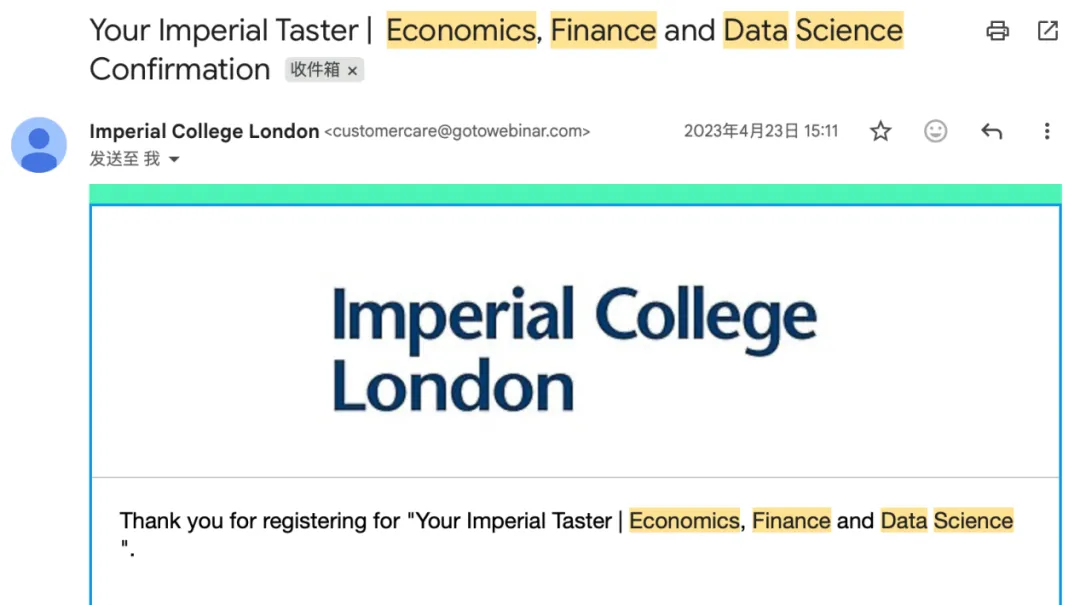
My 2023 webinar registration email
My interest in the program led me to attend Imperial's summer program. There, I developed a much clearer understanding of the principles behind the models. Over five years of mathematical modeling competitions, I had become proficient at applying models while only partly understanding their foundations. The summer program's depth made me feel strongly connected to Imperial and was the main reason I ultimately preferred it to LSE.
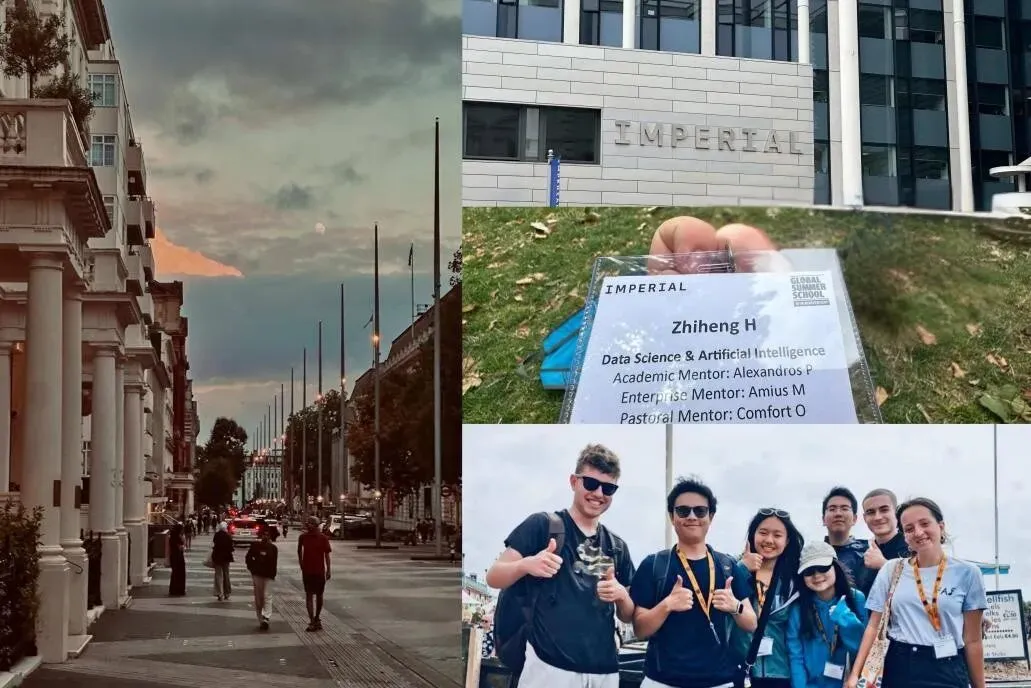
Imperial's summer program
March 2025 was one of my most memorable periods in high school. I spent three of its four weeks outside Beijing: a week taking the SAT, a week at the Conrad Challenge, and a week in Wuhan for IEO. I was disappointed to miss out on major awards, but the days spent traveling with teammates were precious and enjoyable.
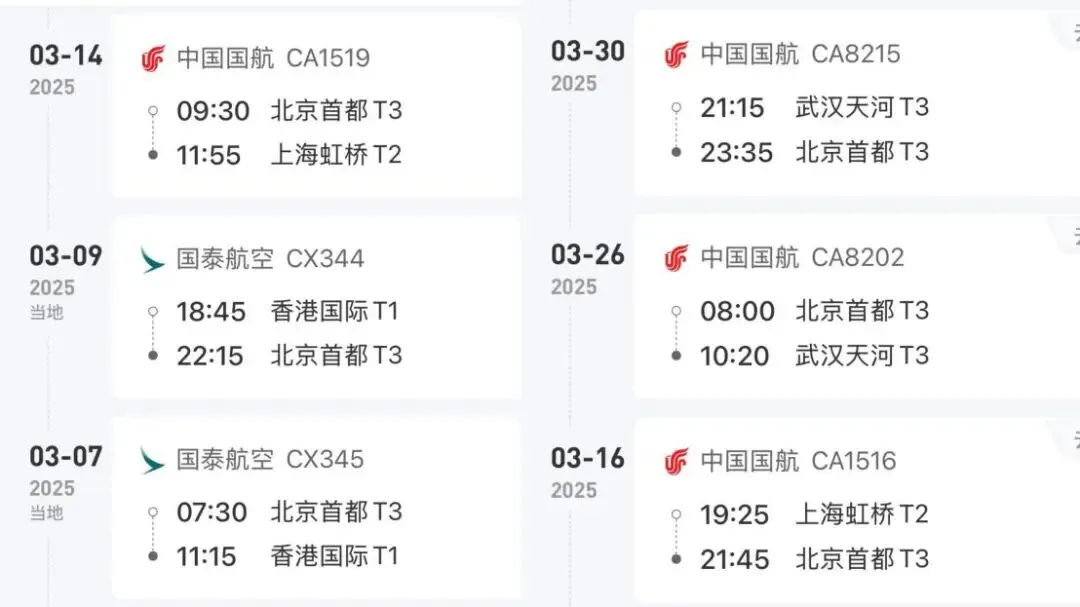
A busy March in 2025
That month, I was also participating in the Pioneer Scholar online research program, my first experience of formal academic research. My professor supervised the work rigorously and carefully managed its progress. Using U.K. economic indicators, I examined the country's development and major events from the 1970s onward. Historical sources and parliamentary debate records informed my econometrics paper. Completing it confirmed how much I wanted to pursue this field.
Data science can contribute greatly by connecting technical analysis with social circumstances. I hope to derive precise insights from large datasets and represent their findings faithfully, while drawing attention to disadvantaged people whose experiences those datasets contain.
I would also like to share some advice with younger students.
The competition for university places abroad encourages some applicants to overstate their achievements or accumulate expensive projects. As awards and impressive titles become widespread, their ability to distinguish applicants diminishes. Pursuing them simply to satisfy others' expectations can be exhausting and leave little lasting benefit. Take time to consider what you genuinely want, independently of outside judgments about competitions and research.
Maintaining your interests and principles is a strength in this competitive environment. Genuine enthusiasm can give your essays and interviews a sincerity that superficial preparation rarely achieves.
A significant challenge in making life decisions is having the courage to accept responsibility for the consequences. Choosing a direction you genuinely care about can give you confidence to face its difficulties.
Part 03
Application Season: More Manageable Than Expected
I applied to universities in the United Kingdom and United States, as well as Hong Kong SAR China. My application season began in August. During the summer, I refined two drafts of my Common App personal statement and prepared for two major U.K. admissions exams. Applications to the University of Oxford and Imperial College London, along with LSE, required MAT and TMUA preparation. October and November were therefore especially busy, and I postponed my Hong Kong SAR China applications. In the United States, I applied Early Action to eight universities and Regular Decision to two liberal arts colleges. Completing all EA applications by November 1 considerably reduced the pressure.
Apart from the usual anxiety and pressure, my applications proceeded in an organized, manageable way. I revised my essays without repeatedly abandoning them and met all major deadlines. I consider myself fortunate that the process went smoothly.
On January 10, just before winter break, I submitted my final two liberal arts college applications. A three-month wait followed. My U.K. results brought welcome surprises: offers from two of my top-choice universities.
Part 04
Acknowledgments
Thank you to my family and close friends. During the most anxious days, especially when several rejections arrived, your unconditional support and reassurance helped me continue.
Looking back at my years at Beijing Academy, I am grateful to the many people who helped me grow.
Thank you to Liu Xiaoyuan, my Homeroom Teacher for three middle school years at Xibahe Campus. Your care and encouragement in everyday school life gave me confidence to explore the world and the freedom to grow.
Thank you to Yu Xiaoqing of the Xibahe Mathematics Department. You introduced me to data science and helped me discover the possibilities within numbers, establishing my interest in the subject.
Thank you to Liu Lianli of the Xibahe technology department for supporting and carefully guiding our Jinpeng Independent Research Project. You led us beyond the classroom to investigate the Double Reduction policy. That experience was crucial to choosing my field and developing a deeper understanding of data science's human implications.
Thank you to Zhang Mingming, my BAID Homeroom Teacher and statistics and calculus instructor. Over four years, your AP teaching gave me a strong academic foundation, while your understanding and support helped me throughout daily school life.
Thank you to Liang Xiao, our Head of Grade and macroeconomics instructor. Last March, you gave me the flexibility to manage a demanding schedule of study and other commitments. During applications, you continued supporting me and offered valuable interview advice.
Thank you to Zheng Shanshan, my College Counselor. You supported me throughout application season, carefully assisting with every essay and the submission of recommendation letters and transcripts. You also shared valuable insights from your conversations with admissions officers.
I am grateful to more people than I can acknowledge here. Thank you to every teacher who taught or guided me, and everyone who offered help and kindness as I grew.