Third Session of BAID "Global Vision Reading Camp" Successfully Concludes
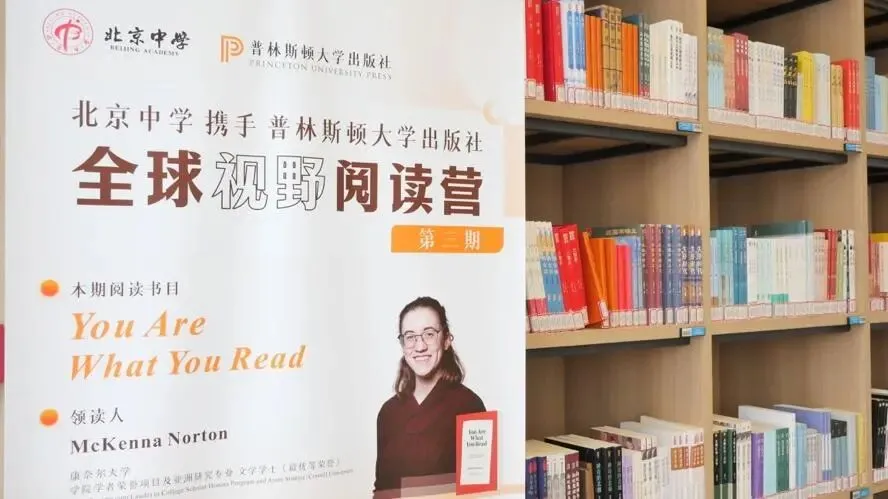
Following the inaugural launch of the "Global Vision Reading Camp" in 2025, which received enthusiastic responses from students, BAID once again partnered with a team of experts from Princeton University Press from April to June this year to officially launch the third session of the "Global Vision Reading Camp." This session welcomed teacher McKenna Norton, a Cornell University graduate, who led students in exploring the meaning and joy of critical reading through the book "You Are What You Read."
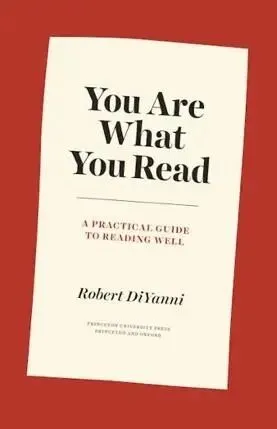
As a classic work on critical thinking and literary education, "You Are What You Read" explores how our thinking and lives are shaped by the choices we make as readers. The author, Robert DiYanni, is a humanities professor at New York University and has served as a teaching consultant at NYU's Center for Teaching Excellence. He is highly skilled at translating classic literary reading techniques into practical methods. BAID's choice of this book as the reading text reflects our hope that, under the guidance of a professional teacher, students can develop their English reading habits, train their ability to think critically in English, and improve their English output skills.
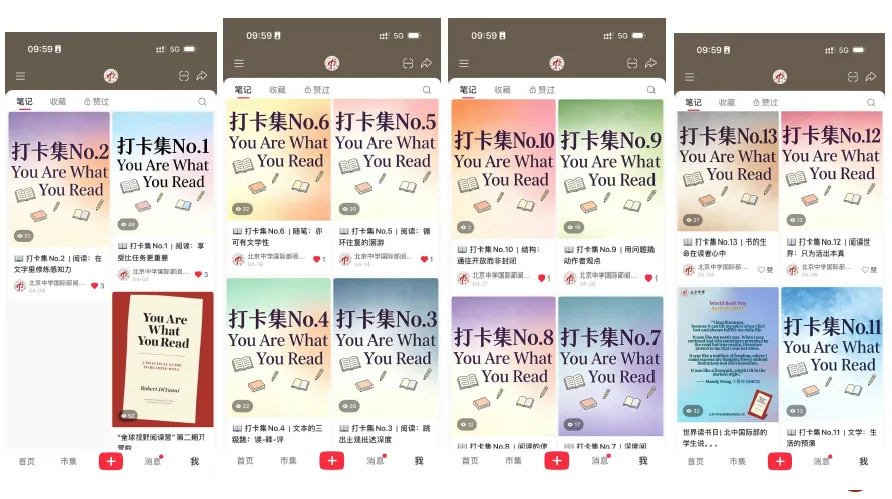
Over the two-month duration of the activity, 25 "little bookworms" not only successfully completed the 240-page book through daily check-ins, annotations, recorded questions, and weekly reflections, but also built up their own understanding and reflections on reading, book selection, and literary criticism.
Student Reading Outcomes
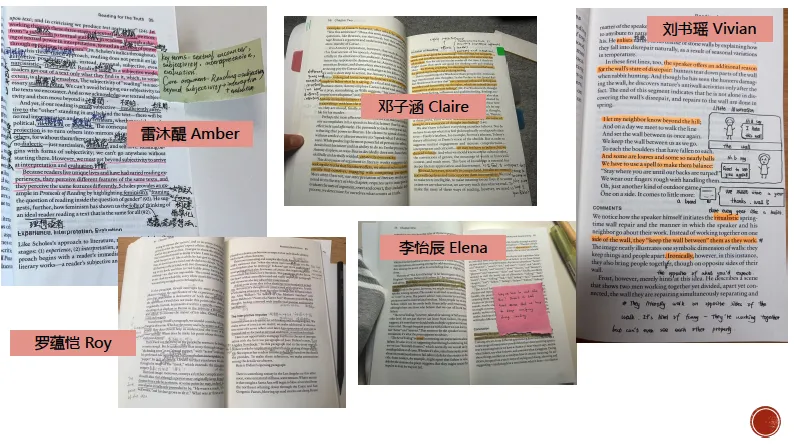
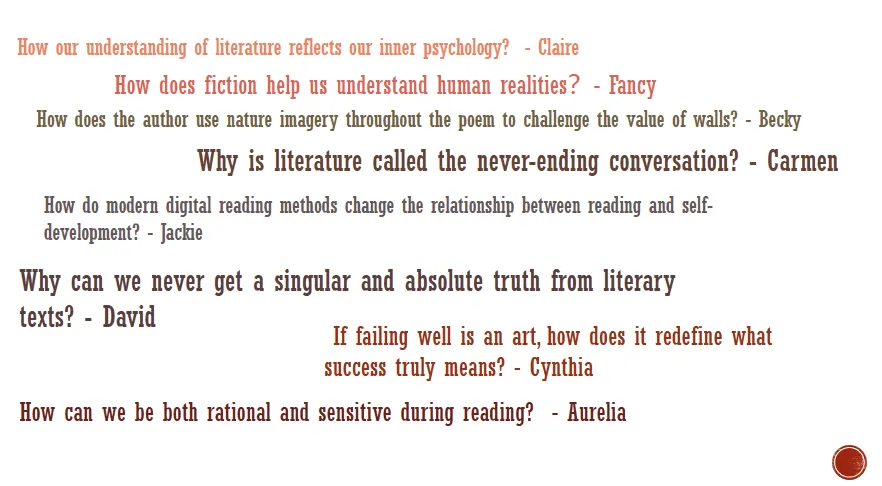
In McKenna Norton's in-person sessions, students actively participated in class discussions and applied core reading methods and tools—including tone, voice, diction, syntax, figurative language, and structure—to the analysis of various nonfiction and fiction works. Students learned to analyze poetry through the lens of genre, context, sound, and literary techniques, and to deepen their understanding of a text through the personal, analytical, and value-oriented dimensions.
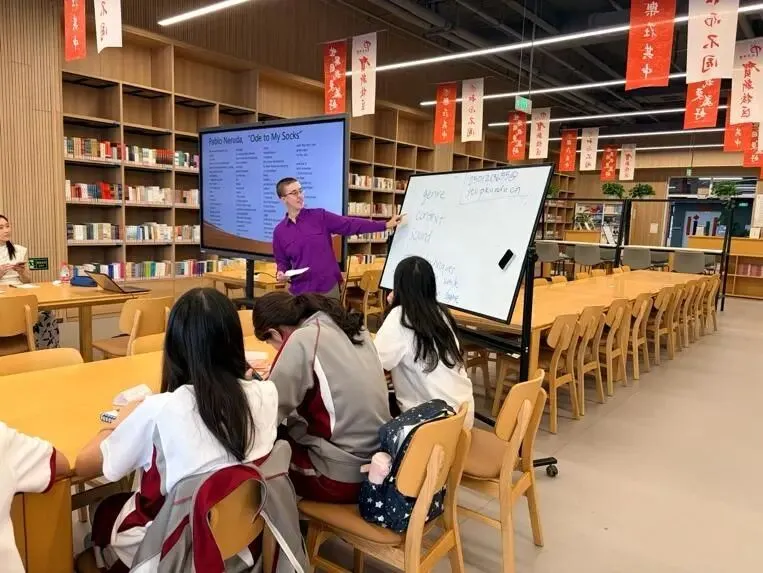
In addition to fiction, students also learned how to use the Aristotelian rhetorical concepts of logos (logic), pathos (emotion), and ethos (credibility) to analyze nonfiction works, as well as techniques for constructing "argument and evidence" in nonfiction. Students applied these classic reading methods to analyze excerpts from classic works such as George Orwell's "Some Thoughts on the Common Toad" and Montaigne's "Of Smells," and also explored excerpts by contemporary acclaimed American writers such as Alice Walker and Ta-Nehisi Coates.
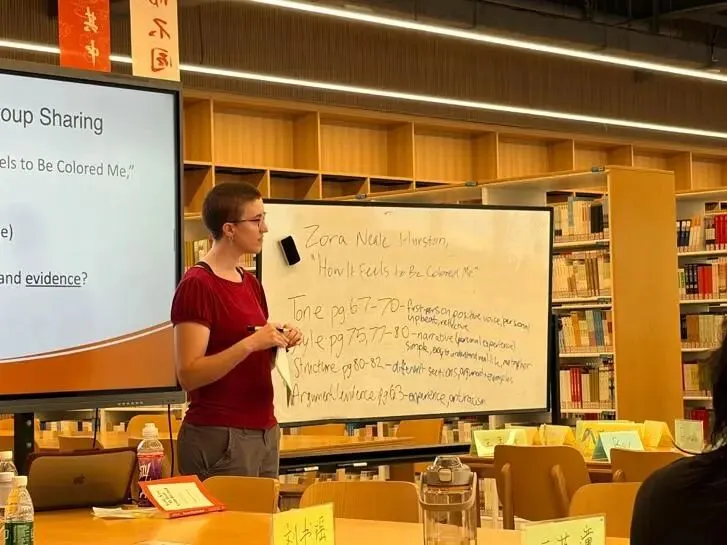
Reading is, of course, far more than technique and method—its greater value lies in the joy it brings.
Through weekly co-reading sessions in the library and McKenna's in-person classes, students also discussed the various feelings that reading brings them, including the four coexisting and mutually nourishing kinds of joy mentioned in the book: solitary vs. social, submit vs. resist, inward vs. outward, knowledge vs. wisdom.
For the first time, students gained a deeper understanding of the essential nature of "reading" from these perspectives, and developed a richer appreciation of, and stronger anticipation for, the life experiences that reading brings.
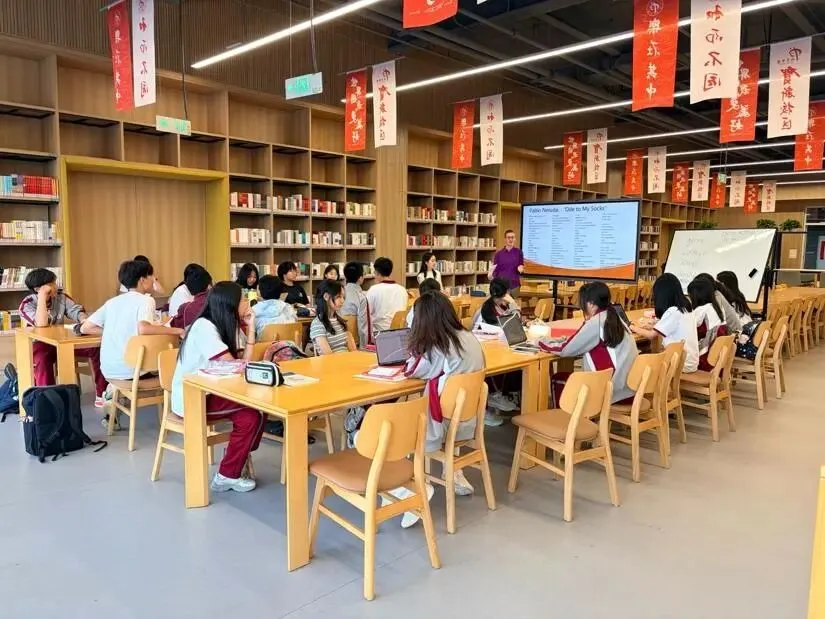
Beyond feelings, there is also thought.
Colliding with fascinating questions was also one of the most inspiring parts of class for students. For example: does every work contain a capital "T" Truth (the only truth) and lowercase "truths" (not the only one)? How do we move beyond simplistic "like" and "dislike" judgments to assess the value of a book? What are the differences between digital and print reading? What kind of impact has social media had on people's reading ability and concentration span? These questions greatly inspired students' curiosity and desire to explore, leading them to think at the value level about how to choose different types of reading material, and how to cultivate good reading habits, and improve reading taste and aesthetic appreciation in the digital age.

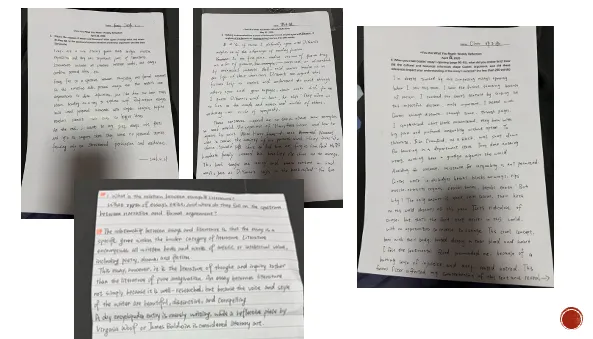
The two months of continuous reading, reflection, and discussion enabled students to apply the textual analysis techniques they had learned and their deep understanding of reading to their own favorite works in their final projects, producing high-quality short literary criticism essays. McKenna personally graded each submission and wrote comments for every student. Among them, Li Yichen, Mao Shuhan, and Ye Jingzhou achieved the highest score of 39 out of 40 and won the "EXCEPTIONAL WRITING AWARD."
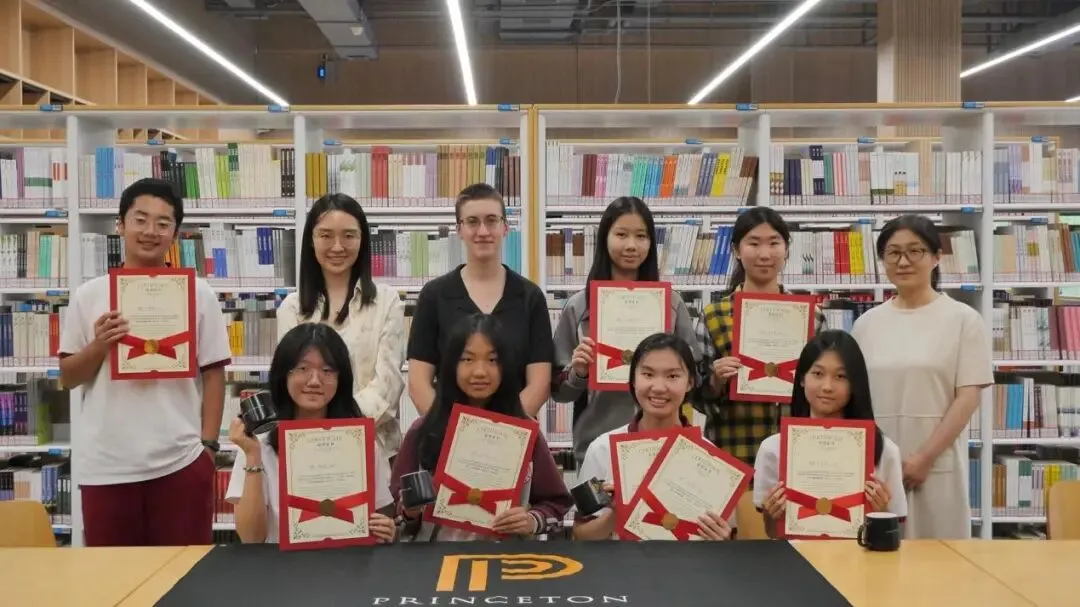
In addition, Liu Yuyao, Luo Yunkai, and Li Yichen received the "CRITICAL THINKING AWARD" for the high-quality questions they left in their daily reading check-ins; Deng Zihan, Li Zijia, Lei Muti, and Mao Shuhan received the "CLASSROOM PRESENCE AWARD" for their courage to express themselves and their willingness to share during class learning—all of which brought this session's reading journey to a perfect close.
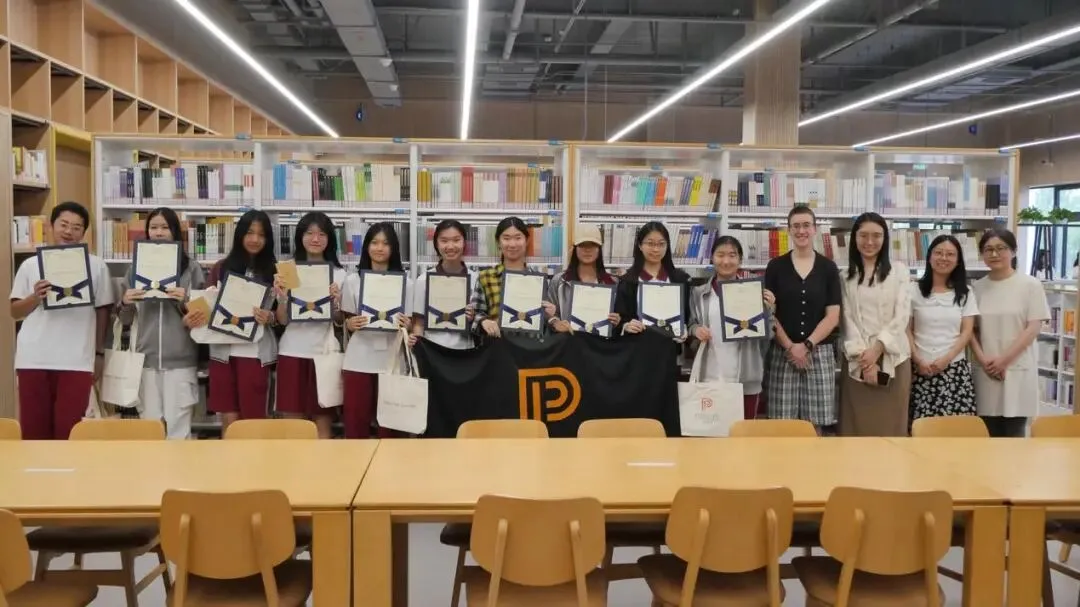
BAer have always taken books as a window to read the world, think about the world, discuss the world, and engage with the world. We believe "You Are What You Read," and we remain committed to integrating reading into every student's daily life through diverse teaching activities, so that it becomes a treasure that nourishes them for a lifetime.
Here, we would like to quote a passage from the book as a fitting close for this reading camp:
"I invite you, as a singular reader, to join in. Bring your thoughts and feelings, your ideas and personal values. Take your place in the conversation so that reading well can, indeed, help you attain a fuller and more rewarding life."
I sincerely invite you, every reader, to join us!
Bring your thoughts and feelings, your insights and values, and join our conversation and sharing—because reading can truly help you attain a fuller and more rewarding life.
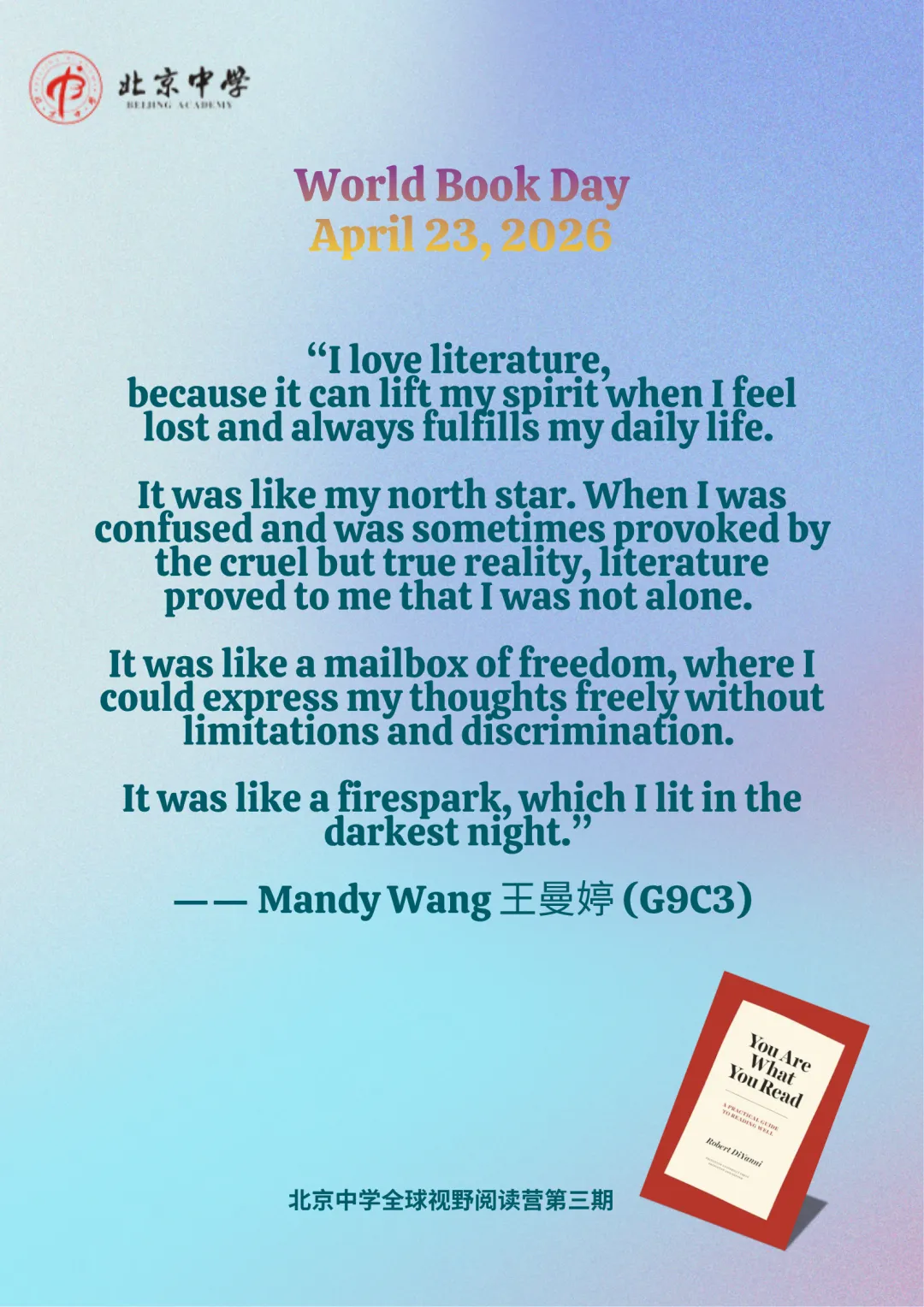
Student Reflections
Shi Yiran (Nicole):
One of the best parts of the book is that it's not full of confusing rules or hard-to-understand ideas. It's a practical guide for anyone who wants to enjoy reading more and get more out of it. DiYanni talks about simple things we can do, like paying attention to what the author is saying, how they say it, and why they wrote it. He also says that reading well takes practice, just like playing a sport or learning an instrument. The more we read carefully, the better we get at it, and the more fun it becomes.
What I liked most is that the book makes reading feel less like work and more like something good for ourselves. DiYanni writes that reading gives us a break from the busy, noisy world. When we open a book, we can escape our daily worries and go somewhere else, even if it's just in our minds. At the same time, reading teaches us to think more clearly, to ask questions, and to see things in new ways. These skills don't just help us with books—they help us in school, in our relationships, and in life.
Wang Yitong (Cici):
The real turning point came when our foreign teacher led a few sessions. Unlike the quiet, lonely reading I was used to, her classes were lively and interactive. She didn't lecture us about themes. She asked us what we thought, then challenged our answers. She shared her own wrong guesses and made us laugh. Reading suddenly felt like a conversation, not a test. For the first time, I found it genuinely enjoyable.
Now the reading camp is over, and I'm grateful for the whole journey. I came in with frustration and left with genuine interest. You Are What You Read taught me that good reading isn't about finding easy answers—it's about struggling with a text, thinking deeply, and discovering meaning for yourself. I might even read the book again, this time for pleasure.
Zhou Huancai (Selina):
The book tells us that we are not only what we read, but also how we read. One of the main points I learned is "slow reading." I used to read very fast, like running a race. But the teacher showed us how to stop at a difficult sentence, ask questions, and even disagree with the writer. That was new for me. I remember one class, we spent almost an hour on just two paragraphs from a short story. I was a little bored at first, but then I saw details I never noticed before. It feels like putting on a pair of glasses.
Also, I was shy to speak my ideas in English. But the teacher always encouraged us. She said, "Wrong ideas are better than no ideas." So I started to share my thoughts, even with my broken grammar. Sometimes my classmates laughed, but in a nice way. I learned that reading is not alone. Discussing with others makes the book come alive.
Another thing I learned is that reading alone is not enough. Discussing with others can open your eyes. In the camp, we had many discussions. Hearing different opinions made me realize that one text can have many meanings. The book says we are what we read. I agree, but I also think we are what we discuss.
Showcase of Student Works
EXCEPTIONAL WRITING AWARD — Winning Work 1
Author: Mao Shuhan (Cynthia)
Analyzed Work (Poetry)
Title: I Wandered Lonely as a Cloud
Author: William Wordsworth
I wandered lonely as a cloud
That floats on high o'er vales and hills,
When all at once I saw a crowd,
A host, of golden daffodils;
Beside the lake, beneath the trees,
Fluttering and dancing in the breeze.
Continuous as the stars that shine
And twinkle on the milky way,
They stretched in never-ending line
Along the margin of a bay:
Ten thousand saw I at a glance,
Tossing their heads in sprightly dance.
For oft, when on my couch I lie
In vacant or in pensive mood,
They flash upon that inward eye
Which is the bliss of solitude;
And then my heart with pleasure fills,
And dances with the daffodils.
This poem describes how the speaker is cheered up by a field of daffodils during a lonely walk, and carry a quiet core message: small, beautiful moments from nature can stay in our memory, and comfort us long after the moment passes. The poet does not use fancy or complicated words to force this idea on readers; instead, he uses soft, vivid descriptions to let us feel the warmth ourselves.
Following Robert DiYanni's literary analysis methods, the most powerful technique here is imagery — a concept DiYanni explains as mental pictures built by descriptive language. Wordsworth paints a bright, lively scene with details like "golden daffodils," "dancing in the breeze," and flowers as countless as "stars that shine on the milky way". These details do not just tell readers "the flowers are pretty"; they let us picture the scene in our own heads, as if we are standing beside the lake with the speaker. By turning a common natural scene into a clear, lively picture, the poet makes the joy of that moment feel real and easy to share.
DiYanni also points out that tone shows a writer's attitude toward their subject, and this poem has a gentle, noticeable shift in tone. It opens with a quiet, lonely tone — the speaker compares himself to a single cloud floating all alone. But after he finds the daffodils, the tone slowly lightens into warmth and joy, with light, active phrases like "sprightly dance" and "my heart with pleasure fills". This slow change guides readers' feelings along the speaker's experience. We do not just hear that nature is comforting; we feel the comfort step by step.
For me, this poem feels very close to my own life. As DiYanni writes in chapters 5 and 6, one of the greatest pleasures of reading is recognition — finding our own feelings and experiences in a text. Last month, I feel really upset after a bad math test, and I walked around our community park for a long time to calm down. I passed a patch of small yellow flowers swinging in the wind, and for a second, I forgot my frustration. I did not think much of it then, but now I understand: those small flowers left a little warm memory in my mind, just like the daffodils for the speaker. This poem teaches me to slow down and notice tiny beautiful things in daily life, because they can become little lights for hard days later.
This poem is simple, but it holds soft, lasting power. It not only describes a field of flowers; it also helps me see the value of small, ordinary moments in my own life. That is why this piece matters so much to me.
Mentor's Comments:
Excellent analysis, Cynthia! You did a great job of explicitly highlighting where you rely on DiYanni; you used lots of specific references from both DiYanni and Wordsworth, and your descriptions are very vivid. I also think your writing style is great; I like how you signpost your own intervention in the analysis (e.g., instead of saying "the reader feels comforted," you write at the end of paragraph three that "we feel the comfort"). This is useful analytically because it shows how you got to your conclusions.
The only thing I'd suggest changing is a few small linguistic errors; watch out for your verb conjugations! For example, in the first paragraph, "carry" should be "carries" (because we would say "the poem carries," not "the poem carry"), and in the fourth paragraph, "I feel really upset" should be "I felt really upset," because this happened in the past. Great work on this response!
– McKenna Norton
EXCEPTIONAL WRITING AWARD — Winning Work 2
Author: Li Yichen (Elena)
Analyzed Work (Poetry)
Title: A Blessing
Author: James Wright
Just off the highway to Rochester, Minnesota
Twilight bounds softly forth on the grass.
And the eyes of those two Indian ponies
Darken with kindness.
They have come gladly out of the willow
To welcome my friend and me.
We step over the barbed wire into the pasture
Where they have been grazing all day, alone.
They ripple tensely, they can hardly contain their happiness
That we have come.
They bow shyly as wet swans. They love each other.
There is no loneliness like theirs.
At home once more,
They begin munching the young tufts of spring in the darkness.
I would like to hold the slenderer one in my arms,
And nuzzle my left hand.
She is black and white,
Her mane falls wild upon her forehead,
And the light breeze moves me to caress her long ear
That is delicate as the skin over a girl's wrist.
Suddenly I realize
That if I stepped out of my body I would break
Into blossom.
In James Wright's poem A Blessing, the speaker describes a seemingly ordinary encounter with two ponies in a Minnesota pasture. What begins as a simple observation gradually develops into a profound moment of insight and emotional awakening. The selected lines form the climax of the poem and reveal its central message: moments of genuine connection with nature can transform our understanding of ourselves and the world around us.
According to DiYanni, literary analysis should consider what a text shows, what it does, and how it achieves its effects. The selected passage shows a moment of epiphany, a sudden realization that changes the speaker's perception. Throughout the poem, the speaker carefully observes the ponies and responds to their gentleness and affection. The word "suddenly" emphasizes that this realization arrives unexpectedly. An ordinary experience becomes something extraordinary, suggesting that moments of insight often emerge when we are fully attentive to the world around us.
The passage also does something important for readers. It encourages us to recognize beauty and meaning in everyday life. Wright suggests that experiences of wonder are not limited to dramatic events. Instead, they can arise from simple encounters if we remain open to them. The poem invites readers to slow down, observe carefully, and appreciate the connections that exist between humans and the natural world.
Wright achieves these effects through several literary techniques. Most notably, he uses metaphor in the phrase "break into blossom." The speaker does not literally transform into a flower. Rather, the image symbolizes growth, renewal, and spiritual awakening. Blossoms are often associated with life, beauty, and possibility, making the metaphor an effective way to express the speaker's emotional transformation. The image suggests that something hidden within him has suddenly opened and flourished.
Imagery also plays an important role. Earlier descriptions of twilight, grass, and the ponies create a peaceful atmosphere that prepares readers for the final revelation. In addition, Wright creates a contrast between the physical body and the blossoming inner self. By imagining himself stepping "out of my body," the speaker suggests a temporary escape from ordinary limitations and a deeper connection with something larger than himself.
Personally, these lines resonate with me because they capture a feeling that many people experience but rarely describe. Sometimes a beautiful landscape, an act of kindness, or a quiet moment can unexpectedly change our perspective. Wright's poem reminds me that meaningful experiences often occur when we pause and pay attention. Drawing on DiYanni's discussion of literature and life, one pleasure I find in this poem is its ability to reveal extraordinary meaning within ordinary experiences. A Blessing demonstrates how literature can deepen our awareness of the world and help us appreciate moments of beauty that might otherwise go unnoticed.
Mentor's Comments:
Elena, this is an excellent reflection! Great work incorporating DiYanni's literary techniques and using quotations from the poem. Your writing is clear and your analysis precise. I also appreciate your personal experience of the poem; your anecdote is quite vivid. Great work!
– McKenna Norton
EXCEPTIONAL WRITING AWARD — Winning Work 3
Author: Ye Jingzhou (Joe)
Analyzed Work (Poetry)
Title: The Art of Failing
Author: Robert DiYanni
The art of failing isn't hard to master.
Just draft your project with the aim to fail.
Then fail better and fail faster. Skirt disaster.
Success is fine, but no match for failing well.
Fail better, fail faster, and be smart.
The art of failing isn't hard to master.
So Samuel Beckett says about his art.
Perfection eludes us at every turn.
So fail better and smarter to forestall disaster.
You won't get anything right from the start.
Don't try. Forgive yourself; make a mess.
Avoid duress. Fail smarter to prevent disaster.
Failure, not success, is what you're after.
That's where the surprises lurk—the discoveries.
The art of failing isn't hard to master.
Court failure. Don't fear its painful pleasure.
Follow missteps—embrace them, take their measure.
The art of failing you can learn to master.
Fail better, smarter, faster. Avert disaster.
Analysis of the Poem
Most people believe failure is something bad we should avoid. However, the poet Robert DiYanni holds a totally different opinion. His main idea is simple: failing is a useful skill we can learn. If we try and fail many times, we can find new ideas and make progress. This growth means more than only chasing perfect success.
The poet uses many easy writing skills to pass on this idea clearly.
First, he repeats lines and uses a calm, confident voice. This poem follows the writing style of Elizabeth Bishop's poem One Art. The line "The art of failing isn't hard to master" appears again and again. At the very end, he changes this line slightly to "The art of failing you can learn to master". This small change tells every reader: anyone can learn to face failure well.
The whole poem only uses plain, direct statements instead of questions. Sentences like "Success is fine, but no match for failing well" sound steady and believable. They help us let go of our fear of making mistakes. Short sayings such as "fail better, fail faster" show up many times, so we can easily remember the poem's core thought.
Second, the poet mentions two famous writers to make his words more believable. He borrows the rhyme rules from Bishop's poem, which teaches people how to accept loss. The poet wants us to see failure is just like loss — both are common experiences we can get used to. He also talks about Samuel Beckett, a well-known writer who thought people should keep trying even after failing. These references prove that many great creators choose to learn from failure long before this poem was written.
Third, the poet uses special word pairs to change our old thinking. The most eye-catching phrase is "the art of failing". Normally, we link the word "art" to perfect, beautiful works. But here, "art" stands for a skill we can practice little by little. Another simple phrase "painful pleasure" is easy to understand: failure brings us uncomfortable feelings, yet it also lets us find new surprises that we cannot get from easy success.
All these writing tools work together. The steady rhyme makes the poem smooth to read. The confident tone wins our trust. Special word choices help us stop feeling scared of making mistakes. In this way, the poet successfully changes how readers look at failure.
My perspective
This poem deeply influences my daily life, and it brings two kinds of happiness from reading, as DiYanni writes in his book.
First, it brings me the joy of correcting my old, wrong ideas. I used to be very afraid of making mistakes in schoolwork or my hobbies. Whenever I messed something up, I felt ashamed and hid my faults. This poem changed my mind completely. It lets me know mistakes do not mean I am bad at something. On the contrary, messy, imperfect tries are necessary steps to learn and create new things.
Second, this poem gives me warm comfort, another pleasure of reading that DiYanni talks about. Lines like "Forgive yourself; make a mess" tell me not to be too hard on myself when I fail. Now I dare to try new things without worrying about looking imperfect. Every time I make a mistake, I write down small lessons from it. Slowly, my work becomes more creative and interesting.
This poem is closely connected to my everyday life. It takes away my fear of failure and gives me the courage to keep trying new things. It makes my study and creation less stressful and more rewarding.
Mentor's Comments:
This is an excellent response, Joe! Your analysis of the poem is great, and I'm impressed by your interpretations of the allusions to Bishop and Beckett. Your personal anecdotes are also quite vivid, and I appreciate how you used the literary techniques the poem uses to lead into the effect it has on you. What you called "special word pairs" in this piece actually has a name in English; we'd call these paradoxical pairs of words oxymorons!
– McKenna Norton
This AI translation is provided for reference only. Please verify with original Chinese version.