#SummerAtBAID: Flying, Exploring, Decoding—A Meeting at Tongdao's Green Mountains
In February 2026, two BAID faculty members boarded a train south for Tongdao Dong Autonomous County in Huaihua, Hunan Province, a place tucked among the mountains of western Hunan and deeply rooted in Dong culture. The visit grew from an introduction by Research Professor Li Yonghui of the Institute of Psychology, Chinese Academy of Sciences. After arriving in Tongdao, the teachers were accompanied by Lin Liangbin, Vice Chairman of the Tongdao County Committee of the Chinese People's Political Consultative Conference and a researcher of Dong culture, with substantial support from the county education bureau. Over five days, they visited Tongdao No. 2 Middle School, Yatunbao Middle School, Pingtan Primary School, and Tongdao No. 1 High School, speaking at length with principals and teachers in search of the most meaningful point of connection between 'what we can do' and 'what local students genuinely need.'
After the visit, the project quickly moved into substantive planning at the school level. BAID submitted a formal proposal for a summer student social practice program in Tongdao County, specifying the schedule, participants, and safety arrangements. At the same time, the school held repeated online discussions with the Tongdao County Education Bureau, eventually establishing Huangdu Primary School and Pingtan Primary School as the two program sites and designing a seven-day framework centered on co-creation between students from Beijing and Tongdao.
To ensure that the program would reach beyond a brief visit, pre-departure training was given equal importance. BAID arranged three intensive training sessions for the ten participating students. Gao Zhenhong, Vice Principal of the Business District Experimental Primary School of Beijing Academy and a nationally recognized Chinese Language Arts teacher, led training in teaching skills and curriculum design, guiding students from learner analysis through lesson rehearsals. Professor He Beili of the School of Experimental Art at the Central Academy of Fine Arts introduced methods of field research, emphasizing 'understanding, respect, and equal companionship.' Professor Zhang Jie, a master's supervisor at the Communication University of China, led a seminar on media literacy among rural children, providing an academic foundation for the project. Zeng Xueqiao from the BAID Library also advised students on activities for the Pingtan Reading Room, while the students independently researched Tongdao's local history, culture, and Dong traditions. Step by step, the training developed into three action teams focused on science and technology exploration, cultural creativity and nature, and literature and reading, covering ten project areas including model aviation, science experiments, ethnic motifs, nature field guides, and poetry. Under faculty guidance, the students developed complete implementation plans.
From field visits to formal proposals, from training to final plans, this journey had already acquired real weight before anyone departed. On July 7, 2026, ten BAID students shouldered their bags and boarded a high-speed train, crossing much of China toward the green mountains of Tongdao.
Over the week ahead, they would connect learning with a series of lively classes. Their cheeks would redden beneath the sun on village paths; they would be moved by Dong songs beside covered bridges; and at the moment of farewell, handwritten letters from local children would bring more than a few of them to tears. More importantly, they left believing they were going there to give, only to return realizing how much they themselves had received.
The story begins with three groups of young people. The first: Flying, Exploring Decoding—A Meeting at Tongdao's Green Mountains.
On the evening of July 13, we boarded the high-speed train from Tongdao back to Beijing. Our suitcases were stuffed with letters written by the children, handmade Dong auspicious flowers, and memory cards filled with photographs. Our seven-day co-creation program in Tongdao Dong Autonomous County had come to an end, yet the stories that unfolded beneath its green mountains and blue skies remained more vivid in our memories than those of any ordinary journey.
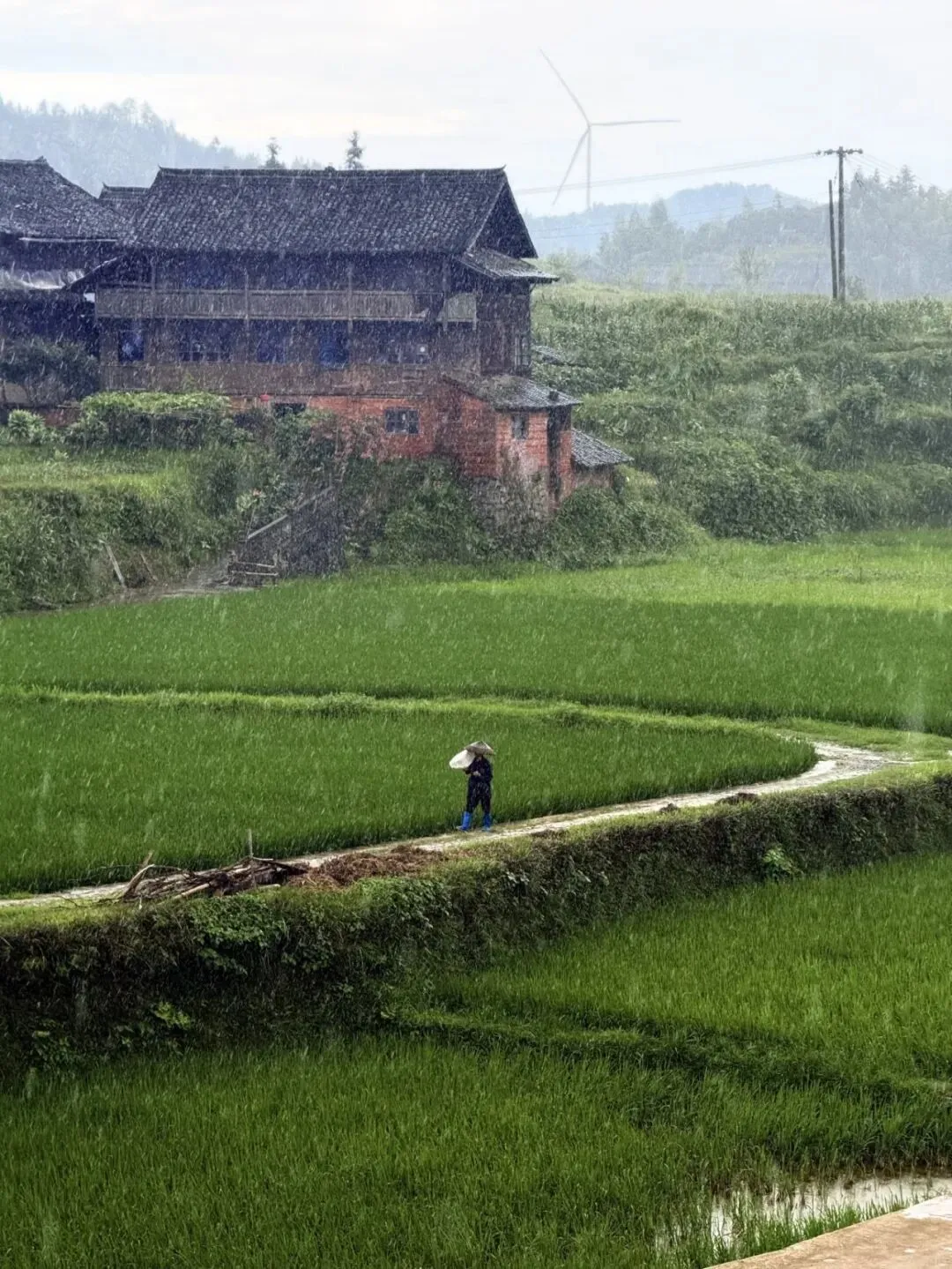
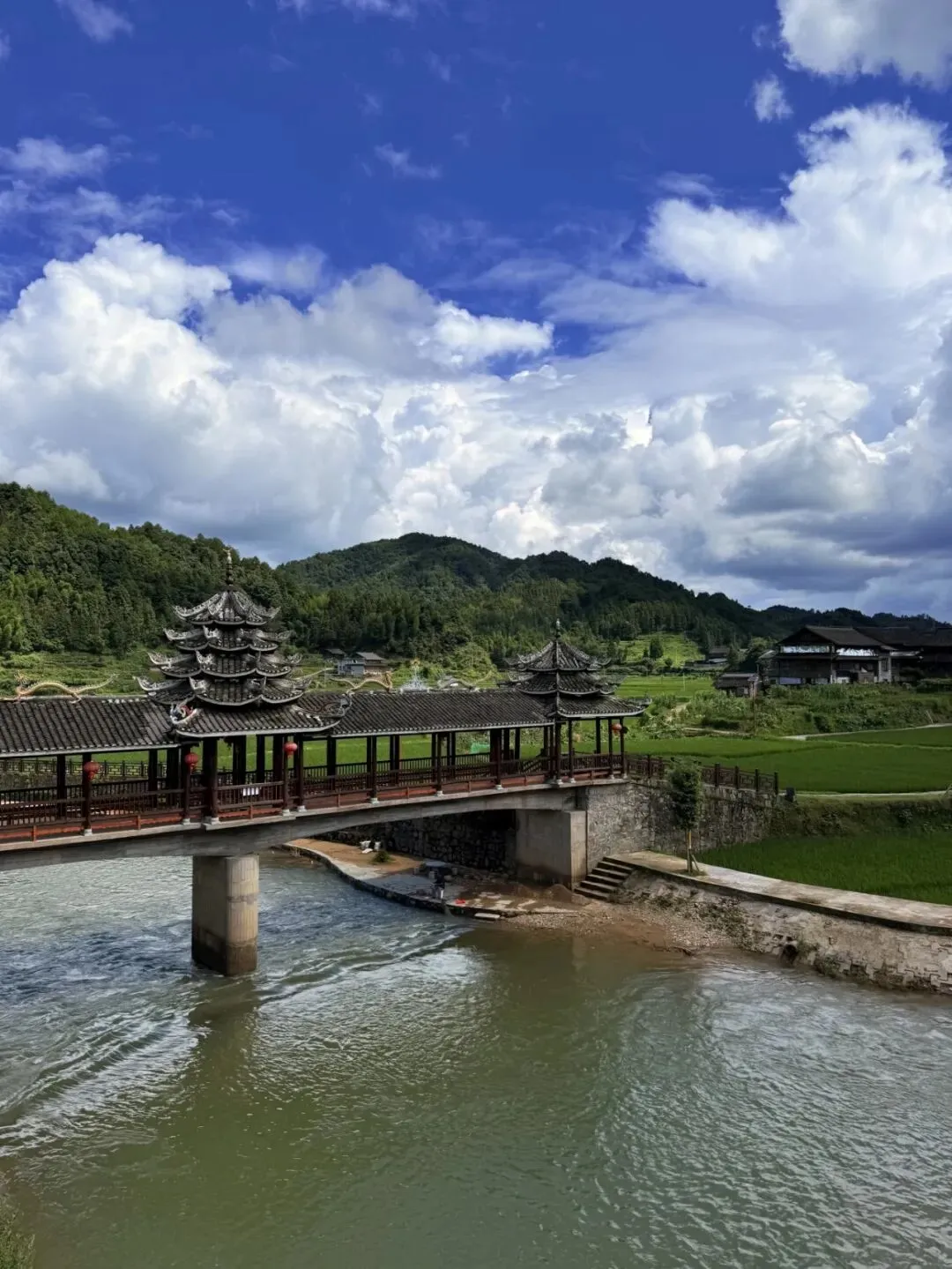
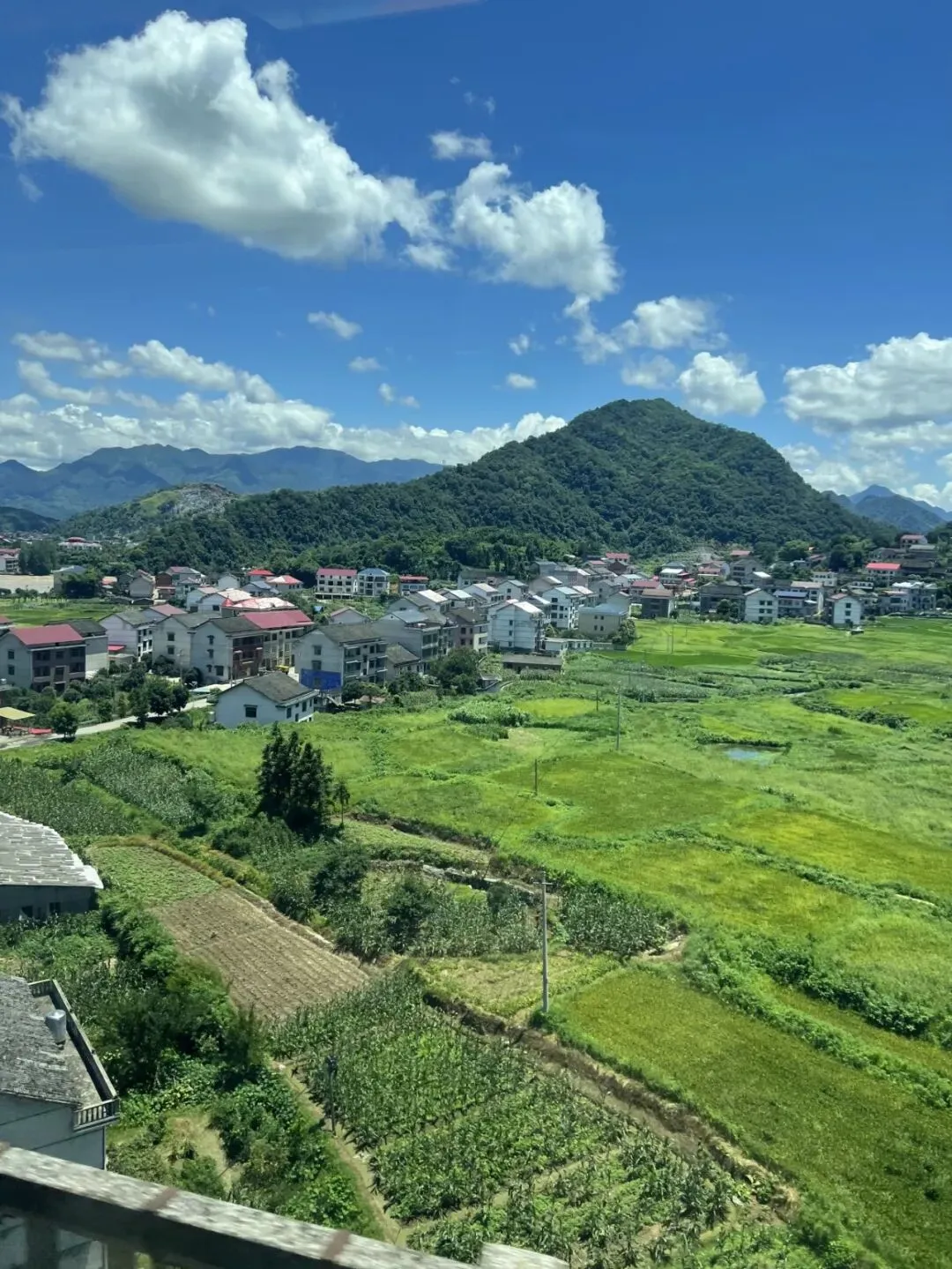
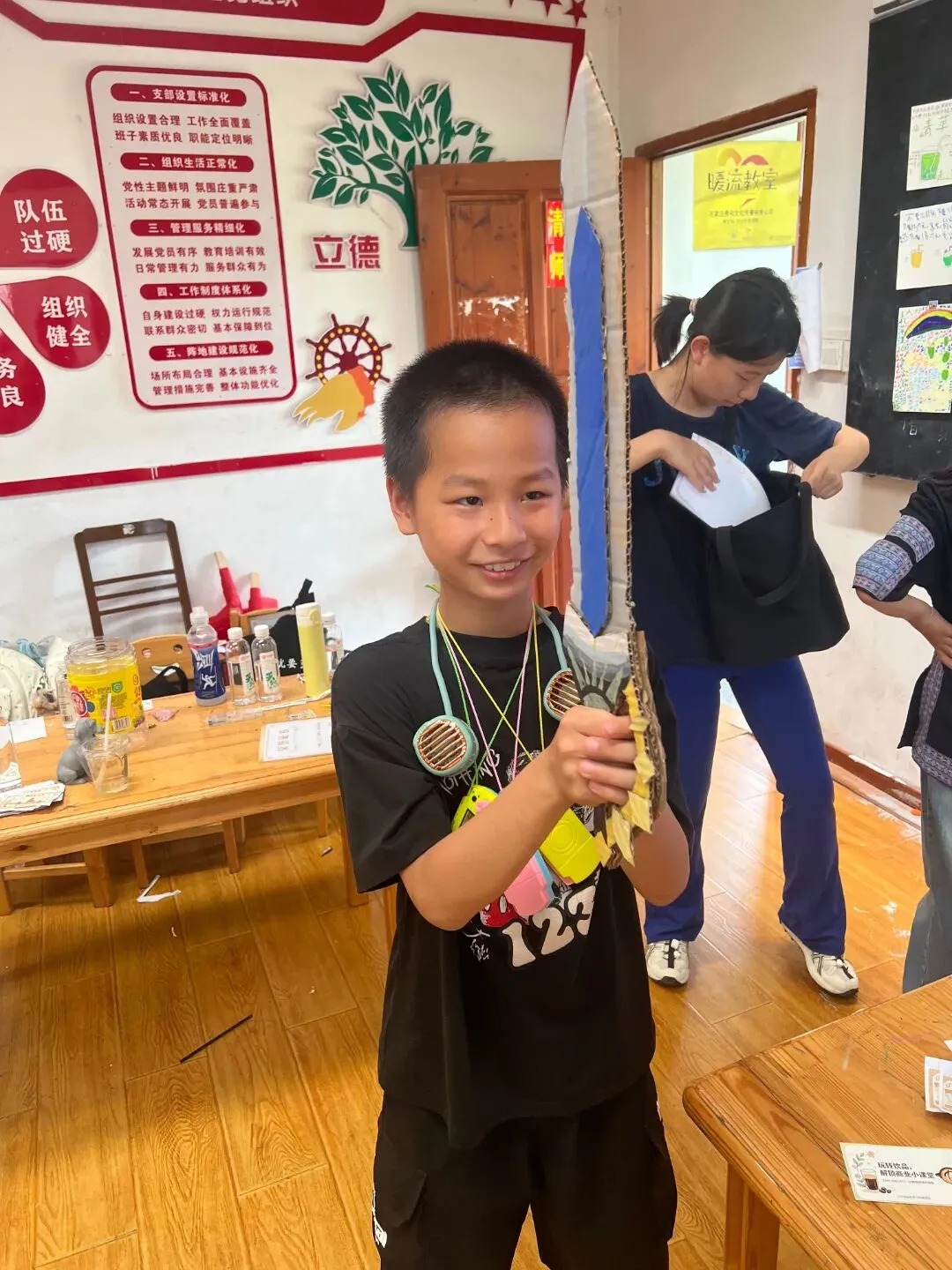
Before leaving Beijing, we had already divided our roles clearly. Li Xiaoyao would lead the model aviation and 3D modeling courses, Nie Ruize would take charge of hands-on physics experiments, and Liu Yunqian would introduce the children to cryptography. We never wanted this to become a one-way transfer of knowledge. Through hands-on co-creation, we hoped to plant a seed of curiosity in the children, giving them the genuine satisfaction of making something with their own hands and allowing that feeling to compete with the brief excitement of online games. We wanted them to glimpse a wider world beyond the classroom. During our pre-departure training, we learned that younger children can sustain attention for only limited periods, and that newly awakened curiosity is both fragile and precious. From the first day, therefore, we committed ourselves to patience, positive encouragement, and a slower pace: praise often, never rush, never dismiss a question, and receive every burst of enthusiasm with care.
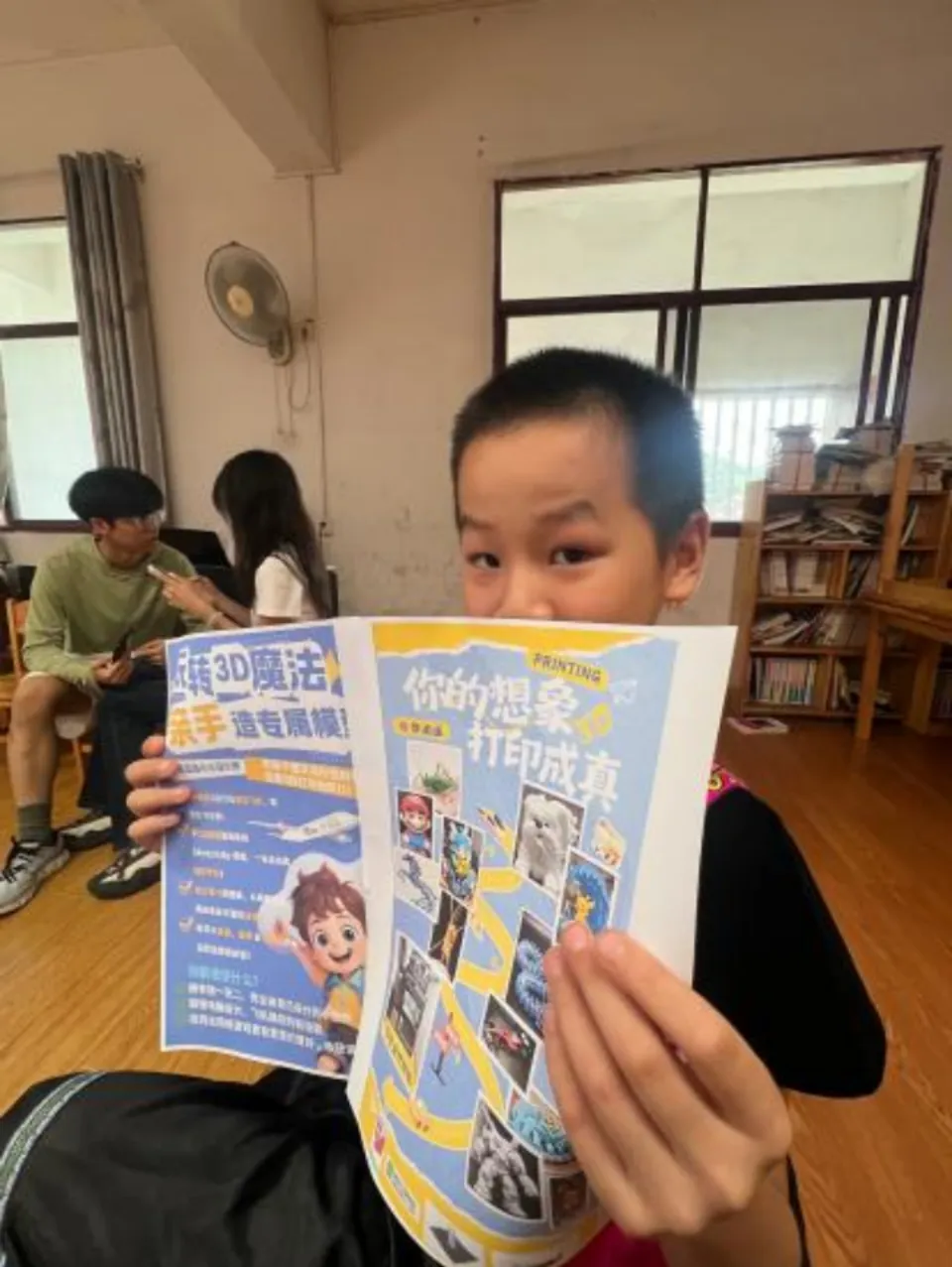
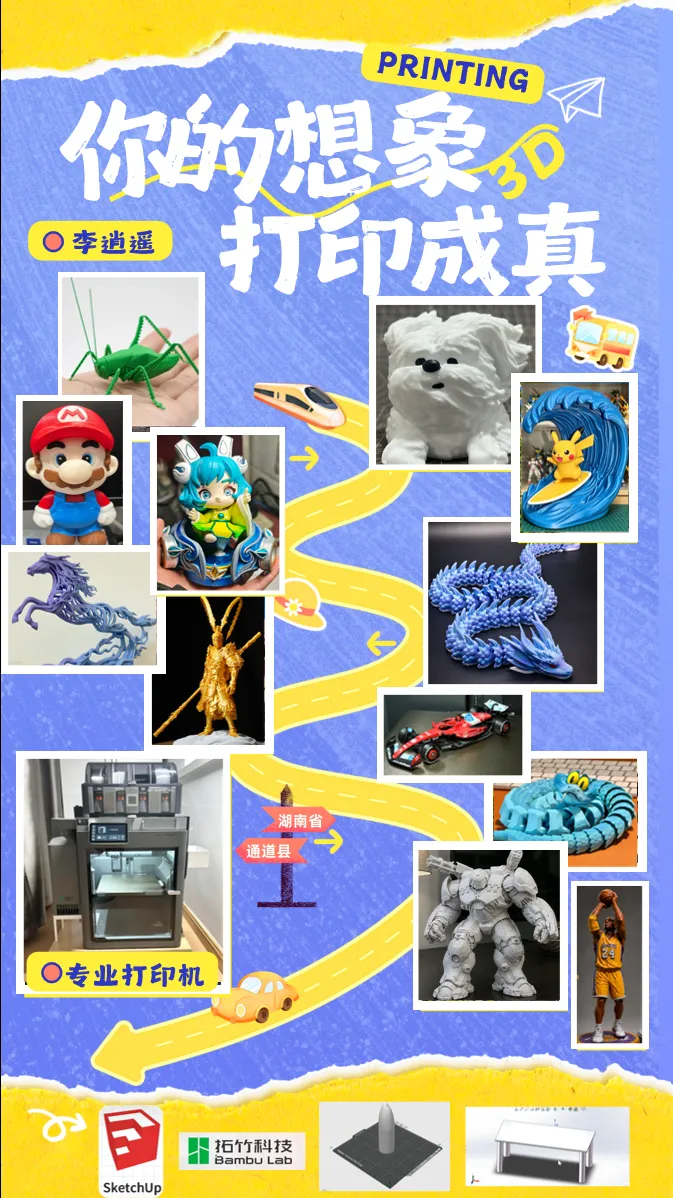
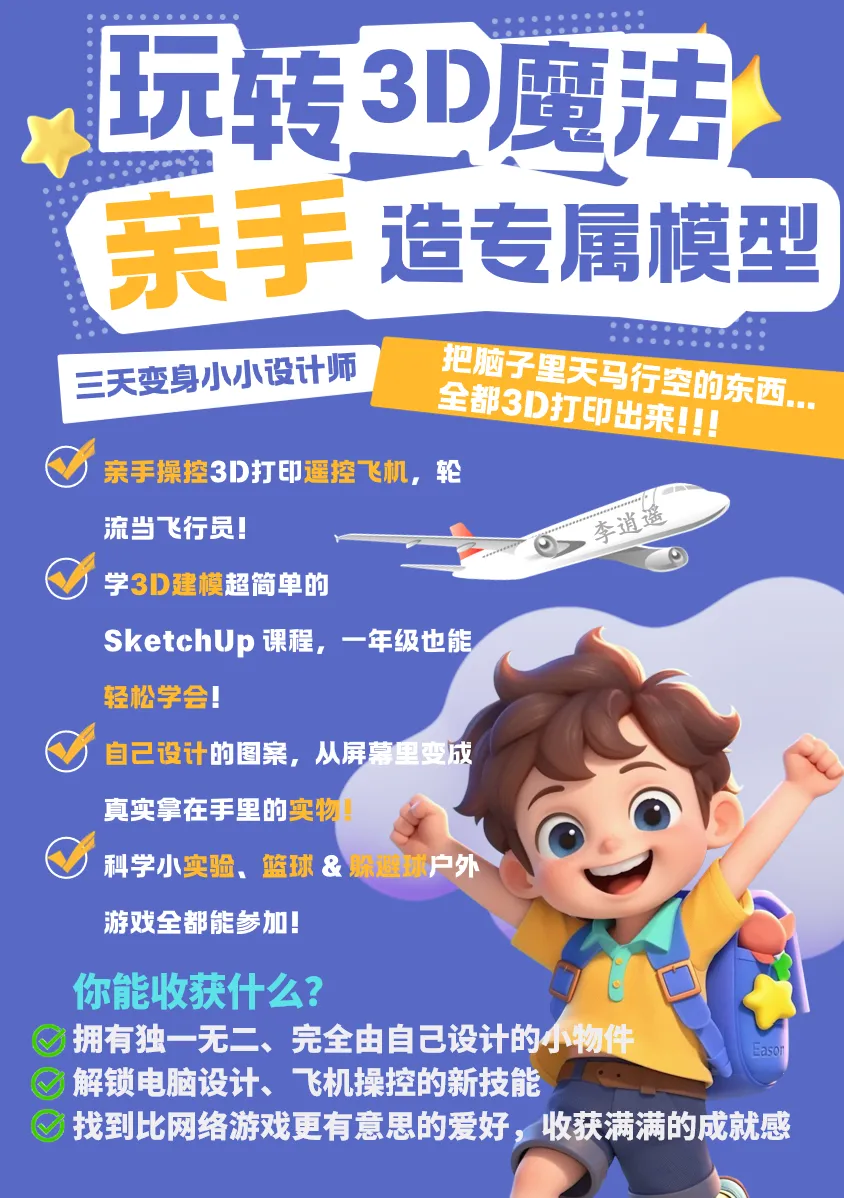
I. Model Aircraft Take Flight: Clouds of Hope over the Dong Countryside
On the first day of formal classes, Li Xiaoyao carried an RC aircraft onto the playground. Tongdao's weather was even better than we had imagined. The sky was a clear, brilliant blue, low clouds resting above the distant mountain ridges, while the breeze carried the clean scent of rice paddies and vegetation. Holding the aircraft he had assembled and tuned himself, Li walked to the center of the playground and prepared to begin our first lesson in aviation.
The children soon gathered around in twos and threes, the small circle gradually tightening. Yet they remained strikingly reserved. With clear, curious eyes, they studied the aircraft closely, their gaze moving across its wings, fuselage, and tail. Everything about it seemed new to them, but no one dared touch it. A few children edged half a step forward, raised a hand uncertainly, hesitated for several seconds, then quietly withdrew it and continued watching. It was easy to see that these children from the mountains held a pure and powerful longing for an unfamiliar world of aviation.
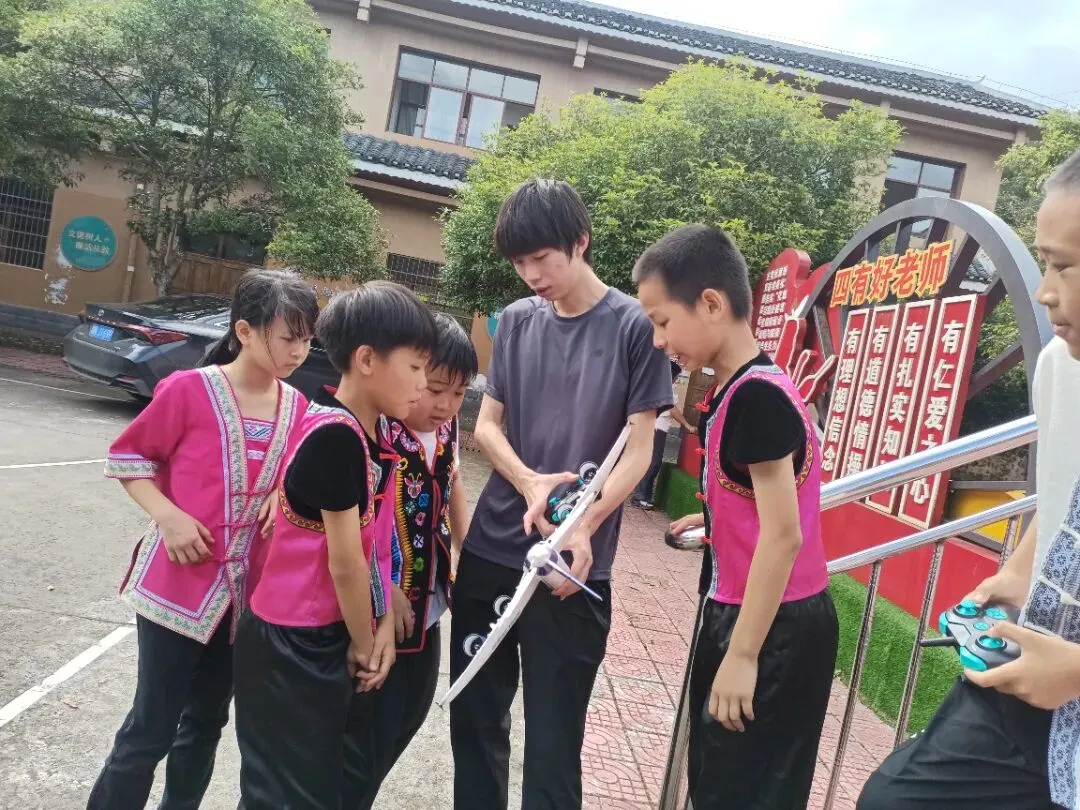
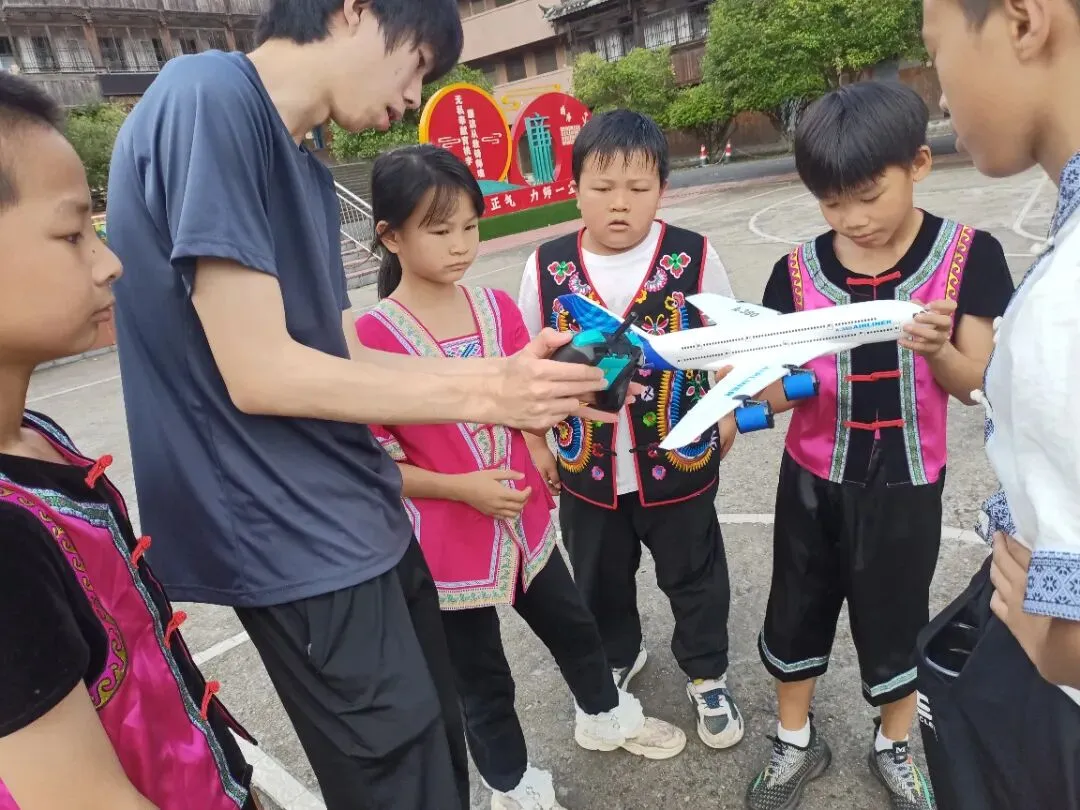
To ease their hesitation, Li Xiaoyao opened the controller and patiently explained its buttons and joysticks one by one. Smiling, he told them, 'Don't worry about breaking it. Today, this plane belongs to all of us. Every one of you will get to fly it into the sky.'
The moment he finished speaking, the silent playground erupted. Cheers rang out across the open air and echoed among the hills. Li then guided the children one at a time, hand over hand, from controlling the throttle to making small directional adjustments. He slowed every movement down, demonstrated repeatedly, and corrected mistakes as they appeared.
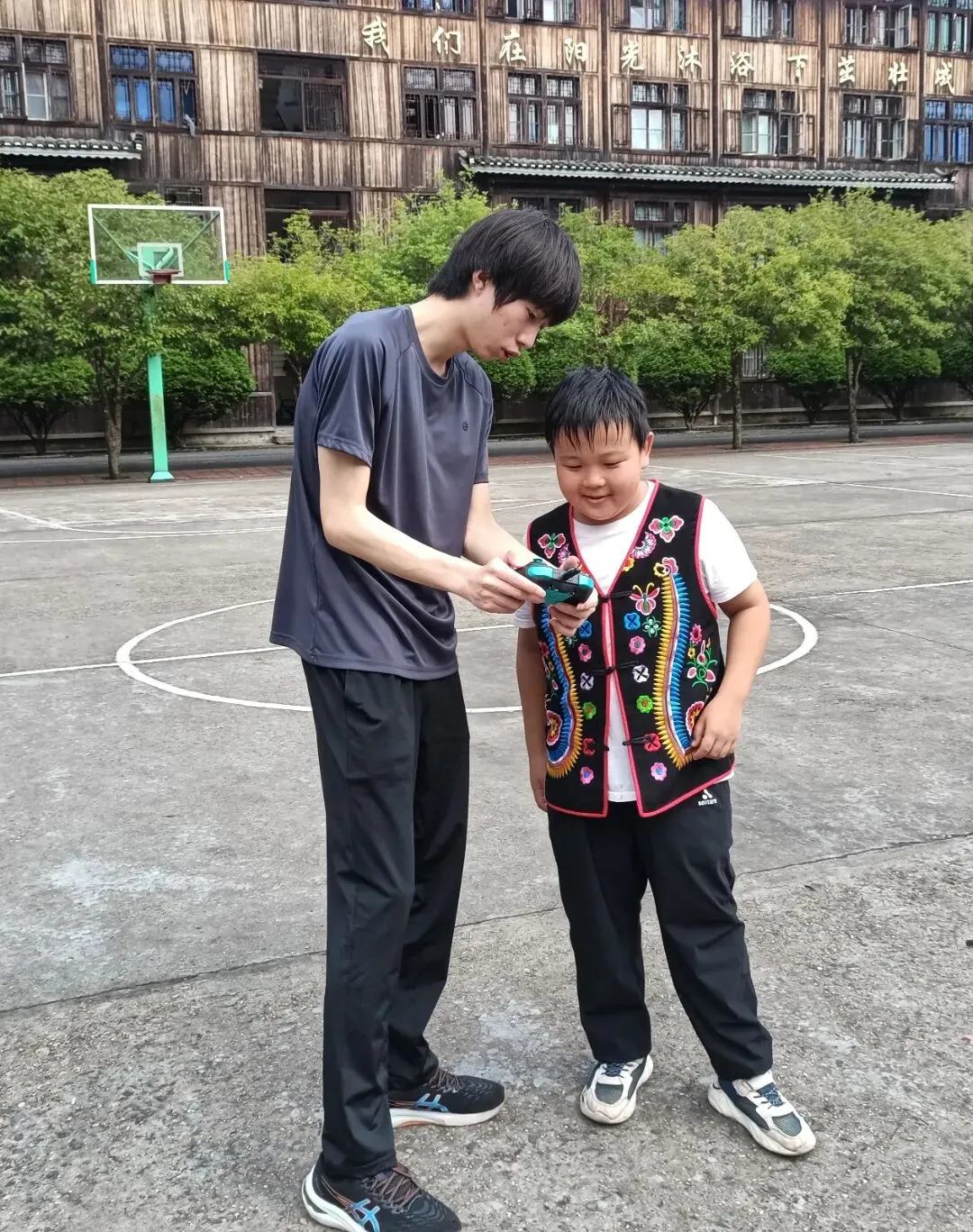
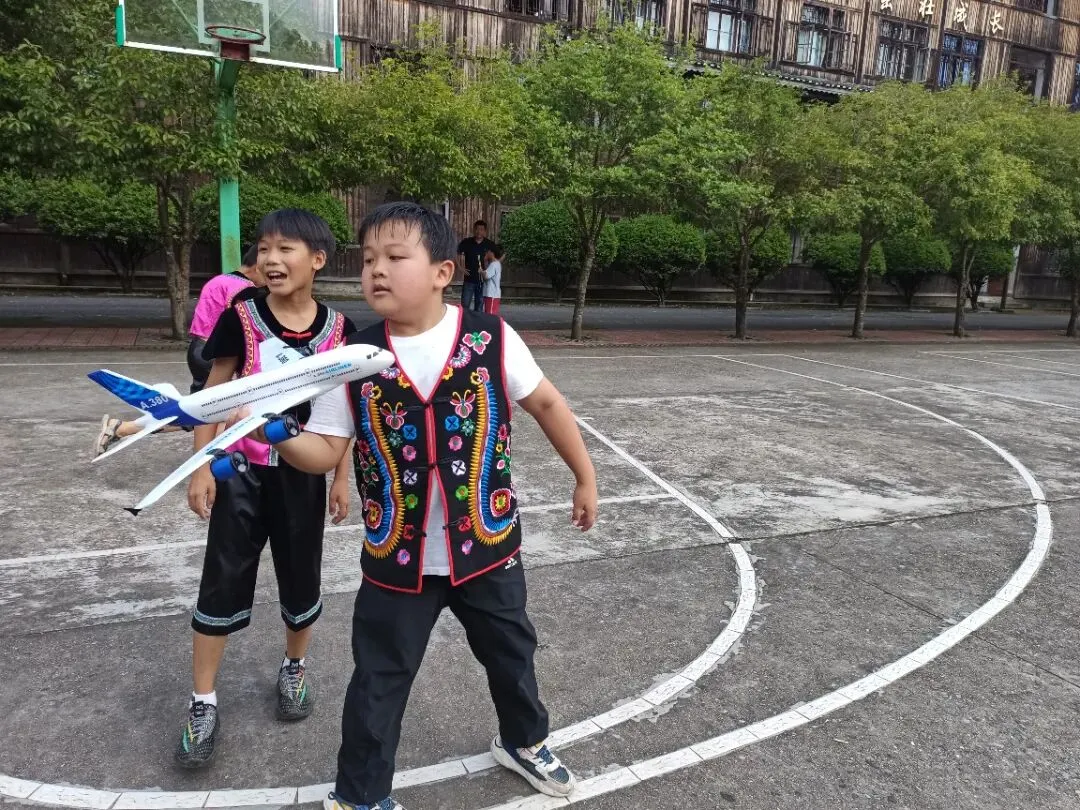
Most of the children were nervous the first time they took the controls. One little boy gripped the controller so tightly that his palm was slick with sweat. The instant the aircraft lifted slightly from the ground, panic flashed across his face. He stopped moving the stick and looked up at Li Xiaoyao helplessly. Li immediately crouched beside him, gently steadied his hand, and said, 'Don't worry. Keep your hand steady. The plane is stable. I'm right here.' Together, they adjusted the pressure little by little and worked on direction until the boy began to find the rhythm of the controls.
The children learned far faster than we had expected. With patient guidance and encouragement from their older schoolmate, their nervousness quickly faded. After only two or three rounds of practice, unfamiliar movements became increasingly natural, and one child after another learned to guide the aircraft steadily through turns and gentle circles across the clear blue sky. As the plane cut through the wind and swept past the clouds in graceful arcs above the mountains, their faces lit up with unmistakable pride and excitement. Standing beside them, Li watched those bright expressions and felt a warmth that was difficult to put into words.
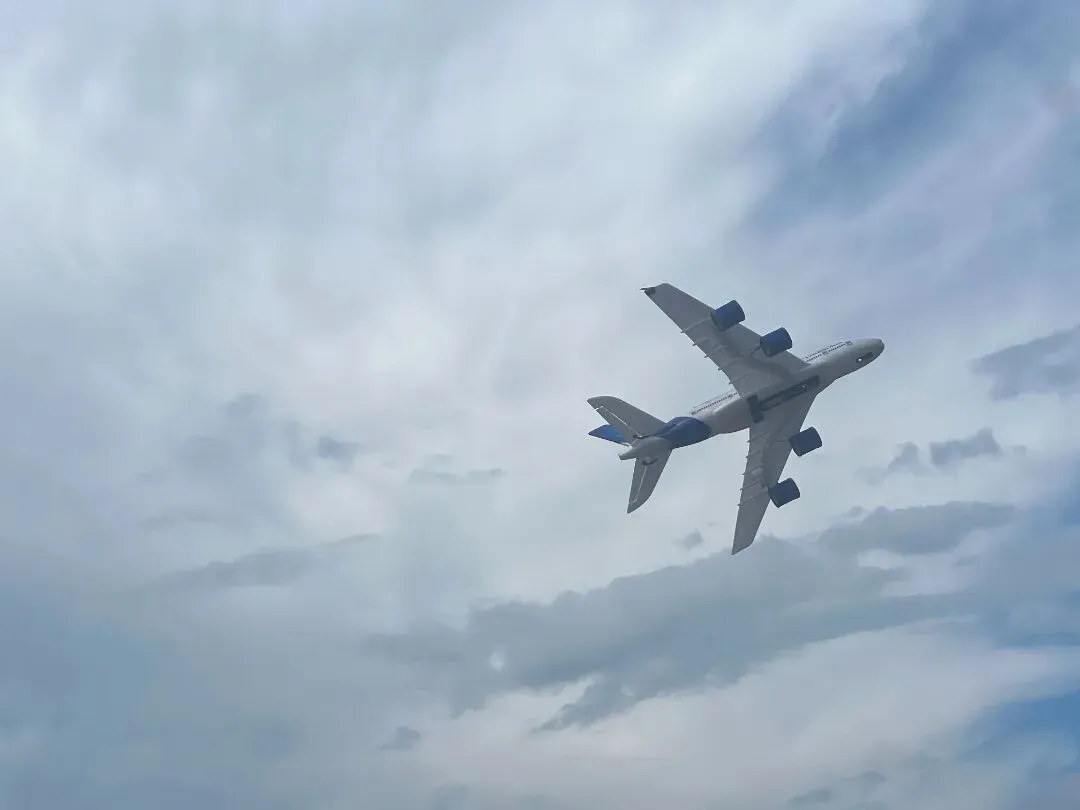
From that day onward, the model aviation course completely captured the children's imagination. The aircraft became the most sought-after 'treasure' in the entire school. During lunch breaks, ten-minute intervals between classes, and even free time after school, children would rush toward the playground, eager to take the controller and fly again. Summer sunlight reddened their cheeks and darkened the backs of their necks; sweat gathered across their foreheads. They barely seemed to notice. Their eyes remained fixed on the aircraft overhead, absorbed in the joy of making it fly.
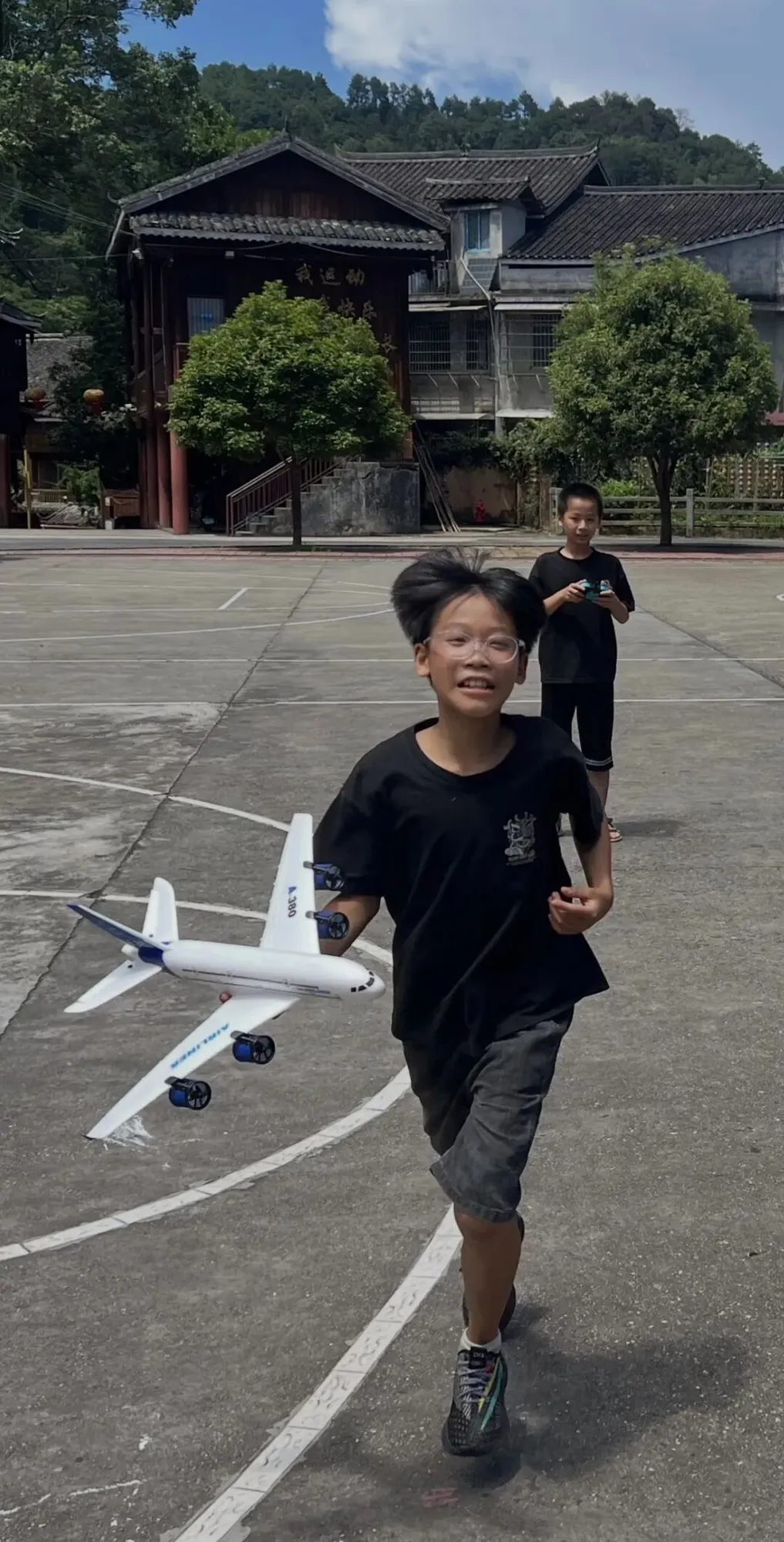
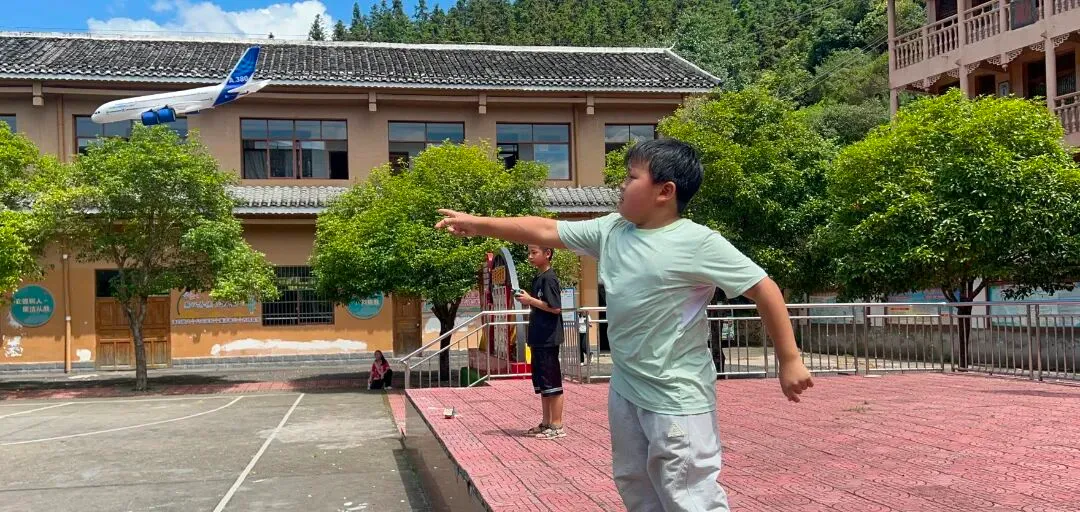
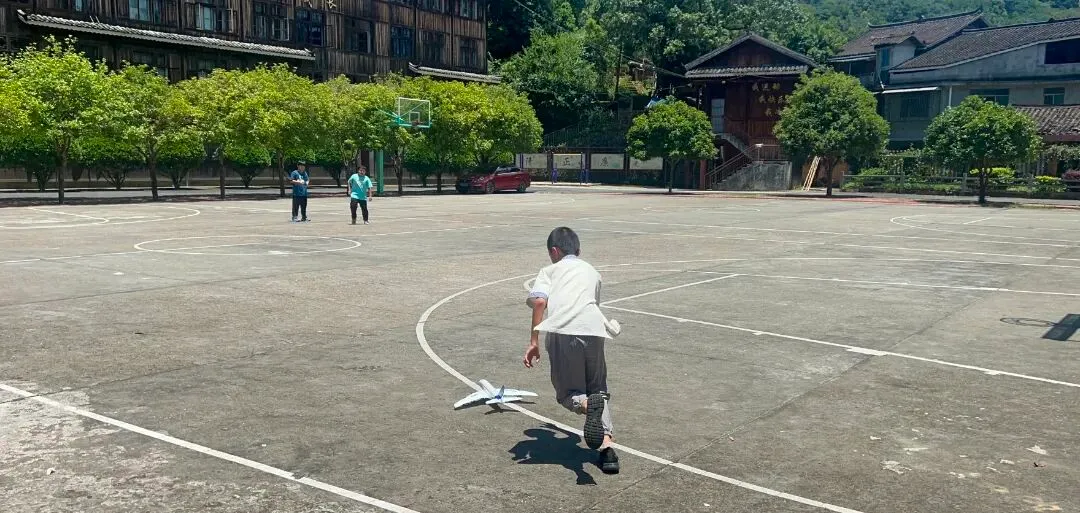
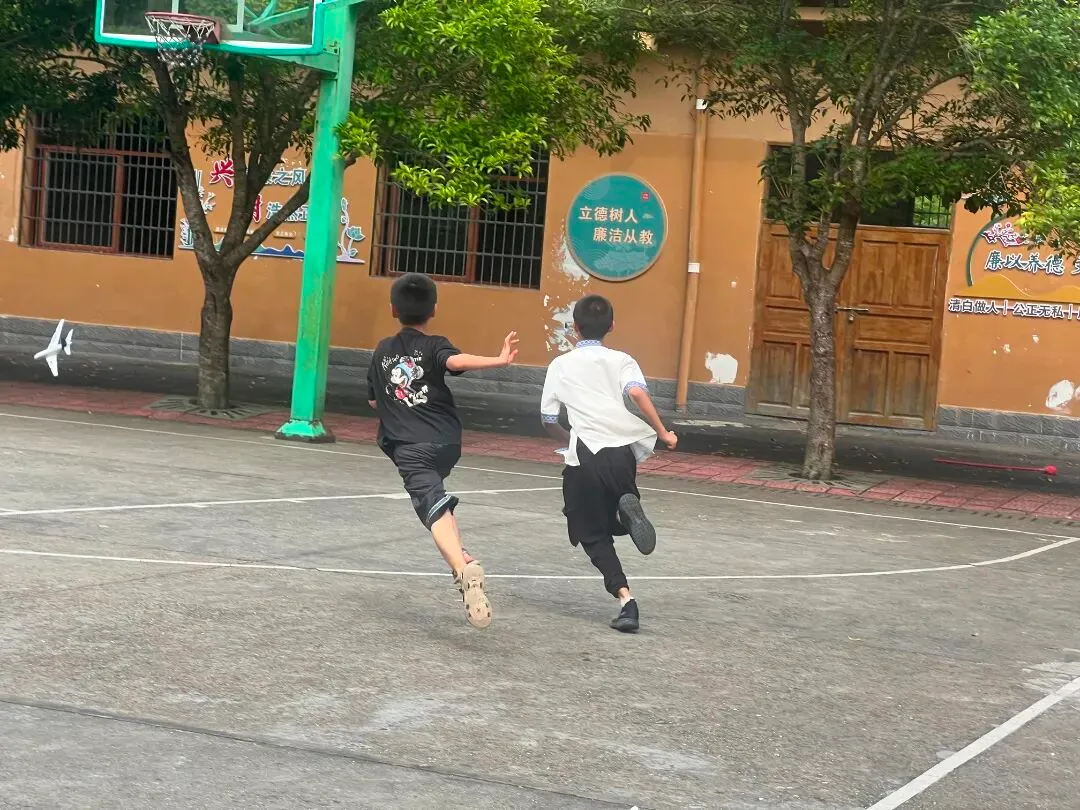
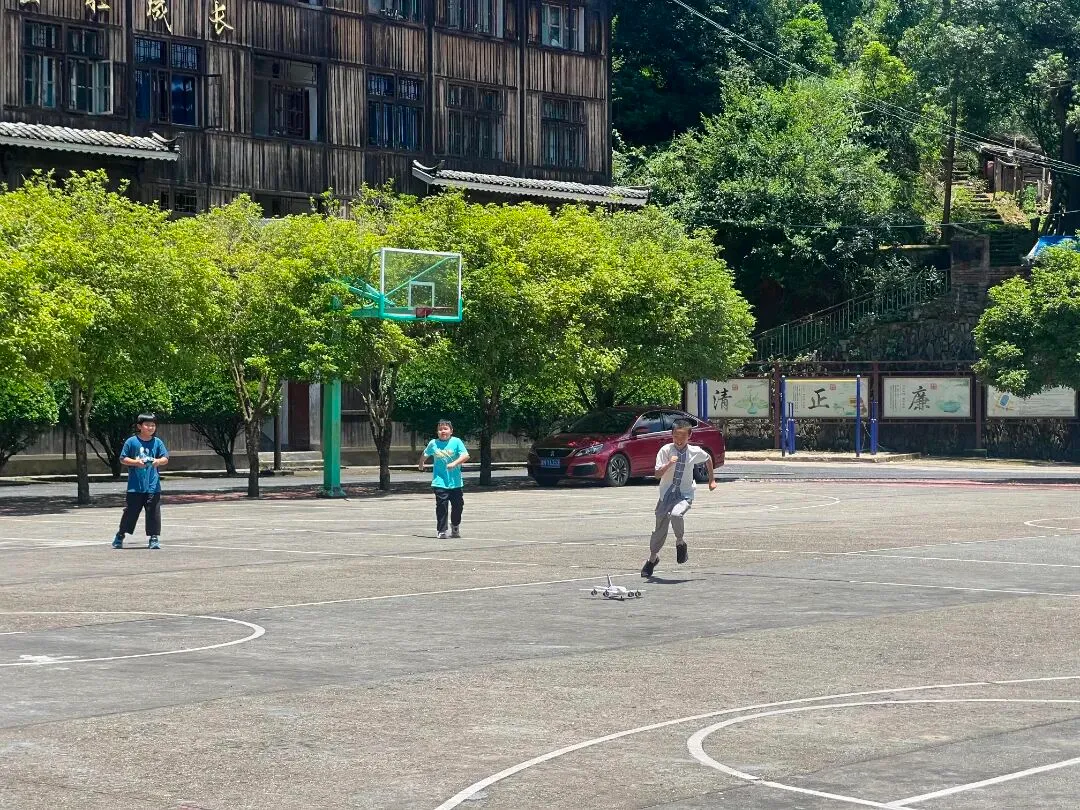
Only later did we learn that most of these children had never traveled beyond the mountains of the Dong countryside. Many had never been on a real airplane, and some had rarely even seen a commercial airliner passing overhead. To them, 'airplane' had largely been two characters printed in a textbook, something distant and unfamiliar.
After each flight session, Li Xiaoyao would sit with the children on the steps beside the playground and talk. He introduced them to commercial aviation, explaining that an ordinary passenger aircraft might carry two or three hundred people toward destinations far away. He told them that the blue sky above them was never truly empty: at any given moment, roughly eight to fifteen thousand aircraft could be flying around the world.
Whenever they heard things like this, the children would widen their eyes and part their lips in disbelief. They crowded around their young instructor and fired off question after question: 'What does it look like above the clouds?' 'How fast can the fastest airplane fly?' 'If a plane flies that high, can it get lost?' 'What does the C919 in our textbook actually look like?' To satisfy their curiosity, Li handed around copies of Airliner World that he had brought especially for the trip. After several days of constant reading, the corners of the magazines had begun to curl, each page carrying traces of the children's repeated exploration. He also replayed videos from air shows, introduced them to more than a century of aviation history, explained advances in modern flight technology, and helped them see a wider sky filled with possibilities they had never encountered before.
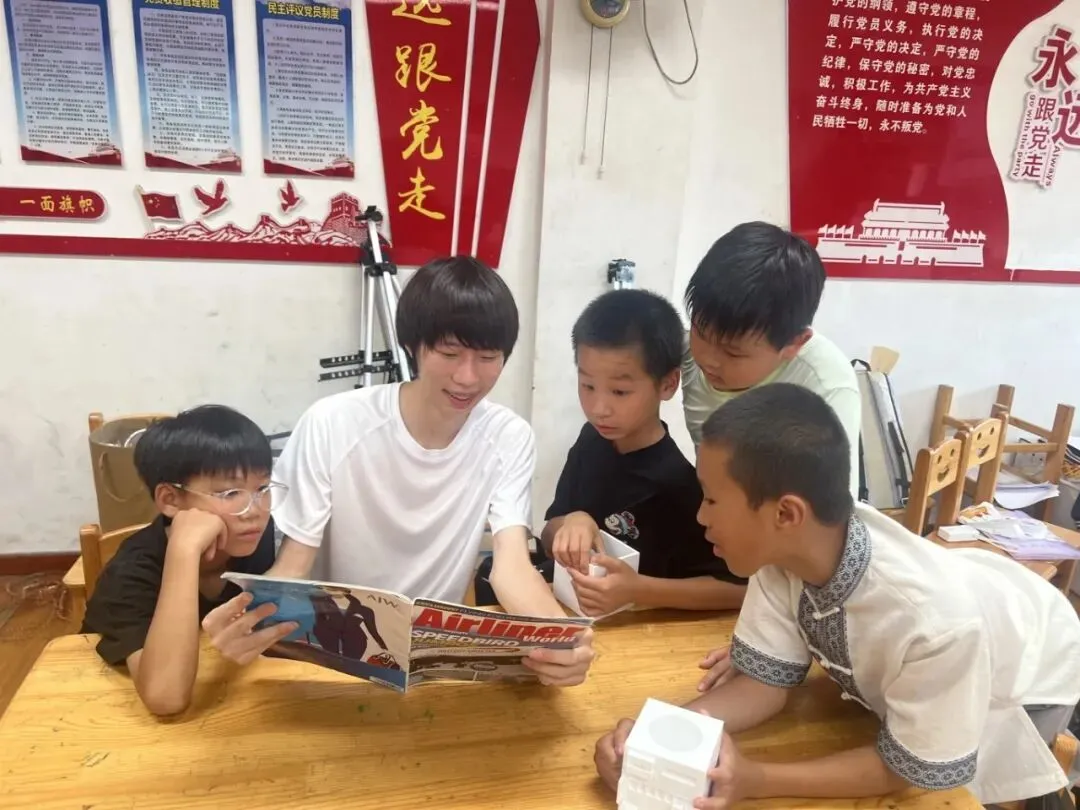
Watching the children gather around him, listening with complete concentration and eyes full of expectation, Li Xiaoyao reflected:
I have been fascinated by aviation, aerospace, and mechanical design since I was little, and for years I thought that passion belonged only to me. But on this playground in the Dong countryside, looking into the clear eyes of these children, I finally understood what this experience could mean: opening a window for them, even just a little, toward a wider world and a vast universe they might one day explore for themselves.
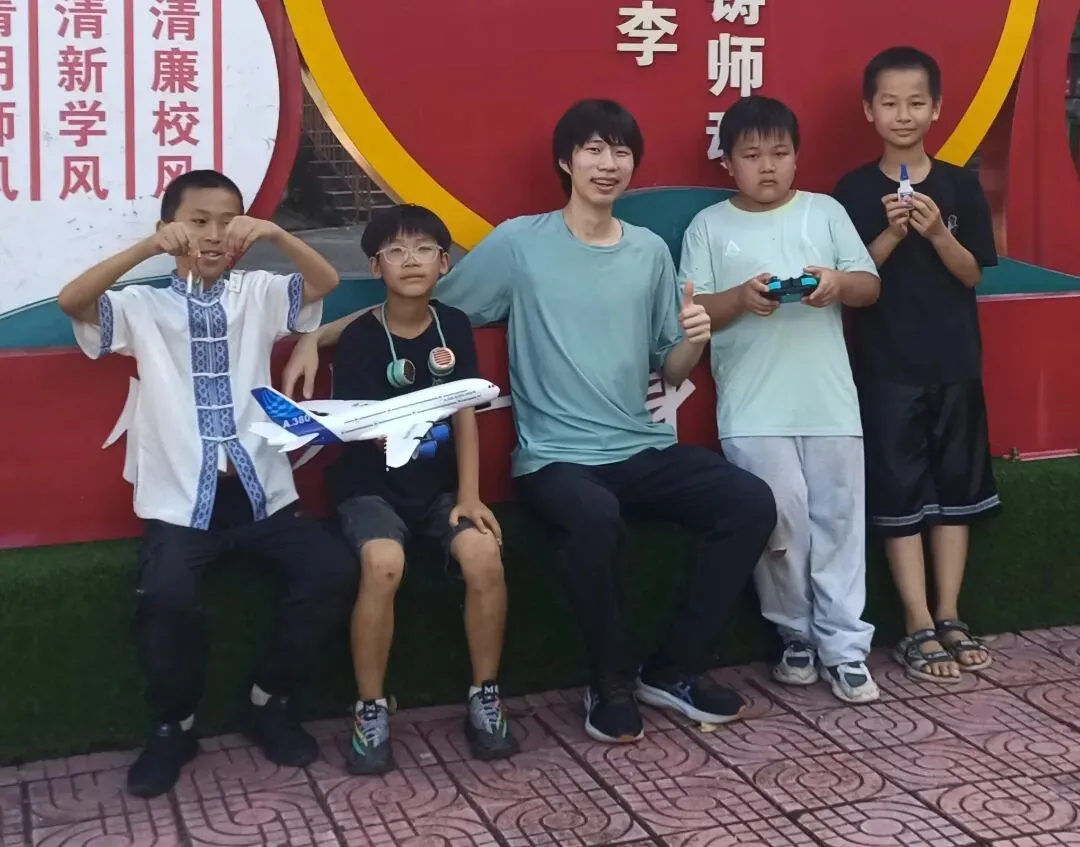
II. The Physics Lab: Touching Scientific Principles with Their Own Hands
Nie Ruize was responsible for the hands-on physics sessions. Before departure, he had packed an entire bag of equipment, breaking abstract physical principles into small experiments that children could build and manipulate themselves, allowing them to discover patterns through trial and error.
For the first experiment, he took out a copper ring, a battery, and two round neodymium magnets. He attached one magnet to each end of the battery, held the top lightly between his fingers, and lowered the assembly into the upright copper ring. Almost the instant he let go, the battery and magnets shot around the inside of the ring with a soft buzz, circling so quickly that they seemed to leave behind a silver blur.
The classroom exploded with excitement. Some children covered their mouths in surprise; others reached forward to touch it and then jerked their hands back. 'Teacher, is this magic?'
Nie did not begin with formulas for magnetic force. Instead, he took the device apart and explained it piece by piece: current flows out of the battery, encounters the magnetic field of the magnets, and produces a force that pushes the assembly forward, while the copper ring becomes its track. Once they understood the basic idea, he immediately distributed the materials and let every group try it for themselves.
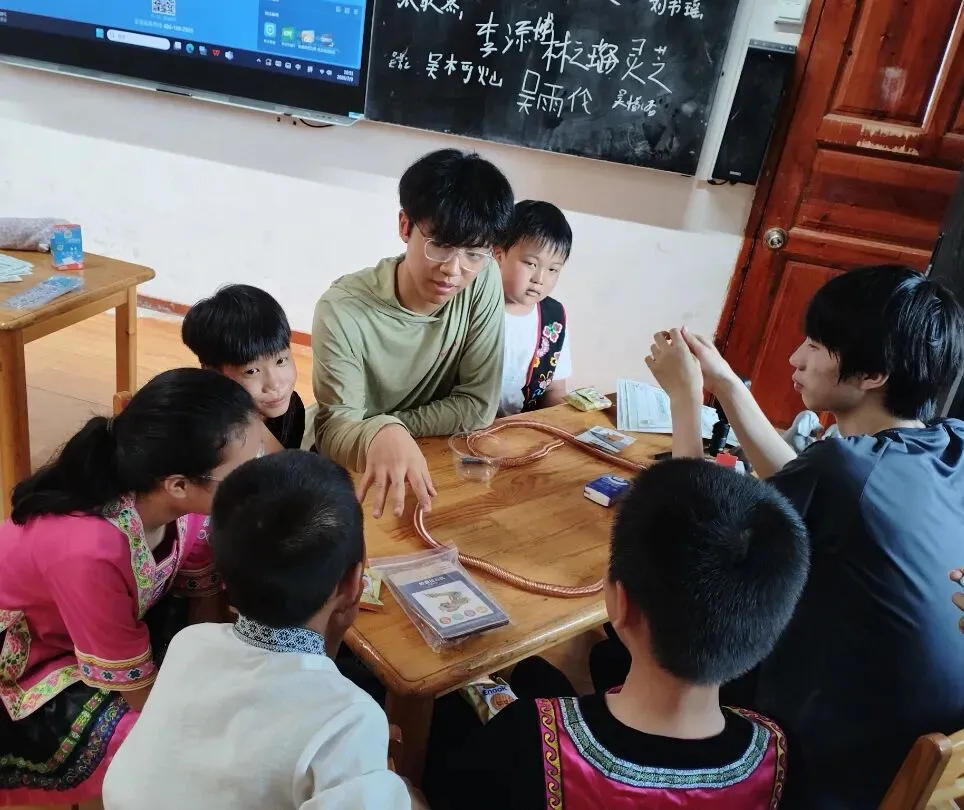
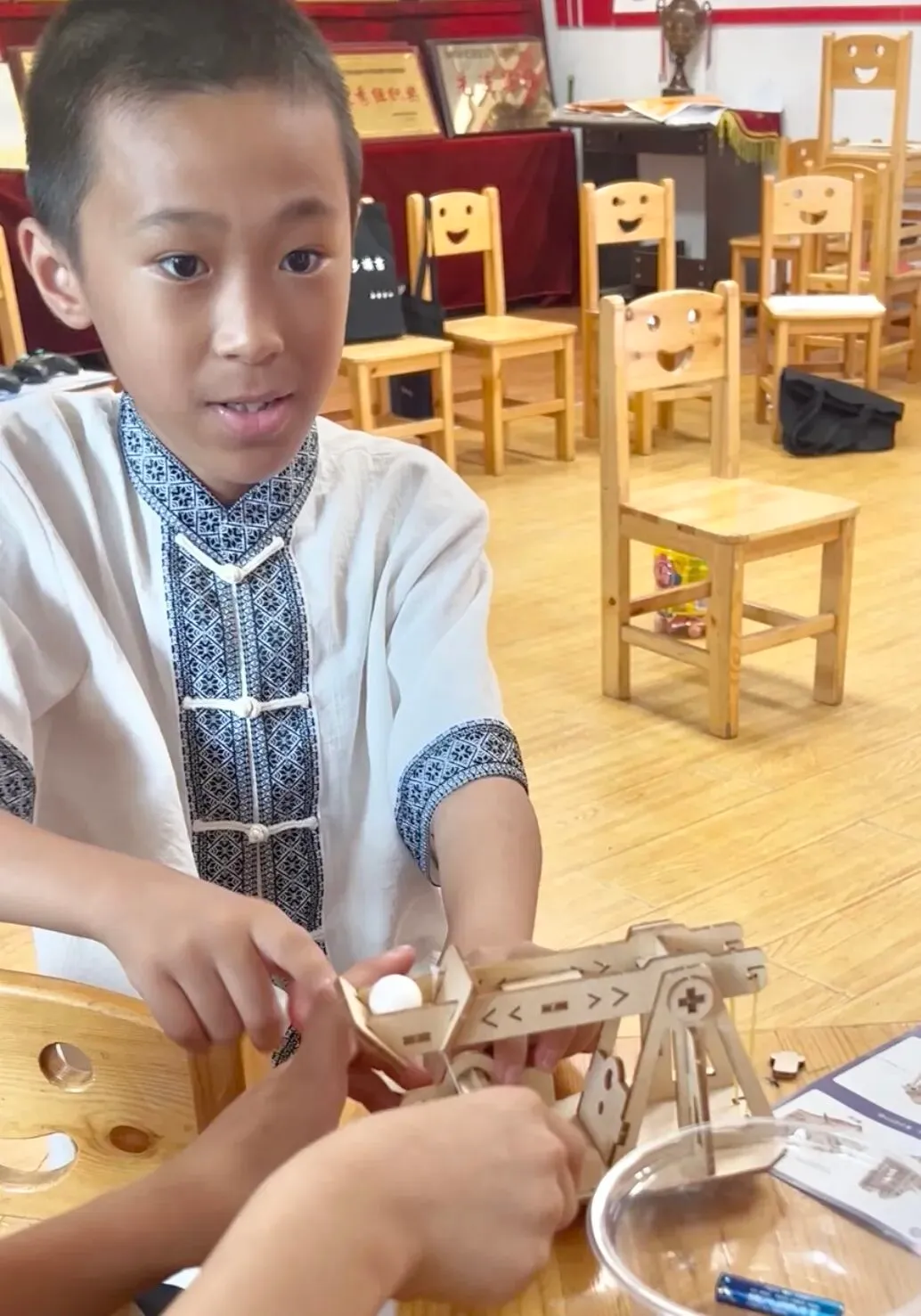
The catapult-building session became even livelier. Working in groups, the children glued supports together, attached elastic bands, and adjusted launch angles while the classroom filled with discussion. Once construction was complete, Nie organized a small competition. Each group took turns changing the tension of the elastic bands and altering the angle of elevation, watching paper 'projectiles' trace parabolic paths before landing across the room. Winning groups clapped and cheered; those who fell short crowded around the others to ask how they had done it. Nie rarely gave them the answer directly. He kept inviting them to test, revise, and try again, allowing ideas such as leverage and energy conversion to emerge naturally through repeated attempts.
He had originally prepared two different lesson plans because he worried that the material might feel too dry or difficult. In reality, the children, despite having no formal background in kinematics or mechanics, showed far more enthusiasm than he had anticipated. Their questions came one after another, and the second plan was never needed. What impressed him was not only their curiosity toward unfamiliar ideas, but also a kind of openness and playfulness that seemed particular to the children of the Dong villages.
For Nie Ruize, the purpose of the class was never simply to make them remember a list of physics concepts. It was enough if they left thinking, 'Physics is fun. Science isn't frightening.' And when the time came to say goodbye, he realized that the co-creation had worked in both directions: while he had been helping the children understand the world, they had helped him rediscover the younger version of himself who had once been curious about almost everything.
III. The Cryptography Classroom: The Logic Hidden inside a Slip of Paper
Liu Yunqian's cryptography course felt especially novel to the children. In their imagination, 'codes' belonged to spies on television. The moment they learned that they could create and crack codes themselves, everyone became eager to try.
To show them why cryptography exists in the first place, Liu designed a group intelligence-transmission game. He divided the class into three teams. The first team received an original secret message and could pass it to the second only by whispering it from person to person, while the third team's task was to move close enough to intercept whatever they could overhear. By the end of the first round, the version repeated by the second team bore little resemblance to the original, and several important details had already been intercepted by the third. The children burst into laughter at the wildly distorted messages, but the lesson was clear: information passed purely by word of mouth was far too unreliable. Encryption, they realized, really did have a purpose.
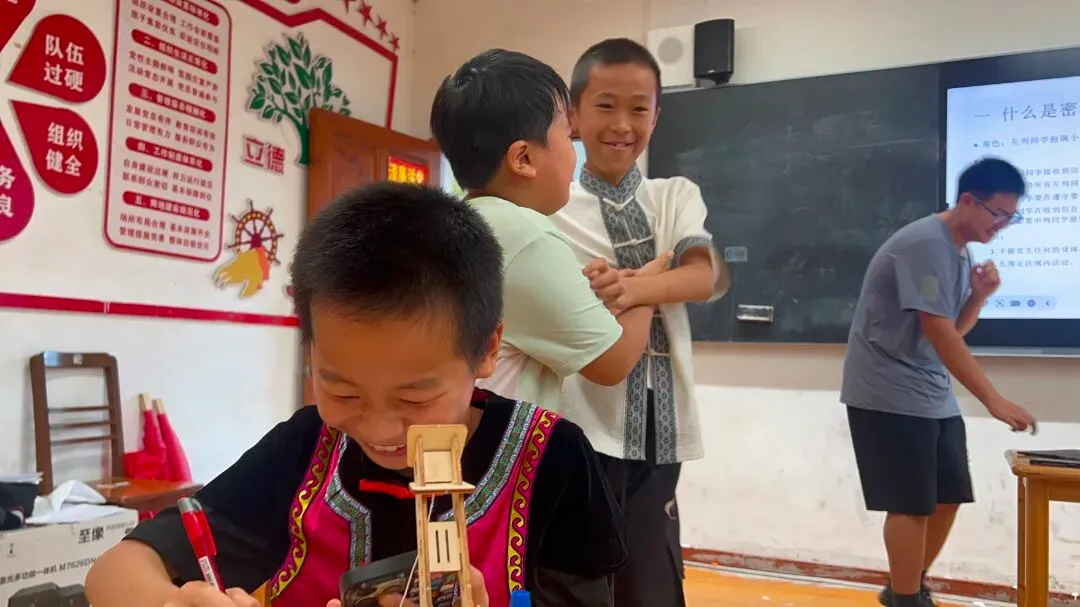
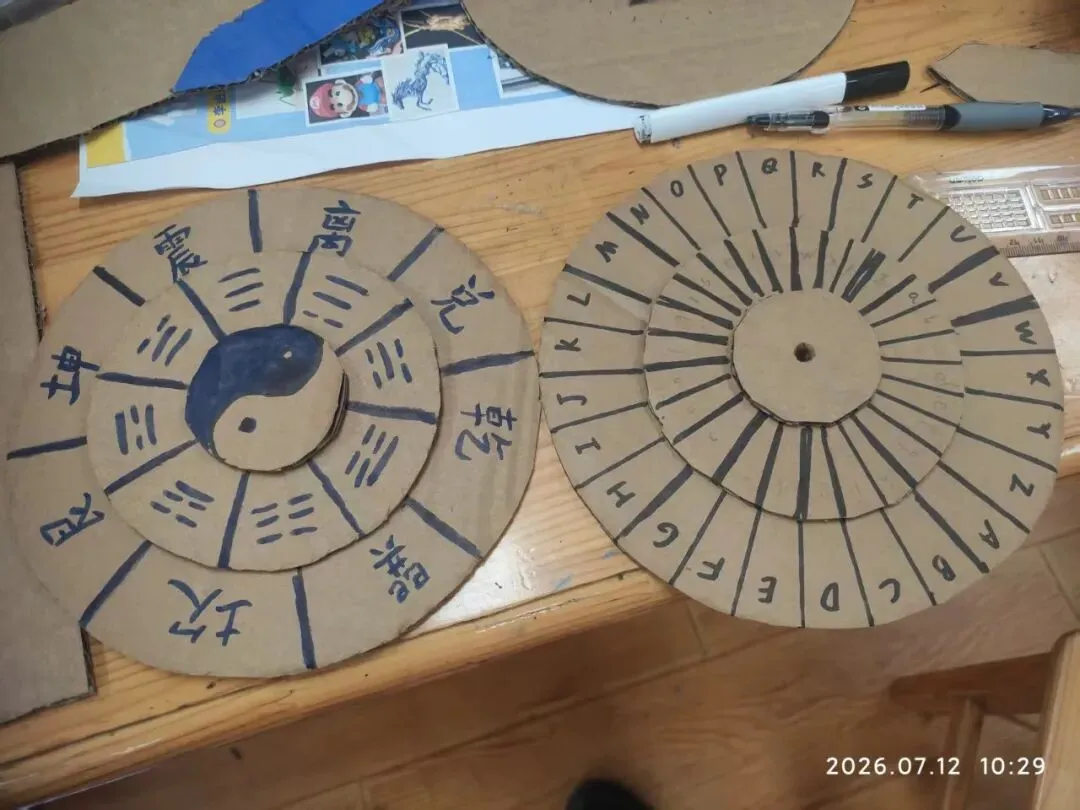
With that foundation in place, Liu introduced the classic Caesar cipher. The simple principle of shifting letters made an abstract idea immediately understandable. He then arranged several rounds of practice: first, the class decoded messages with a fixed shift together; then students worked in pairs, writing secret messages for one another and taking turns decrypting them. Heads bent over scratch paper as they counted letter shifts. Those who solved a message slapped the desk and laughed; those who remained stuck frowned and chewed on their pens. Even children who normally struggled to sit still remained focused on the slips of paper in front of them.
Once they had mastered the basic technique, Liu broadened the discussion to the wider uses of cryptography, moving from military communication in ancient times to mobile payments and information security today. The children began to understand that codes were more than a game: they were tools for protecting information. What could easily have become a dry lesson in logic instead unfolded as an immersive puzzle.
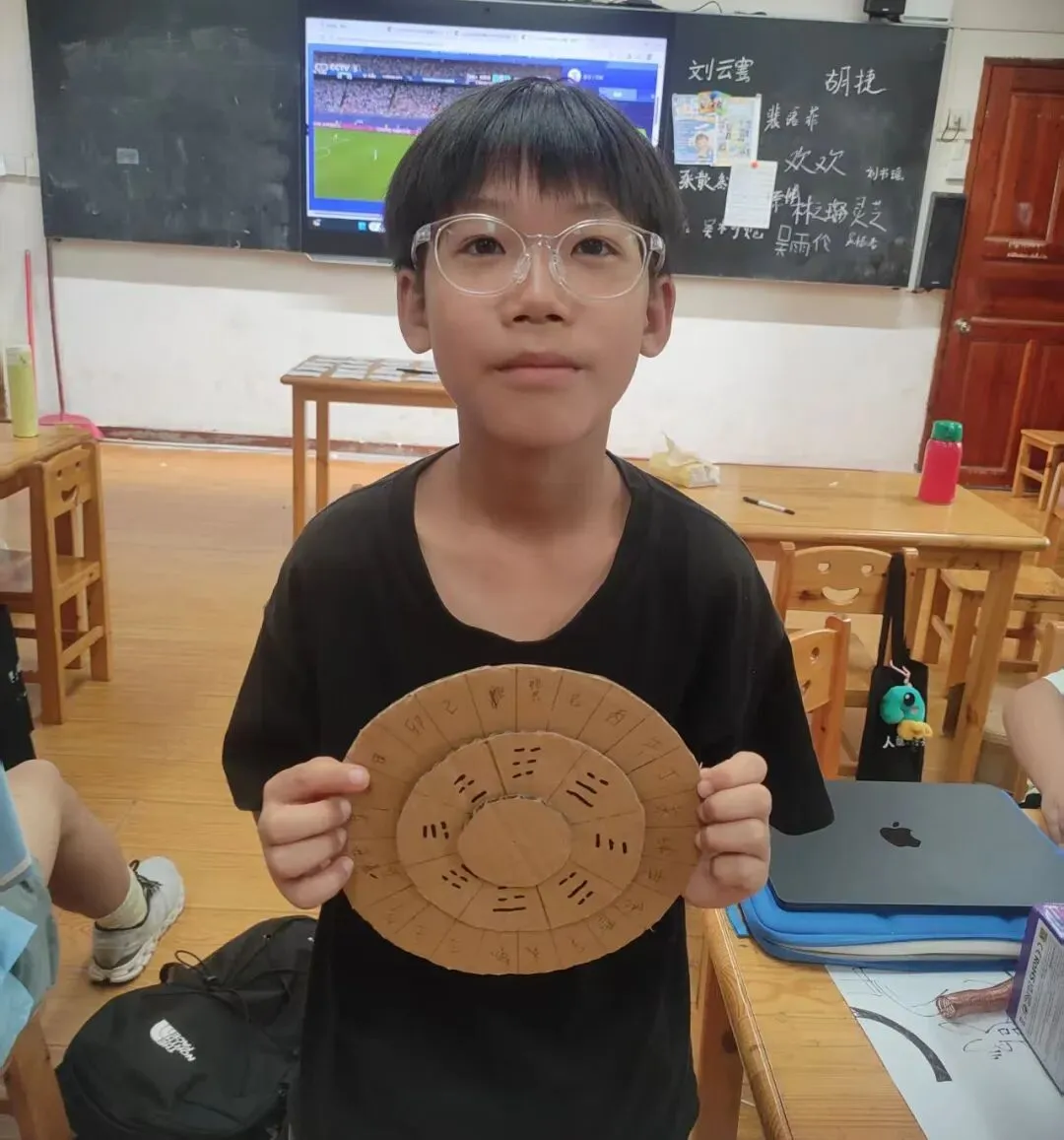
Outside the formal lesson, Liu also guided the children in making rotating cipher wheels. He prepared cardboard, compasses, scissors, glue, and markers, then showed them step by step how to draw the inner and outer disks. Whenever a child cut a circle unevenly, he crouched beside them and patiently helped trim it into shape. The mental challenge of the classroom and the satisfaction of making something by hand came together in that little project, and for many of the children it was the first time mathematics and logic had felt so playful.
IV. 3D Modeling: Giving Form to Imagination
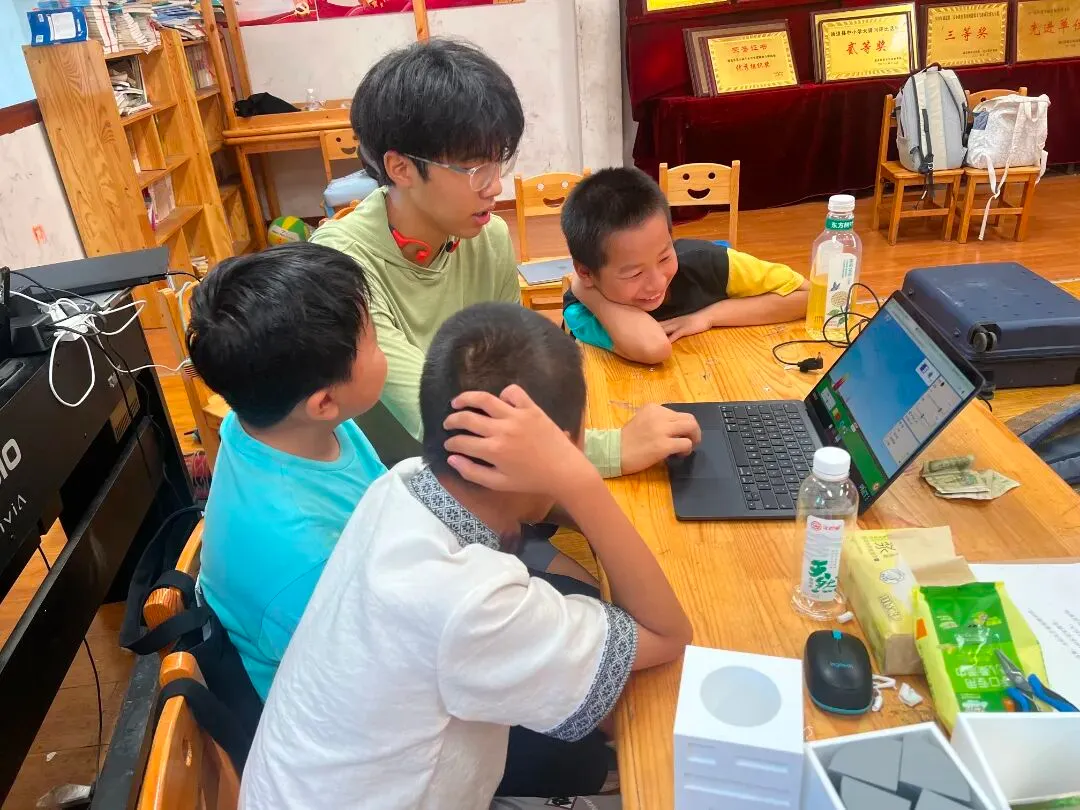
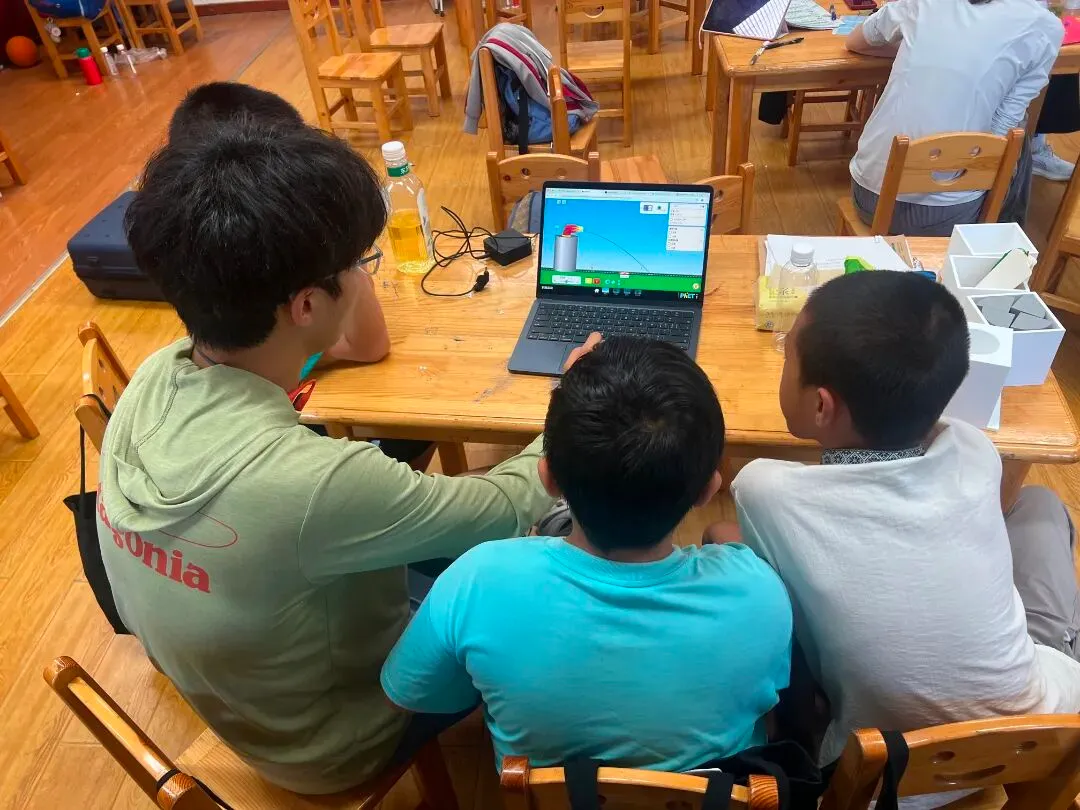
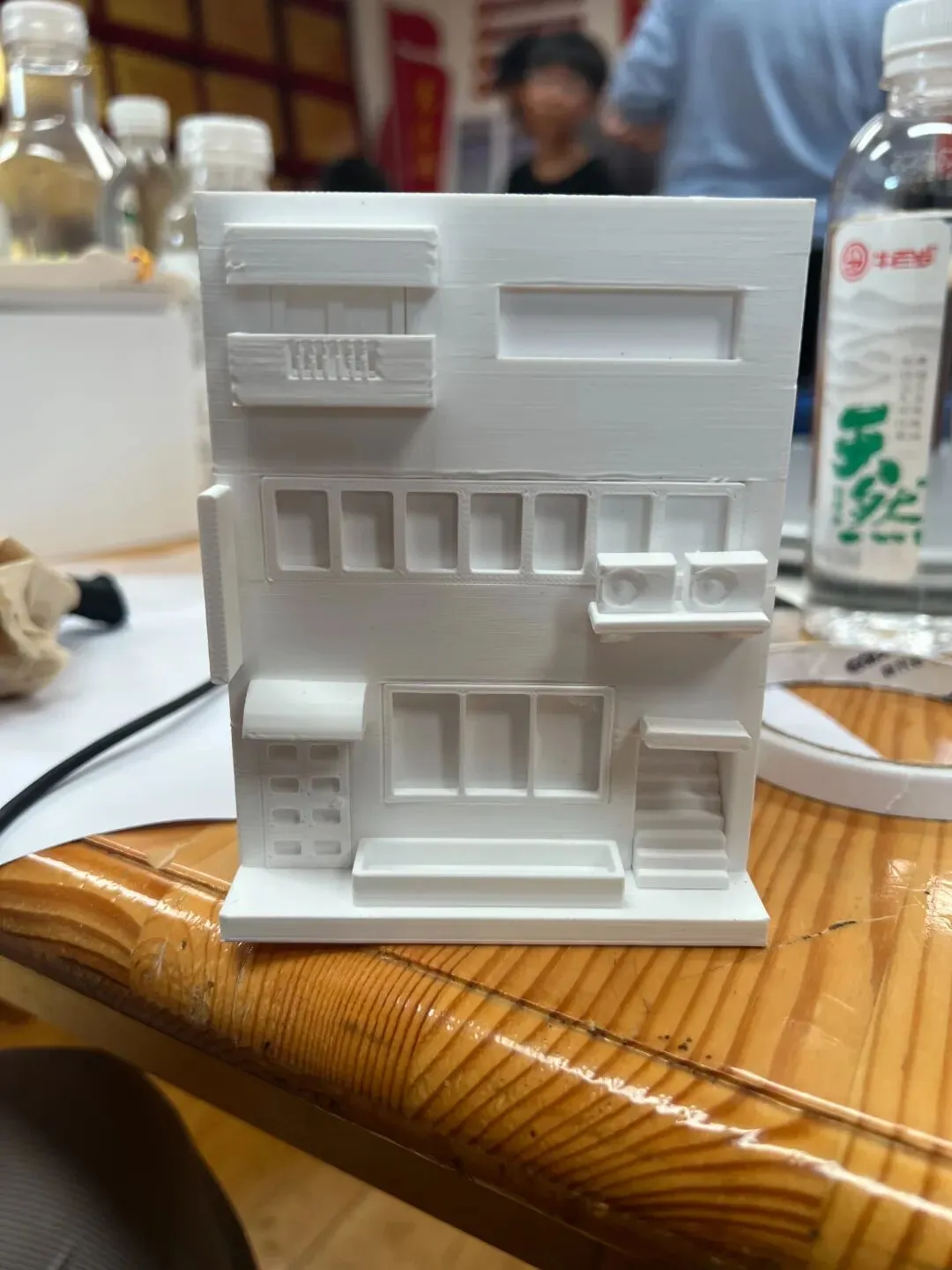
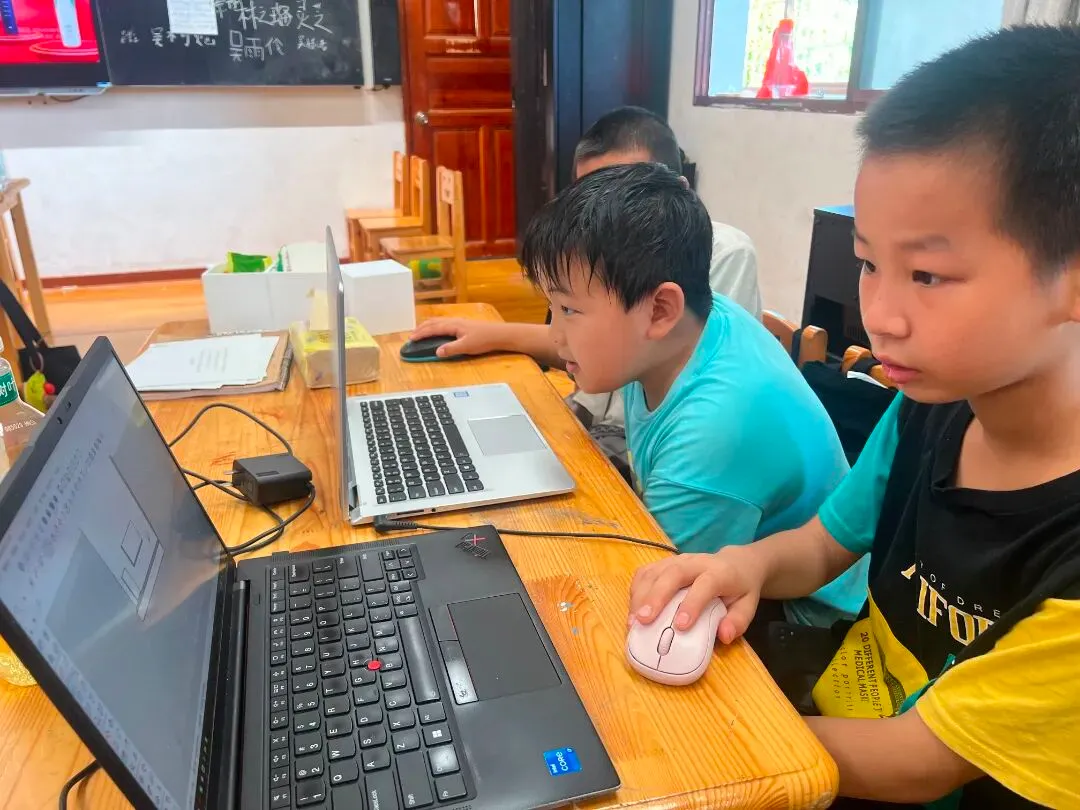
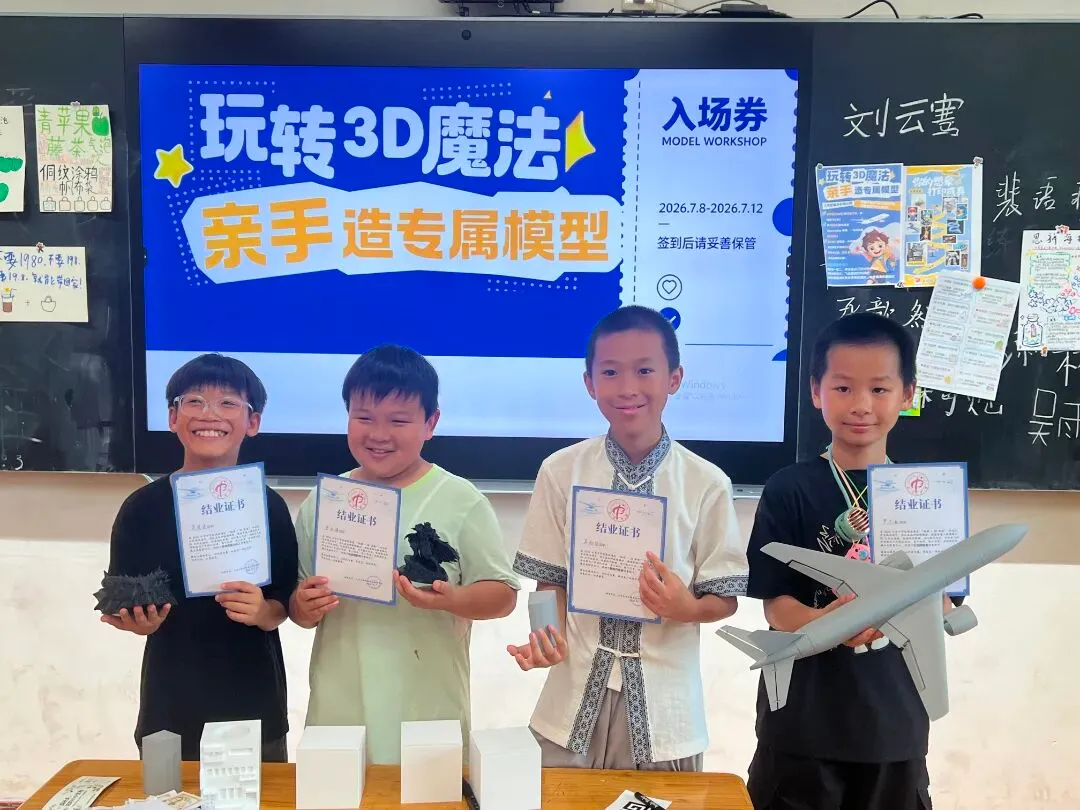
The aircraft had awakened their curiosity; the 3D modeling course gave their imagination somewhere to land. Li Xiaoyao began with the most basic functions in SketchUp, arranging the three-day course in gradual steps. On the first day, students practiced drawing straight lines, using push-pull tools, and adjusting dimensions, beginning with simple geometric forms such as cubes and cylinders. On the second day, they moved on to a more demanding task: constructing a three-story house with doors, windows, and a roof, strengthening their ability to combine multiple forms into a complete model.
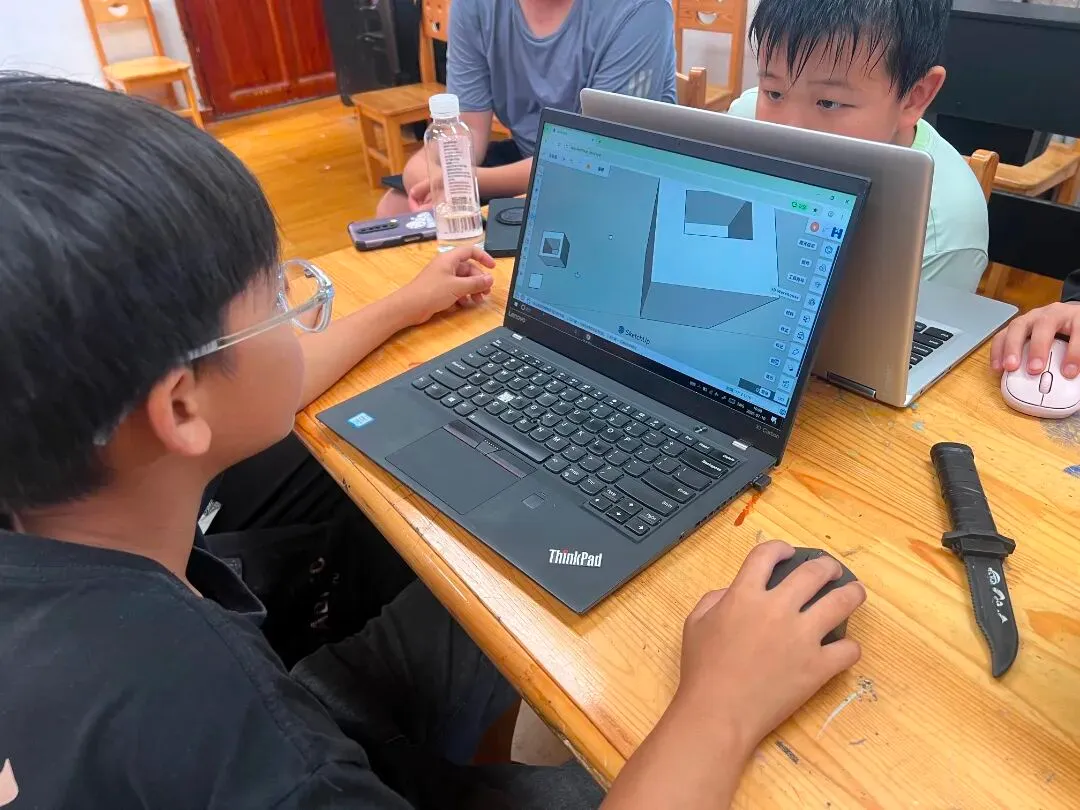
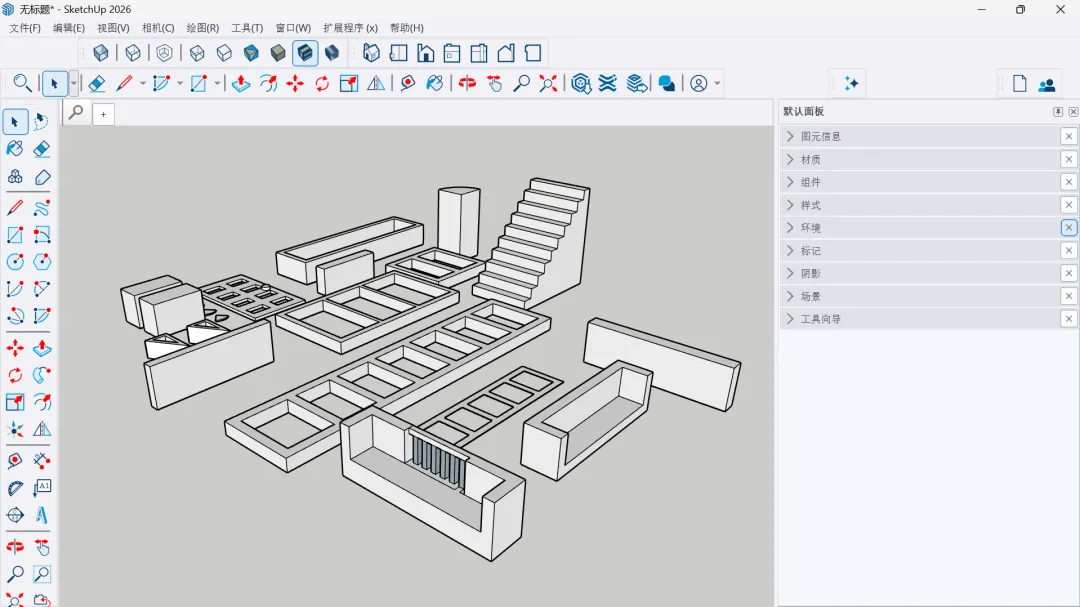
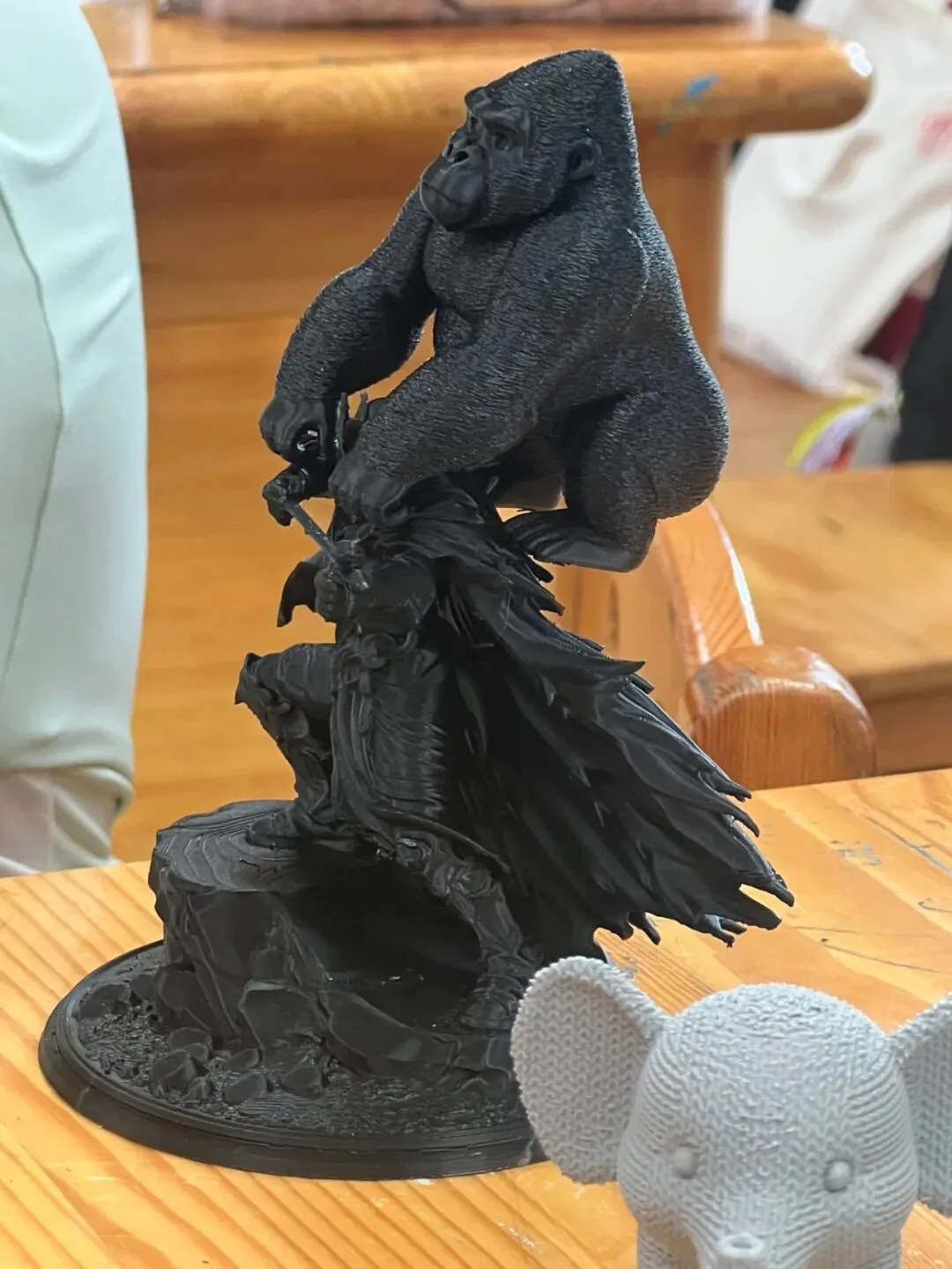
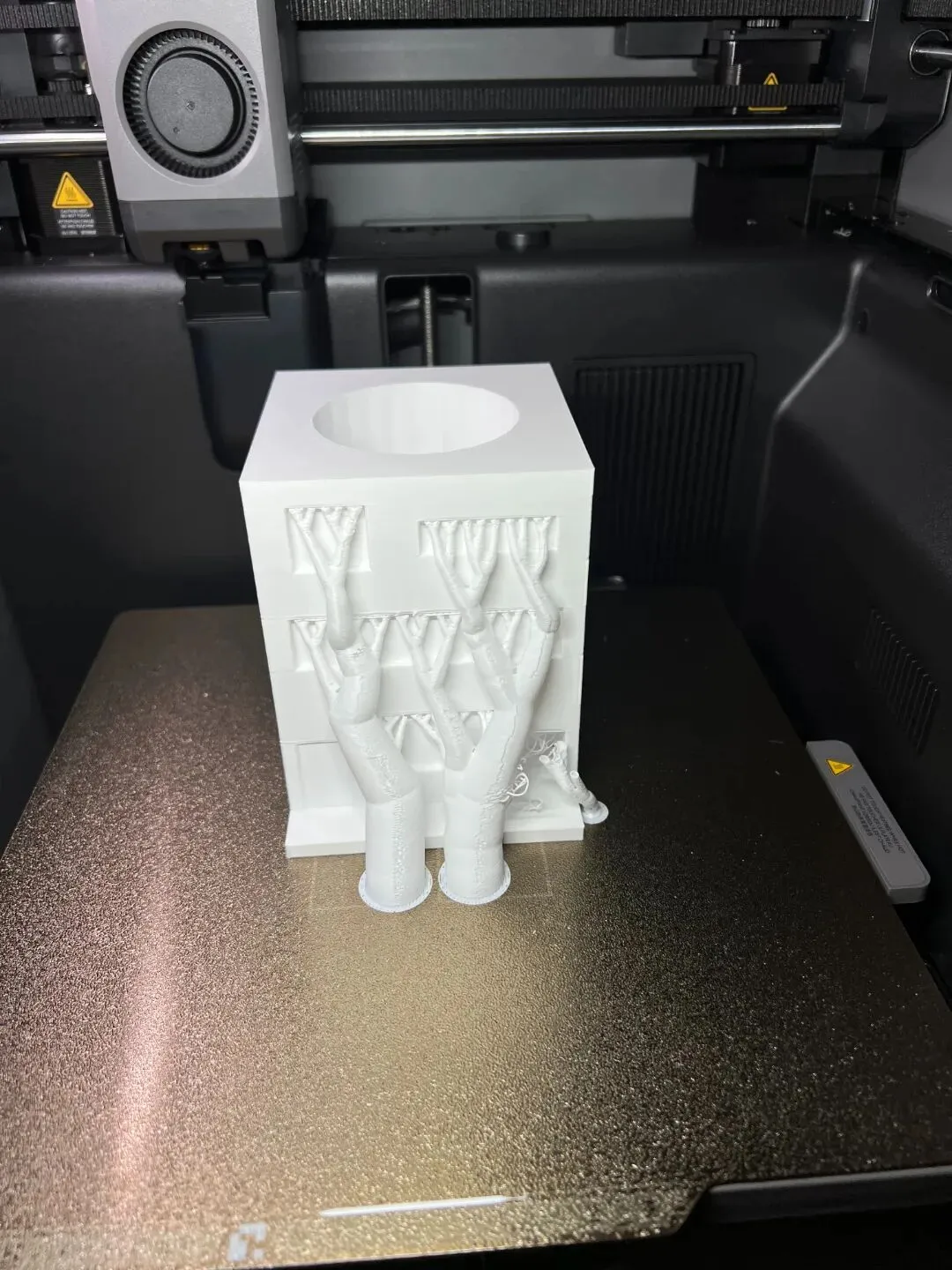
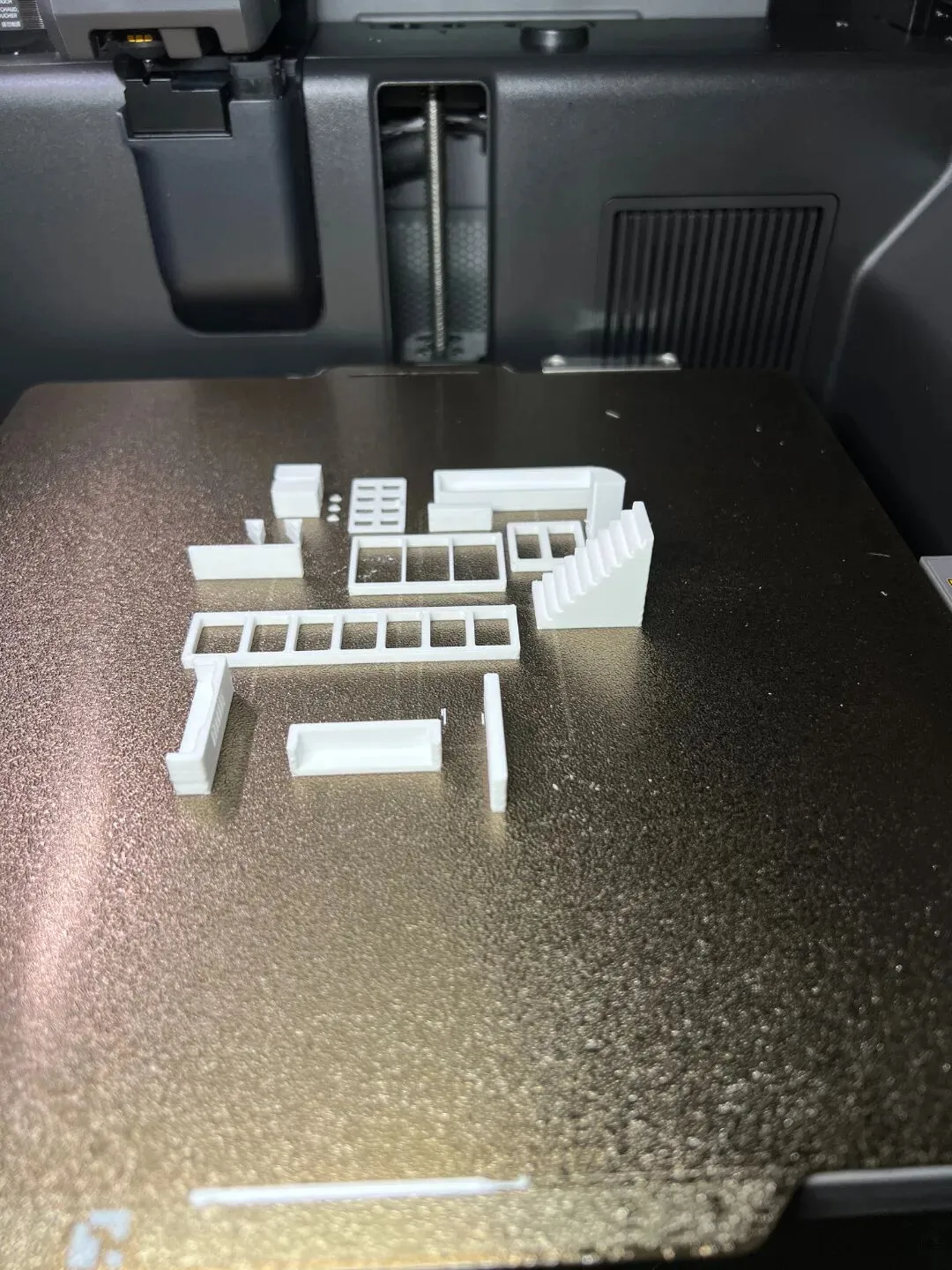
Li taught slowly. After demonstrating each operation, he would crouch beside the children and work through problems one by one. If a line went crooked or a push-pull operation failed, he would place his hand on the mouse and guide them through it again. He believed that, for beginners, the feeling of 'I can do this' was essential to sustaining interest. After each module, he brought out the corresponding object he had already printed in 3D, allowing the children to compare the digital model on screen with something they could actually hold, weigh, and move in their hands. The moment a shape from the computer became a physical object, the classroom filled with the same delighted reaction: 'I really made this!'
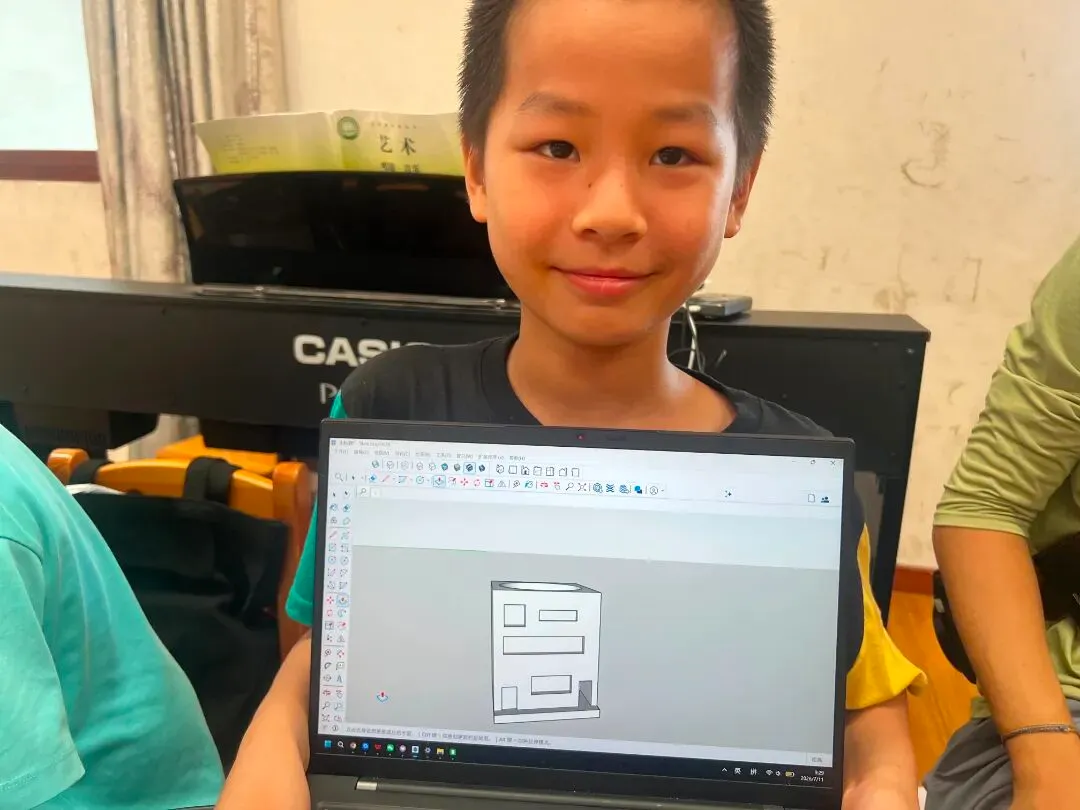
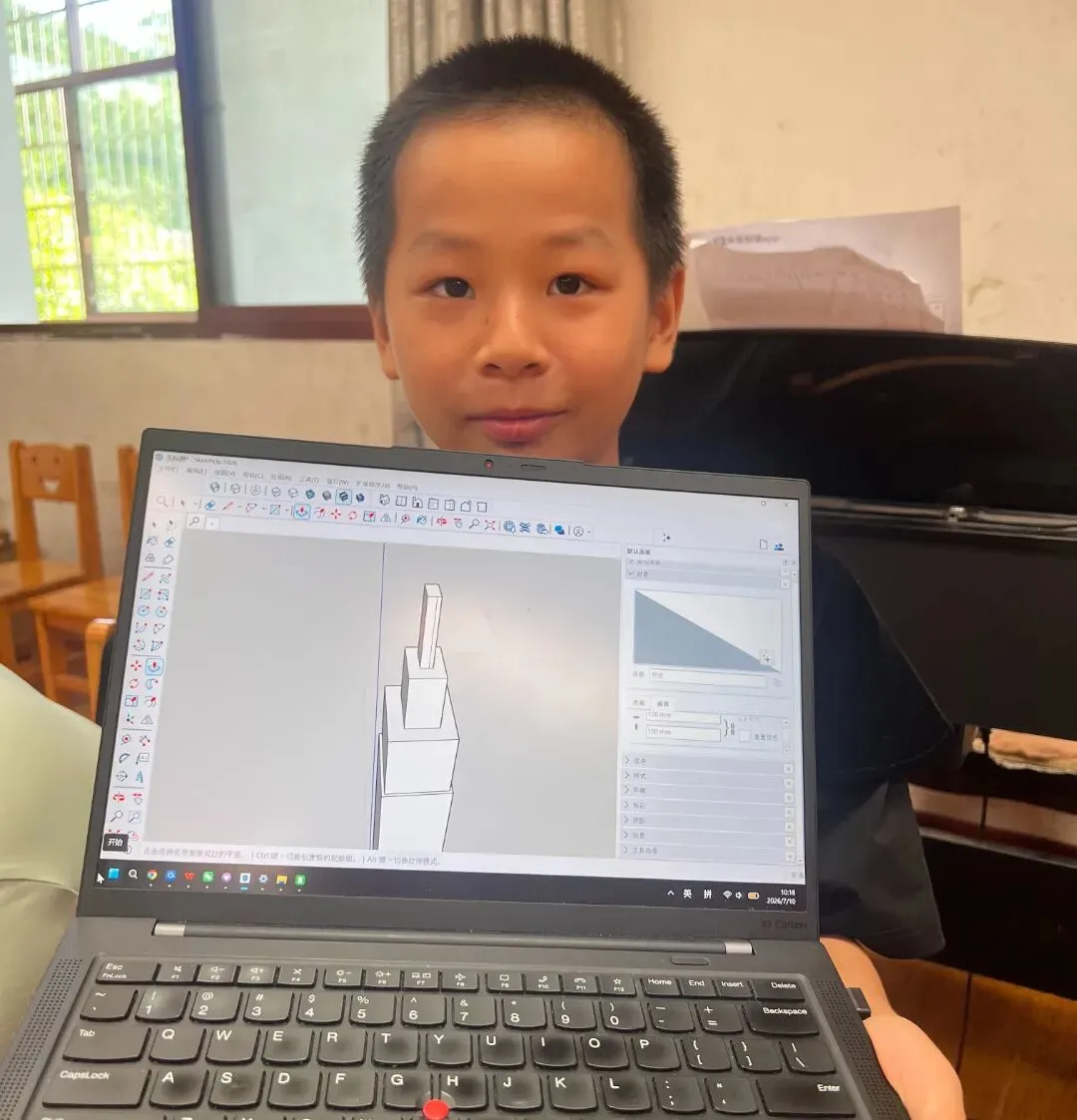
On the third day, the free-design session released the children's imagination completely. One child carefully designed a dream house with a courtyard, explaining that it would be for living with their grandparents, and adjusted the window shapes again and again. Another reconstructed New York's Empire State Building from a vague memory of seeing it in a film. Others, inspired by the aviation class, bent over their screens designing airplanes and rockets of their own, spending long stretches thinking about wing angles and carefully drawing five-pointed stars onto their tail fins.
Li saved every completed design. After returning to Beijing, he printed them one by one and mailed the finished objects back to the school together with handwritten cards of encouragement.
The class also became a small experiment in cultural fusion. Local children taught the BAID students how to weave traditional Dong auspicious flowers, and Li then showed them how to recreate the same patterns digitally and print them as physical ornaments. When traditional ethnic motifs met modern 3D technology, the children turned their finished pieces over and over in their hands. Their expressions carried both the warmth of something familiar and the brightness of discovering something entirely new.
At the end of the course, Li Xiaoyao made them a promise: whenever they created a new 3D model in the future, they could send the file to him, and he would print it in Beijing and mail the finished piece back. The mountains were high and the distance long, but enthusiasm for creating did not need to stop at geography. As Li put it, 'I'm willing to be their long-term 3D-printing support team, so the interest that began in this classroom can keep going further.'
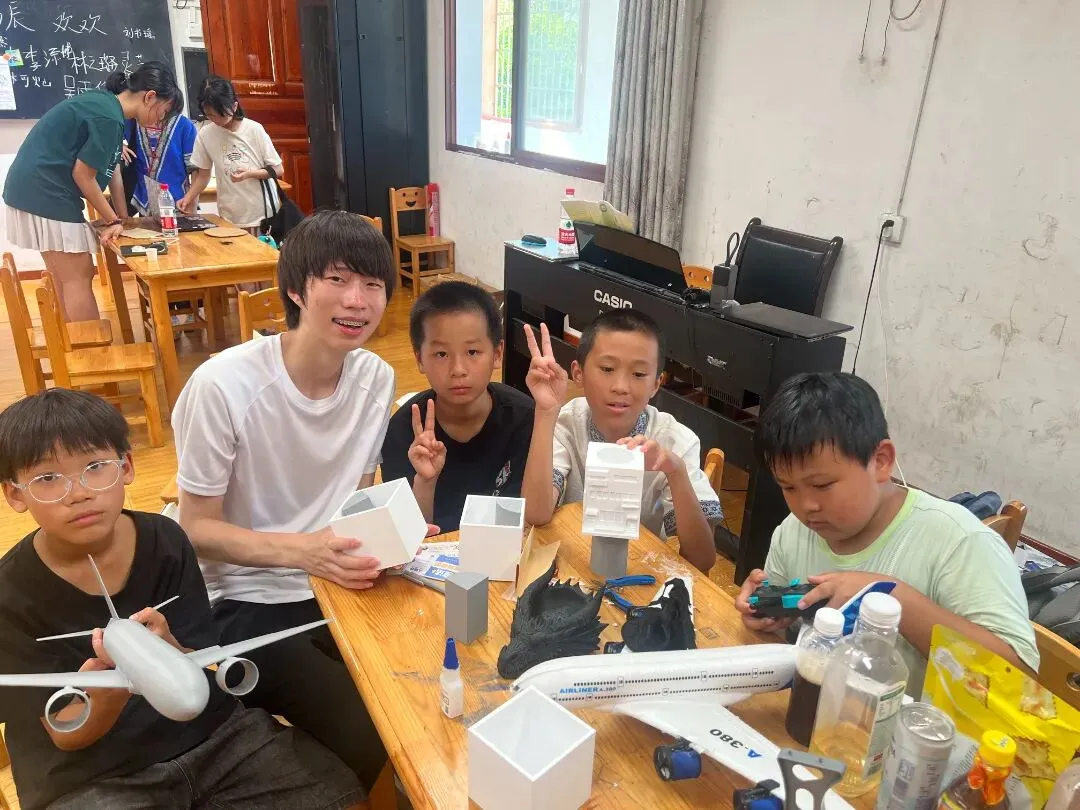
V. Beyond the Classroom: Everyday Life in Dong Country and the Warmth of Exchange
Our connection with the children extended far beyond lessons. During breaks, Li Xiaoyao and Nie Ruize organized basketball, dodgeball, and other outdoor games. On the small playground, children chased the ball, jumped, shouted, and laughed until their uniforms were damp with sweat. After only a few games, we were no longer 'the strangers from the city.' We had become older friends who could run around and laugh alongside them.
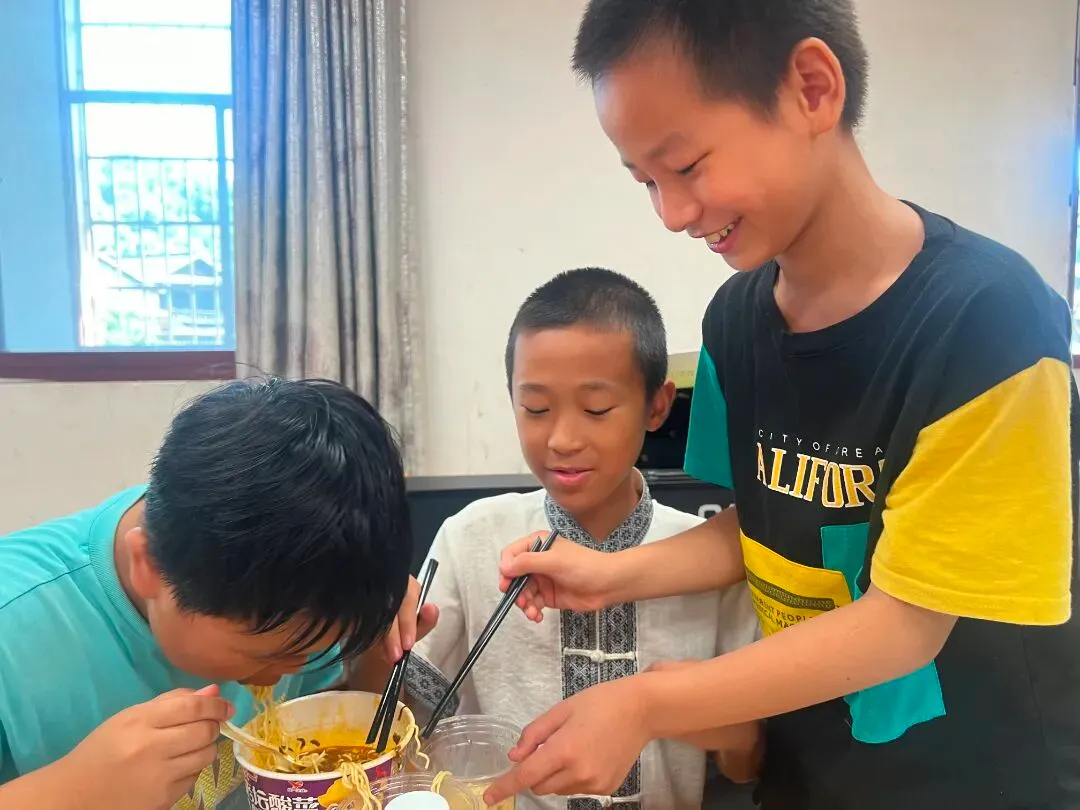
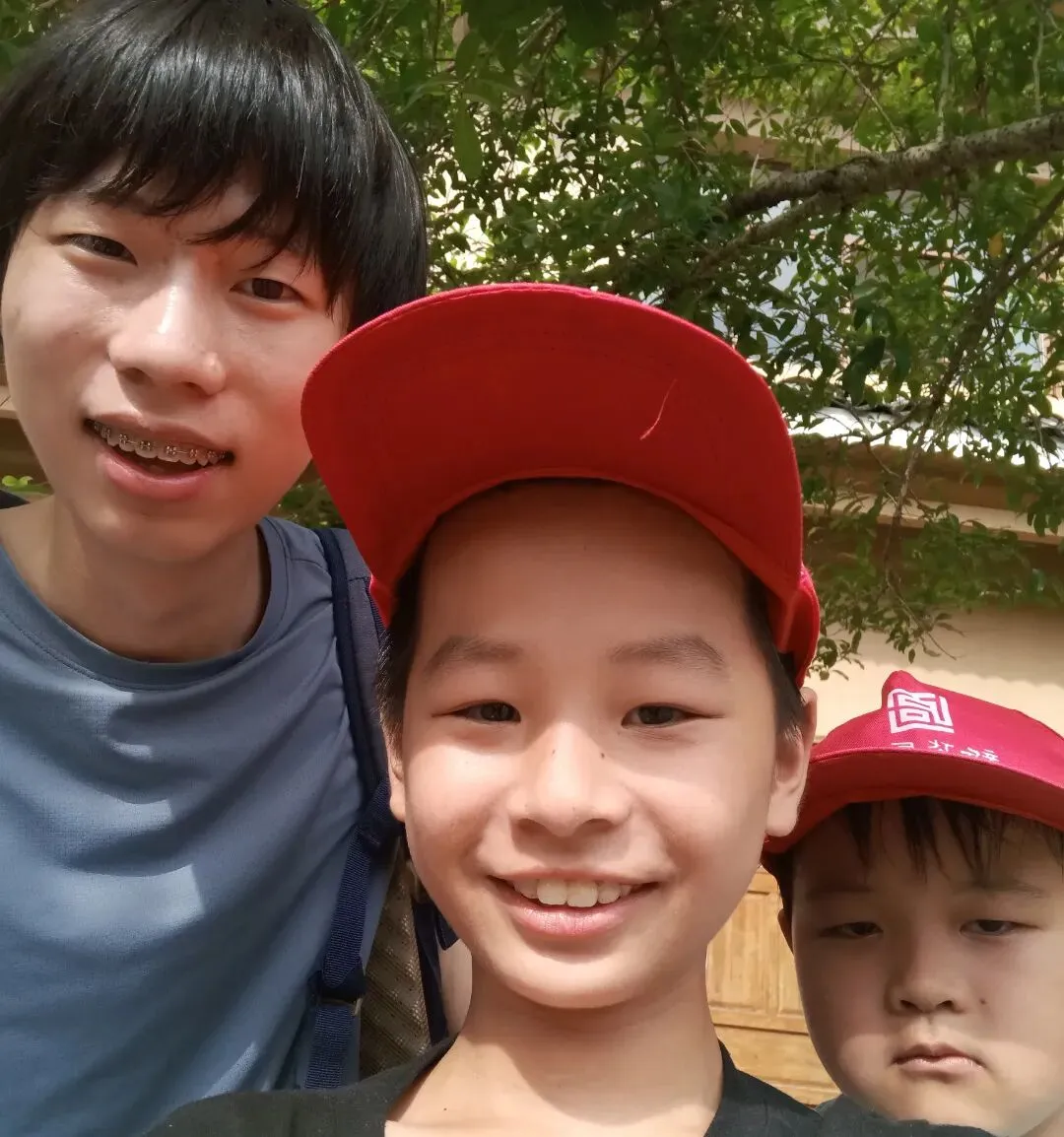
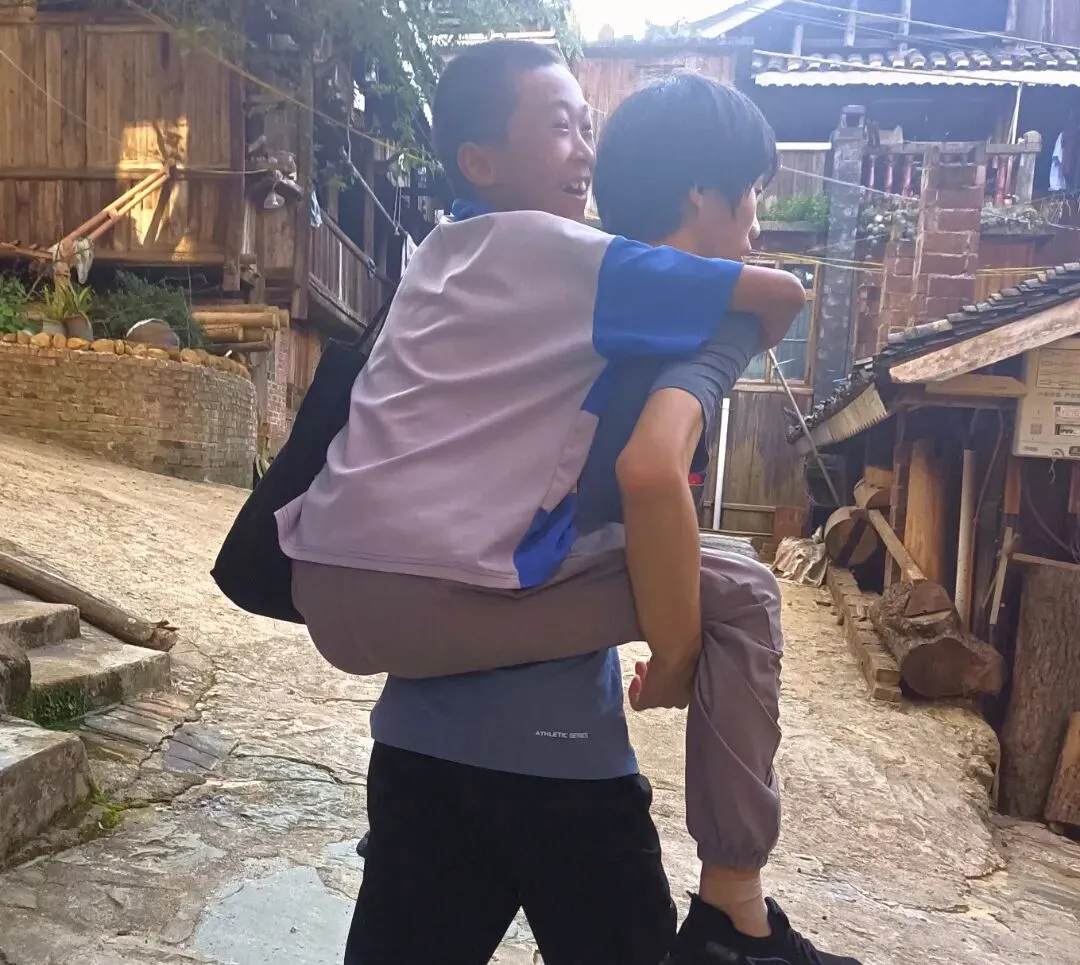
The children, in turn, invited us into Dong culture. They taught us to sing winding Dong melodies that took several attempts before we could even begin to follow. They showed us how to weave auspicious flowers, colorful threads winding between our fingers until intricate patterns slowly appeared. During a home visit, we saw a traditional waist loom more than a century old. A Dong grandmother sat down carefully and began working with both hands and feet, the shuttle moving swiftly between the warp threads as neat brocade patterns slowly emerged from otherwise plain strands of silk. The old loom produced a deep, rhythmic sound that lingered through the wooden house, as if telling a story that had traveled across a hundred years.
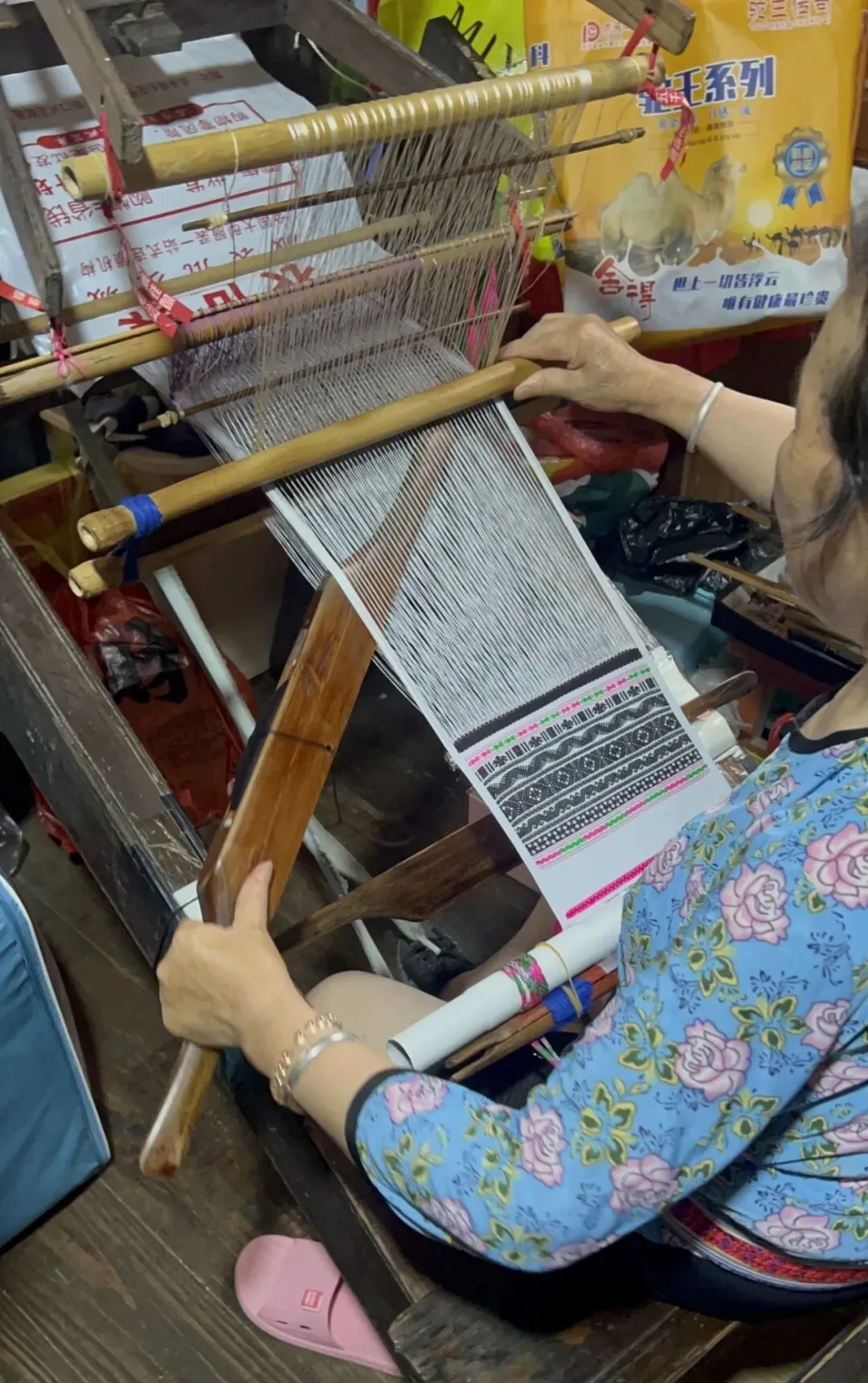
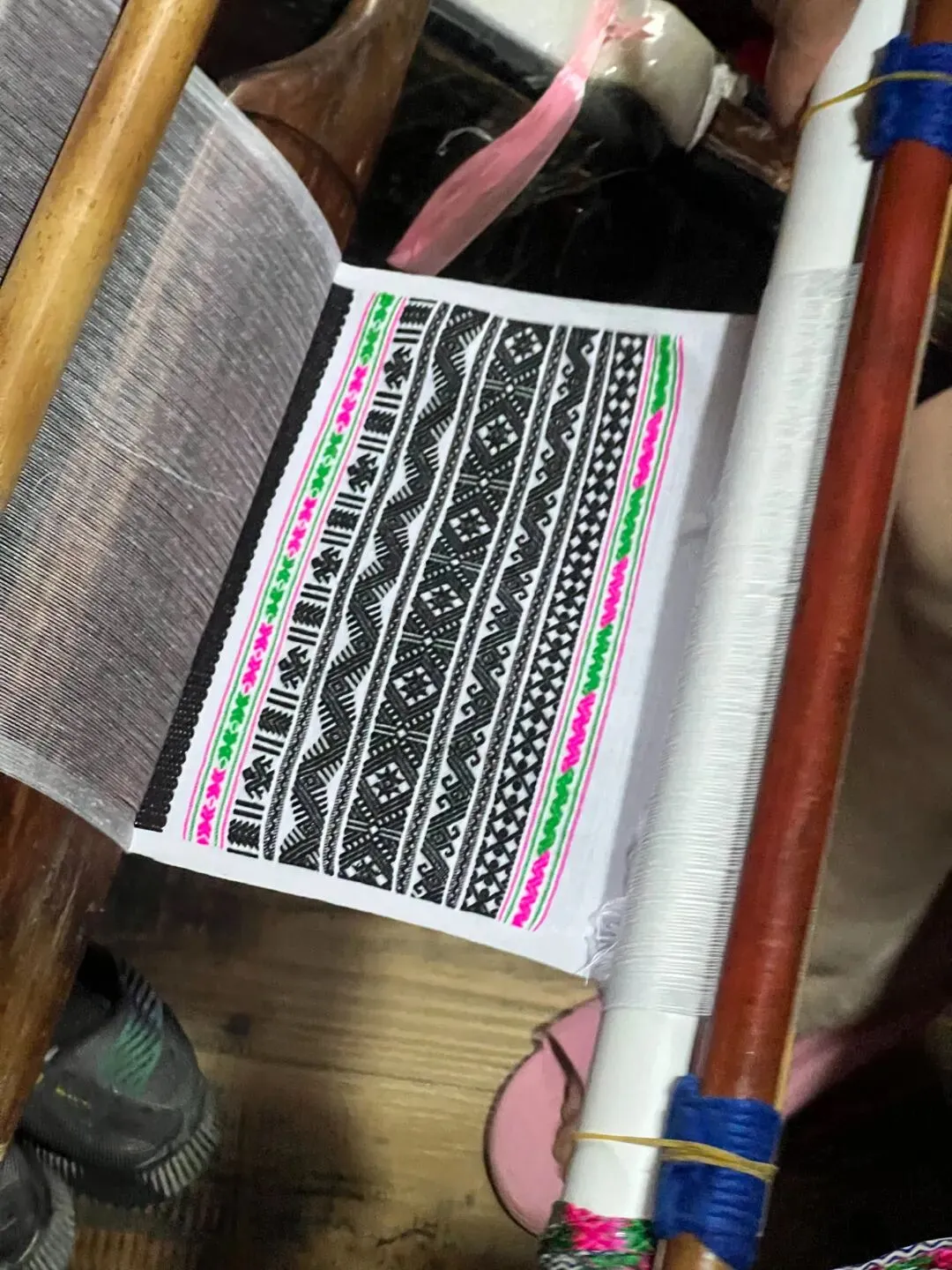
The hospitality of the local families was simple and deeply moving. Almost as soon as we sat down inside a home, adults would bring out freshly picked fruit, washed clean and piled high on a plate, pressing piece after piece into our hands. They did not say much, yet the sincerity in their expressions carried more weight than any elaborate words. In moments like those, it became impossible to think of the project as one-sided. We had brought with us a glimpse of the world beyond the mountains; they gave us living local culture and kindness in its purest form.
One small part of the project became especially meaningful. Li Xiaoyao had brought a spare phone and handed it to a local child, inviting him to become our 'young photographer' and document the classroom, playground, and village from his own perspective. When we later looked through the photographs, we were unexpectedly moved: the silhouette of an aircraft cutting across the sky, the side profile of a child concentrating in class, figures running freely across the playground, the soft evening light settling over the mountains. Countless small, vivid moments had been preserved through his eyes, allowing us to see the co-creation from another angle — perhaps its simplest and most moving one.
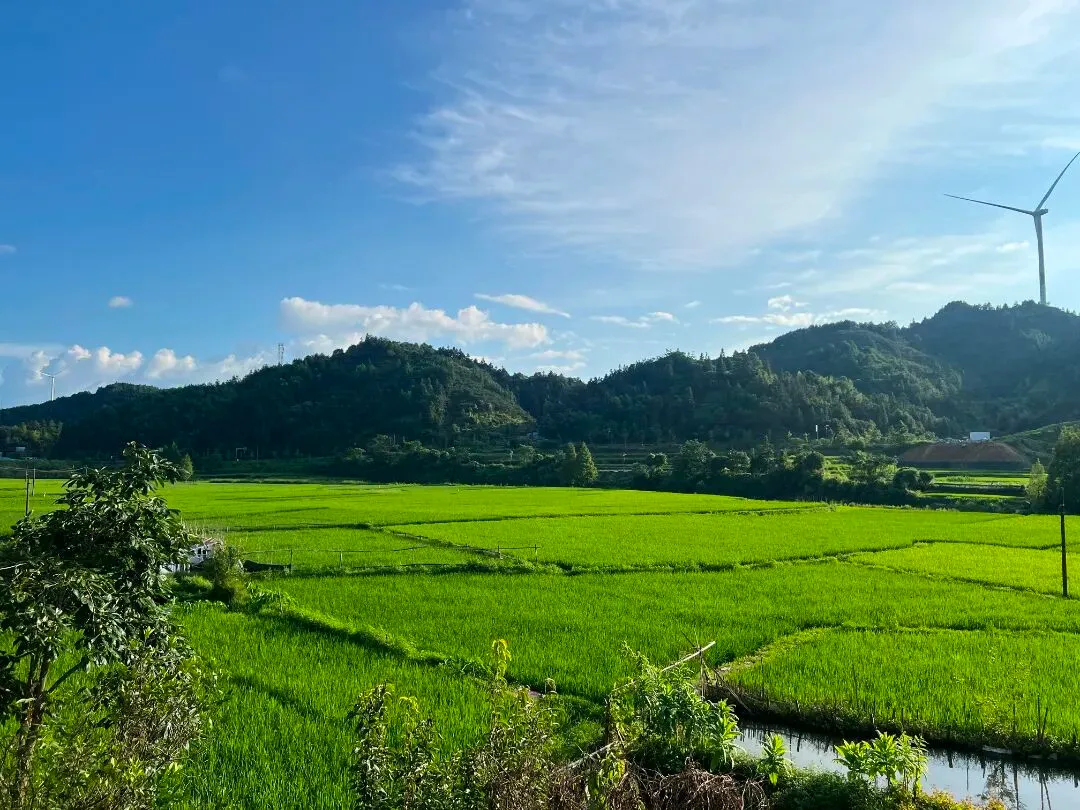
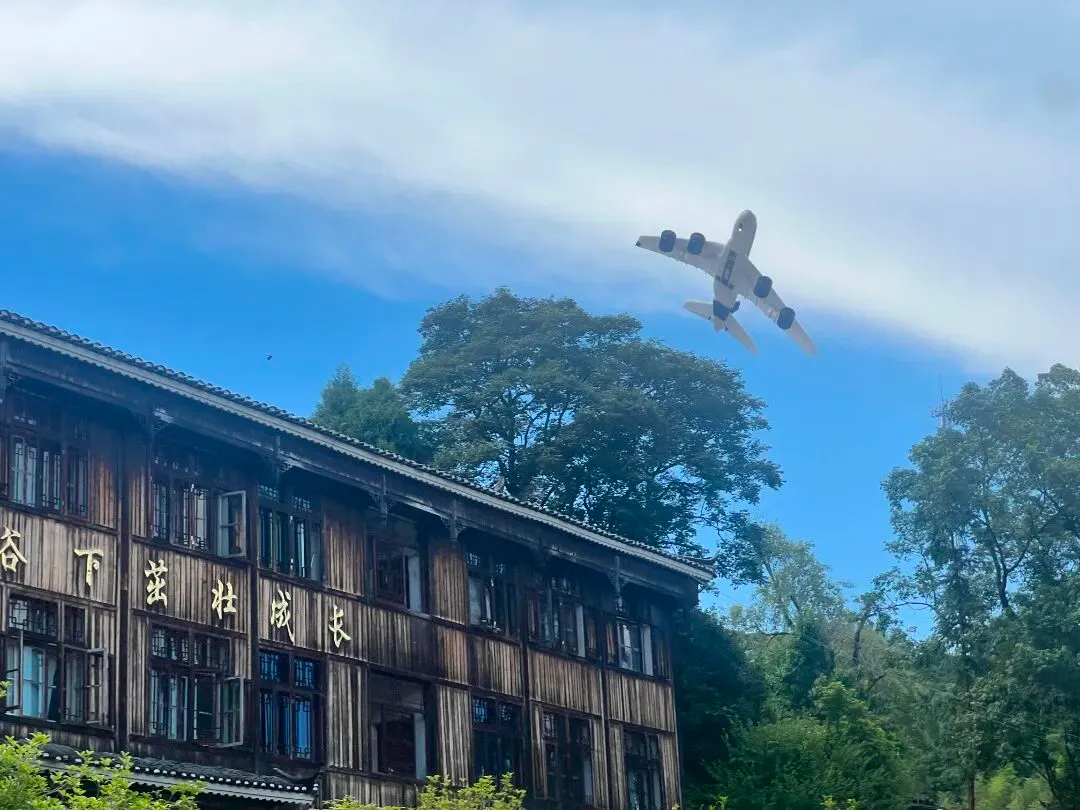
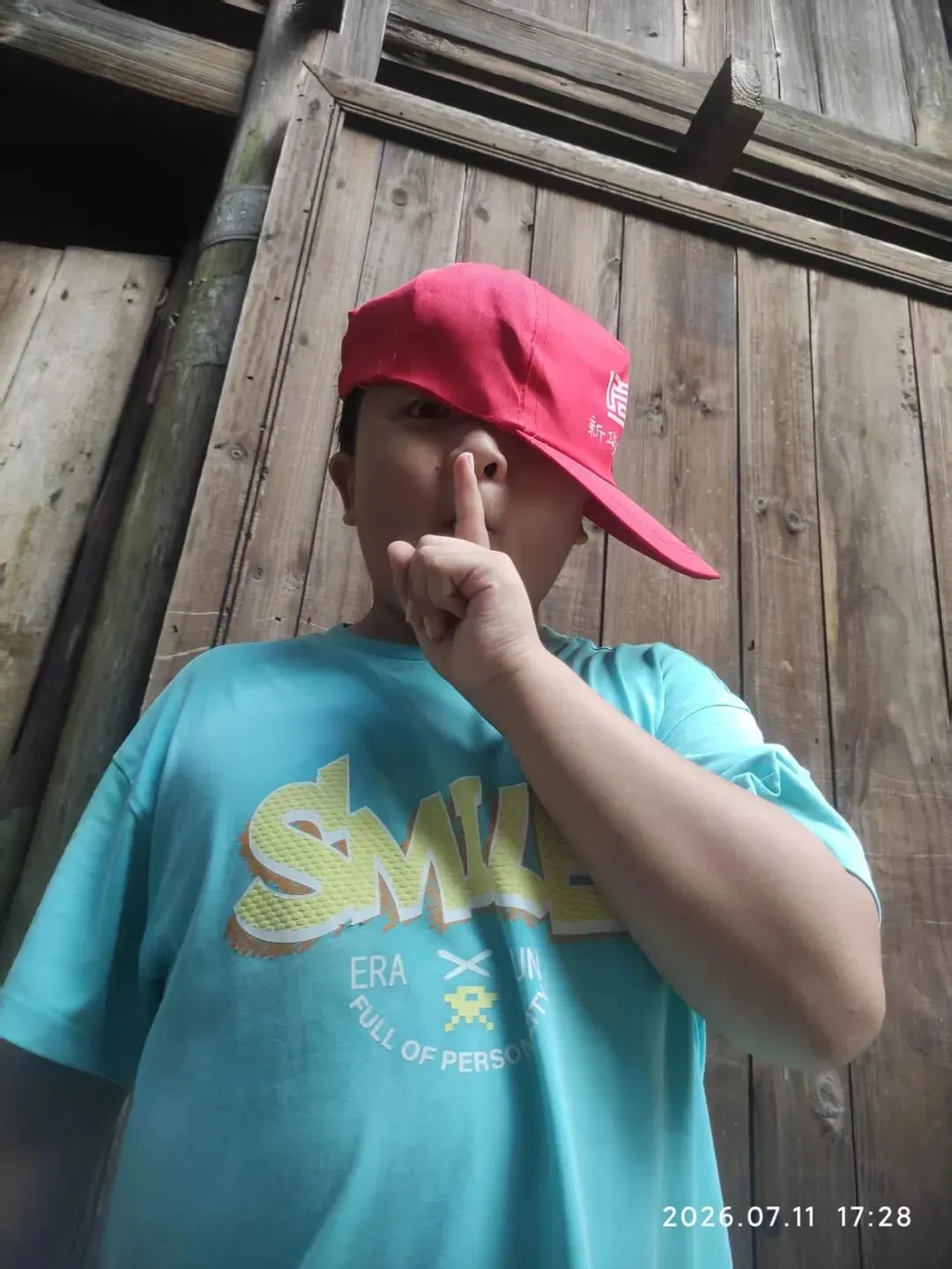
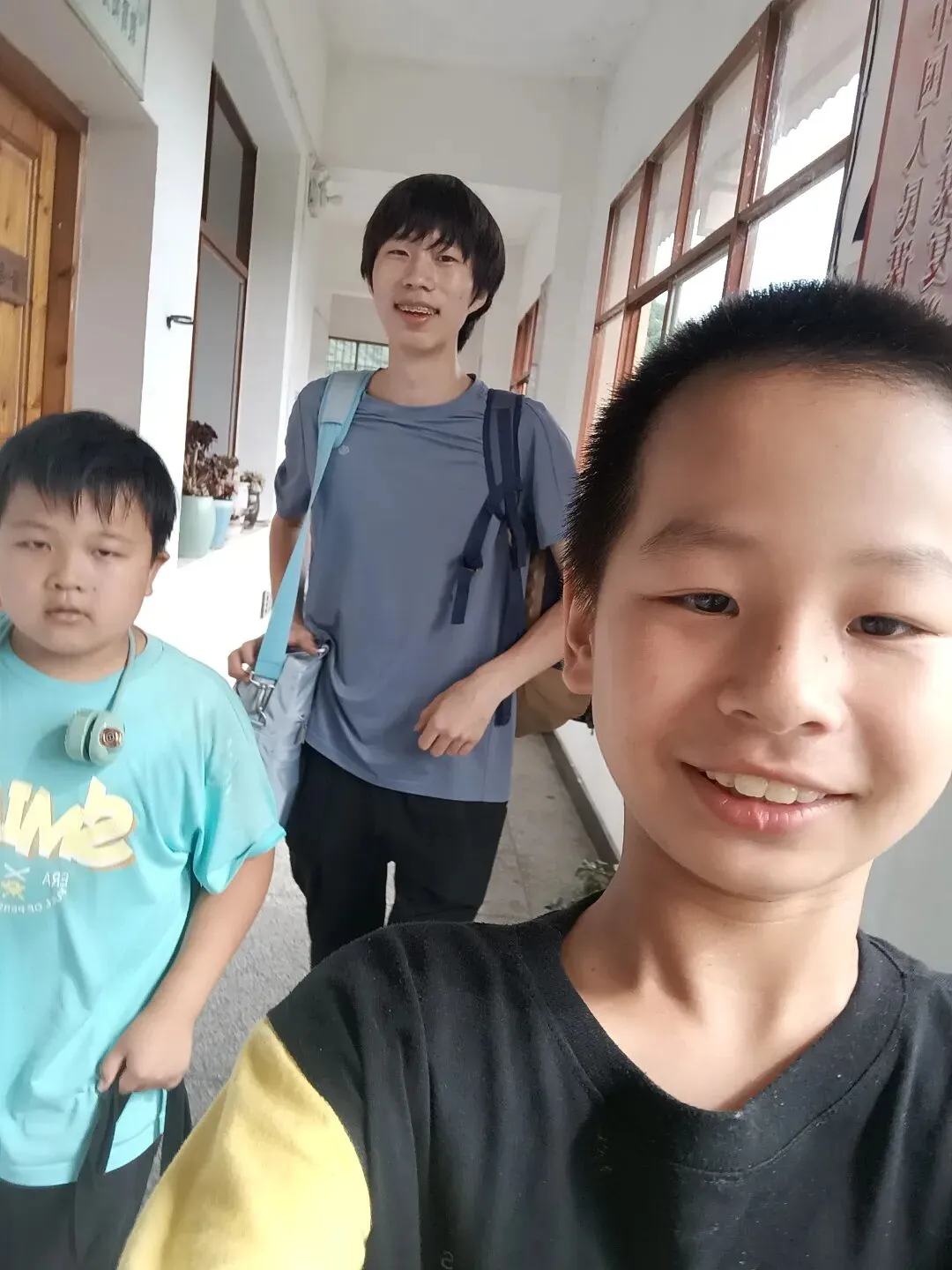
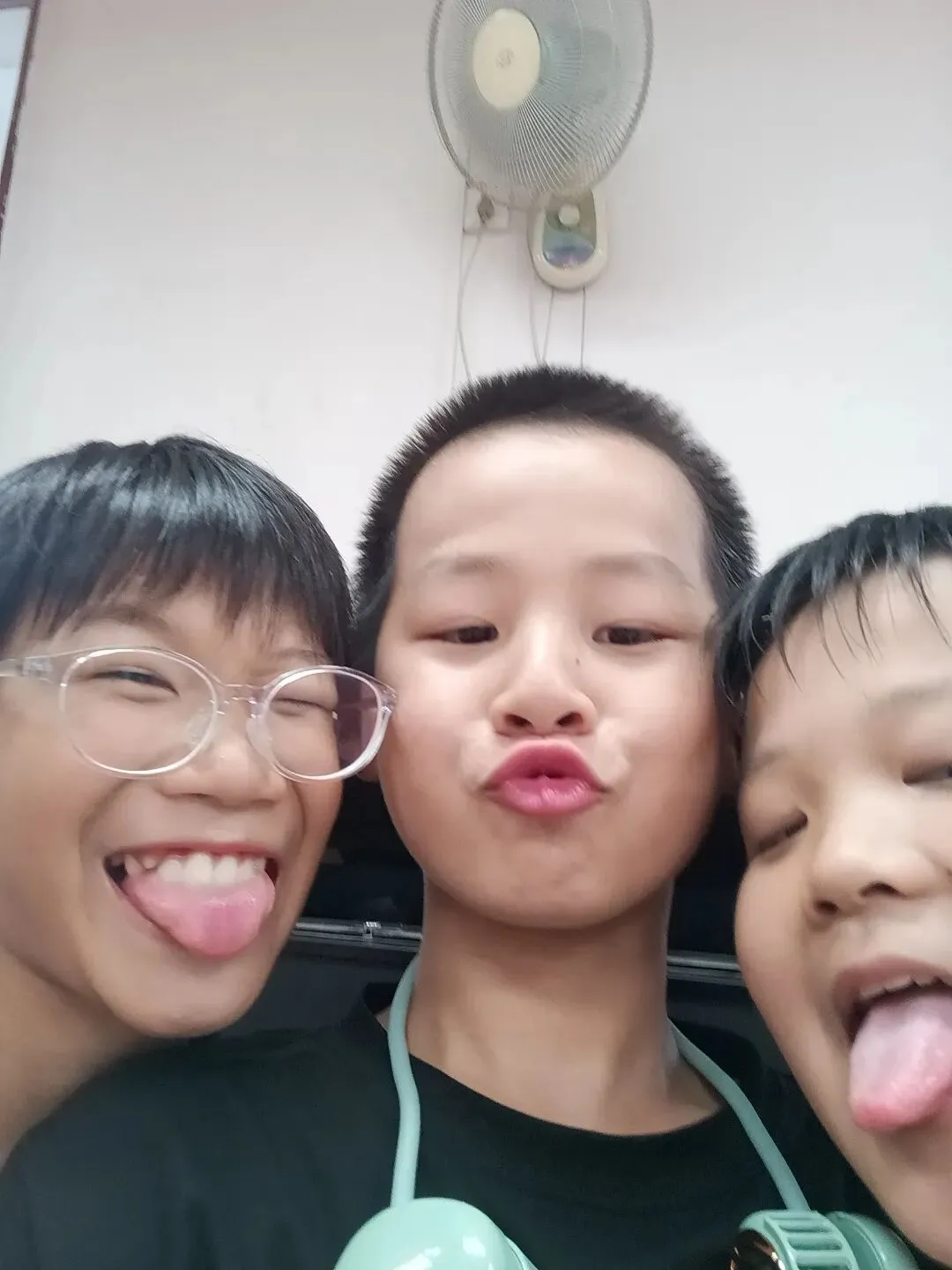
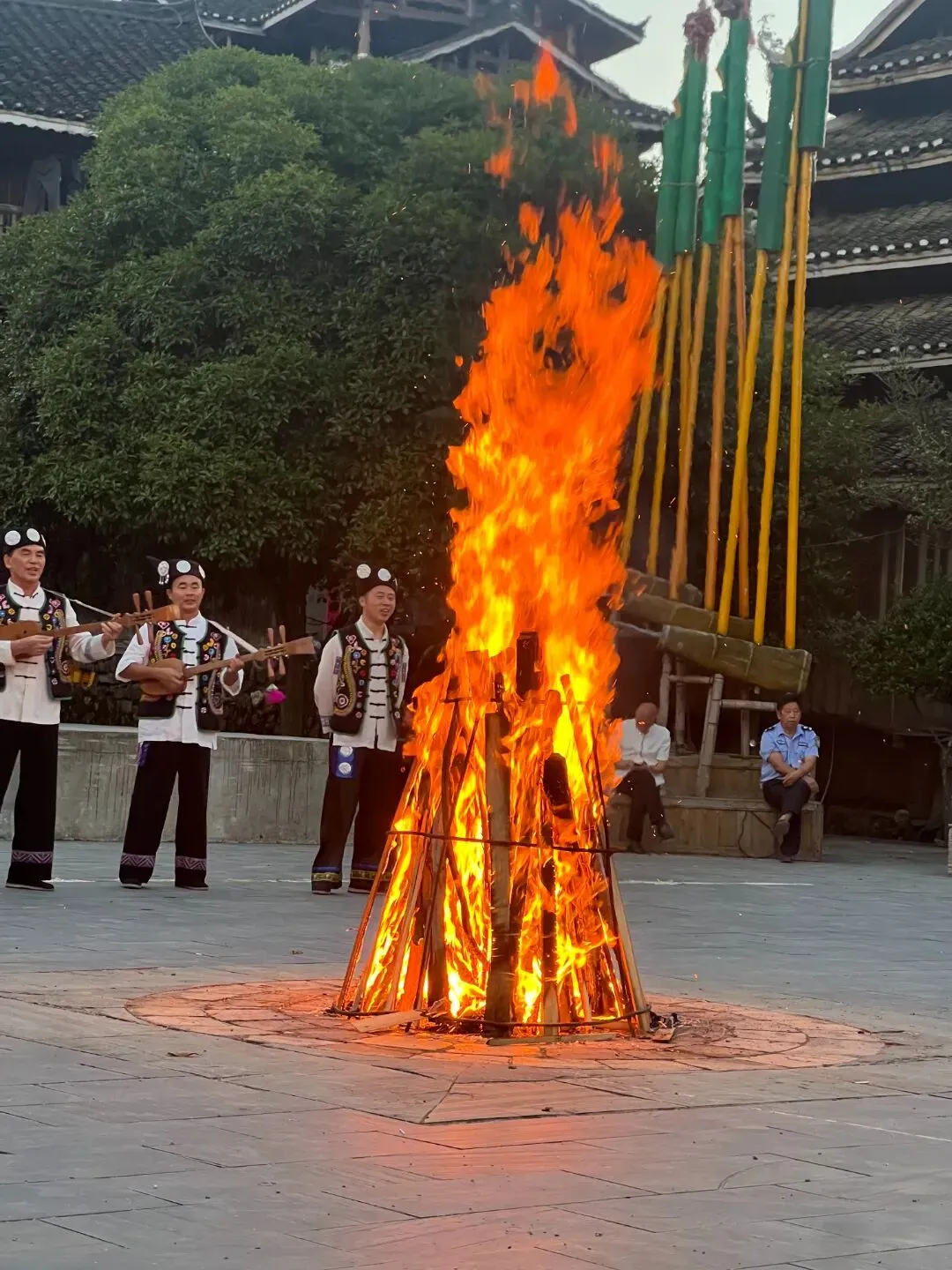
A photography collection by Luo Zhilei, a Dong primary school student
VI. Farewell: A Summer Folded into Envelopes
Seven days of co-creation passed almost before we realized it, and suddenly the day of departure had arrived.
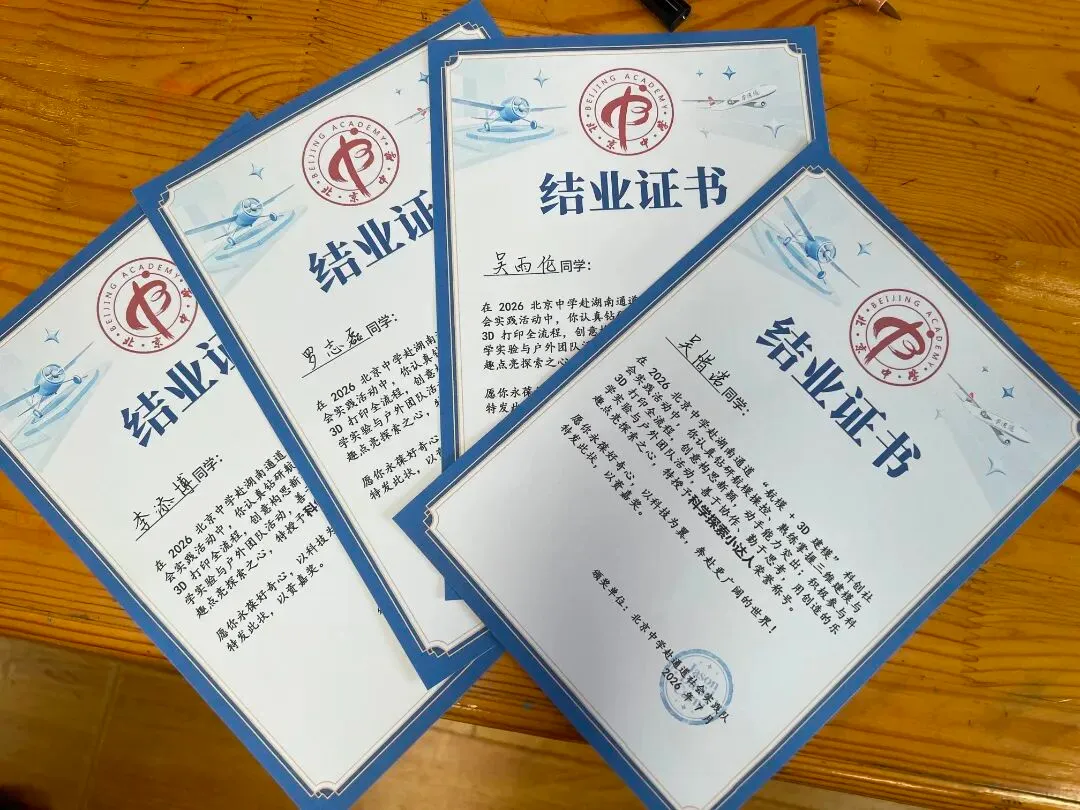
At the final ceremony, we prepared personalized certificates for every child: 'Model Aircraft Pilot,' 'Creative Modeling Star,' 'Young Science Explorer,' 'Junior Codebreaker.' Each title was chosen to recognize something the child had discovered or achieved during the week. They held the certificates high and posed for photographs with their friends, pride written openly across their faces.
When it was finally time to leave, the children crowded around us, unwilling to let the moment end. One after another, they pulled out letters they had prepared in advance, carefully folded and pressed firmly into our hands. The thick sheets of paper, covered in young handwriting, recorded the happiness and discoveries of those few days: the nervous excitement of controlling an aircraft for the first time, the pride of completing a first 3D model, the astonishment of understanding a physical phenomenon, the delight of cracking a code. The language was simple and sincere. One child had written quietly, 'Thank you for showing me that there are endless possibilities beyond the mountains. I want to study hard too, leave the mountains one day, and see a bigger world.'
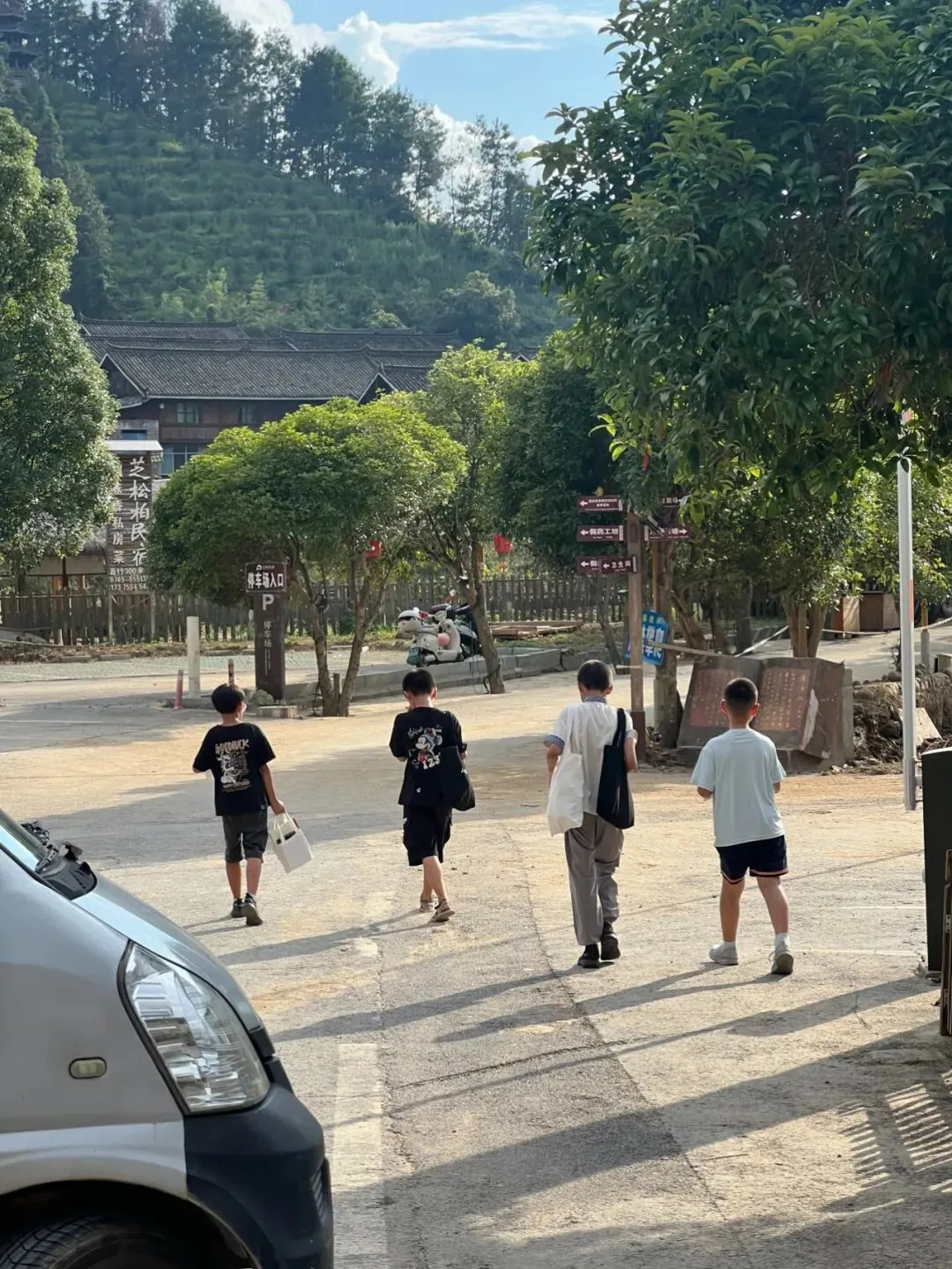
Every sentence seemed to strike somewhere deep inside us. Looking at the children's reddened eyes and reluctance to say goodbye, we too struggled to hold back our tears. We waved from the school gate as their figures became smaller and smaller in the distance, yet in our memories they remained fixed forever inside that blazing summer.
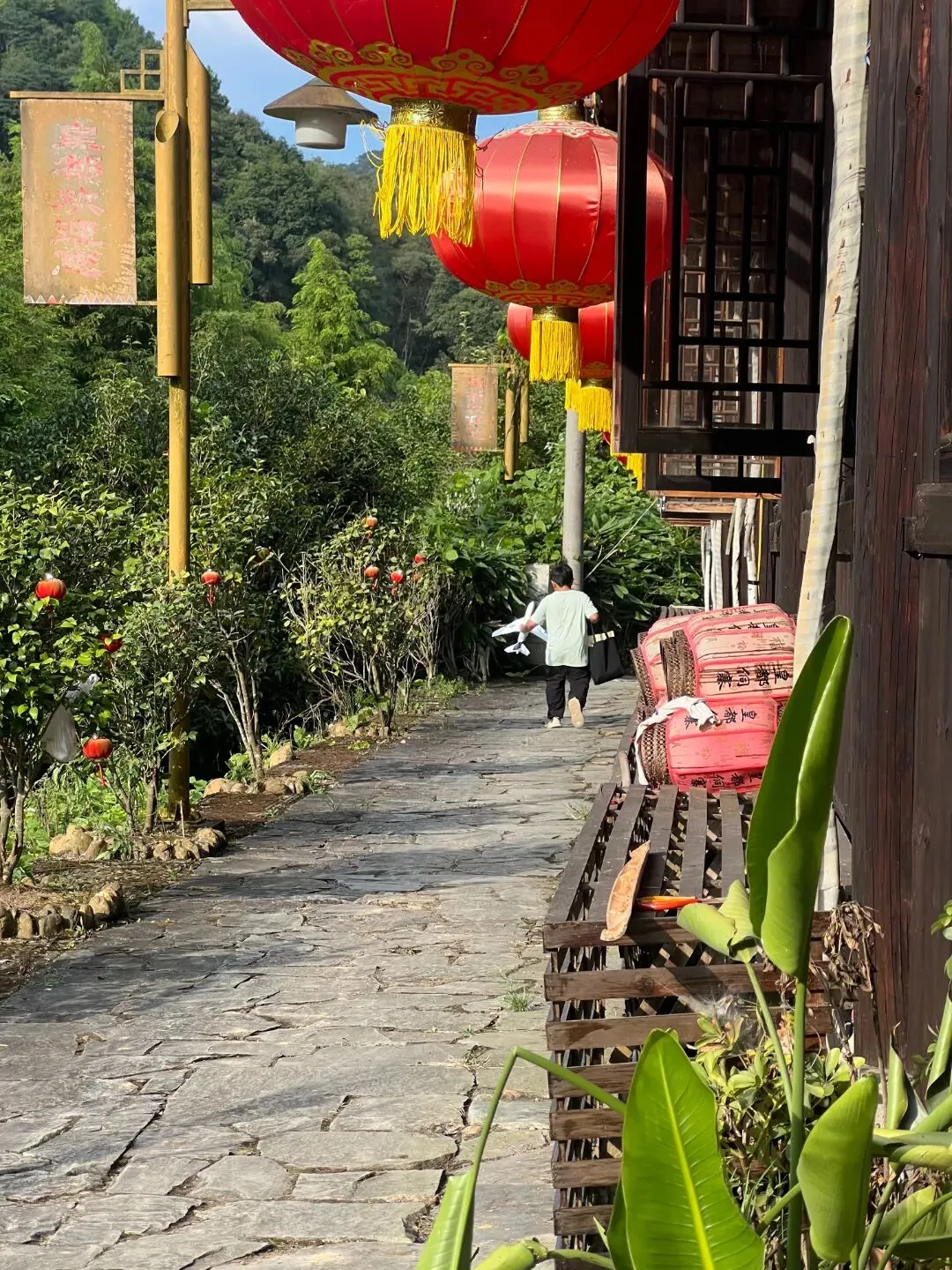
Some people say that seven days cannot change very much. Perhaps they are right. But we still believe that once certain seeds are planted, they can take root and grow toward the light. Through RC aircraft, 3D modeling, physics experiments, and cryptography, we opened a few small windows onto the wider world and planted seeds of curiosity, scientific exploration, and the courage to travel farther.
For us, the week became a lesson in growth as well. Before this journey, we simply loved aviation, aerospace, 3D modeling, and mechanical design. We had been used to studying them alone, absorbed in our own interests. Tongdao taught us something deeper about what passion can mean. A passion reaches further when it is shared — when something you know and love can become a small source of light for someone else.
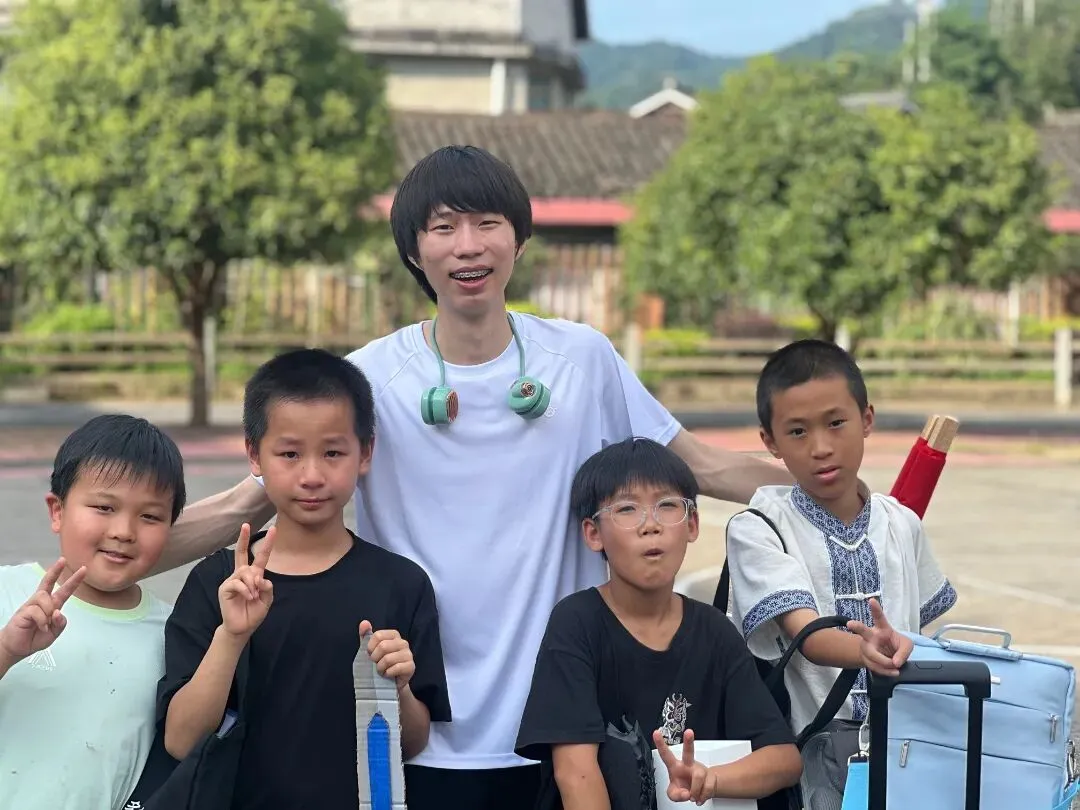
The mountains are high, and the road between us is long, but there will be other days ahead. We will keep the promises we made to the children and continue sharing what we love with them. This story, begun in the height of summer and carried across mountains and rivers, is a story of creation and growth.
It has not ended.
This AI translation is provided for reference only. Please verify with original Chinese version.