#SummerAtBAID: A Journey of Dreams in Tongdao, Hunan
When we first heard about the project — co-creating with children in the Dong countryside of Hunan — our minds filled with imagined scenes. In the city, concrete and steel seem to carry the weight of everyday pressure, and the pace of life in Beijing, the city where we have spent the past fifteen years, has always seemed to hold an unspoken tension. In our imagination, primary school children in rural Hunan would be running freely through fields and mountains, away from the distractions of electronic devices, spending their days playing simple games with an easy, childlike innocence. The scenery, of course, would be beautiful, and somehow their worries would be fewer too. Yet when we finally arrived and spent a week living alongside them, much of what we had imagined before the trip was quietly overturned.
I. On the Road · Half a Day in the County Town
July 7 was spent almost entirely in transit. After seven hours on the high-speed railway, we finally arrived at Huaihua South Railway Station. Standing on the platform with our luggage, the first thing we felt was the humid heat. Unlike Beijing's dry summer heat, here the air seemed saturated with moisture, seeping into every pore. As the coach left the station and headed toward the county town, the landscape outside changed almost at once. Green gradually took over the windows. Houses emerged between overlapping layers of forest, built largely from timber. They reminded us a little of Beijing's courtyard houses, though they carried a far more rustic simplicity. Terraced fields, roads, and lakes appeared one after another beneath the blue sky, revealing a landscape we had never seen before — fresh, calm, almost as though we had reached the other side of the world.
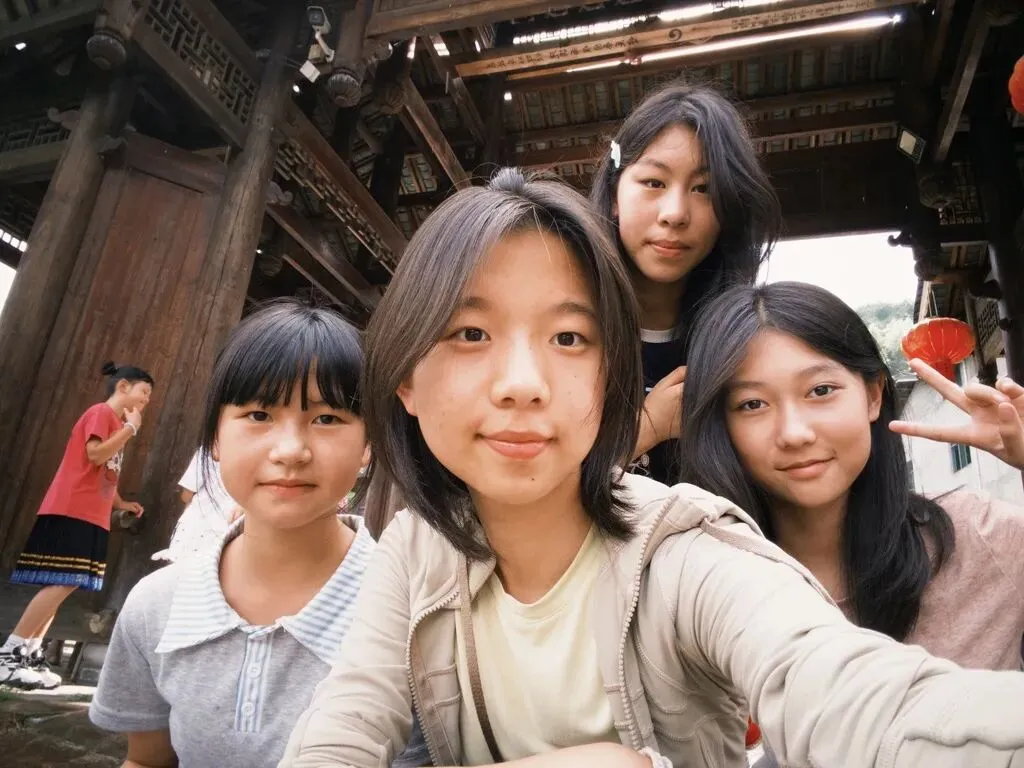
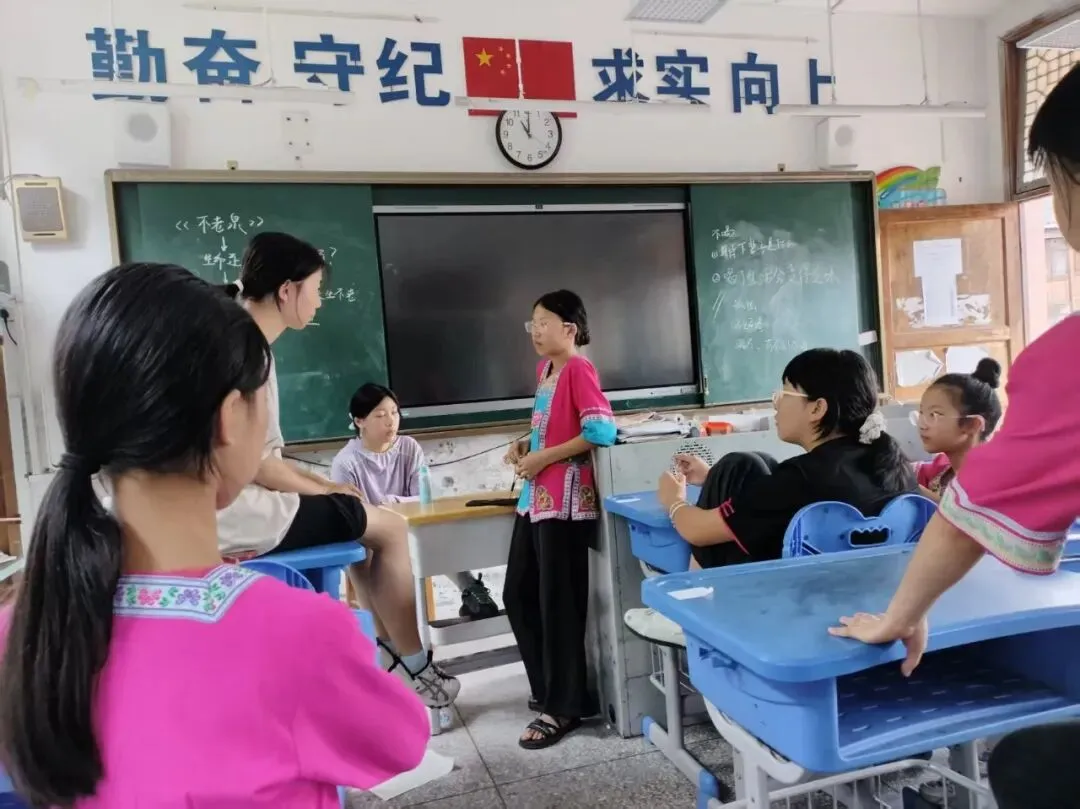
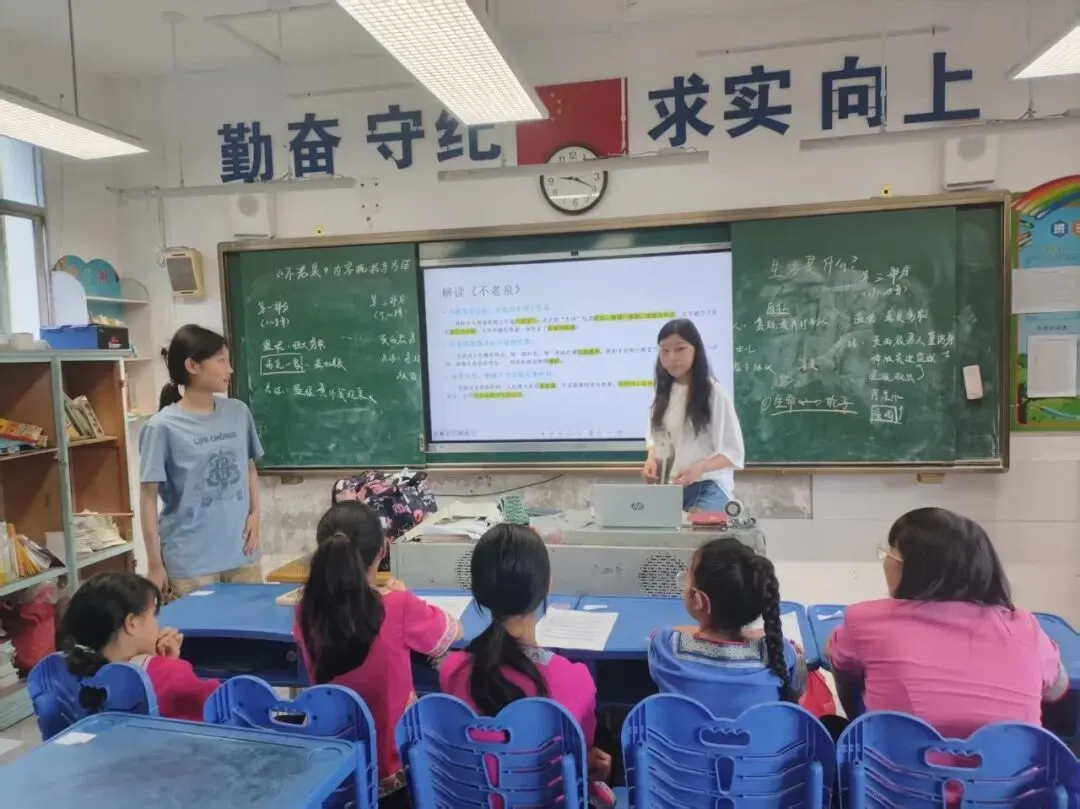
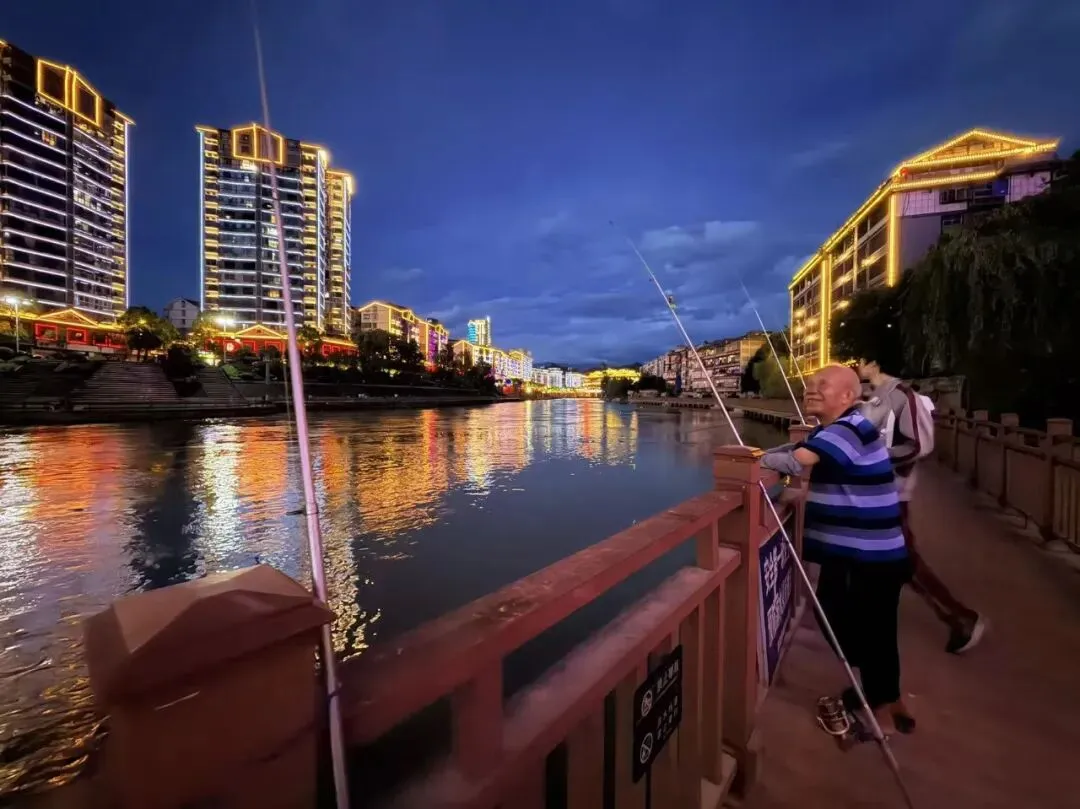
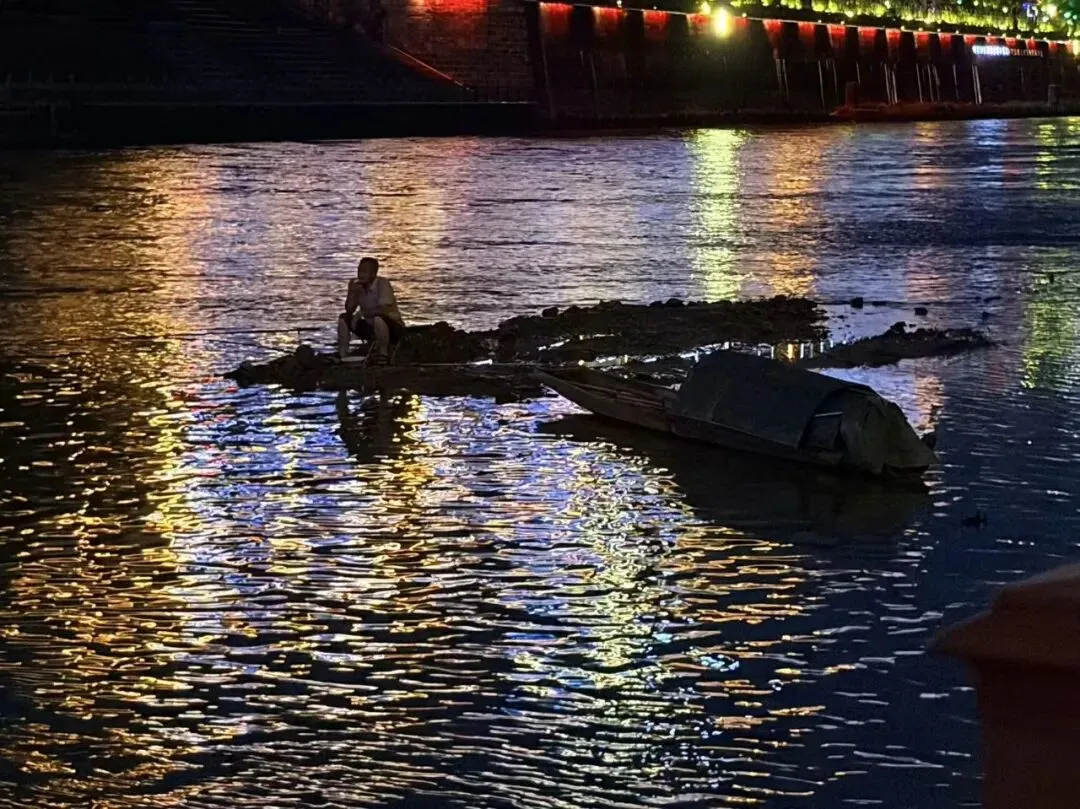
We spent our first night in a hotel in the county town. It was hardly luxurious, but it was spacious and clean enough. Dinner that evening made one thing unmistakably clear: we were truly in Hunan. It was spicy — very spicy — and undeniably delicious. Afterward, we wandered along the river and through the town. Yellow lights came on along the covered bridge, while colored lights traced the railings, casting rippling bands of color across the water. The evening wind seemed to tease the reflections, pushing them forward and pulling them back. Several fishing rods stood along the riverbank, watched by elderly and middle-aged men in straw hats. The rods reached into water painted with strange, almost dreamlike colors, as though someone had plucked the sunset from the sky and laid it upon the river. Among soft mud and tangled aquatic plants, a small fishing boat drifted past. An old man pushed it forward with a long pole, as if searching for a dream. Whose dream, I wondered?
II. July 8: Pingtan Primary School & Pingtan Village
The next day, we finally left the county town and headed deeper into the countryside to meet the students of Pingtan Primary School. The school's signboard was made of wood. The campus itself was larger than we had expected and had a considerable range of facilities, including an auditorium, reading room, laboratory, and computer classroom. When we first walked in, both sides were visibly reserved. The students stayed close to their teachers, while we, doing this kind of activity for the first time, were not quite sure how to begin either. We tried to approach them and asked what grade they were in. Their eyes shifted away and no one answered. Only after their teacher encouraged them did they quietly reply, unevenly and almost in fragments, "Grade Five." Through a series of icebreakers, however, conversation gradually began, and little by little we became familiar with one another.
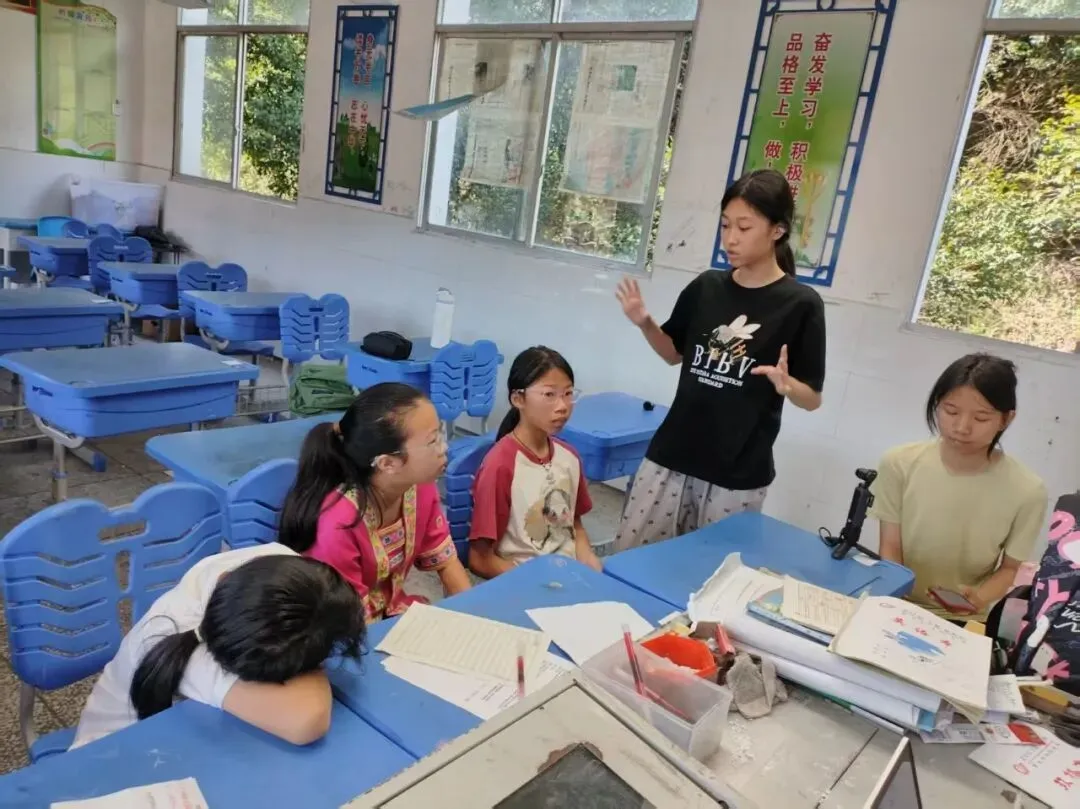
In our pre-trip research, we had learned that the Pingtan Reading Room was especially well known because it had been designed with support from the University of Hong Kong, so it naturally became our first stop. The moment we entered, we understood why. The scent of fresh timber lingered in the air. Two spiral staircases curved upward side by side, and through the windows beside them stretched pastoral scenes painted by nature itself: rivers winding through broad fields of green, Dong villages scattered across the landscape. It seemed like an extraordinarily peaceful place to read. I conducted a few small interviews there and asked one long-haired girl, "What do you think the world is like?" She sat on a little stool, looked out of the window, and thought for a long time before saying, "I think the world is unfair." I was taken aback and asked her why. She said she did not want to talk about it. I asked whether she had ever thought about changing it. She answered that she couldn't, so she had given up. I thanked her for being willing to speak with me and reveal even that small part of what she carried inside. My feelings were complicated. I still do not know whether the world is fair, but I had never expected a child her age to have confronted that question so early. I told her, "I won't tell you that the world is fair. But I hope you can still find a little hope and beauty within an unfair world."
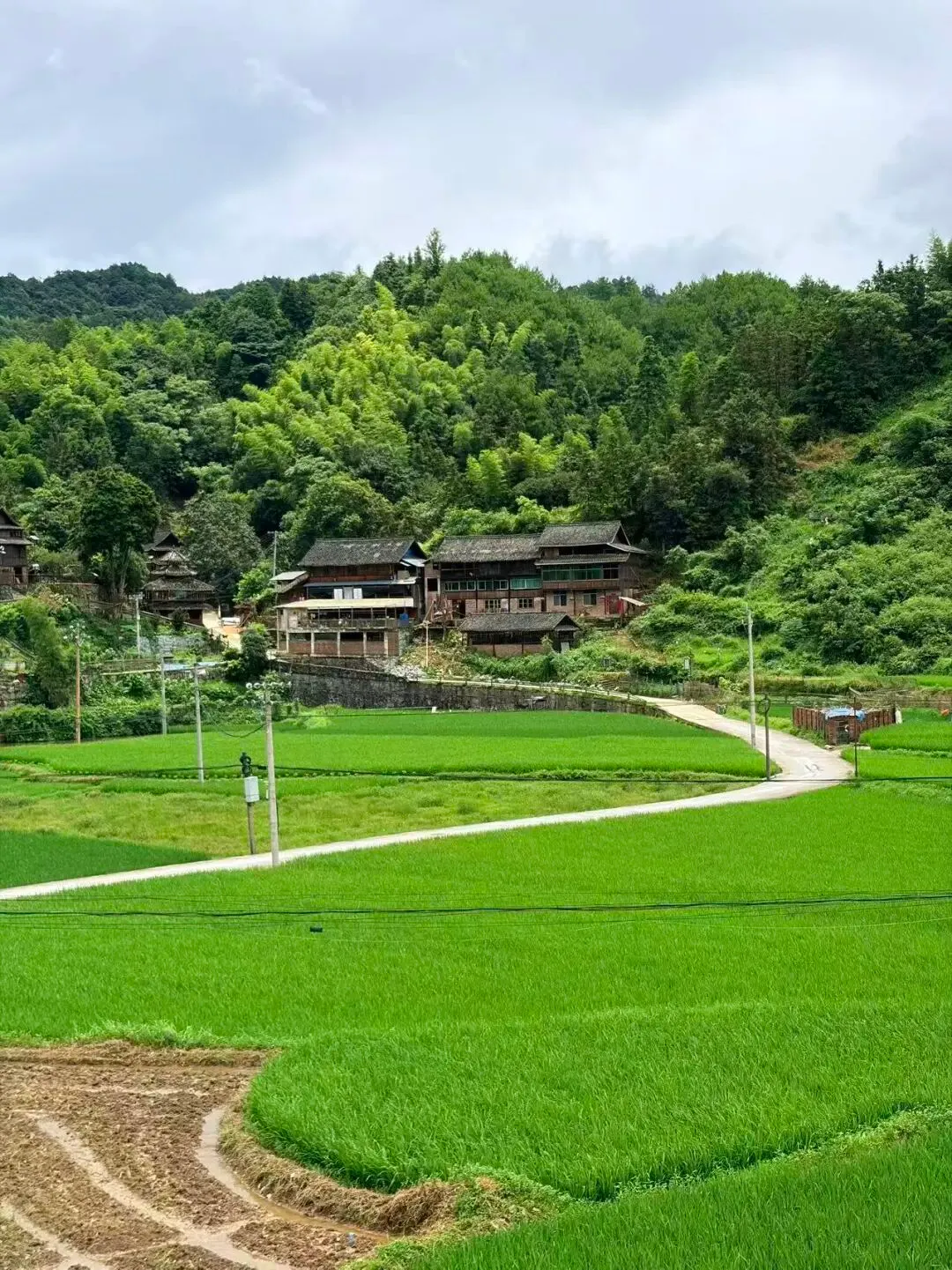
That afternoon, we walked through Pingtan Village. One detail I found especially interesting was the way local events were announced: information such as the activity and its time would be written in brush calligraphy on a large sheet of red paper, then pasted onto the side of a house. The village homes stood close together, and nearly everyone seemed to know everyone else. People gathered on stairways and in pavilions, chatting in the Dong language. When we stopped in a pavilion to take photographs, the children joined in too. They were surprisingly good at it. Everything felt easy and natural.
III. July 9: First Meeting at Huangdu Primary School
From Pingtan Primary School, we moved on to Huangdu Primary School. The campus felt open and spacious, with tidy desks and chairs. The software on the classroom display screens was even the same as what we used at our own school, and the office had printers. The teaching building was constructed almost entirely from wood. Standing in the corridor and looking outward, all we could see was green: trees layered across the mountains, leaves overlapping beyond the classroom windows. It felt as though every shade on a green color chart could be found there.
On our first day at the school, a clear, bright "Hello!" suddenly came from above us. We looked up and saw little heads poking out of the windows. The children were dressed formally, probably in traditional Dong clothing. The moment they noticed us looking back, they laughed and ran into the classroom.
And just like that, another story began.
IV. July 9-12: Finding Their Dreams, and Ours
During our five days at Huangdu Primary School, I met many people. Two children in particular stayed with us. One wore pink glasses, and when she smiled it felt as though sunlight had slipped into the classroom. The other was always insisting, "I'm crying because I'm laughing," even as he hid his tears behind a wooden sword.
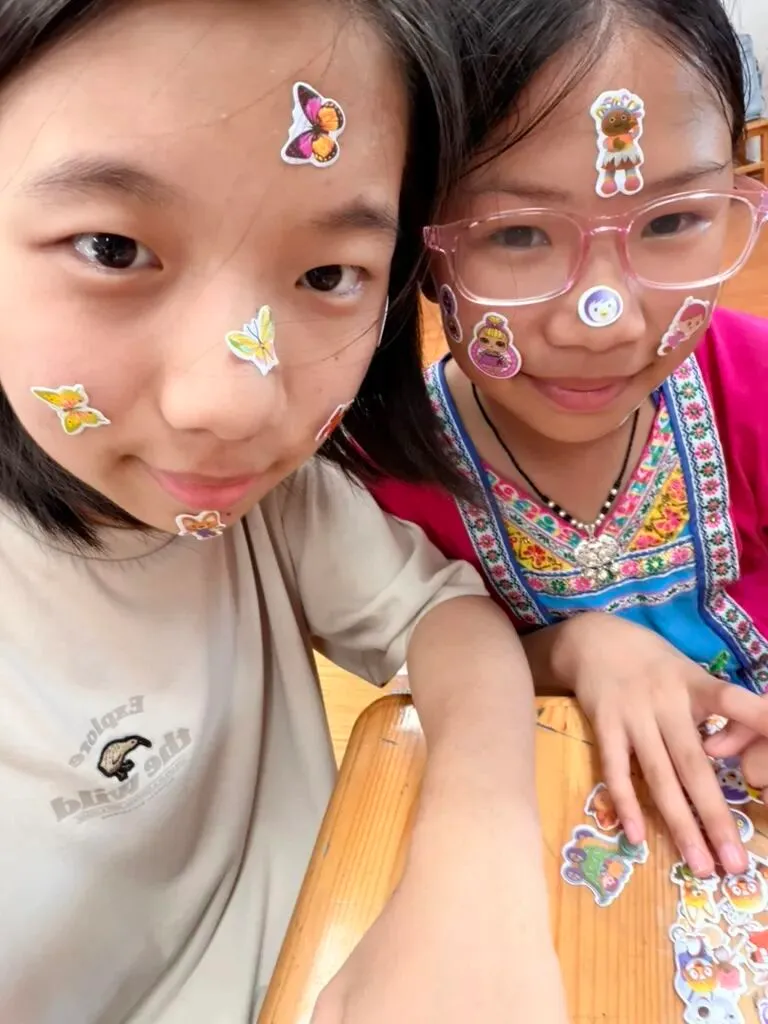
By the end of those five days, we realized that they were not only themselves. In some ways, they reflected Huangdu as a whole, and the bright yet sensitive hearts of so many children growing up on this land. That is why I want to write about them separately. It is not because they were somehow more special than the others. It is because through them, I saw exactly how my original image of "carefree children in the countryside" was overturned — gently, honestly, and powerfully.
V. A Future Journalist
Among the children in our co-creation activities, one girl stood out almost immediately. She wore a pink outfit and pink plastic glasses, and told us that all the decorations on her clothes had been made by her family. We were amazed by the craftsmanship. Her clothes were beautiful, patterned in ways none of us had seen before, with vivid colors throughout. The blue collar was densely embroidered with distinctive Dong motifs, while a blooming pink peony had been stitched into the blue fabric across her chest. Yet what made the outfit especially beautiful was the radiant smile that went with it. In her hair was a wooden pin ending in a traditional Dong auspicious flower, symbolizing peace and good fortune. As she bounced around, the tassel at the end bobbed with her, and the sight of her always made us smile.
She told us she was in Grade 4. To start a conversation, one of us asked whether she had a favorite celebrity. She said she liked G.E.M. and especially loved listening to The One and Only. By coincidence, G.E.M. had been my favorite singer when I was in Grade 4 too, and I could see how excited she was when she realized we shared that connection. From then on, the two of us spent more time together than I did with almost anyone else, and we talked about everything.
On the first afternoon, she came over carrying a notebook and asked us to sign it. I happened to be the first person she asked. After collecting everyone's signatures, she turned to me and said, "Do you know why I asked you to sign first? Because you're my best friend!" Looking into her completely sincere eyes, I was unexpectedly moved. Somehow, she had accepted me after only half a day.
When we learned how to weave an auspicious flower, she kept telling me how smart I was. Yet she was just as quick herself. She told me she wanted to become a journalist one day, so I handed her my DJI camera and let her interview everyone in our group. Every question she asked had clearly been thought through carefully. Later, when we explored recitation together, she was the only one who immediately volunteered. She spoke with emotion, and there was warmth in her words.
As our first day drew to a close, she began giving me updates on the time we had left together: "We still have 25 minutes... 15 minutes... 10 minutes..." We still had five more days, yet I could already hear reluctance in the way she counted them down. When we parted that evening, she remembered my name, said "See you tomorrow," and then quietly added, "I'll give you a present tomorrow." I went back feeling absurdly happy.
The next day, she was at the window again. This time she called my name loudly: "Zhang Xinran!" When I entered the classroom, she ran over and hugged me. She said she had missed me and gave me a bracelet. When it came time to choose activities, she told me, "Wherever you go, I'll go. I'm following you."
During the first class, we left the classroom and walked outside the school. She carried the DJI camera, filming eggplants, leaves, the sky, signboards, bridges — everything around us. "This looks nice. Let's film this." Sitting on some steps, she suddenly asked me, "Do you know how they built those pointed towers on Puxiu Bridge? I've always wondered. The bridge doesn't use a single nail, so how did people even stand up there to build them? It's more than a hundred years old, and they didn't have modern tools back then."
The question stopped me. The bridge stood right beside our guesthouse, and I crossed it every day, yet I had never really looked at it. I had never thought to ask a single question about how it had been built.
Later, we found a teacher and asked, but even the teacher was not entirely certain. Eventually, we turned to AI together and found something close to an answer. At school she once told me, "You know, I'm unbelievably curious. But curiosity killed the cat." After spending several days with her, I certainly understood what she meant by her curiosity. Yet to me, it was no warning sign. It was a powerful weapon. It was hunger for the world, and hope shining through the way she looked at life.
When I was younger, I too could sit for hours reading One Hundred Thousand Whys, absorbed by question after question. Somewhere along the way, however, I became used to burying myself in schoolwork and forgot to look around me — at my surroundings, at the world itself. She reminded me how joyful discovery could be.
That afternoon, she drew on my iPad, sketching many of us. Her technique was hardly polished, but she caught something recognizable about every person. I asked her whether, if she were given the chance to study journalism seriously, she would be willing to stop spending so much time scrolling through short videos on Kuaishou. She did not hesitate for a second. She nodded hard and said yes.
What I saw in her eyes was pure love for something.
I began studying recitation when I was very young, and the reason I had brought that skill here to share with the children was simple: I truly loved it. I often say that recitation is one of the things that makes me who I am. In her, I saw a glimpse of the younger version of myself who loved it just as fiercely. For a moment, those two figures seemed to overlap, and I felt almost dazed by the resemblance.
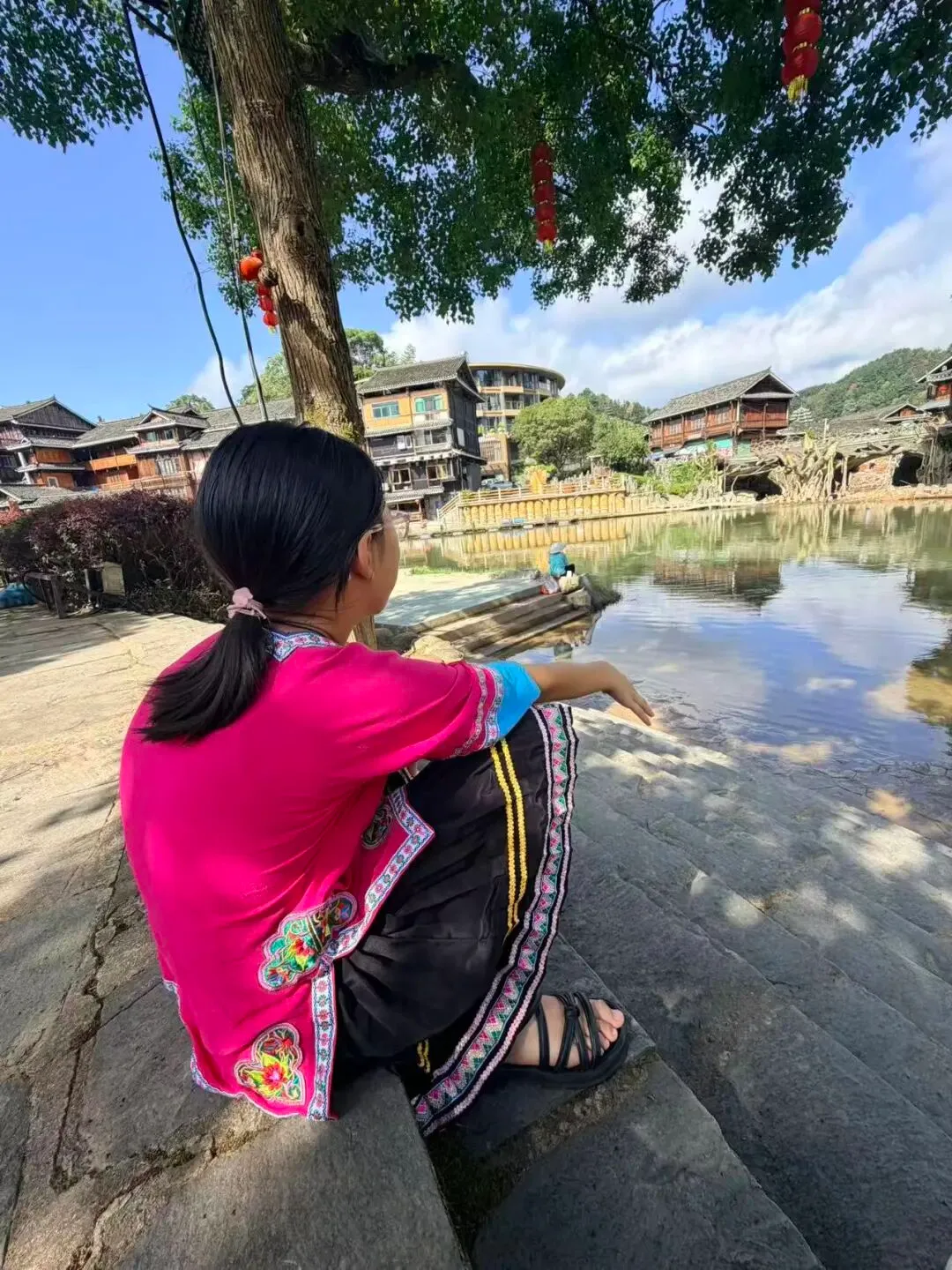
She also told me about many of her worries. Their lives were nowhere near as effortless as I had imagined before coming. Their concerns were strikingly similar to those of the students at Pingtan Primary School, and surprisingly similar to the things I worried about when I was their age. Yet she told me that even so, she was happy most of the time. She was still full of hope.
Then, suddenly, it was almost time to leave.
Five days were nowhere near enough for me to understand her completely, yet she had already given me so much to think about and so much to remember. That night, I wrote her a letter. I barely planned it. I simply let the pen and paper find their own path, and before I knew it I had filled three A4 pages. Over the years, I have written countless long messages and letters to teachers, classmates, and friends. I never really expect replies.
She was the only person who wrote one back.
On the final day, she pressed the letter into my hand. Two entire pages. I froze.
She told me, "I cried for a long time after I read your letter yesterday. The words at the end got smudged because of my tears."
Every sentence in her letter seemed to answer something I had written. She said she had given me the bracelet because it was made of beads threaded together one by one, and that meant we should stay together like the bracelet and never come apart. She wrote that in five days she had met "a perfect girl" — me. She wrote that tears could not keep someone from leaving, but she had written the letter through her tears because she wanted to remember that she had once had an important friend.
Back at the guesthouse, I read those simple, unadorned words and burst into tears. She was my best friend in Hunan, and also the only friend there who had become so deeply mine. How could I possibly not miss her?
From the morning of our last day, she kept saying that she would definitely cry when we said goodbye. Definitely. Yet throughout the day she played happily and laughed constantly, so I started to think she had only been joking.
Then we reached the playground at the end of the day.
A boy was standing there holding the wooden sword they had made, using it to hide his face as he cried. I pointed him out to her. She ran over, teased him, and laughed — and then, still laughing, suddenly threw herself into my arms and began to cry.
I held her for a long time. I could feel her tears, and mine were close behind.
All day I had been taking photographs of her, trying to preserve a few more fragments of our time together. Earlier, I had asked her, "What am I supposed to do if I miss you when I'm back in Beijing?"
She said, "Then look at the photos we took."
My own tears fell then. But I did not want to make her even sadder, so I wiped them away and tried not to sniff.
She told me that she cried easily, that she was sensitive.
I told her, "Being sensitive can be a good thing. It means you can feel the beauty of life and the happiness inside ordinary moments more deeply. You experience the world with greater intensity than some people do. And honestly, that's something a journalist needs."
I had brought almost nothing valuable with me on the trip, only one book: Shi Tiesheng's Original Sin · Fate. His writing has comforted me many times, so I gave the book to her, hoping it might one day comfort her too. On the cover I wrote:
"In the language of God, 'walking' and 'the road' share the same sound. So walk boldly along your own road, and fulfill your dream."
She told me many things. Her family's shop had been washed away in a flood, and they were busy rebuilding their home. She had once entered a reading competition, but because she came from the countryside, she said she had been made to take second place even though she should have ranked first. The more I learned about her, the more I admired her. She was optimistic and brave. She was quick-witted too, chatting with us about gossip, doing ridiculous impressions, and noticing tiny details other people missed.
On the last day, I asked the children to complete a short poetic line:
"The thing that makes me happiest is —"
She became very excited and told me not to look until she had finished. When she finally showed me what she had written, it said:
"the first time I met you."
The happiest part of my trip to Hunan was meeting you.
I will always remember a girl who longed to shine.
VI. A Little Boy Who Was Always "Crying from Laughter"
On our first day at Huangdu Primary School, we played some icebreaker games. Our performance was probably a little too dramatic, because one boy suddenly buried his head in his knees and began to cry. I thought we had frightened him and hurried over with a tissue. He wiped his eyes and insisted, "I'm crying because I'm laughing!"
At the time, I thought he was very strange.
The other children told me he was the most mischievous one, always fighting or swearing, so for a while I did not dare approach him much. He became closest with Li Xiaoyao, following him around every day, flying model planes and learning 3D modeling. I once watched him work at a computer, quietly and intently constructing the Empire State Building. He borrowed Li Xiaoyao's phone and wandered around taking pictures, then used Doubao and AI to blend Egyptian pharaohs, mummies, and our faces into ridiculous images that made all of us laugh.
Li Xiaoyao was constantly praising him: "This one is great." "You're seriously talented." "That's amazing."
I watched the corners of the boy's mouth slowly lift. The change was almost imperceptible, but I saw it.
When he took photos, he became completely serious, searching for angles and changing poses. On the final day, Li Xiaoyao insisted on organizing a little photography exhibition for him. The boy looked at the photos and started smiling. Then, slowly, the smile became tears.
Just as he had on the first day, he wiped his eyes with a tissue and declared loudly:
"I'm crying because I'm laughing!"
A classmate beside me whispered, "He's actually crying this time. He doesn't want Li Xiaoyao to leave."
I already knew.
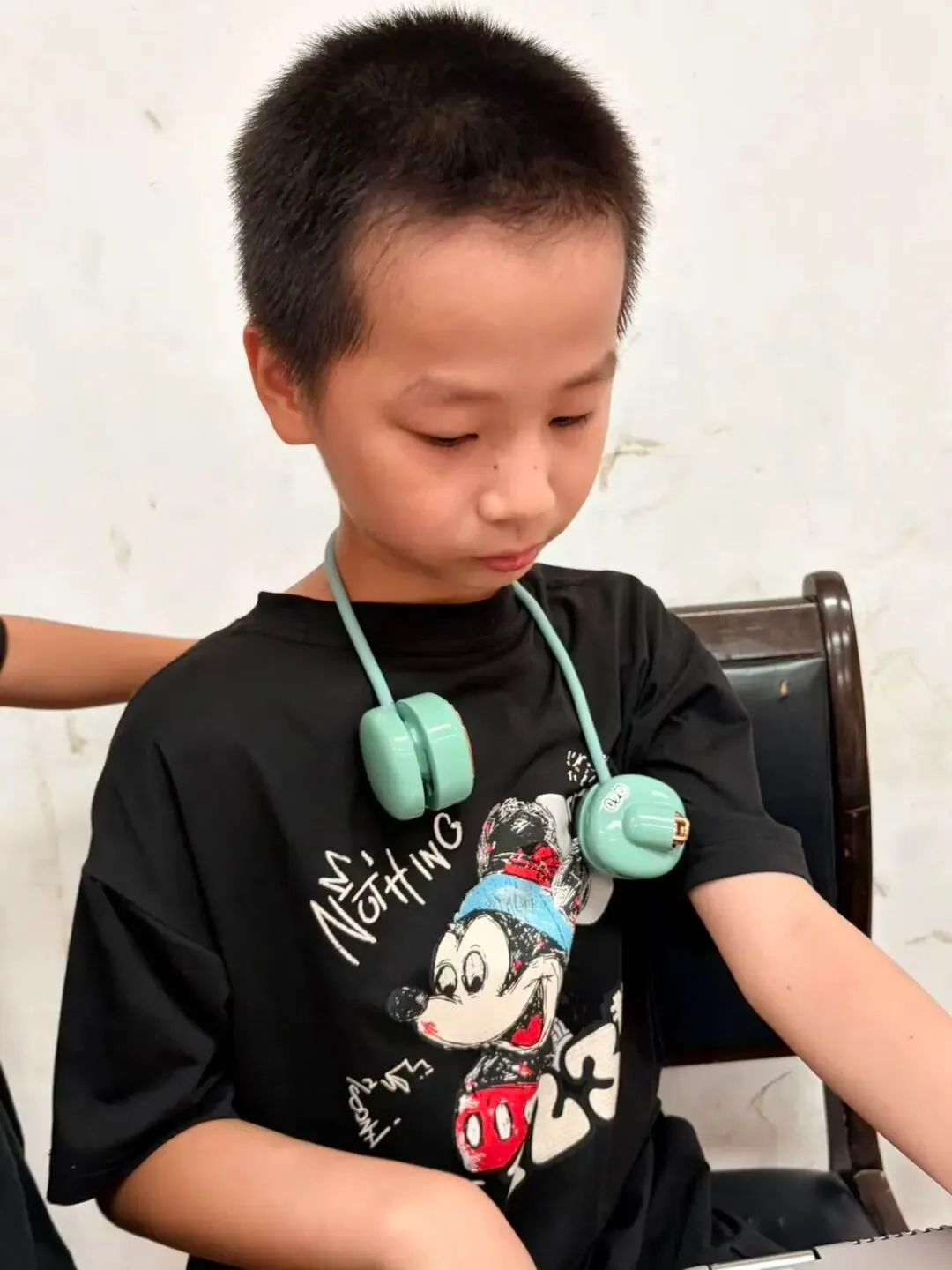
We visited his home the day before we left. At one point, he asked Li Xiaoyao to carry him on his back, but as soon as he was lifted up, he shouted, "Put me down! Put me down!" Yet when I turned the camera toward his face, he broke into the brightest smile I had seen from him all week.
When it was finally time to say goodbye, I asked whether he would miss Li Xiaoyao. He turned his head away and said he would not miss anyone. I did not expose him.
Li Xiaoyao said, "I'll come back and see you next holiday."
The boy turned around as though he wanted to say something. Suddenly he stretched out one hand and shouted, "Wait!"
He braced his hand against a board and buried his face in his arm. When he raised his head again, his eyes were red.
Li Xiaoyao stepped down.
And the boy cried in front of him.
Over those few days, I had seen his mischievous side: making deliberately ugly photo edits, wrestling with his friends, fooling around. But I had also seen how intelligent and funny he was. The captions he added to photos were always perfectly timed. His impressions of teachers were uncannily accurate. His dream was to become a beggar — although, he insisted, not an ordinary beggar. He had to become the leader of the Beggars' Sect.
And I saw something gentler too.
He came to ask me for a signature and a photo. He cried behind a wooden sword when he thought no one was looking.
I knew him for only a short time, and I cannot claim to know every part of who he is. What I saw was a clever, funny, sincere little boy who could also become extraordinarily serious when something meant something to him.
VII. Them · The Village · Us
They were far from the only children I interviewed. I carried the DJI camera around and spoke with many others too.
They had plenty of worries: too much homework, school being exhausting. Yet they had just as many dreams.
"I want to be a big boss."
"I want to be the leader of the Beggars' Sect."
"I want to become a journalist."
"A photographer."
"I want to meet Ju Jingyi."
"I want to pull the skin I want — and the character too."
Their eyes carried a kind of hope that seemed impossible to erase, bright with life.
During our village visits, we went into several students' homes. At every house, before anything else, we were offered crisp, seedless watermelon bursting with juice after the first bite. In one student's home, we saw a loom that was more than a century old. Her grandmother had begun weaving when she was twelve and had continued for more than sixty years. The walls of the house were covered in the student's certificates and awards.
This trip to Hunan gave us far more than we expected. Every day, we were soaked through with sweat. The morning humidity allowed our hair to remain presentable for perhaps five minutes before it began evolving into something resembling a barcode. Our clothes were drenched daily. The classroom had only one oscillating fan. Outside, temperatures above 35°C wrapped us in something like a steam oven, while we fought an endless campaign against bees, spiders, and crickets.
It was exhausting.
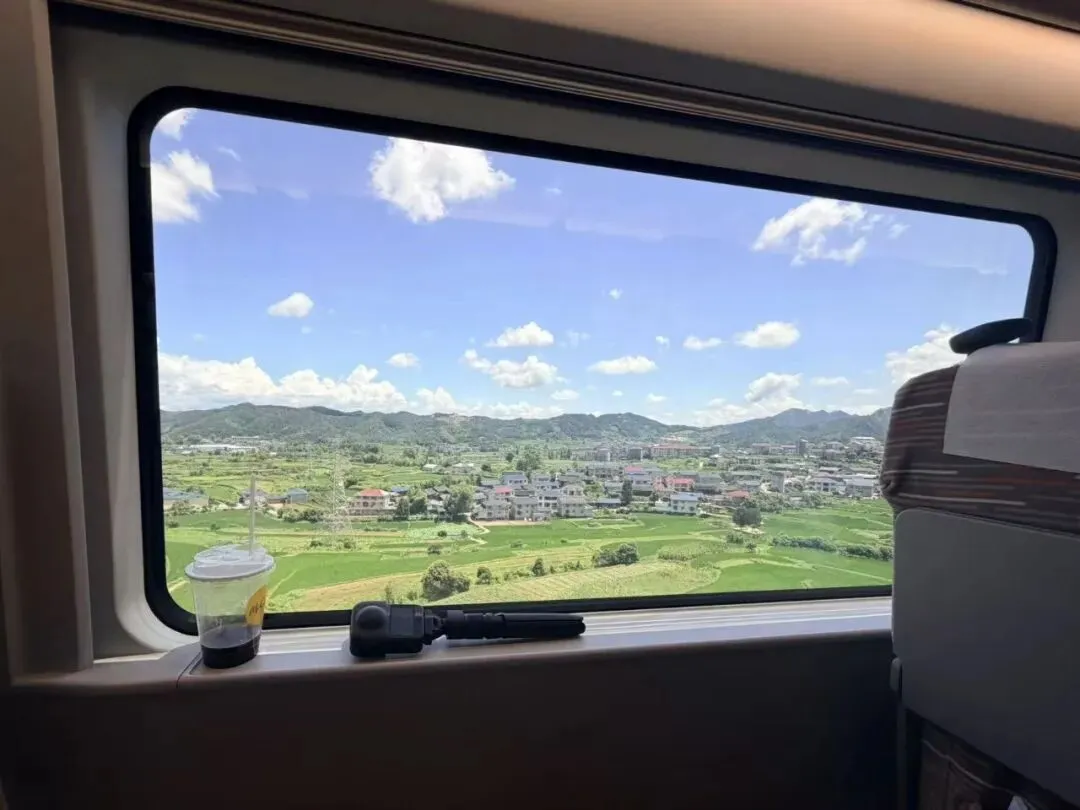
Yet sitting on the high-speed train back to Beijing, the exhaustion seemed inseparable from all the warmth, humor, and emotion of those days.
We went looking for dreams.
We found ours, and we found theirs.
And somewhere along the way, we also recovered a few childhood dreams of our own that we had nearly forgotten.
Story: Zhang Xinran
Pictures: Zhang Xinran, Liu Shuya, Fei Yufei
Editing: Li Xuan
This AI translation is provided for reference only. Please verify with original Chinese version.