#SummerAtBAID: A Unique Journey
Before we left, we imagined countless possibilities.
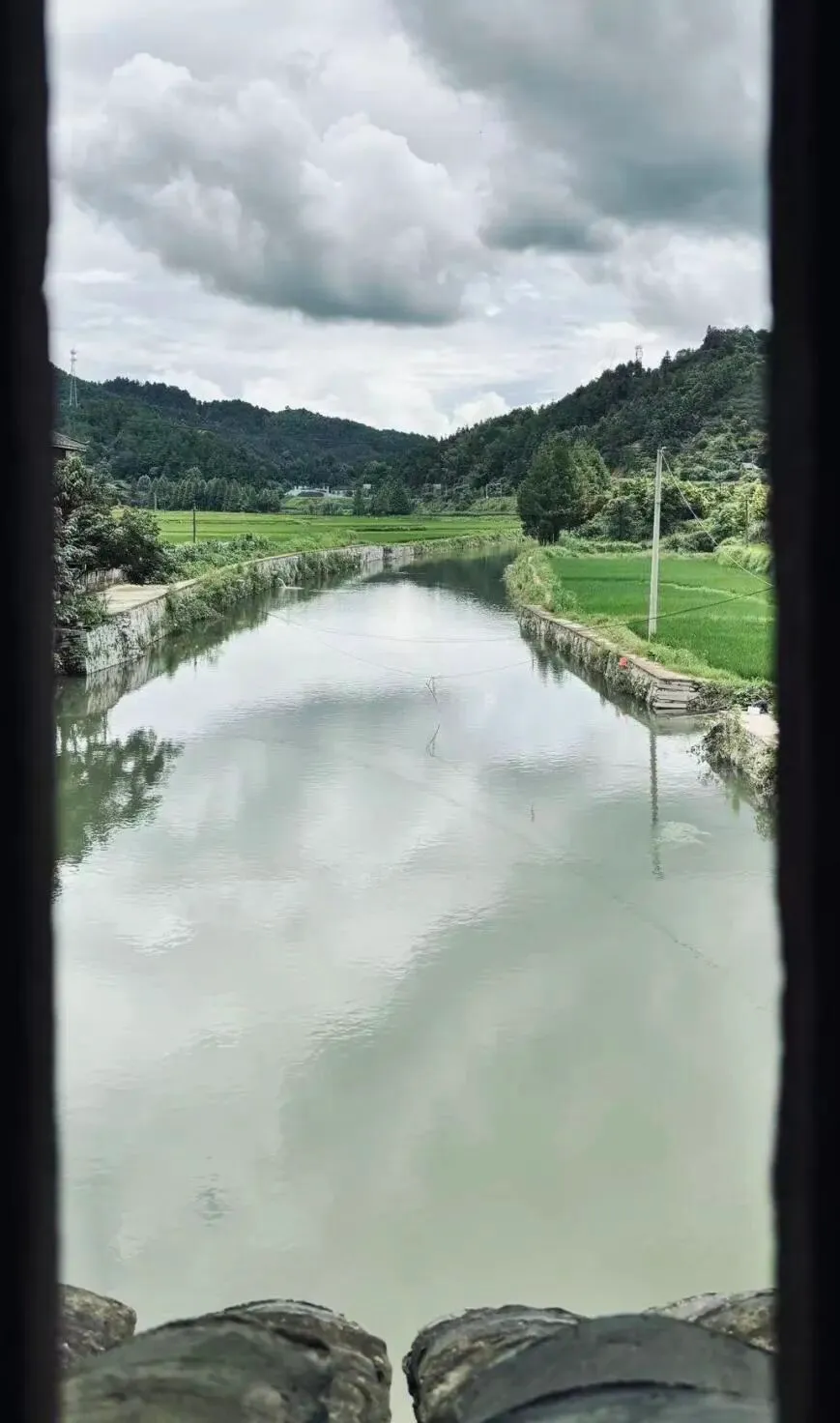
We crossed ridge after ridge and stepped into the summer of Tongdao Dong Autonomous County in Hunan. Yet the moment we truly arrived, all those expectations began to fall away.
The mountains were greener than we had imagined. When the children told us stories about life in their villages, it somehow felt as though we had known one another for years. They pressed their most genuine kindness into our hands and led us along every path they knew by heart.
This is a story about meeting, discovering, and growing together.
If you are ready, come with us into this summer among the Dong villages.
Discovering Life in the Mountains — A Local Field Guide to Biology
One "Beautiful Insect" That Began Our First Biology Lesson
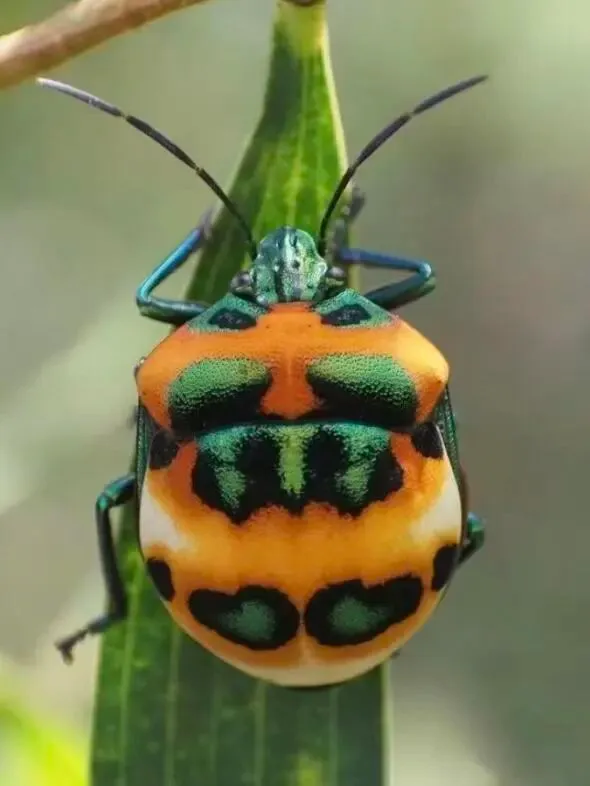
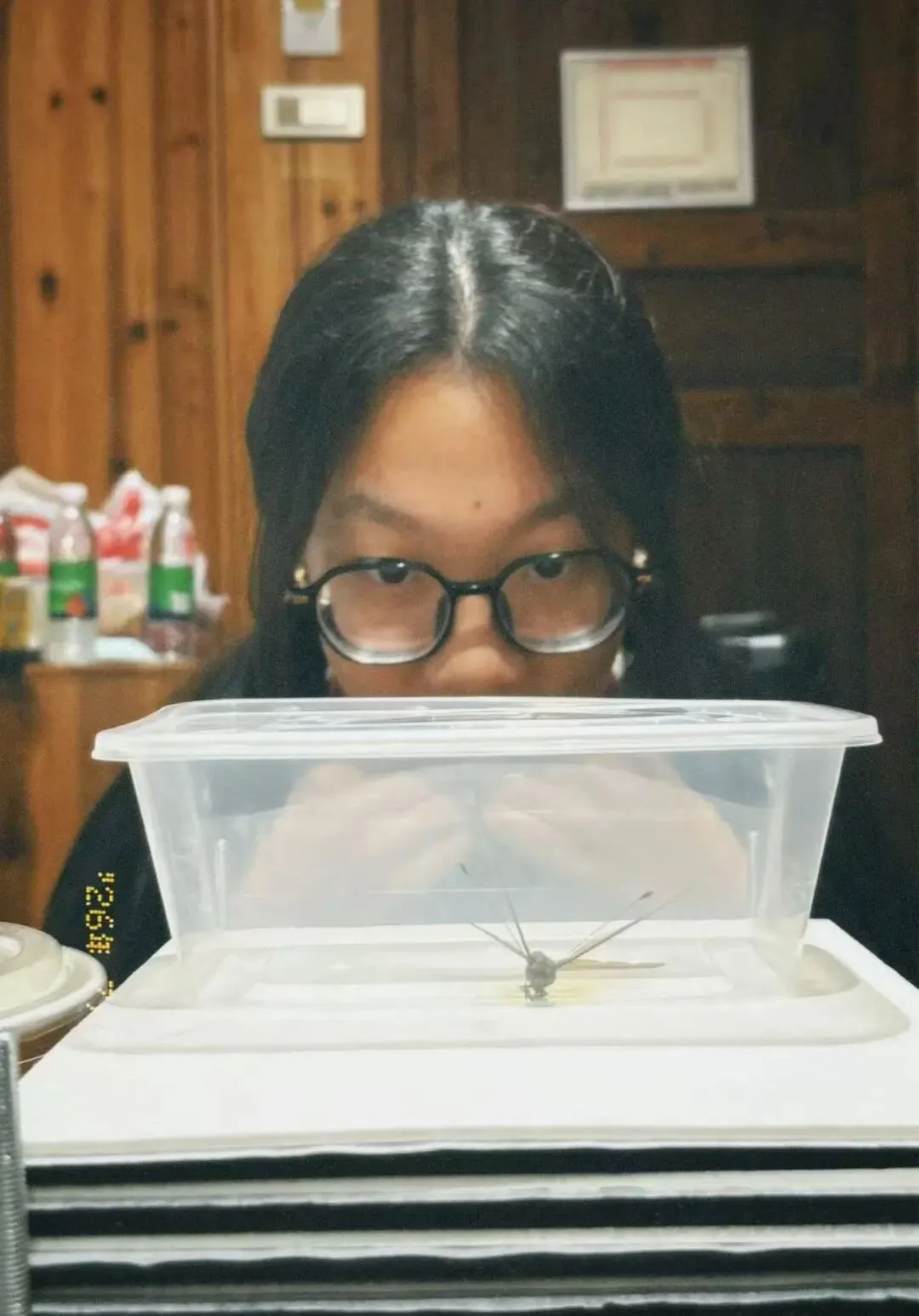
On our first day at Huangdu Primary School, we spotted an insect on campus unlike anything we had ever seen in Beijing.
Its body was a vivid green, edged with golden markings that caught the sunlight with a metallic sheen. It rested motionless on a leaf.
Our first reaction was simple:
"It's beautiful."
Everyone pulled out their phones to take pictures, yet none of us could name it. We searched field guides and compared references until we finally identified it as a camellia shield bug, a member of the same broader group many people know as "stink bugs."
Excited, we introduced our new discovery to the children nearby. Then we realized they already knew it well.
"I see them all the time!"
"There are lots of them in the woods."
"But... I don't know what they're called."
That moment made us notice something interesting.
We found it fascinating because we had never seen it before. The children barely noticed it because they had seen it all their lives. The same living creature could mean something completely different depending on who was looking.
It also made us reconsider what this co-creation project was really about.
Learning does not belong only to distant knowledge printed in textbooks. It also begins with the flowers, trees, insects, birds, and animals that have always surrounded these children. They deserve names. They deserve to be observed and recorded. And they can become a child's first window into both science and home.
So we decided to begin our biology program with the living world of the children's own hometown.
Together, we would create a Field Guide to the Living World of Our Home — a field guide belonging to the Dong villages themselves. We wanted the children to discover that their best biology classroom had been beside them all along.
Sometimes, the things easiest to overlook are precisely the things closest to us.
An insect can be like that.
So can a village.
So can home.
They Knew This Land Better Than We Ever Could
Before the class began, we were a little worried.
Would the children be shy? Would they hesitate to participate?
Those concerns disappeared almost immediately after we met them.
I began by asking:
"Are butterflies and moths actually relatives?"
"Butterflies are prettier!"
"Moths come out at night!"
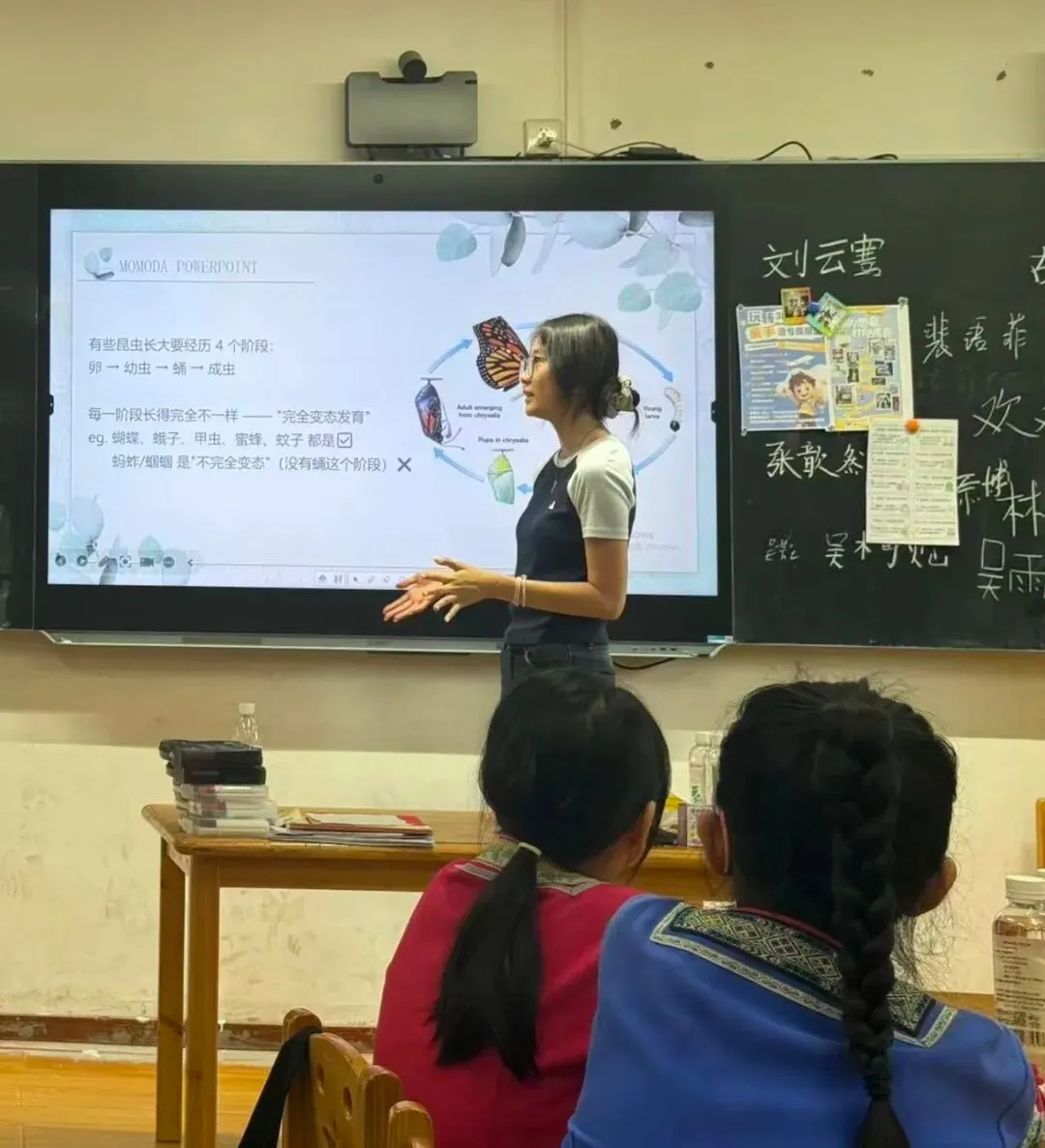
There were plenty of answers, though most stayed at the level of what the children could see at first glance. So we brought out the moth and butterfly specimens we had prepared and observed them together. We then moved on to frogs and toads, discussing different ways to tell them apart.
In class, hands were constantly raised.
During activities, students gathered around us to continue the discussion.
And once we stepped outside the school for field observation, the children became our little guides.
They led us to flower beds and grassy corners around campus, crouching close to the ground like a team of young explorers searching carefully through the plants.
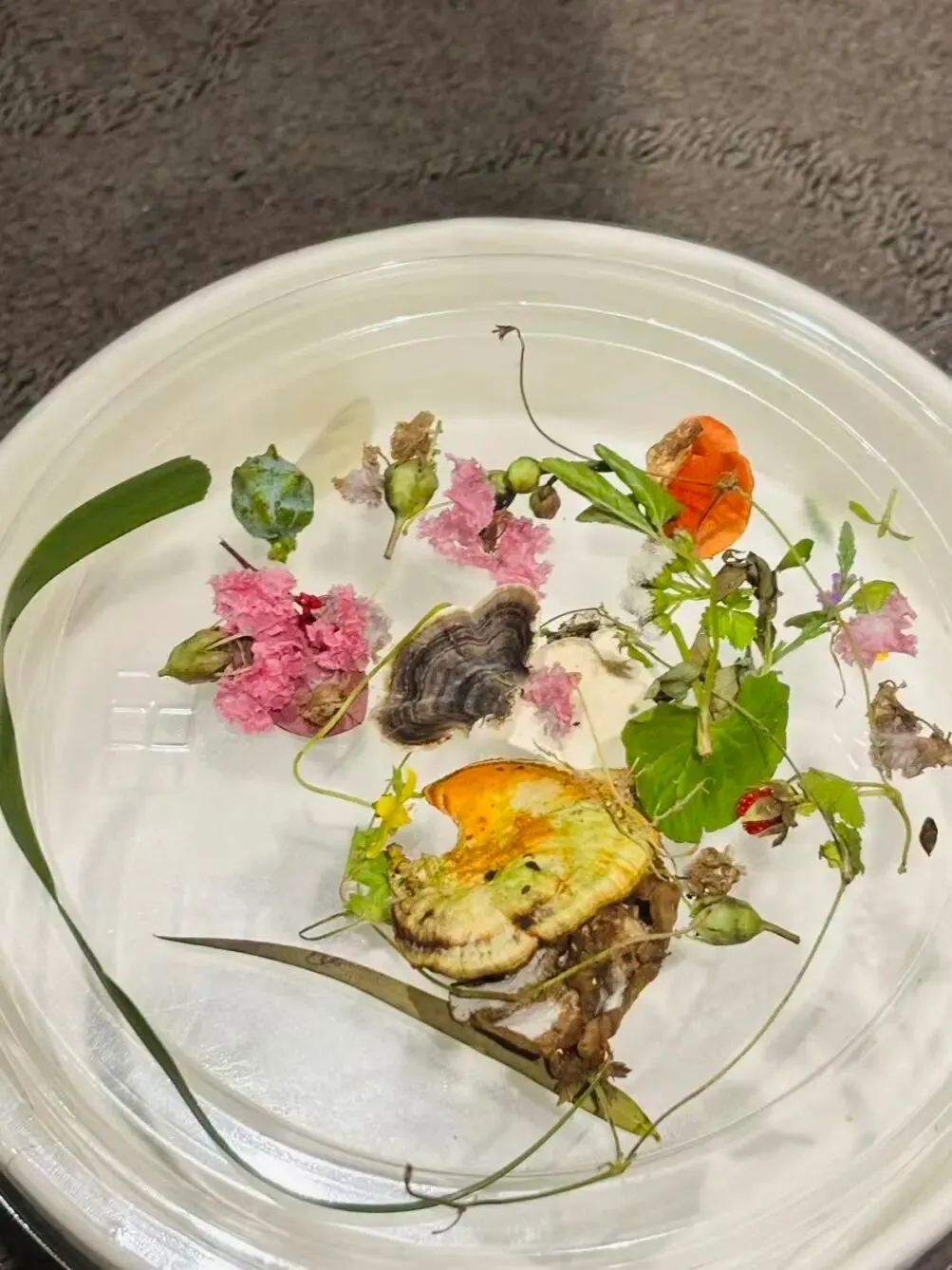
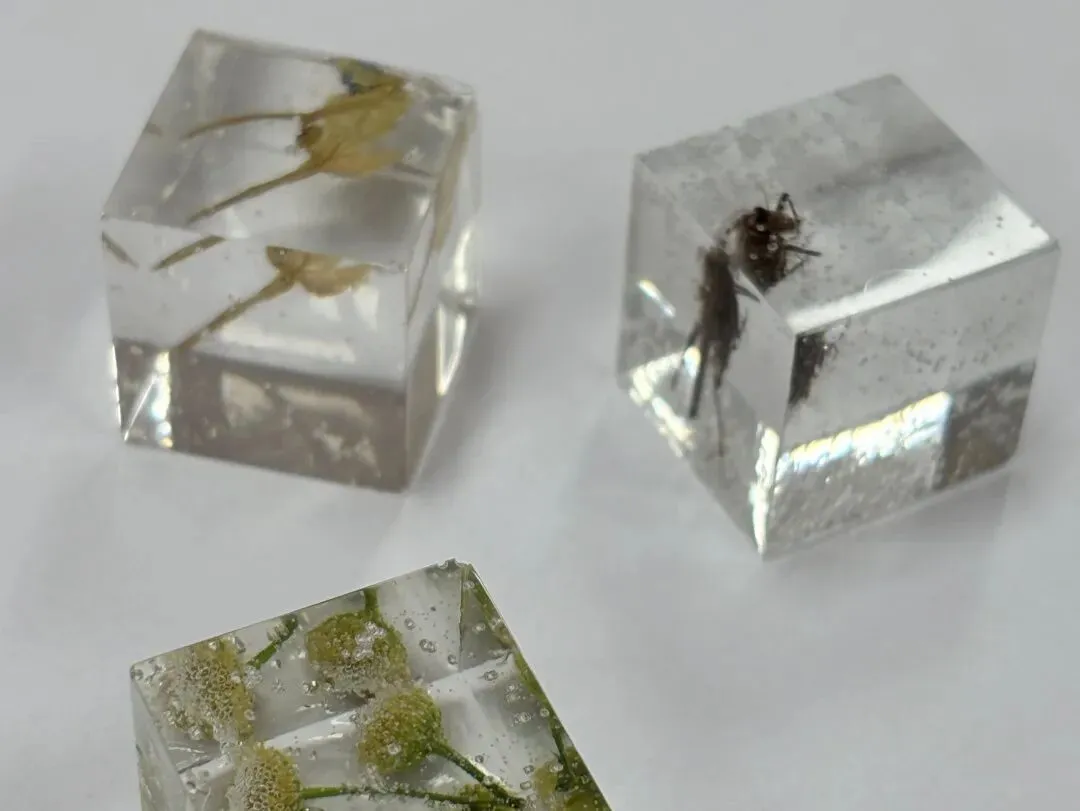
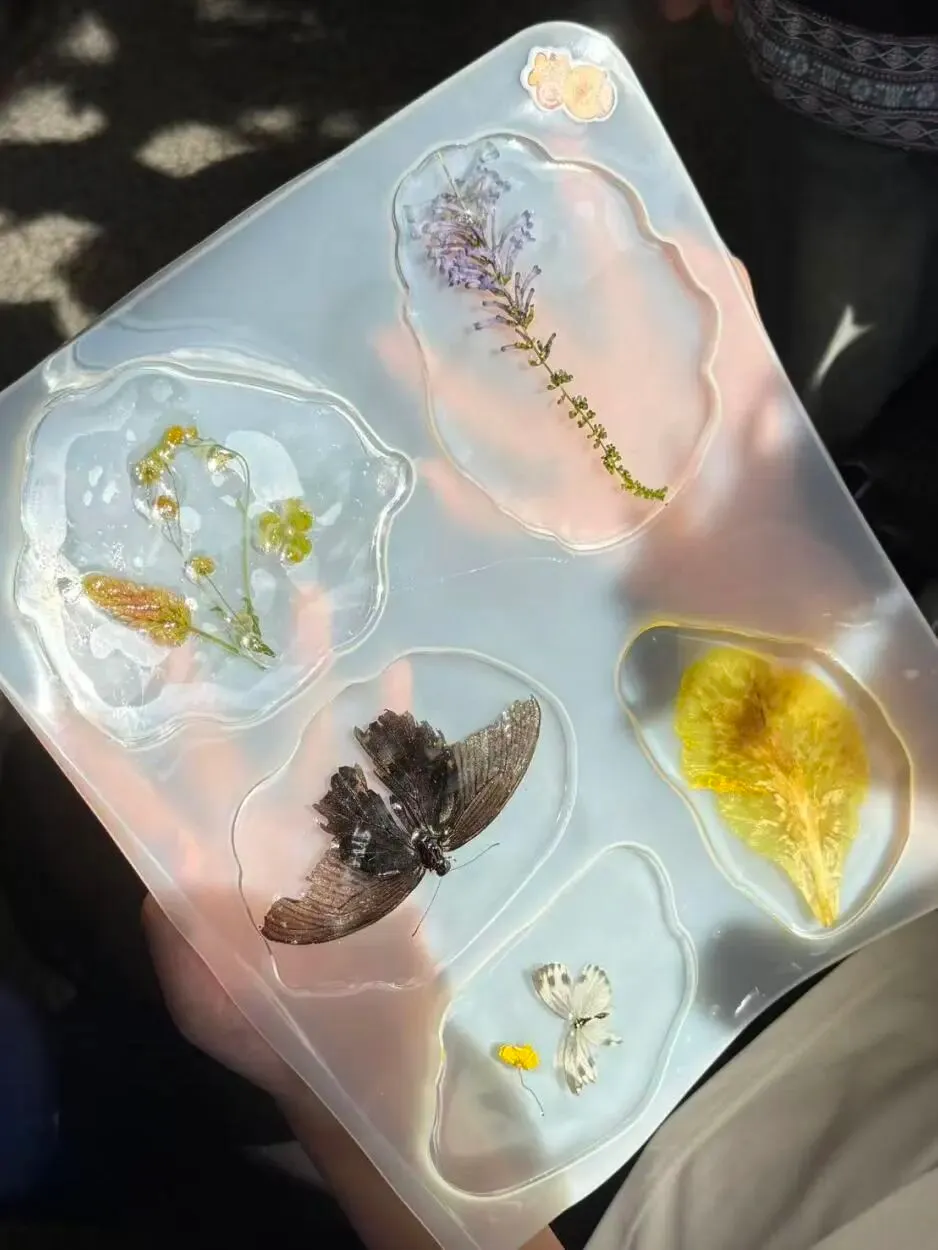
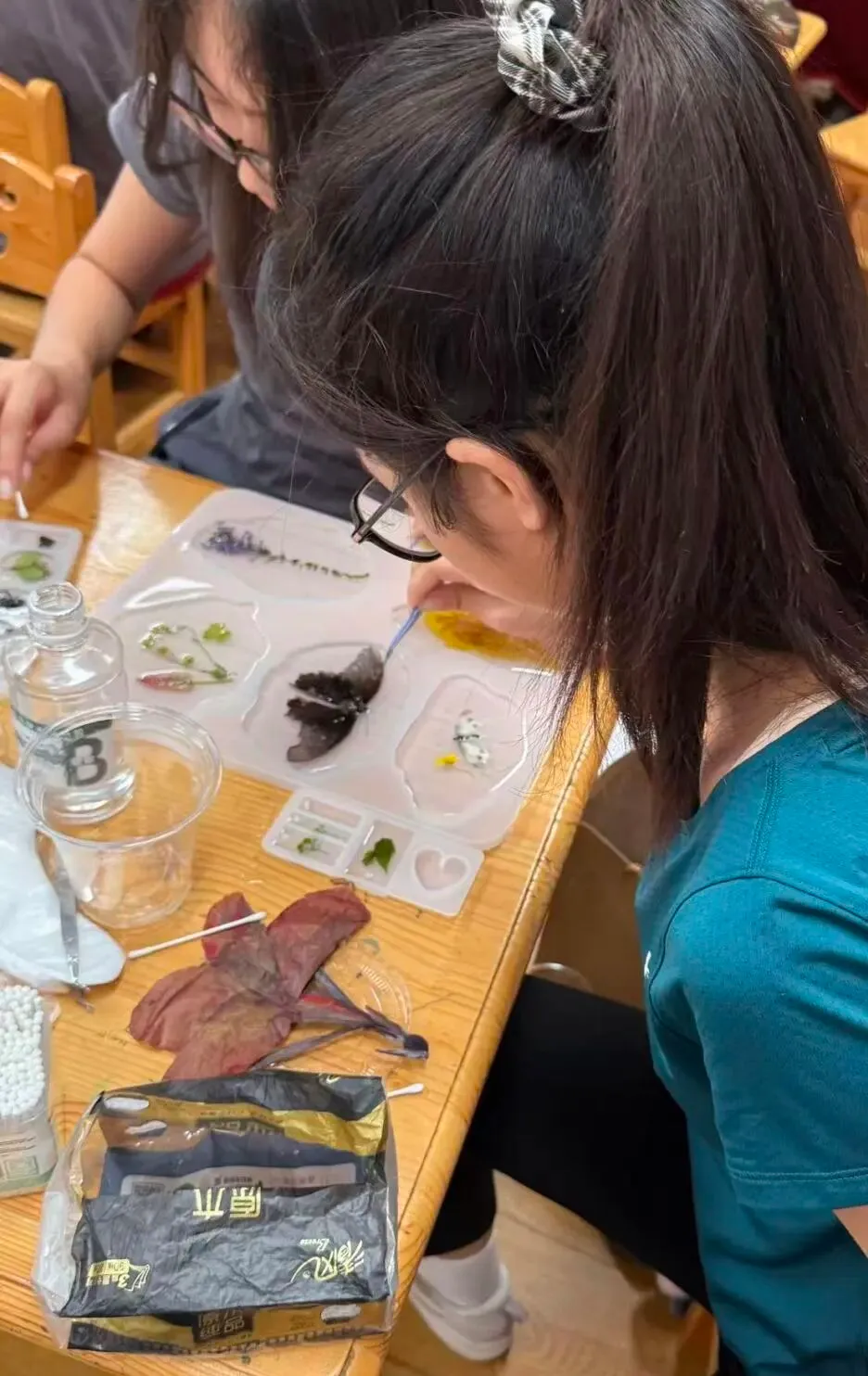
Back in the classroom, they placed their discoveries into transparent molds with extraordinary care: a bright green leaf, a tiny wildflower no one could name, even a small beetle.
In those moments, they were artists and scientists at once.
"There's a really beautiful flower over here!"
"I know where to find this kind of bug! I'll take you there!"
They knew these mountains and streams, these woods and fields. They knew plants and animals that could only be found locally.
We introduced scientific concepts.
They introduced us to the Dong villages as they truly were.
The lesson became an exploration we completed together.
Looking at the pieces the children had made, I found myself thinking about how much my own assumptions had changed.
At first, I thought I was the one bringing knowledge. I imagined myself explaining ideas such as complete metamorphosis, incomplete metamorphosis, and sun-compass navigation.
Instead, the children taught me something more fundamental: how to remain curious.
May we never lose that eagerness to discover.
The class ended, but our exploration had only begun.
The plants and insects preserved inside those molds were more than finished pieces in the children's hands. They became records of a summer in Huaihua when we learned together and grew together.
From the Classroom into Nature — An Exploration Led by Two Students
The Discovering the Dong Villages: Hometown Field Guide Project was designed and taught by two of us.
Feng Jingyan: Responsible for the overall course design, lesson content, classroom organization, and post-program documentation and reflection. She hoped to connect biological knowledge with direct observation of nature, allowing children to learn through exploration.
Dai Nuo: Responsible for preparing materials, classroom instruction, and field activities. She worked alongside students on observation records and field-guide creation while supporting the practical operation of the program.
There were only two of us.
Still, we hoped to leave behind more than a single class. We wanted to create a set of learning resources that could remain in the reading room at Huangdu Primary School and continue accompanying children as they explored the natural world around their home.
Knowledge written on a blackboard is ultimately flat.
A lesson truly begins when children crouch down, reach out, trace the veins of a leaf with their fingers, and smell the earth beneath them.
Ideas Taking Root in Dong Country — A Business Co-Creation Workshop
A paintbrush.
A cup of vine tea.
A piece of Dong brocade.
When ordinary objects meet a child's imagination, they begin to carry a value far beyond their price.
Before We Began
We spent a long time preparing this business co-creation workshop before traveling to the Dong communities of Hunan.
And before the first class, we were nervous.
We kept asking ourselves whether topics such as financial literacy, product creation, sales, and marketing would feel too distant from the children's everyday lives.
Would they find the class boring?
Would they lose interest?
Would they sit silently throughout the session or resist the activities we had planned?
We imagined awkward silences and tables where no one wanted to make anything. The more we thought about it, the more uncertain we became.
So before finalizing the workshop, we visited Pingtan Primary School. We listened to the children, learned more about their daily lives and interests, and revised the entire program little by little.
First Encounters
Once we entered the schools and began spending time with children at Huangdu Primary School and Pingtan Primary School, nearly all of our worries disappeared.
The children were sincere and gentle, with an openness that made conversation easy. Whenever we approached them, they gathered around almost immediately, eyes bright as they told us story after story about life in the Dong villages. Then they would eagerly take us around their campus.
As the days passed, we gradually noticed that the schools had relatively few opportunities for enrichment activities. Books in the libraries were not always well organized, picture books suitable for younger children were limited, and hands-on activities involving crafts or student-led planning were rare.
Yet the children's minds were full of ideas.
They simply needed somewhere to make those ideas visible.
When we saw the expectation in their eyes, we stopped worrying about whether our original plan would work. Instead, we revised the workshop again and gave the children far more freedom to create and explore.
Hand-Painted Dong Brocade Bags: Finding Home in Traditional Patterns
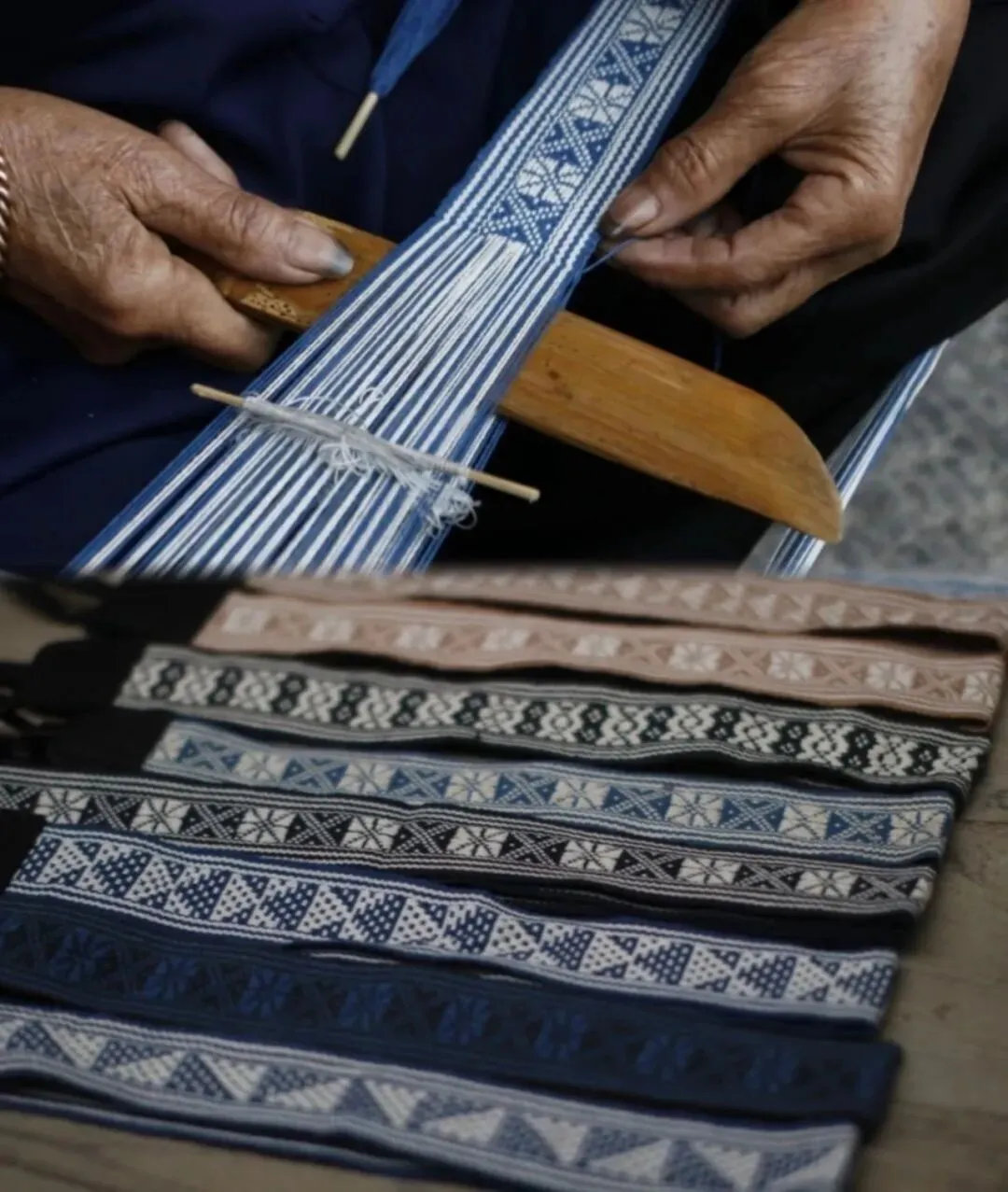
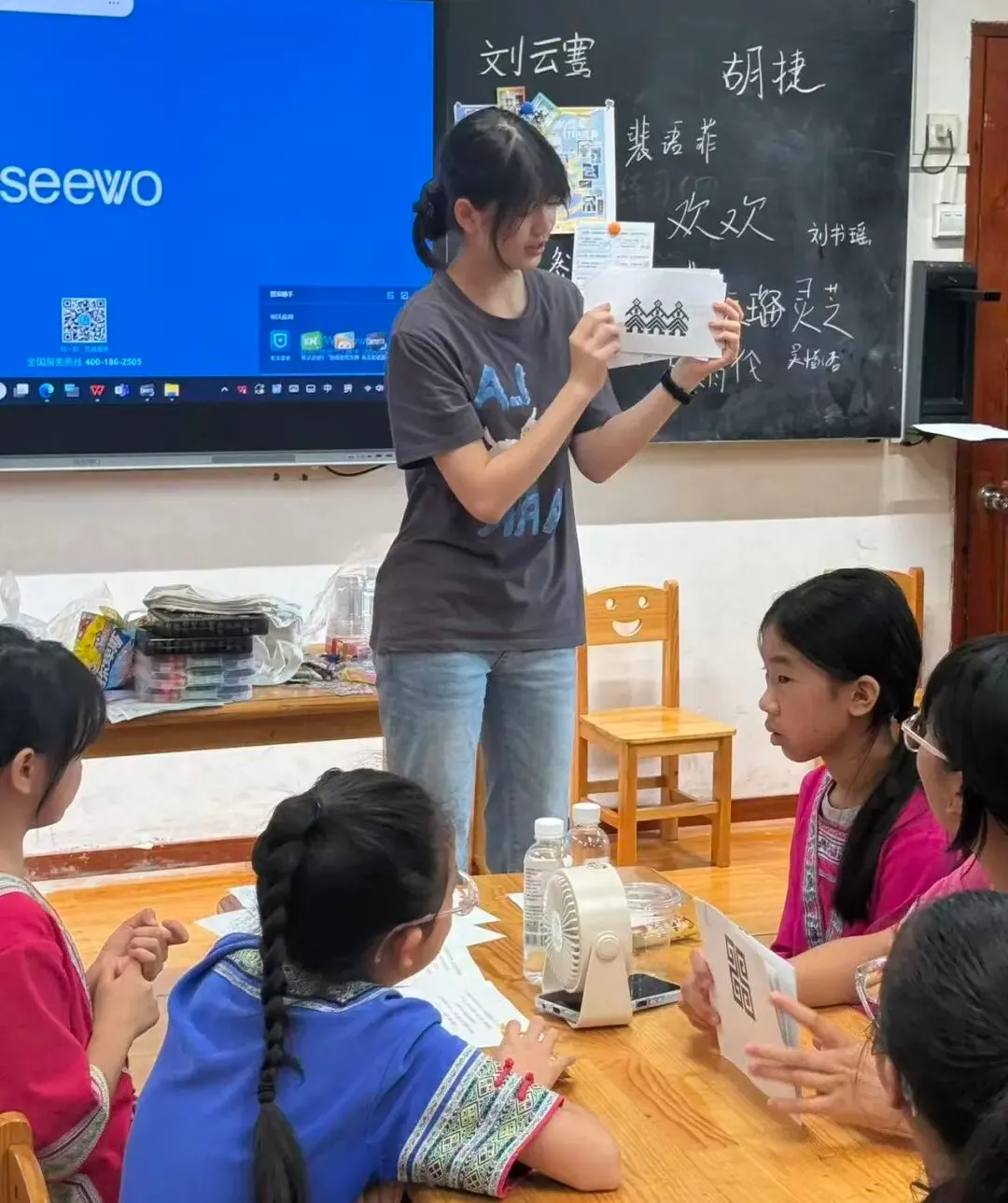
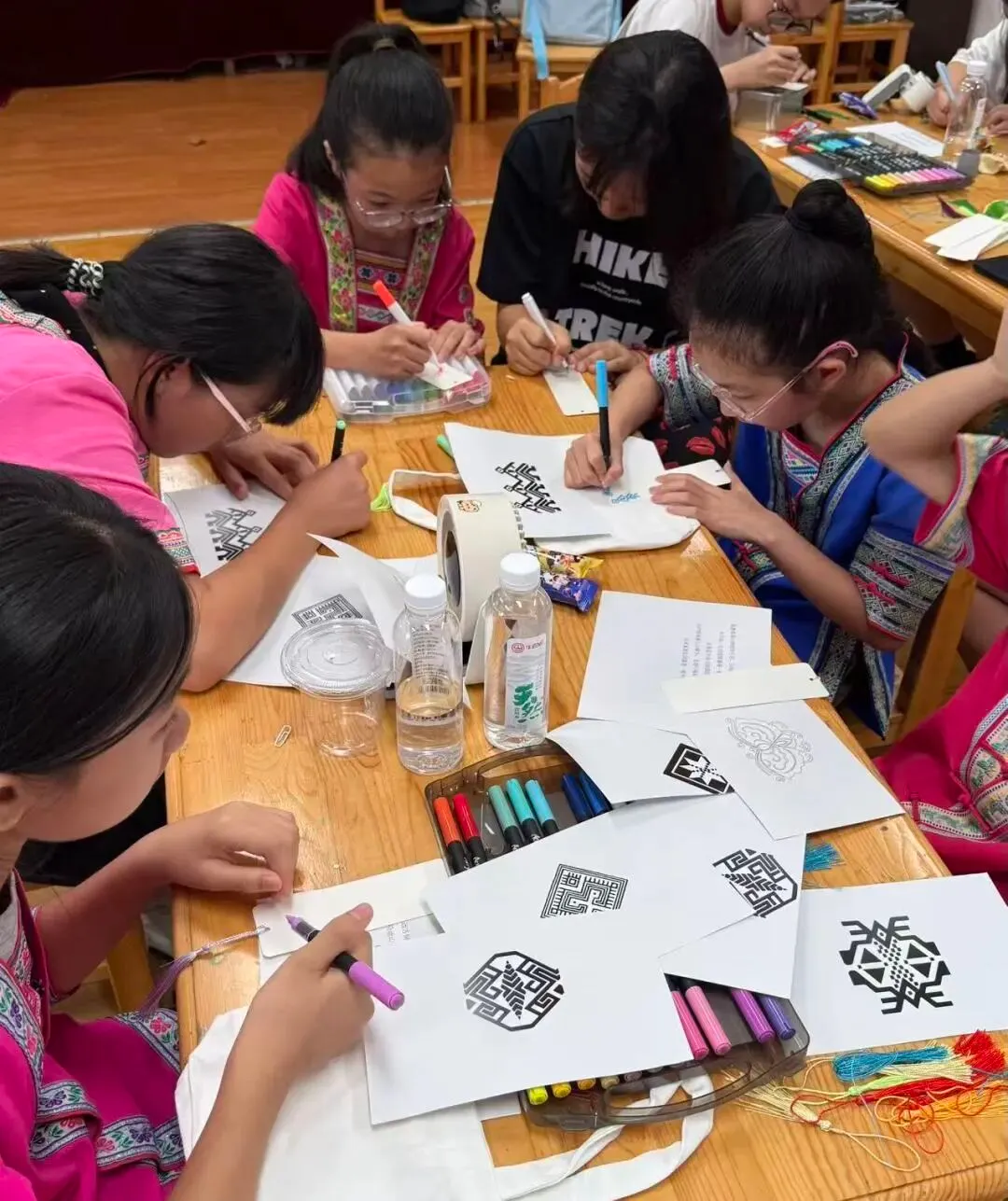
During the workshop, we sat around the desks and talked with the children about Dong brocade, a textile tradition passed from generation to generation.
Yao Yuchen explained:
"The patterns on Dong clothing and the wooden buildings in the villages aren't drawn randomly. Each one carries a meaning of its own."
When we introduced the Yeluo pattern, one boy shot his hand into the air.
"My grandma always weaves this pattern! I never knew there were so many stories behind it."
Before coming to the Dong villages, most of what we knew about Dong brocade patterns came from fragments of information online.
The children gave us something far richer.
They told us about grandparents weaving at home and about the ways different patterns appeared in everyday village life. Their stories filled in details that no reference material had given us.
We had assumed we would be teaching them.
Instead, children who had grown up here taught us how Dong brocade actually lives within the culture of their families and communities.
After the introduction came the free painting session.
There was no standard template.
The children could choose their own bags, paints, colors, and designs. Traditional Dong motifs appeared alongside animals, playful drawings, and whatever else they liked. Slowly, one original hand-painted bag after another began to emerge.
Patterns carried through generations met the imagination of children growing up today.
Suddenly, the tradition felt vivid, playful, and entirely alive.
Vine Tea Sparkling Drinks: Tasting the Mountains
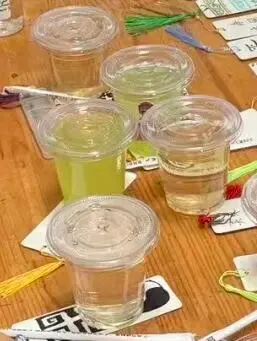
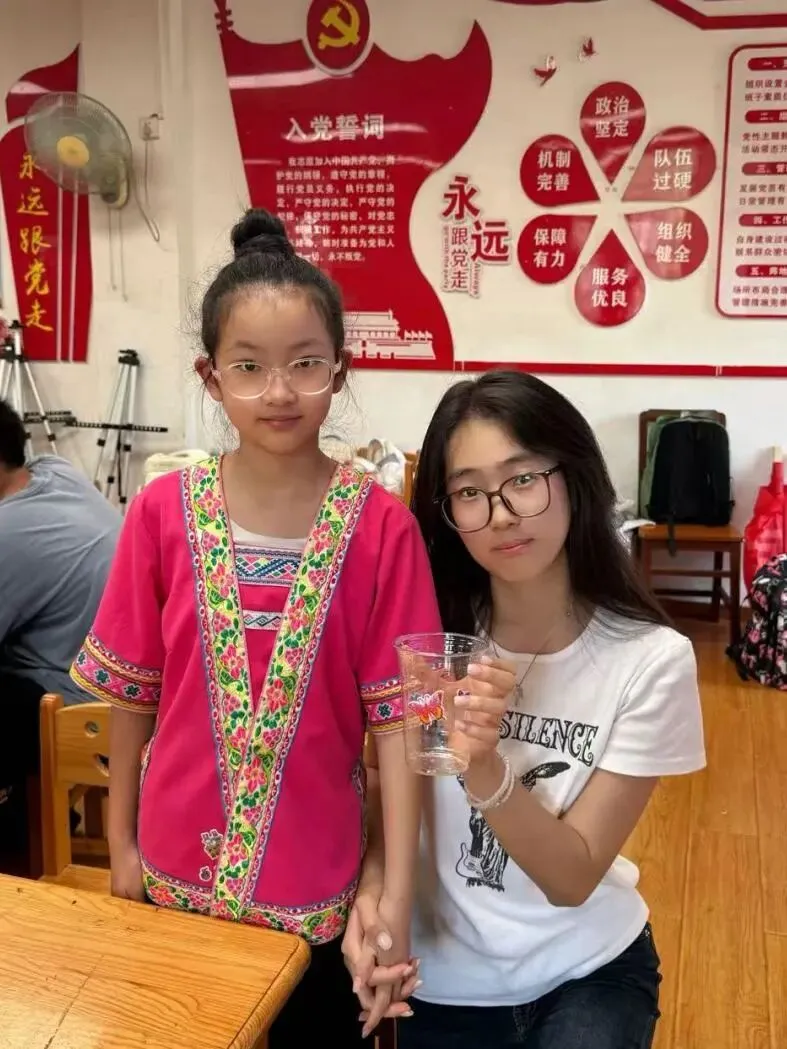
In another workshop, we used local vine tea to create green apple sparkling drinks together.
Before the trip, we knew little more than the fact that vine tea could be brewed and drunk.
Once we began preparing it alongside the children, we learned that it was part of everyday life in the Dong communities. Many families kept it at home and served it to guests, with local customs surrounding how it was prepared and enjoyed.
Once again, the children knew far more than we did.
There was no fixed recipe during the workshop. The children were free to experiment.
"I want more apple. It'll taste sweeter!"
"Maybe less sparkling water. Otherwise it'll cover up the light fragrance of the vine tea."
They tasted and adjusted their drinks repeatedly, experimenting freely and improving each version until everyone had created something suited to their own preferences.
We stayed beside them, recording the different combinations they tried.
Through those easy conversations, we learned much more about vine tea and everyday life in the Dong villages than we ever could have anticipated while preparing the lesson in Beijing.
A Short Lesson in Financial Literacy
Once everyone had completed their hand-painted bags and drinks, we moved naturally into a short lesson on financial literacy.
"Making a bag requires fabric and paint. Preparing a drink requires fruit and vine tea. All of these materials have costs, so a price can't simply be whatever we feel like charging."
Together, we calculated material expenses and introduced the basic idea of pricing a product by considering both its costs and its distinctive creative value.
Then we asked the children to identify what made each product special.
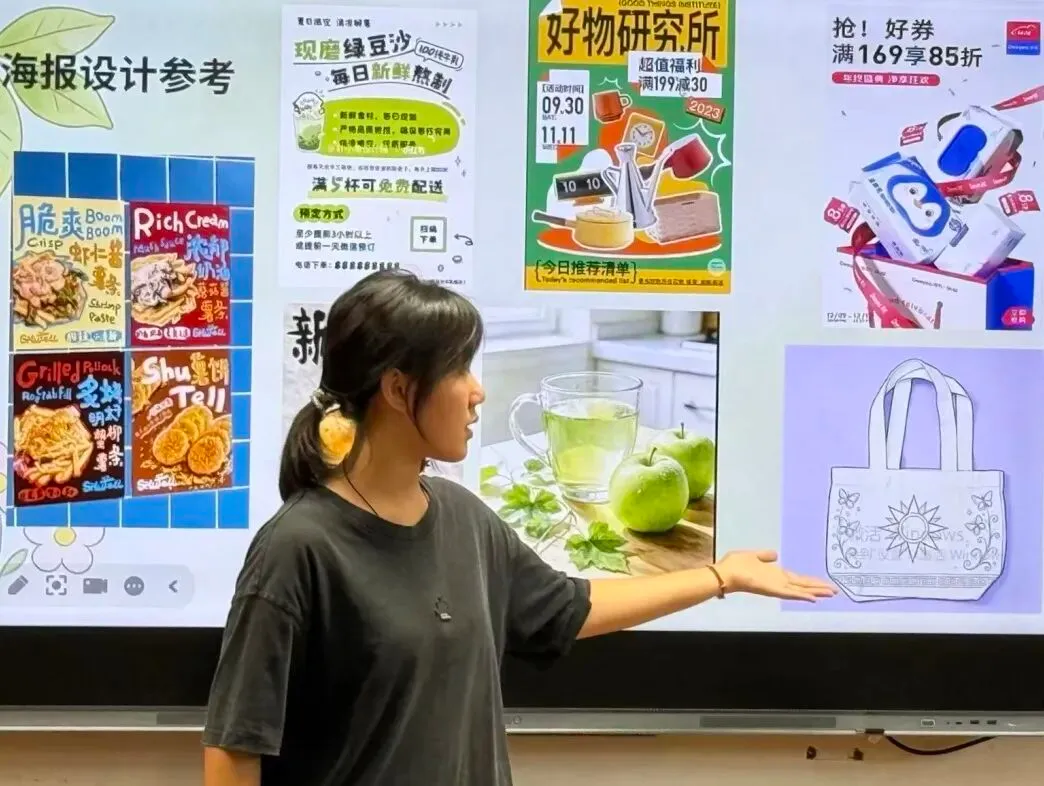
At the end of the session, everyone picked up colored pens and designed a promotional poster for their own creation, complete with an advertising slogan.
The liveliest part came at the very end: our miniature sales fair.
One by one, the children stepped forward to pitch their bag-and-vine-tea packages. Their seriousness made the whole scene even more charming.
Some called out enthusiastically:
"Our creative set was originally 999 yuan! Today it's 90% off — only 99!"
Others gestured dramatically as they explained the one-of-a-kind Dong brocade patterns on their bags and proudly promoted local specialties from their villages.
Watching them throw themselves into the performance with complete sincerity filled us with warmth.
Growing Together: Bringing the Workshop Back to the Schools
This workshop was never a one-way transfer of knowledge.
We introduced the children to basic commercial ideas and gave them space to create freely, express themselves, and experiment with their own ideas.
They introduced us to the reality of life in Dong country.
Through their stories, we learned how Dong brocade and vine tea existed within family routines and village traditions. They added depth to knowledge that had previously existed for us only on paper.
Our next step is to further develop the hand-painted Dong brocade bags, vine tea products, and other creative pieces that emerged from the workshop. We plan to organize small charity sales both on and beyond our campus in Beijing.
All proceeds will be returned to Huangdu Primary School and Pingtan Primary School to purchase new books for their libraries and additional materials for hands-on learning, giving the children more opportunities for creative activities connected with their local culture.
A workshop we began with uncertainty eventually became an exchange filled with generosity on both sides.
We brought ideas into the mountains.
The mountains gave us something back.
The children discovered new possibilities through making and creating, while we found new meaning in a culture rooted in everyday life.
We accompanied one another.
We grew together.
And through the imagination of young people, the traditions of Dong country gained new ways to shine.
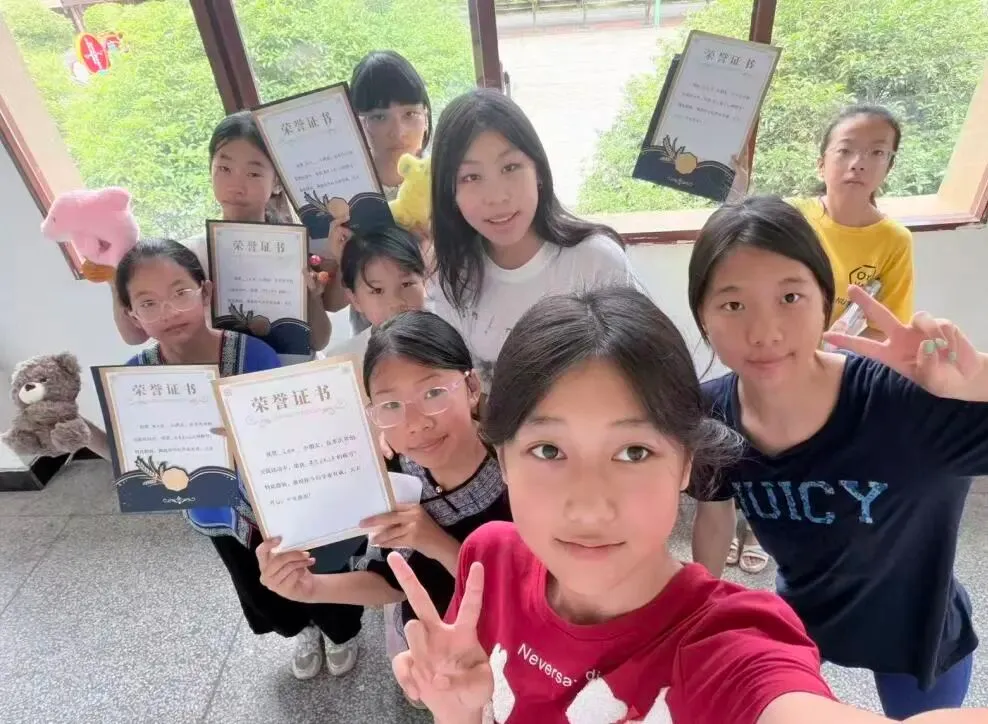
The workshop has ended, but the story of those painted bags and cups of vine tea has not.
They will become new books on library shelves, accompanying children as they begin to discover a larger world.
Epilogue
In this exchange, the two courses came to represent two ways of understanding both the land and ourselves.
The biology field-guide project was the children leading us home.
The business and financial-literacy workshop was us accompanying them as they looked outward toward the world.
One helped us understand where we come from.
The other helped us imagine where we might go.
In the summer heat, we gave running back to PE and the mountains back to nature class.
Co-creation was never about one side giving to the other.
It was two worlds casting light on each other.
When the time came to leave, we did not dare promise when we would return.
But two seeds had already been planted.
One was called confidence, rooted in love for one's home.
The other was called courage, reaching toward the future.
Perhaps that was the best gift we could leave behind: hope.
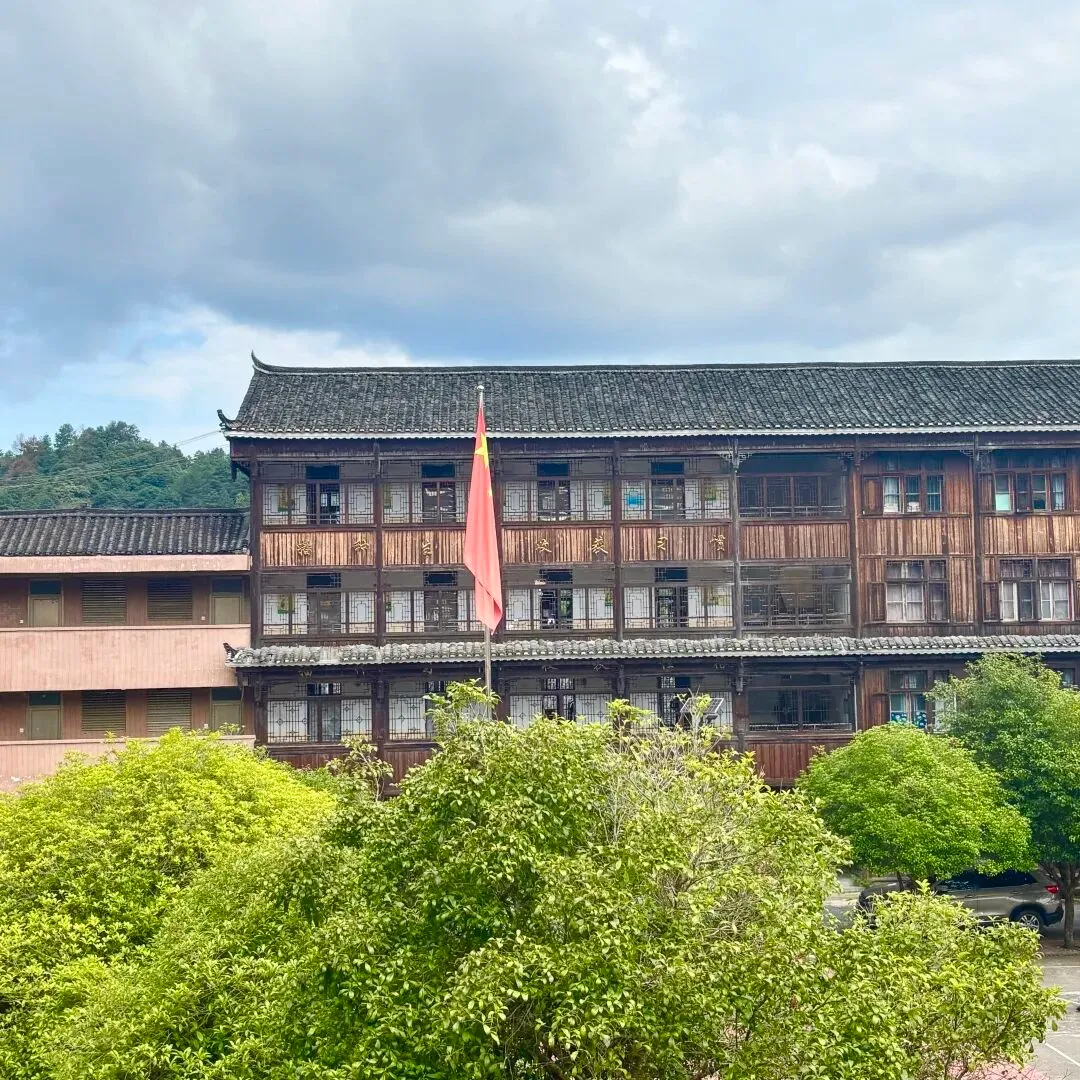
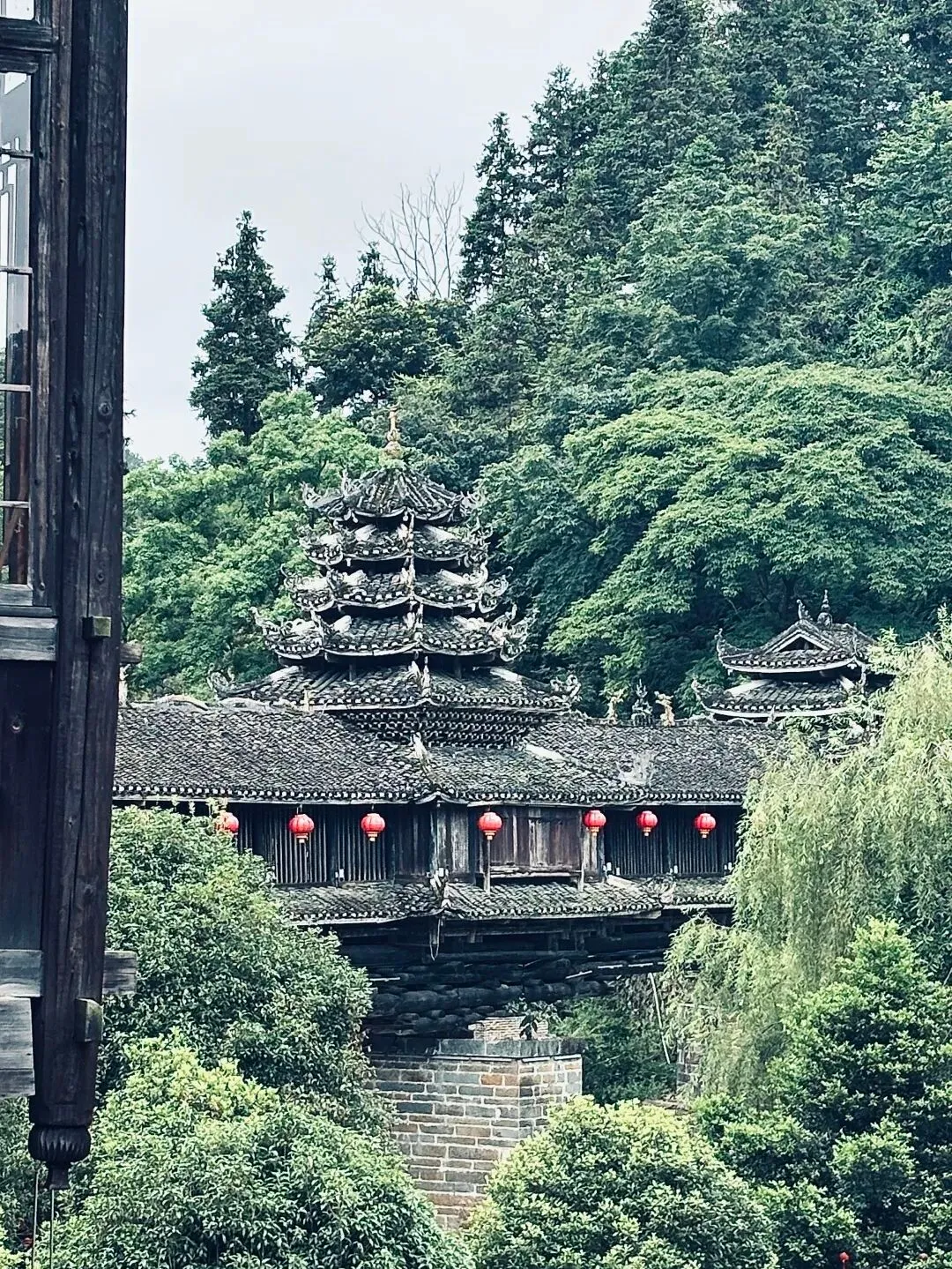
Acknowledgments
As we bring this story to a close, we want to offer our deepest thanks to everyone who brought light to this journey.
To Those Who Guided Us from Afar
Thank you to the BAID faculty for their full support.
We are especially grateful to the experts invited by the school: Zhang Jie from the Communication University of China, specializing in Communication Studies; He Beili from the Central Academy of Fine Arts, specializing in Anthropology; and Gao Zhenhong from the Beijing Academy Education Group, specializing in Chinese Language Arts education.
Their guidance before our departure changed the way we approached the project.
They helped us let go of the arrogance that can come with seeing ourselves as "educators from the city." We moved from asking, "What do I want to teach?" to asking, "What am I willing to learn?"
We learned to lower ourselves closer to the land and listen carefully to the children who had grown up upon it.
Thank you as well to every instructor who gave us advice and encouragement throughout the preparation process and accompanied us throughout the journey, helping keep us safe at every stage.
To Those Who Welcomed Us There
Thank you to the educators at the Tongdao County Education Bureau, the staff of Xinhua Bookstore in Tongdao County, and the teachers at Pingtan Primary School and Huangdu Primary School in Tongdao Dong Autonomous County.
And thank you to the children whose warmth and sincerity stayed with us, as well as every friend in Tongdao County who helped us along the way.
You welcomed us without hesitation.
Because of you, a group of visitors from far away quickly found a place within everyday school life.
And because of you, we came to understand something of the depth and value of this land.
To the Friends Beside Us
Thank you to every member of our team.
Thank you for enduring the summer heat without complaint.
Thank you for helping one another through late nights of lesson preparation.
For eleven days, we sweated together, laughed together, and watched one another grow.
These intense, luminous memories belong to every one of us.
The mountains are high and the road is long.
Until we meet again.
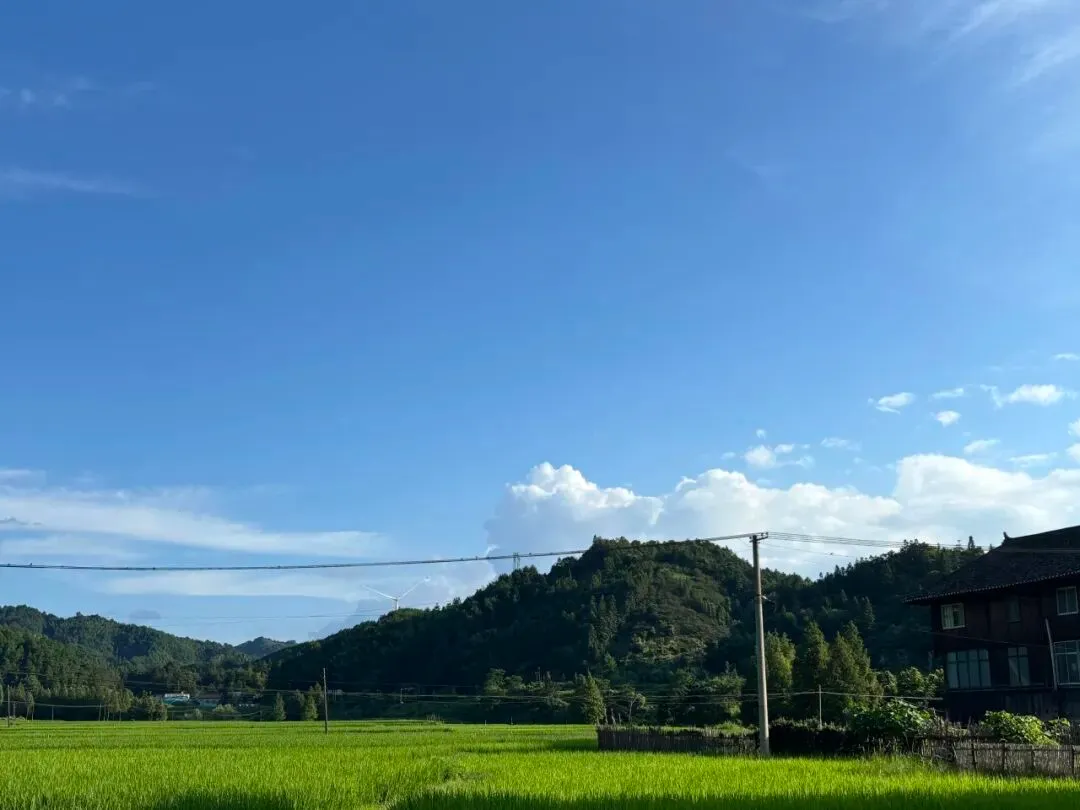
This journey has no real ending.
It continues in questions of confidence, courage, and love for home.
It will remain here, growing alongside the children, waiting for the day when the flowers bloom.
Mountains may rise and rivers may stretch between us.
We will meet again.
Faculty Advisors: Hu Jie, Wang Fengbo Student Members: Dai Nuo, Feng Jingyan, Li Xiaoyao, Lin Zhilu, Liu Shuyao, Nie Ruize, Pei Yufei, Yao Yuchen, Zhang Xinran Writing: Dai Nuo, Lin Zhilu Photography: Lin Zhilu, Yao Yuchen, Dai Nuo, Feng Jingyan Editor: Lin Zhilu
This AI translation is provided for reference only. Please verify with original Chinese version.