BAers Shine at 2026 National Youth Aerospace Innovation Competition (Beijing Regional)
The vastness of space inspires young minds, while every rocket reflects the precision and creativity behind scientific innovation. At the 2026 National Youth Aerospace Innovation Competition, Beijing Division, five BAID teams competed in the Rocket Design and Construction event, earning two Second Prizes, two Third Prizes, and one Excellence Award.
This marked BAID students' first participation in an aerospace engineering competition. From designing rockets to refining physical prototypes, students demonstrated strong research skills, technical creativity, and a commitment to scientific exploration.
Systematic Preparation for the Competition
Preparation for the competition extended over a considerable period. BAID developed a structured program combining online instruction with in-person training, supporting each team throughout the development of its project.
01 Online Foundation Training
Before the competition, students attended online sessions covering fundamental aerospace concepts and competition rules, along with basic rocket structures and design requirements. The training helped students establish a foundation in aerospace engineering and understand the key criteria used in competition evaluation.
02 Practical Training
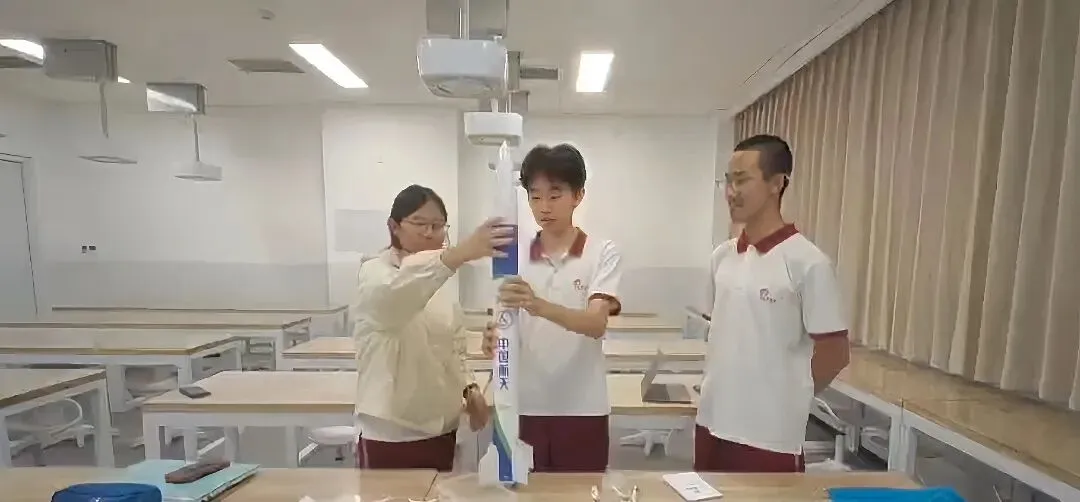
During the in-person training stage, industry experts were invited to guide students through major technical challenges, including 3D modeling and physical assembly, as well as propulsion balance and system calibration.
03 Final Preparation Sessions
Before the final round, each team received targeted guidance. Students reviewed weaknesses in their designs and refined the logic of their presentations, while also checking the safety and performance of their rockets. Each team completed individual revisions and reviewed the presentation process together with contingency plans for questions during the competition.
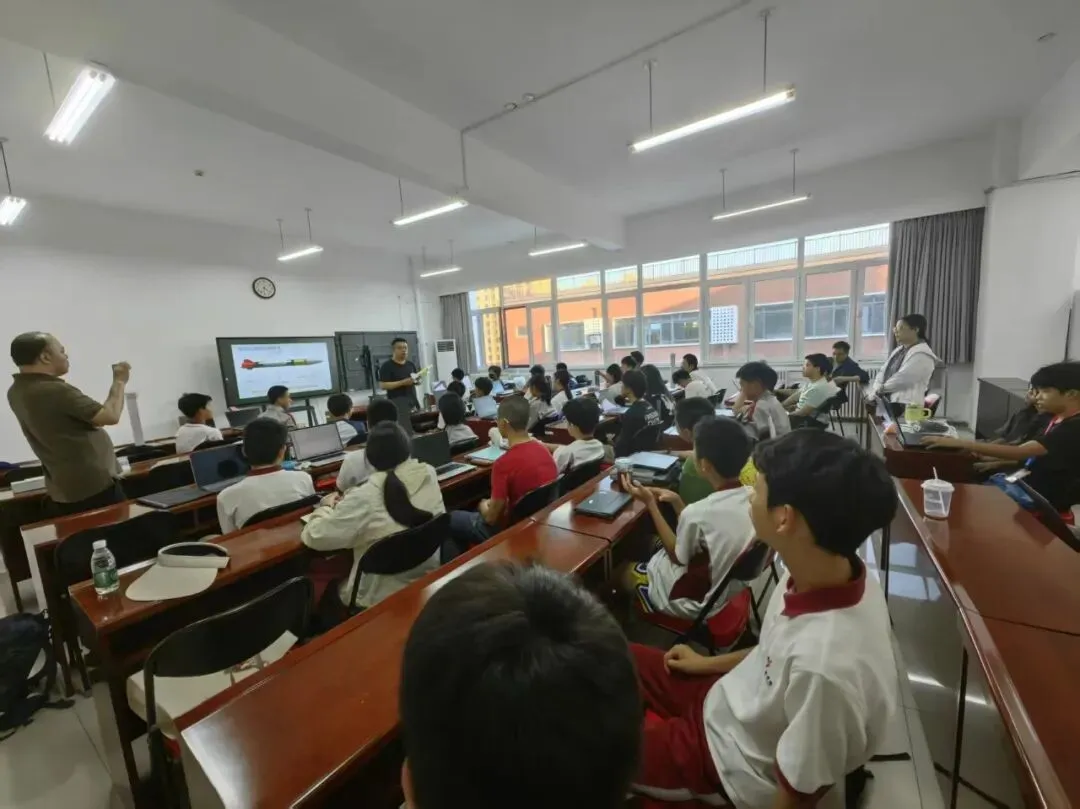
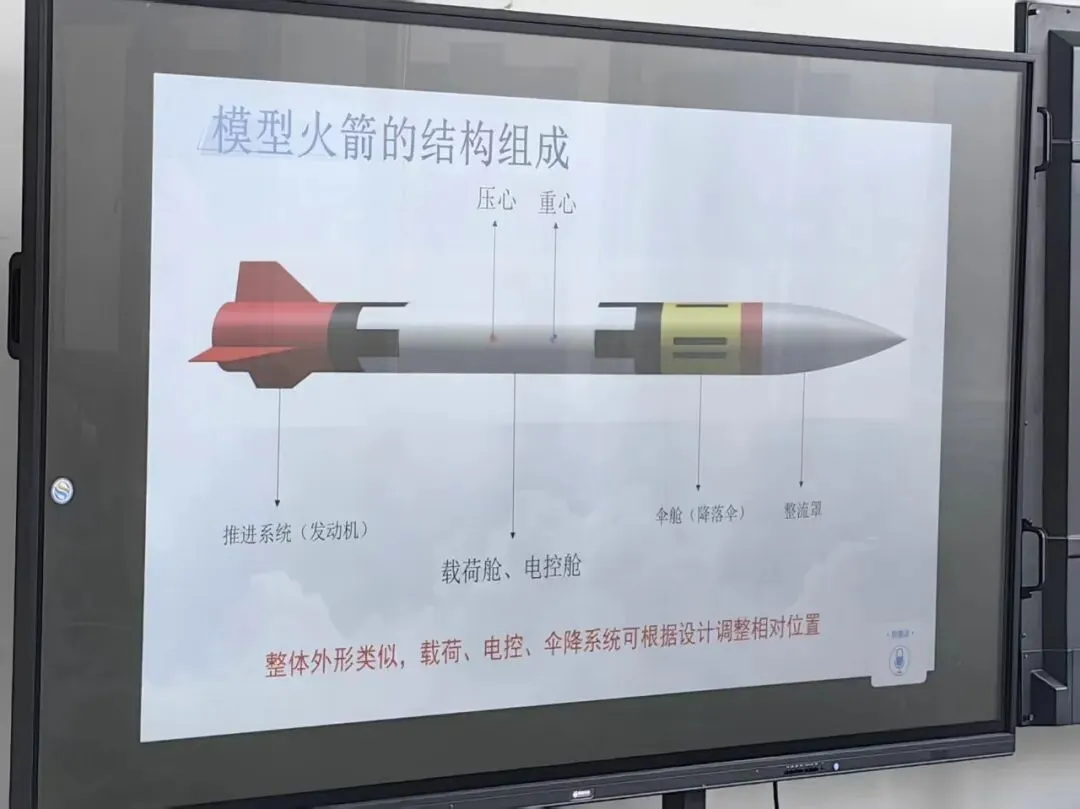
Throughout the preparation process, students approached their work with discipline and care. They regularly used time outside class to revise their projects, communicate with teammates, and resolve engineering problems. The experience strengthened both their capacity for sustained research and their ability to collaborate effectively.
Student Led Rocket Development from Design to Assembly
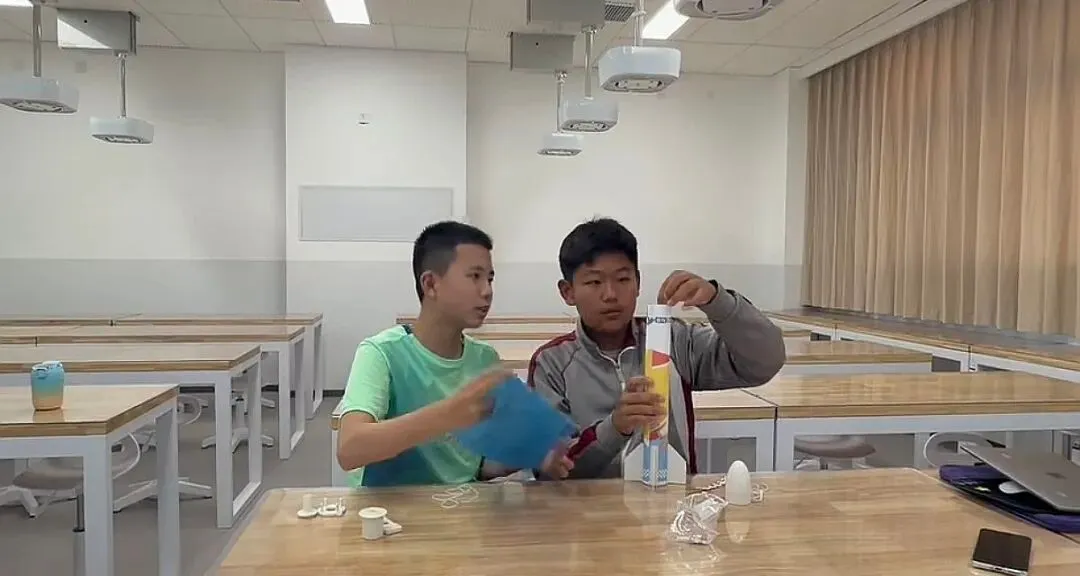
Students took primary responsibility for the design and construction of their rockets throughout the preparation process. Each team combined digital design and 3D printing with physical fabrication and assembly to produce its competition entry.
01 Digital Modeling and Design
Students independently used professional modeling software to create 3D models of their rocket bodies. They repeatedly checked dimensional parameters and refined the aerodynamic design based on their calculations.
02 3D Printing and Assembly
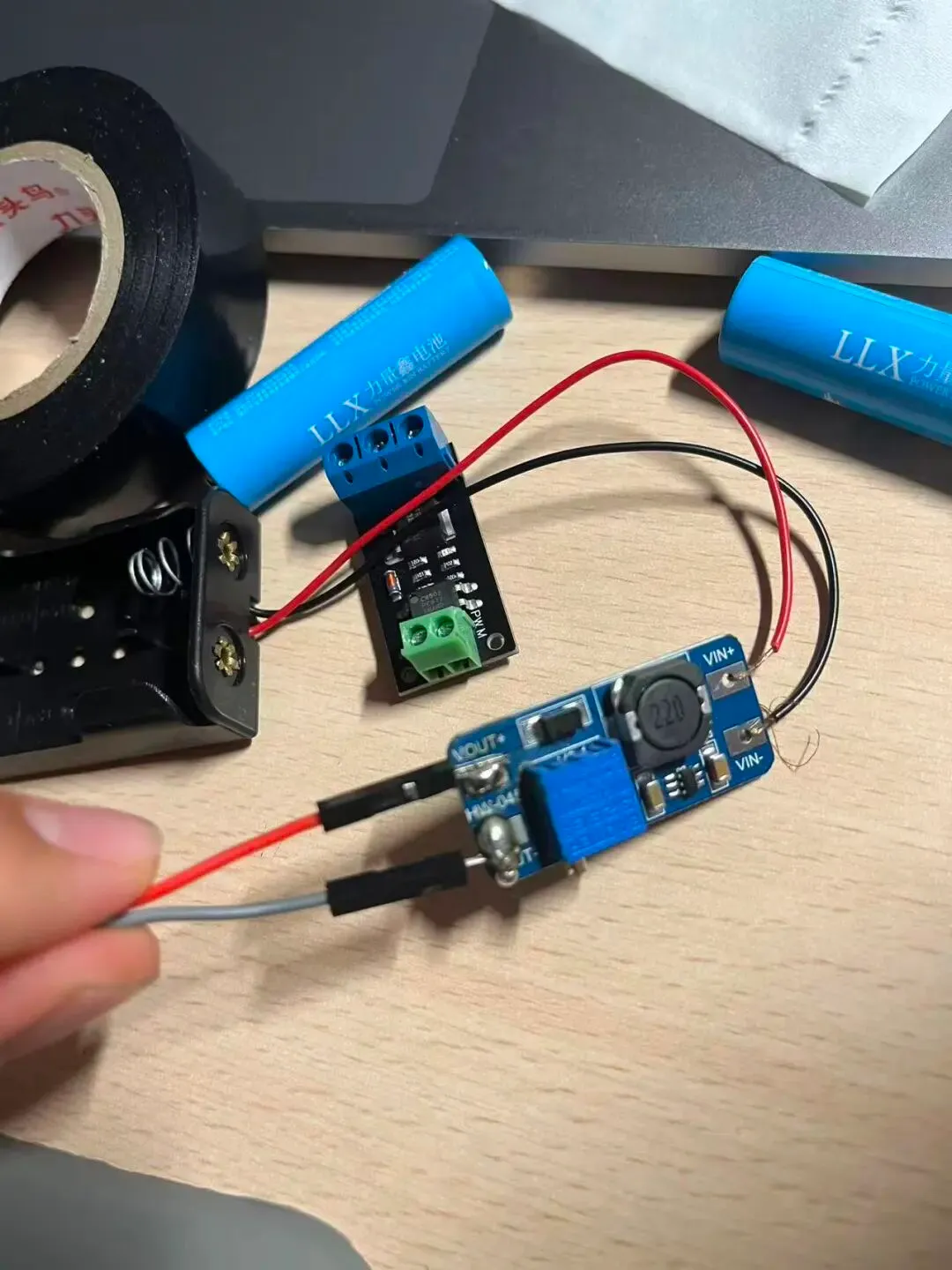
Using the school's 3D printers, students produced physical components directly from their digital models. They adjusted printing parameters and corrected manufacturing errors before completing rocket assembly, weight calibration, and propulsion system installation.
03 Competition Documentation
Each team independently designed an aerospace themed poster and organized its experimental data. Students also prepared formal rocket design reports documenting their design rationale and experimental process, together with the distinctive features of their projects.
From initial concepts to finished rockets, and from technical reports to visual presentations, students experienced the major stages of an engineering design process. Along the way, they developed stronger abilities in technical design and practical construction while gaining experience in scientific documentation.
Learning Through Competition and Exploring Aerospace Engineering
The Beijing regionals provided students with an opportunity to present their work and engage with other young aerospace innovators. Receiving multiple awards in their first aerospace engineering competition recognized the sustained effort that students had invested throughout the preparation process.
Students gained practical experience in aerospace engineering, 3D modeling, and 3D printing while developing a more rigorous approach to scientific inquiry. The competition also strengthened their teamwork and presentation skills and encouraged further exploration of aviation and aerospace engineering. These experiences have provided a strong foundation for future participation in engineering and technology competitions.
Empowering Aerospace Dreams
BAID will continue to create opportunities for students to participate in science and technology competitions and practical research programs at different levels. Through sustained support for scientific innovation, the school aims to help more students explore aerospace engineering and pursue their interests through research and practice.
This AI translation is provided for reference only. Please verify with original Chinese version.