A11yLab: The Beijing Academy Student Accessibility Initiative
President: Lin Donglai
Founded by Beijing Academy International Division student Lin Donglai, A11yLab is a student public service club focused on disability and accessibility. Starting on campus, the club organizes accessibility education, volunteer service, and community activities to help students better understand the barriers that people with disabilities may encounter in education, mobility, access to information, and everyday life. A11yLab has organized white cane experiences, accessibility education campaigns, and inclusive outings, while working with organizations including the Institute for Accessibility Development at Tsinghua University and Hequn Public Welfare.
Background and Purpose
A11yLab grew from students' long-standing interest in accessibility. Before the club was established, several members had participated in the Accessibility Development Future Stars Program, a collaboration between Beijing Academy and the Institute for Accessibility Development at Tsinghua University. Through project work and community research, they gained direct exposure to the everyday experiences of people with disabilities and gradually came to see how closely accessibility is connected with ordinary life.
People often notice physical or sensory differences first while overlooking the role of roads, buildings, and information environments. A continuous tactile paving route, for example, can help a person with visual impairment determine direction, while the same route blocked by parked vehicles may provide misleading information. Clear audio cues can make information available to more people, while information presented only visually may exclude some users. A11yLab therefore begins with familiar settings on campus, helping students examine the relationship between people and their surroundings and understand the purpose of accessible facilities and services.
After the club was established, Lin Donglai served as president, with An Yuehan, Huang Zixun, Jiang Bohan, and Zhao Wangshu among the core organizing members. The club also began recruiting students from different grades who had participated in the Accessibility Development Future Stars Program, allowing more students interested in public service and accessibility to take part.
Club Goals
A11yLab aims to increase students' understanding of disability and accessibility through campus activities and community engagement, while encouraging them to apply this understanding in everyday life.
One major area of work is accessibility education. Through experiential activities, printed materials, and themed programs, members introduce students and faculty to some of the barriers people with disabilities may encounter in daily life. They also explain common accessibility features such as tactile paving, ramps, and audio signals, helping participants examine accessibility through familiar surroundings.
The club also creates opportunities for students to interact directly with people with disabilities. Through activities organized with community partners, students can learn about people's actual needs, practice providing appropriate assistance, and reconsider assumptions they may previously have held about disability. Through these experiences, A11yLab hopes to encourage greater respect for differences and equal participation across the school community.
White Cane Experience
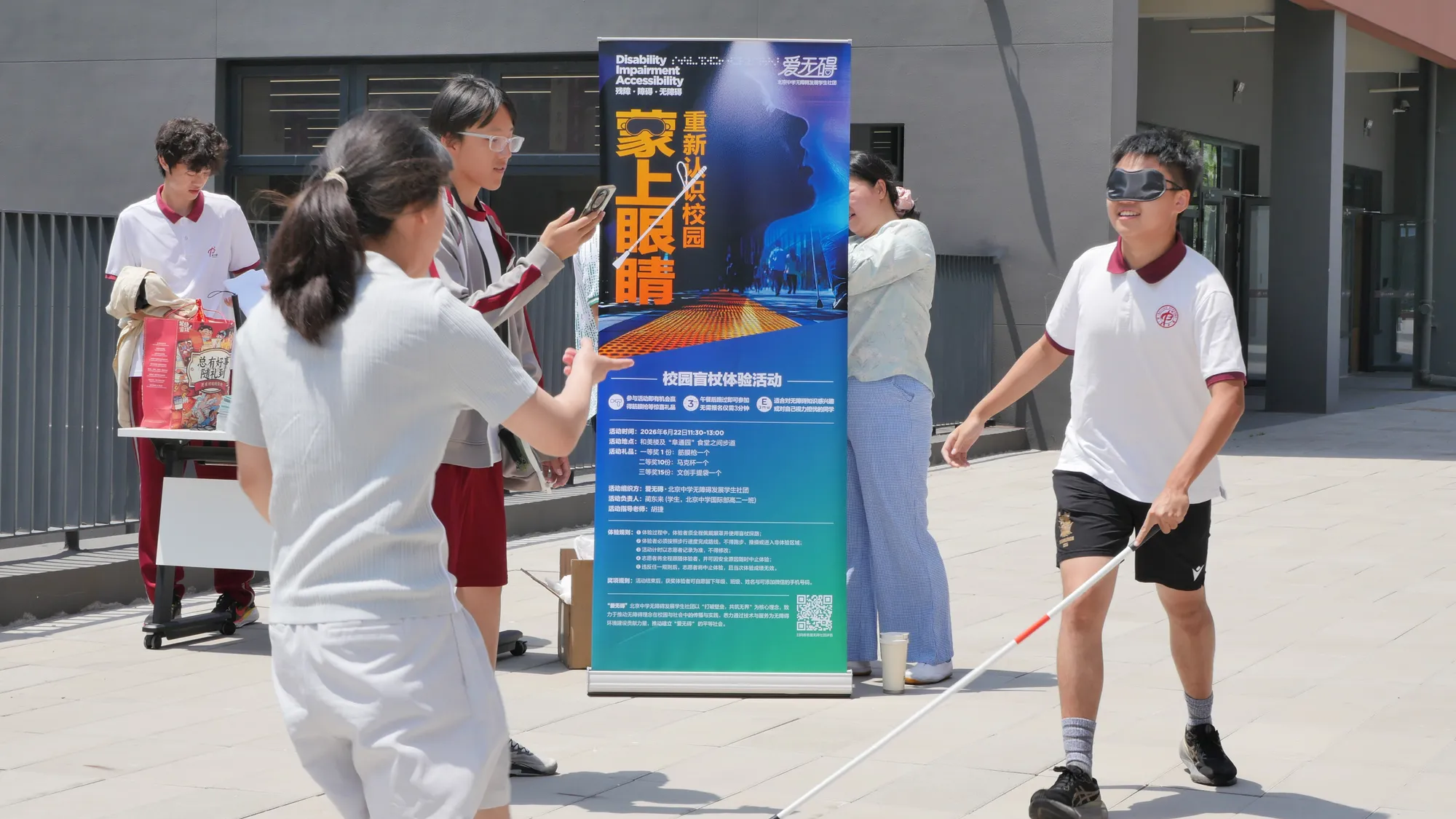
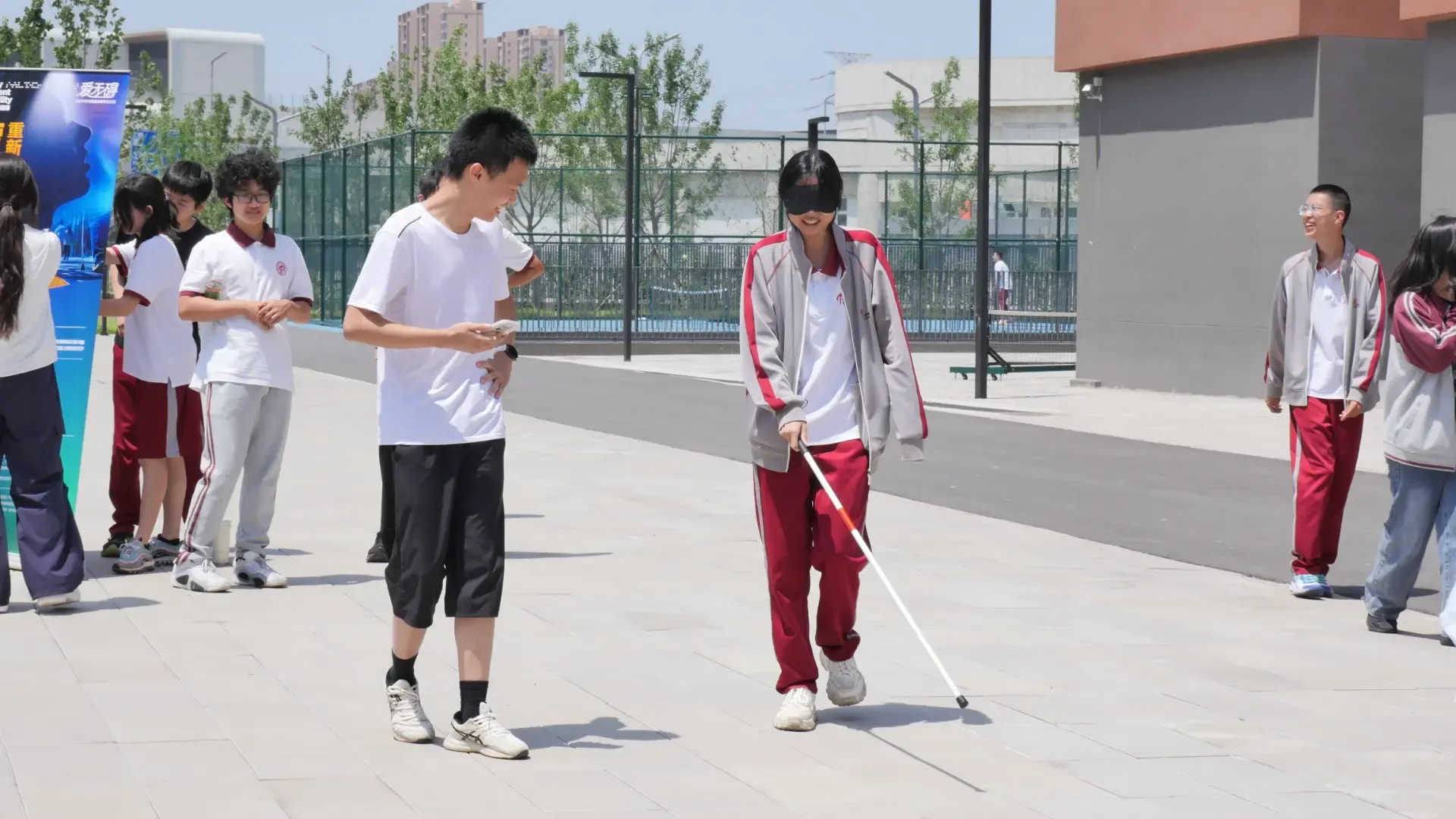
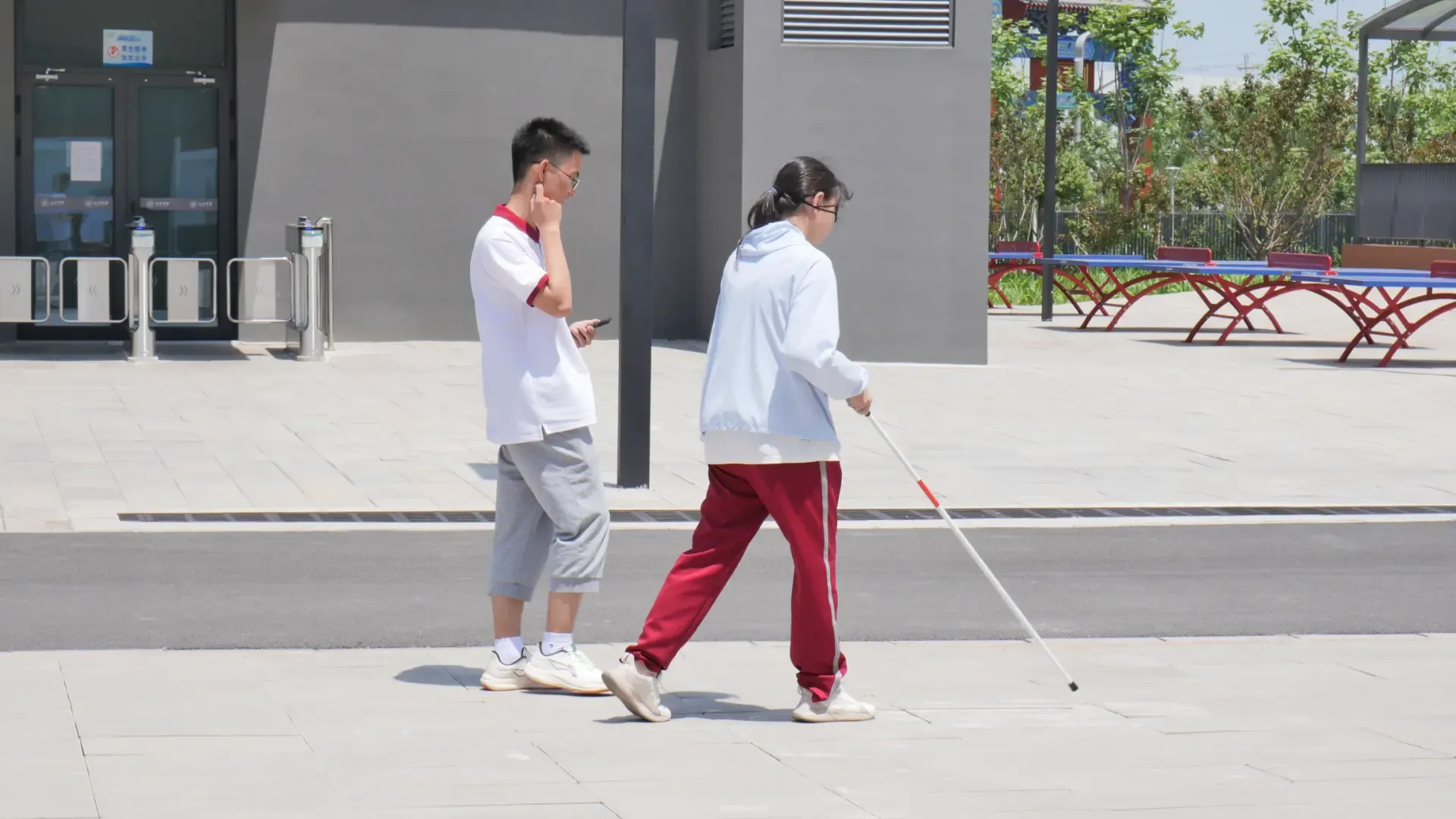
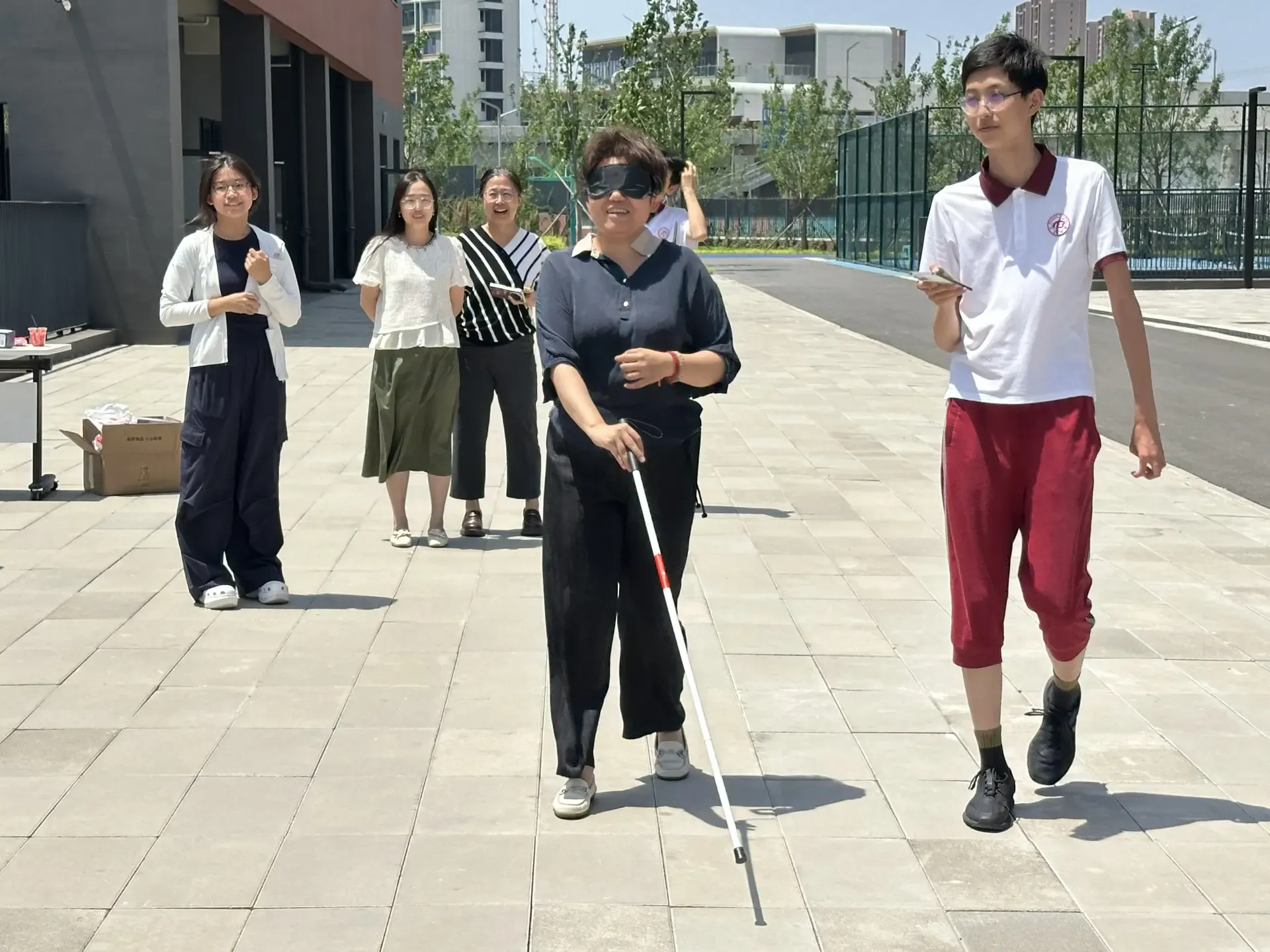
The White Cane Experience is one of A11yLab's main on-campus activities. Using a route that students pass through every day, the activity asks participants to temporarily rely less on visual information and navigate with a white cane, drawing attention to the importance of direction, obstacles, and spatial cues in mobility.
The club spent several weeks preparing for the activity. Members first selected a route and revised the plan according to pedestrian traffic and conditions on campus. Before the formal event, volunteers surveyed the site, learned basic white cane techniques, and rehearsed the entire process. Students were also responsible for preparing posters, white canes, blindfolds, disinfectant, and other materials.
Volunteers were assigned different responsibilities during the event. Some introduced the activity and invited passing students and faculty to participate. Once a participant entered the activity area, an orientation volunteer explained how to use the white cane and reviewed the rules. During the experience, one volunteer accompanied each participant throughout the route, recording the completion time and monitoring safety. Other members maintained order and recorded results.
More than 120 students and faculty members participated during the approximately 90 minute inaugural event. After completing the route, participants could leave written reflections at the site and received accessibility education materials prepared by the club. By navigating a familiar part of campus in a different way, many students began to notice features such as orientation, obstacles, and spatial information that they rarely considered in everyday life.
The white cane experience serves as an introduction to understanding mobility for people with visual impairments. A few minutes under a blindfold cannot reproduce the full realities of living with visual impairment, so A11yLab combines the activity with accessibility education. Participants are encouraged to continue learning about how people with visual impairments travel and to consider how campus environments can accommodate people who access information in different ways.
Disability · Impairment · Accessibility
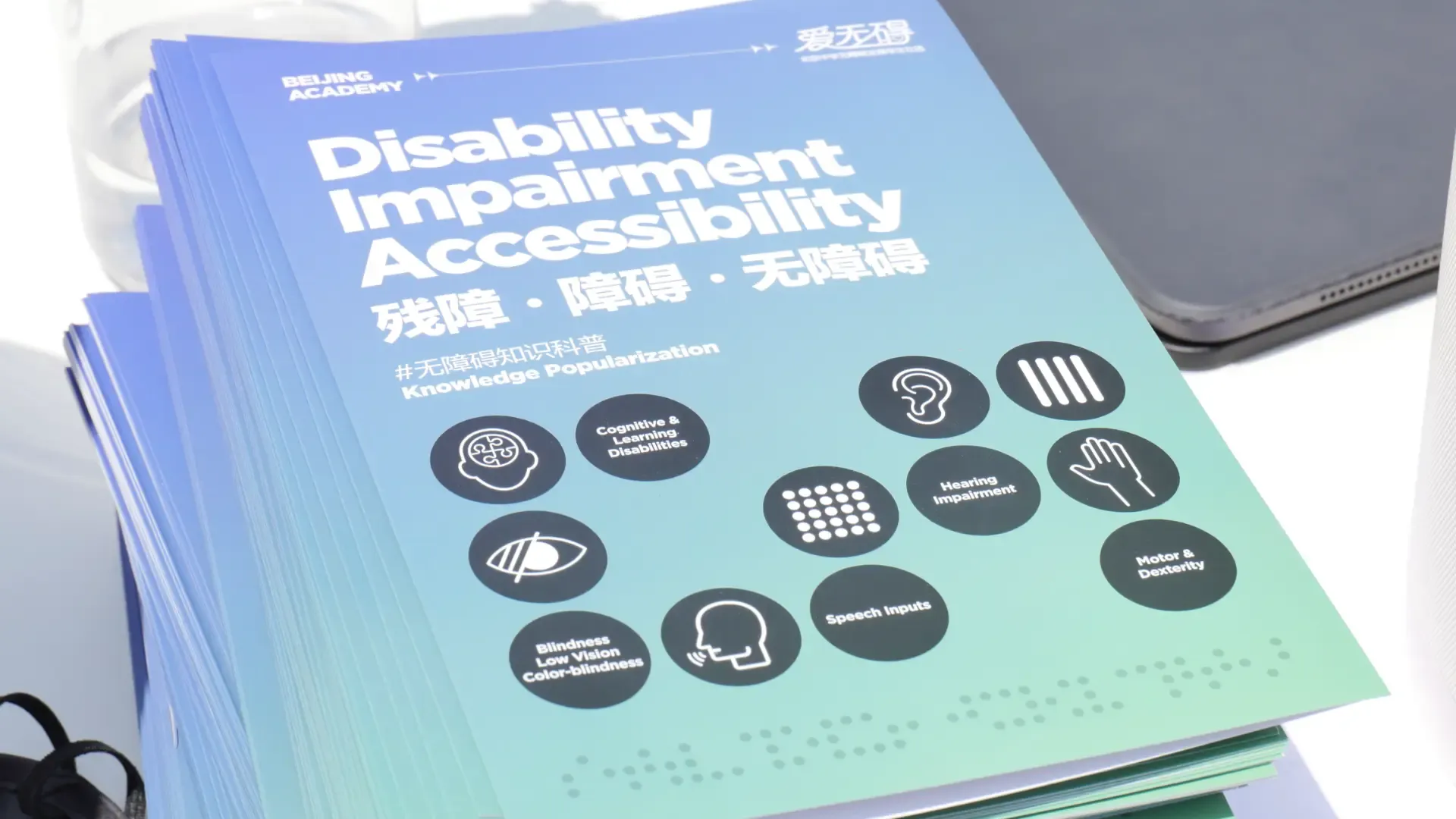
To introduce accessibility concepts to a wider audience, A11yLab worked with the Institute for Accessibility Development at Tsinghua University to create an educational brochure titled Disability · Impairment · Accessibility.
The brochure begins with basic concepts of disability and explains how individual physical or sensory differences interact with the surrounding environment. It also introduces changes in how disability has been understood over time and uses everyday examples to explain the relationship between accessibility, the built environment, and public services.
The material also addresses language and everyday interactions. People with disabilities have their own preferences and ways of living, so assistance should begin by asking what the person needs. Descriptions of disability should also use accurate and respectful terminology. Through these examples, the club encourages students to reconsider common stereotypes and pay greater attention to the perspectives of people with disabilities themselves.
More than 460 copies of the brochure were distributed to members of the community in a single day. In addition to the white cane experience, A11yLab has used the material at other events so that participants can continue learning after an activity ends. The club currently retains a collection of brochures and display materials for future accessibility education on campus.
Inclusive Visit to the China Science and Technology Museum for Scientists
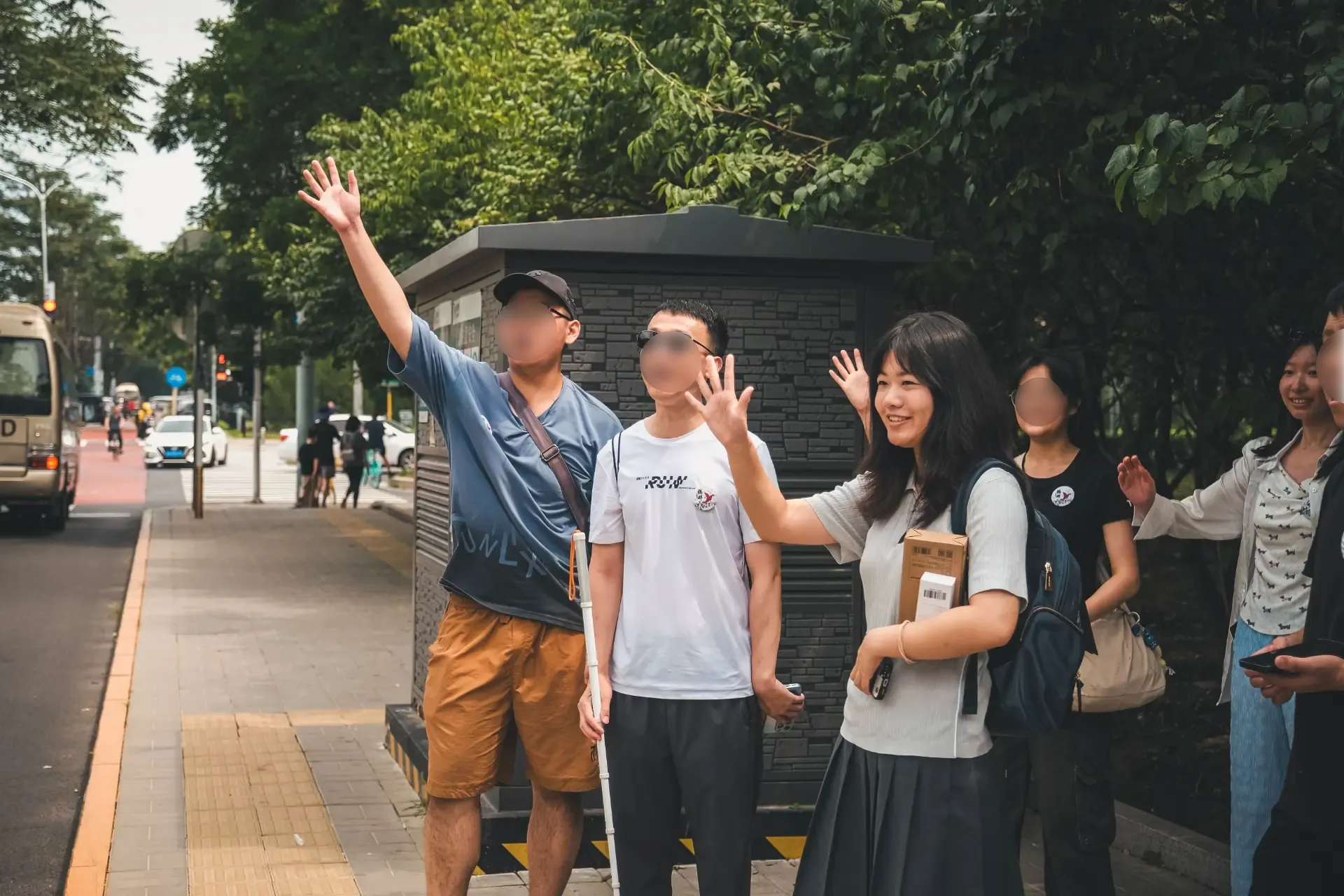
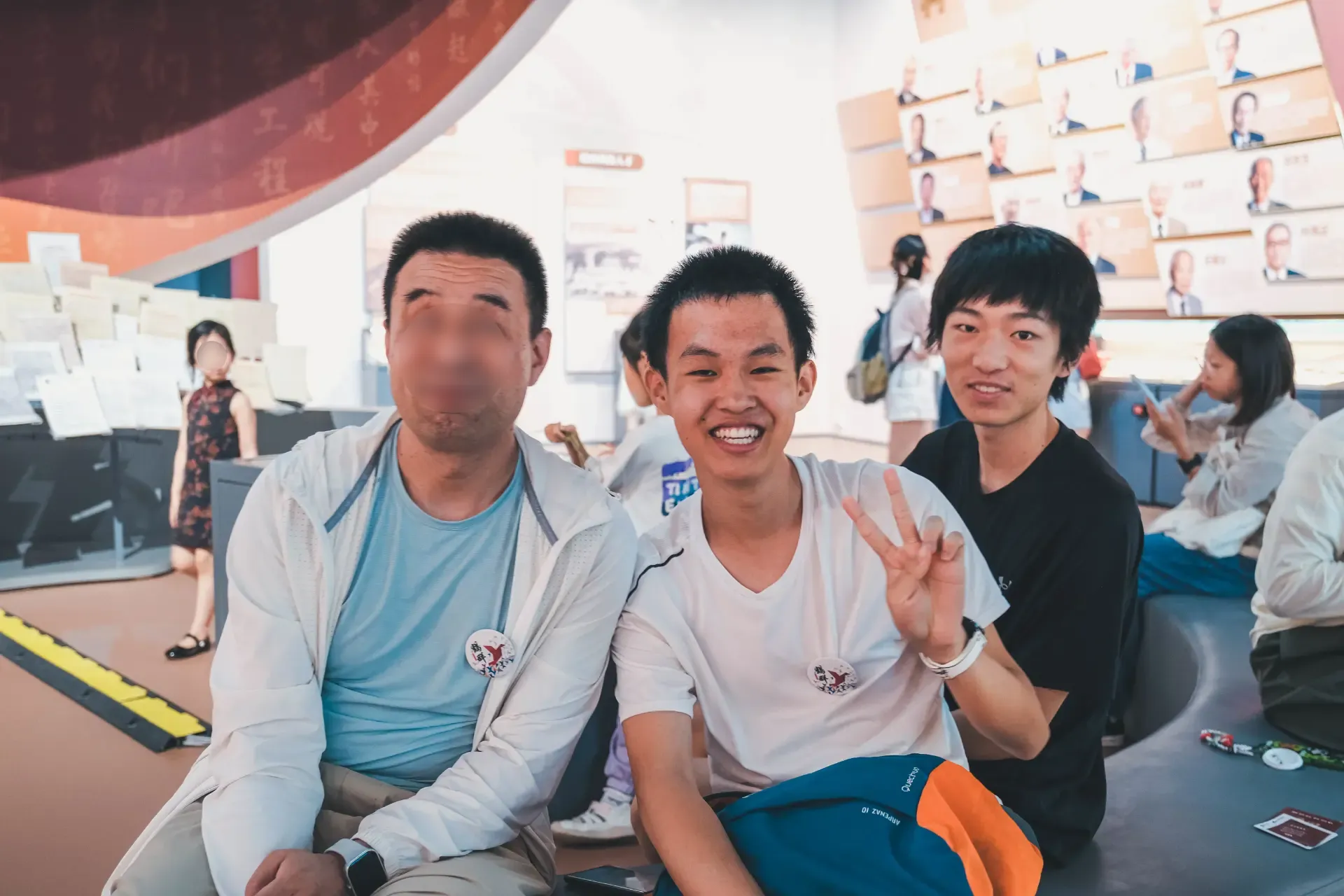
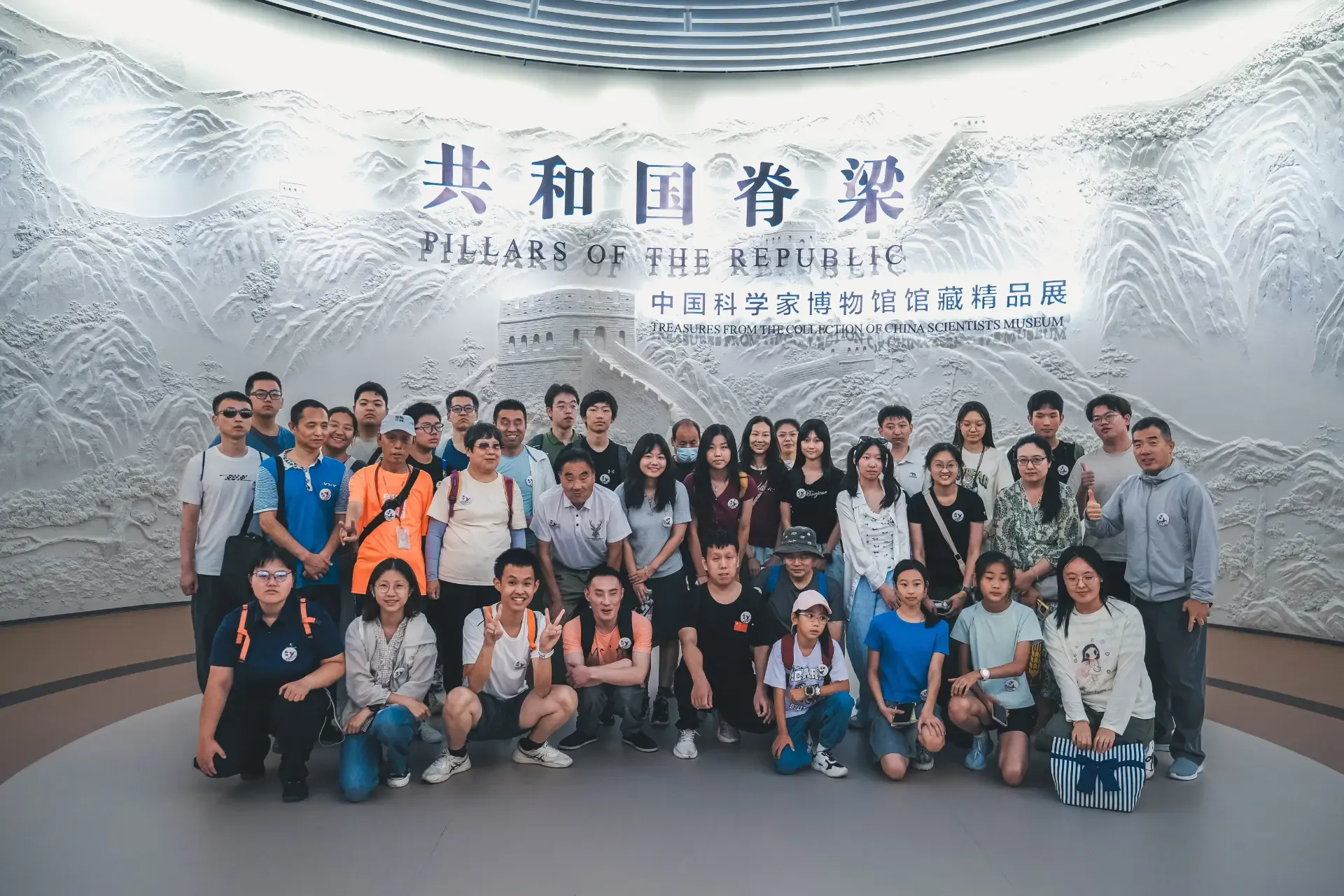
In August 2026, A11yLab partnered with Hequn Public Welfare, a registered disability service organization with more than 5,000 volunteers, to organize an inclusive visit to the China Science and Technology Museum for Scientists. More than 50 volunteers and people with disabilities participated, including 23 student volunteers and five teachers who helped coordinate the event.
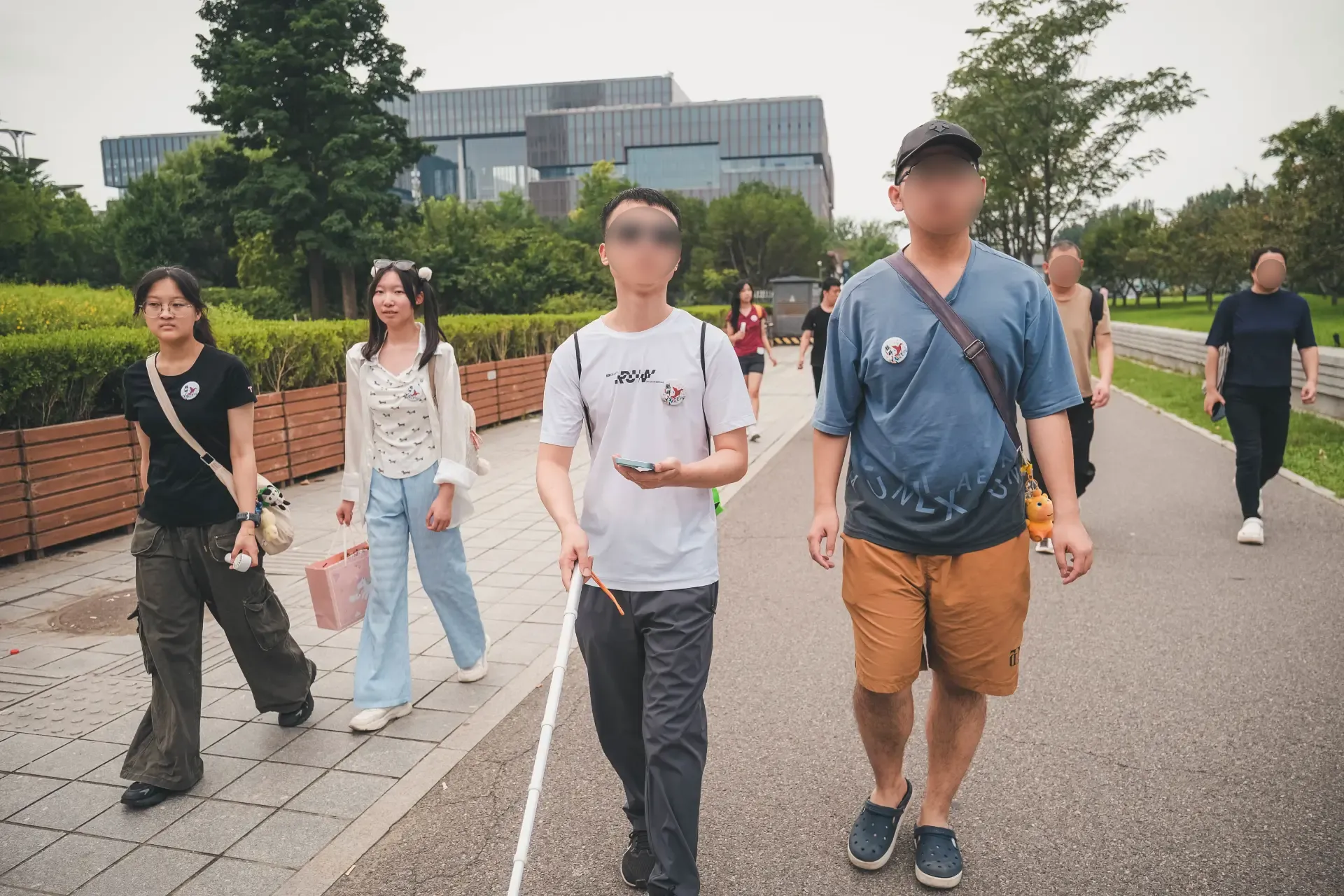
Before the activity, club members surveyed the route from South Gate of Forest Park subway station to the museum, examining road conditions, tactile paving, and street crossings. Student volunteers also attended disability service training, learning how to guide people with visual impairments and how to ask first whether assistance is wanted.
On the day of the activity, volunteers and participants with visual impairments walked together from the subway station to the museum. Once inside, volunteers discussed exhibition choices with the people they were accompanying. They could read written descriptions aloud when requested and describe photographs or physical exhibits where appropriate. Some participants joined the museum's public guided tours, while others explored different galleries according to their interests.
Compared with a short campus experience, the museum visit allowed students to spend much more time interacting directly with people with disabilities. Decisions about when to guide someone, how to describe an exhibit, or when to offer assistance depended on communication in the moment. Students came to understand that volunteer service begins with respecting another person's decisions and responding to the assistance that person actually requests.
The collaboration with Hequn Public Welfare also expanded A11yLab's work beyond campus. By accompanying participants through public transportation routes, streets, and a cultural venue, students were able to observe accessibility in public spaces and hear directly from people with disabilities about their experiences using those environments.
Student Leadership and Club Development
Most A11yLab activities are organized primarily by students. From the club's earliest meetings, members have discussed themes, activity formats, and staffing arrangements together. The Campus White Cane Experience developed from an initial idea through route planning, publicity design, and on-site rehearsal before the final event took place.
As the club organized more activities, members developed clearer responsibilities. Some handled event planning and communication with the school, while others worked on promotional materials and on-site coordination. Additional volunteers took responsibility for participant guidance, safety, photography, and documentation according to the needs of each event. Faculty advisors supported school coordination and safety, while external partners provided knowledge and opportunities for community engagement.
The club has also accumulated materials from completed activities. Its current inventory includes six white canes, one standing display for the white cane experience, disinfectant sprays, and accessibility education brochures. These materials document the club's past activities and can be reused in future campus programs.
Through this process, students also learn how much practical work lies behind a public service activity. A white cane experience lasting only one lunch period still requires advance planning for routes, pedestrian traffic, equipment, and sanitation. An off-campus activity requires participant communication, volunteer preparation, and on-site coordination. Each stage depends on members working together to bring an initial idea into practice.
Campus Accessibility Research and Future Plans
Alongside its existing campus and community activities, A11yLab plans to examine accessibility within Beijing Academy itself in greater depth.
One area of future work is a campus accessibility survey. The club plans to organize students to examine roads and public facilities around campus, identify places that may create difficulties for people with disabilities, and invite people with disabilities to participate in the evaluation. Their feedback can help students understand where improvements are needed before compiling findings and recommendations for the school.
A11yLab also plans to conduct surveys on accessibility awareness among students and families. The results can help the club understand which topics are already familiar to the school community and where misconceptions remain, allowing future education programs to address actual needs more closely.
The club also hopes to organize interviews and themed programs with people with disabilities and researchers in accessibility. These conversations can address specific issues in education, mobility, and social participation while giving students access to perspectives that cannot be reproduced through short experiential activities.
From a campus white cane experience to an inclusive museum visit, A11yLab has gradually developed its own approach to accessibility work. The club will continue to begin with concrete issues visible in school and community life, involve more students in accessibility initiatives, and encourage broader attention to how everyday environments can support people with different needs.