Under the Full Moon: BAID Celebrates Zhongqiu Festival
The air was sweet with osmanthus, and the moon was waxing toward full. At noon on September 24, the ground-floor lobby of Desheng Building came alive with swaying lanterns and the faint scent of ink, as BAID's Full Moon Zhongqiu Party opened across five zones, drawing students and teachers into a shared celebration of the Zhongqiu Festival.
Lantern Riddles and Pitch-Pot: Puzzles Hidden in the Glow
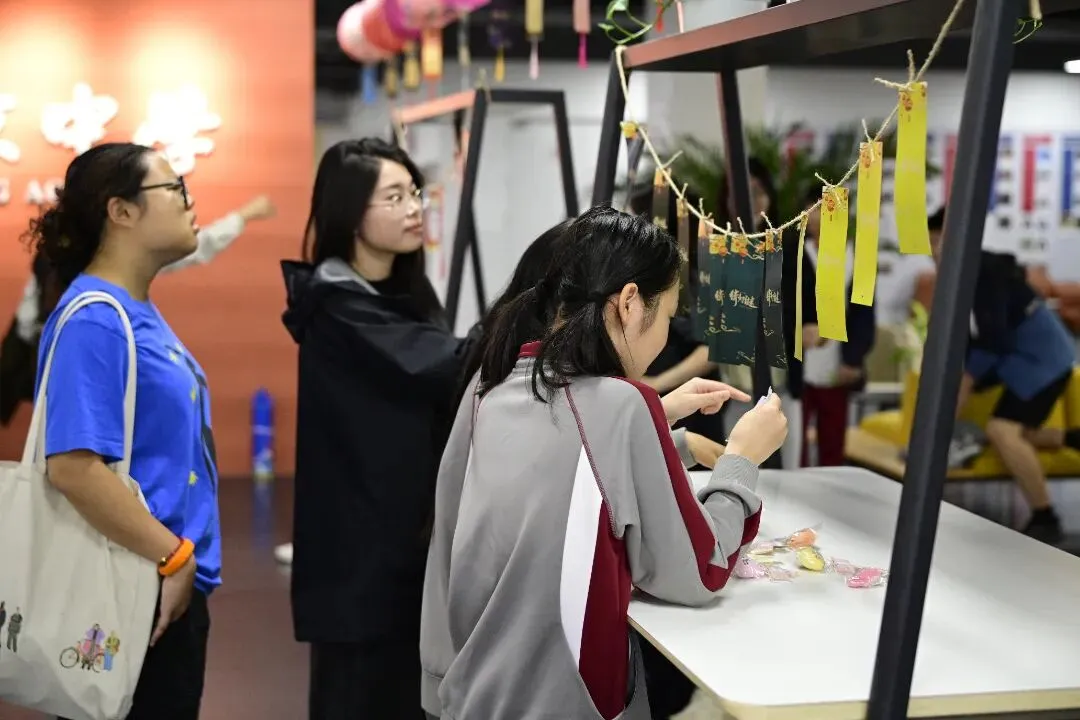
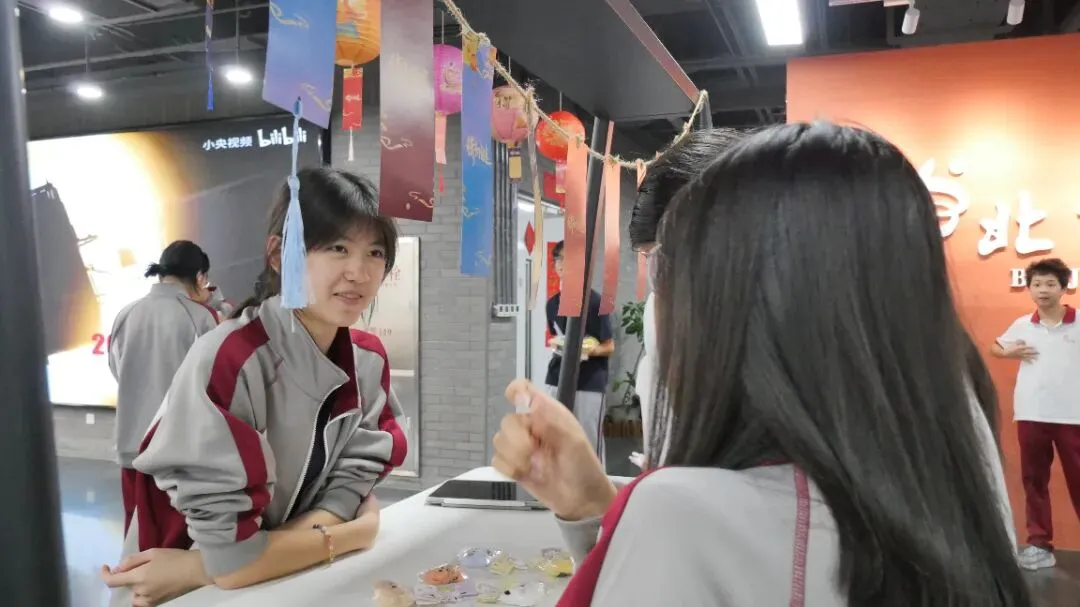
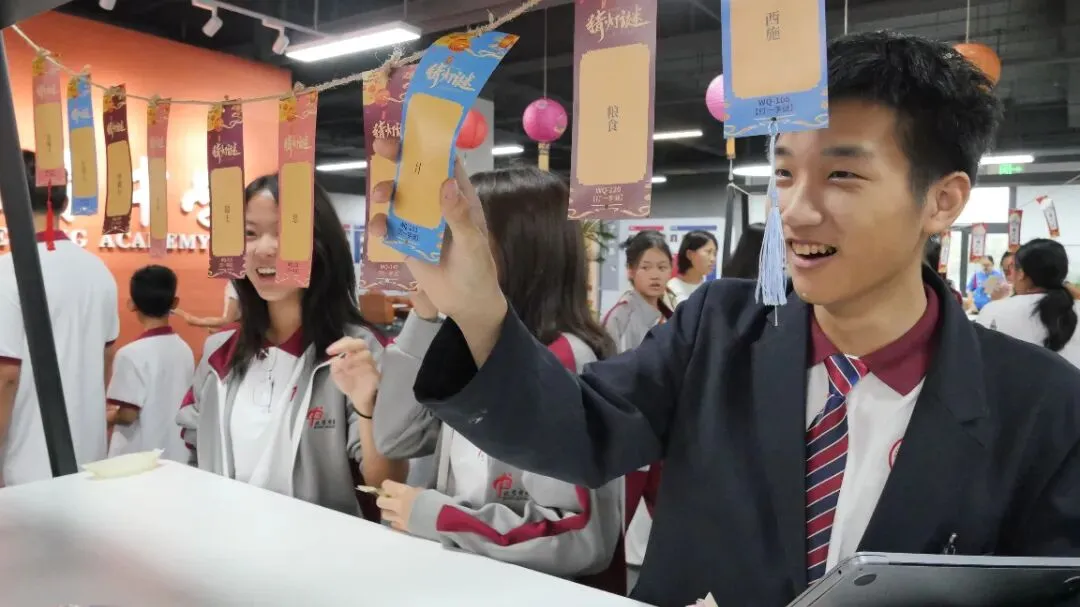
Lanterns swayed gently, their attached riddles fluttering in the breeze. Some students stood deep in thought, while others whispered back and forth with friends. Those who cracked a riddle walked away with a small prize, and even those who did not simply smiled and moved on to the next. The pitch-pot game also drew a steady crowd; cheers and applause erupted each time an arrow found its mark. These traditional pastimes sprang back to life on campus that afternoon, filling the party with a genuine, joyful energy.
A Taste of Reunion: One Moon, One Bite of Togetherness
At the mooncake-tasting area, treats donated by the parent association were neatly sliced and arranged, with a range of flavors waiting to be sampled. Friends clustered in twos and threes, sharing mooncakes along with the togetherness that defines the Zhongqiu season. As the old verse goes, "A small cake like chewing the moon — crisp and sweet within." Across the centuries, mooncakes have never been merely about taste; they carry the memory of reunion. We hoped to let the flavor of tradition find its way onto campus in a relaxed, natural way.
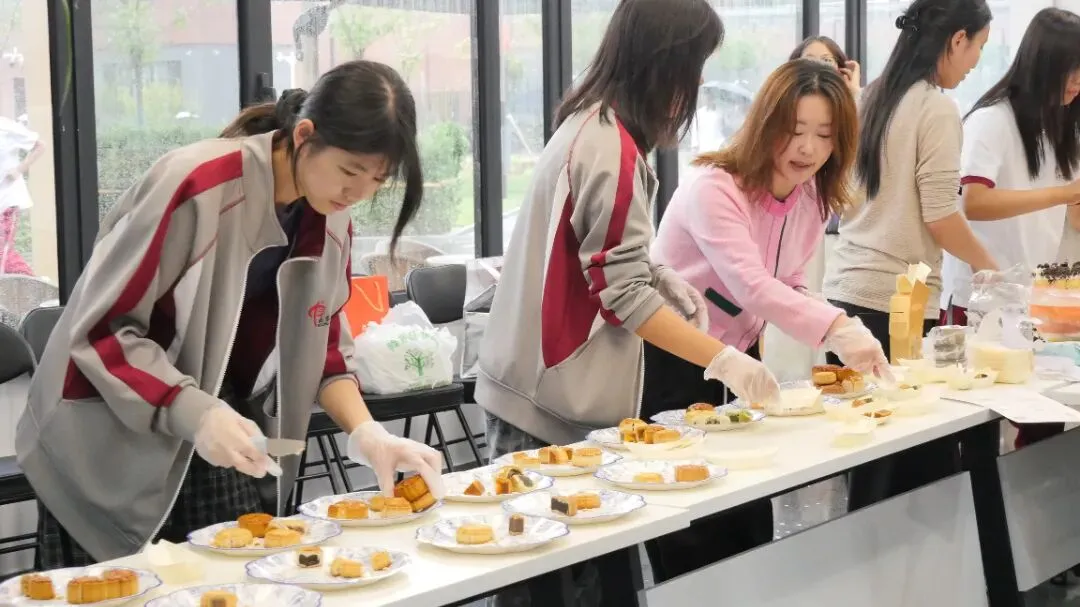
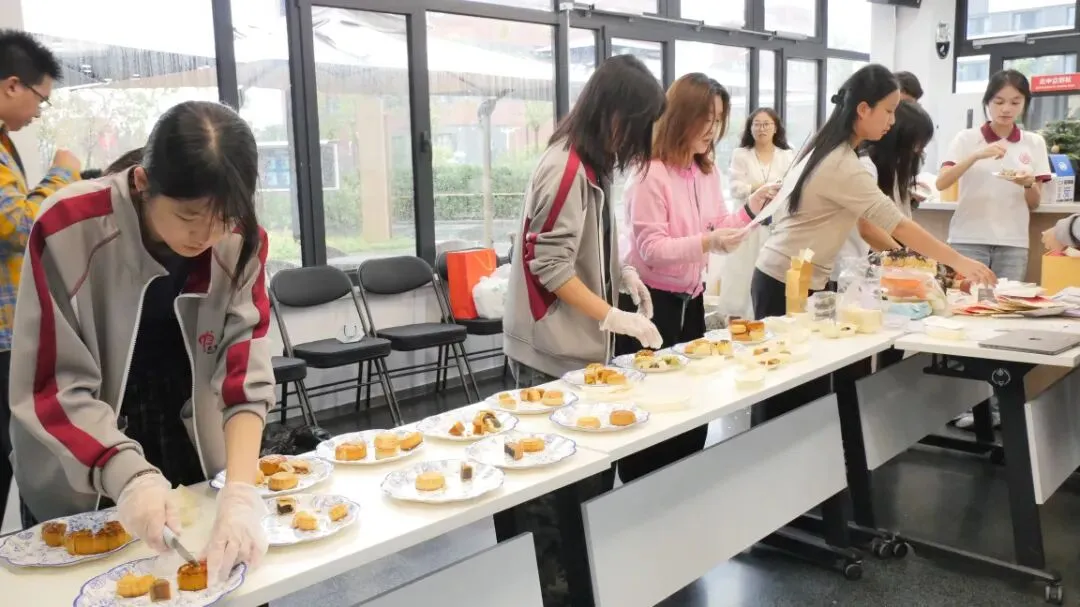
At the tasting area, Wang Tianyi and Wang Yufei also prepared an educational display on low-sugar mooncakes, encouraging healthier eating. Here is what they shared:
How Much Sugar Is in a Mooncake?
According to nutrition labels on commercially available products, a 100-gram serving of Cantonese-style mooncake typically contains 20 to 30 grams of sugar — the equivalent of 3 to 4 sugar cubes. The recommended daily limit for added sugar is 25 grams, or roughly a quarter of a standard mooncake.
"Low-Sugar" Mooncakes Are Not Sugar-Free
China's national standard stipulates that only products containing no more than 5 grams of sugar per 100 grams may carry a "low-sugar" label. In practice, most mooncakes marketed as low-sugar still contain 10 to 15 grams, and some manufacturers actually increase the fat content to compensate for the reduced sweetness.
"Zero-sugar" mooncakes may use sugar substitutes, but the carbohydrates in the crust and fillings still break down into sugar during digestion. Furthermore, beyond white sugar, ingredients such as inverted sugar syrup, maltose, high-fructose corn syrup, malt syrup, and honey are all essentially sugar — and the higher they rank on the ingredient list, the more of them there is. If any of the first three ingredients contains "sugar," "syrup," or "honey," it should be counted toward your daily sugar intake. When shopping, read the nutrition panel on the back carefully rather than relying solely on the claims printed on the front.
Four Principles for Eating Mooncakes Smartly
- Portion: Stick to a quarter of a cake per sitting, and no more than two per day. Sharing with family is always a good idea.
- Pairing: Enjoy with green tea, oolong tea, or plain water, and avoid pairing with sugary drinks like cola or milk tea.
- Timing: Best eaten in the morning. Avoid eating right before bed.
- Trade-off: On days you eat mooncakes, cut back on other sweets and starchy staples to keep your total calorie intake in balance.
Brush and Ink: Writing Sentiments, Setting Wishes
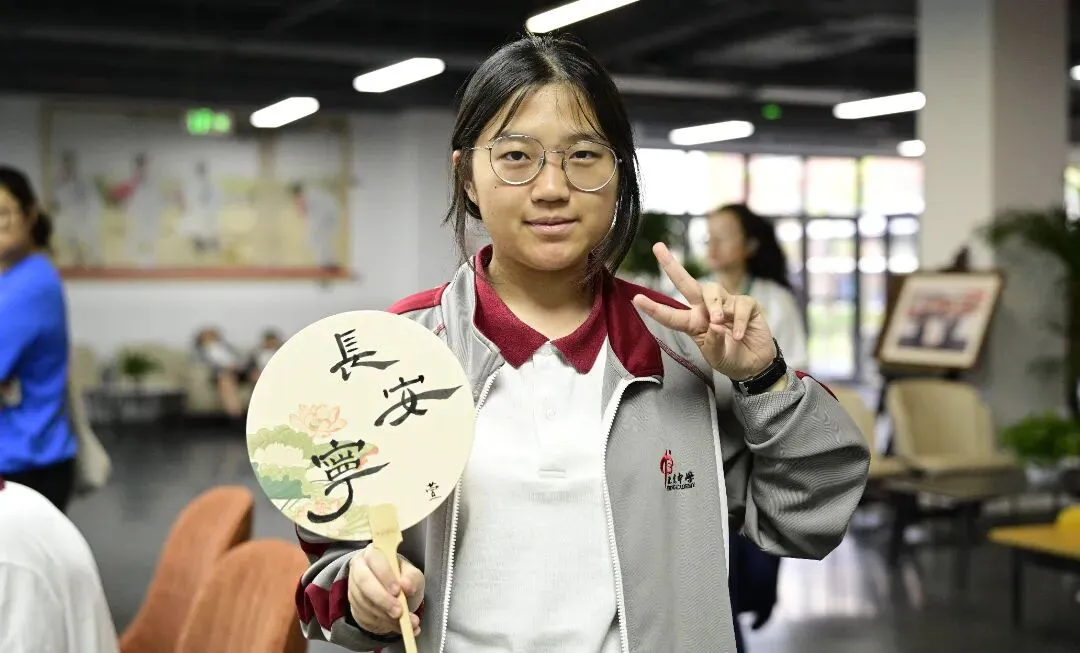
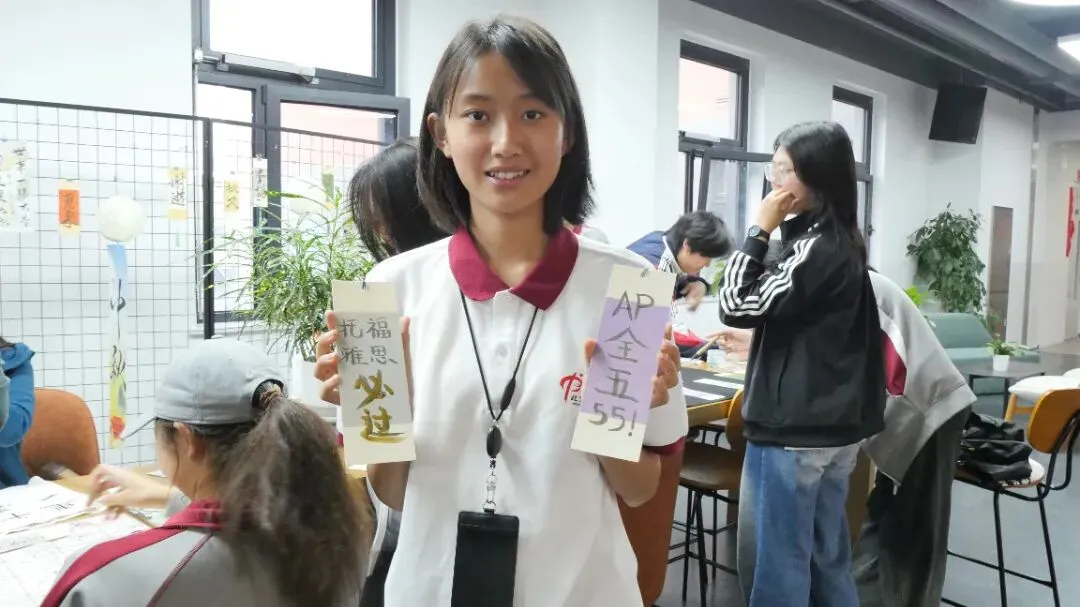
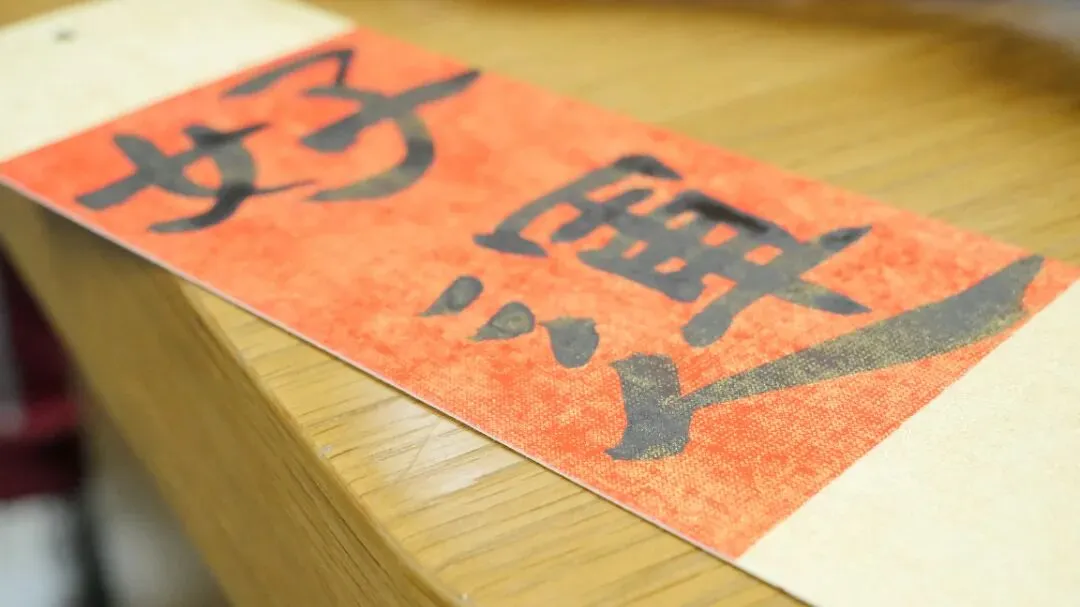
At the calligraphy area, a long table was laid with rice paper, brushes, and ink, creating an atmosphere of quiet elegance. Students picked up brushes to write their Zhongqiu wishes. Some wrote the character for "moon," others for "fortune," and still others filled line after line with hopes of their own. In the rhythm of brushstrokes, the festival seemed to slow. "May we live long and share the moon's beauty, though a thousand miles apart." Perhaps every character written that day carried a quiet sentiment meant for this autumn.
More Delights: Surprises Beyond the Main Event
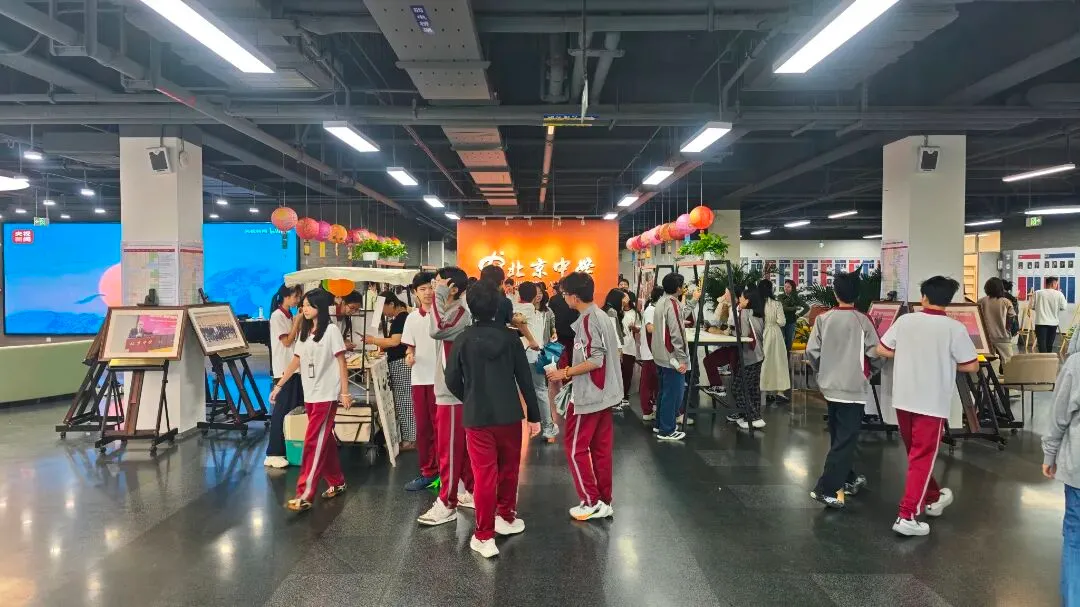
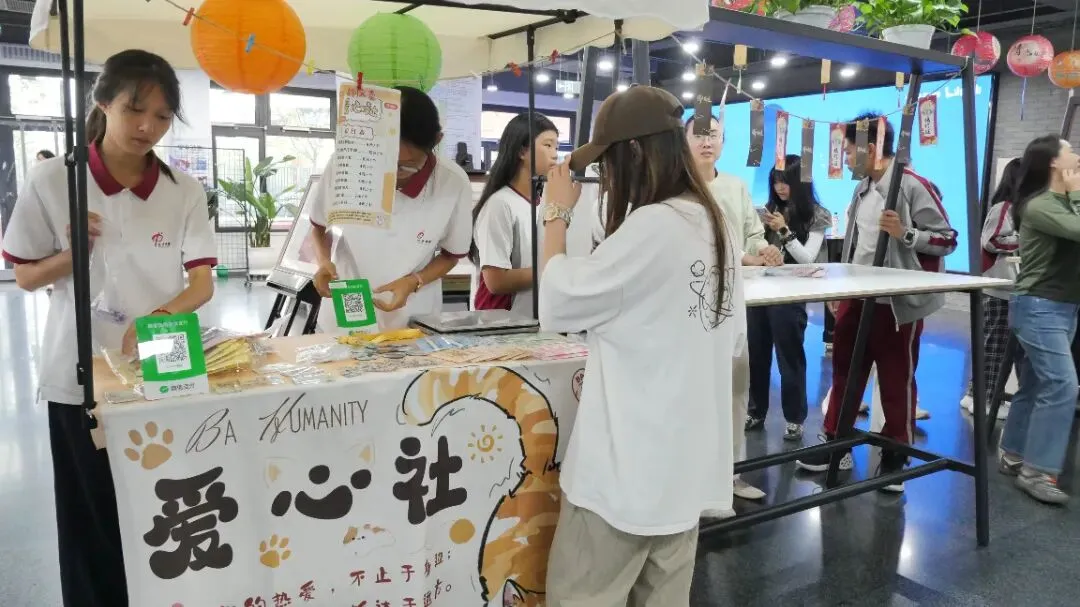
Beyond the main activity zones, students from the BAID Humanity Club and the BAID Cultural & Creative Club also set up shop, adding their own touch of festivity. Students lingered by the carts, browsing freely and picking out creative products they liked.
A party is more than guessing riddles, writing calligraphy, snacking on mooncakes, and snapping photos — it was a gentle reunion between BAID students and traditional culture. From lantern riddles to mooncake tasting, from brush-and-ink wishes to framed photographs, traditional festivals are no longer just words in a textbook; they become real experiences that everyone can take part in.
Our gratitude goes to the parent association, the volunteers, and the teachers who kept the bustle orderly, the rituals warm, and turned a brief sixty-minute party into a Zhongqiu memory that belongs to Beijing Academy.
Student Reflection
Feng Jingyan
For me, this Full Moon Zhongqiu Party was not just a festival event — it was a complete journey from planning to execution. The biggest challenge? We had less than eight days to prepare. Eight days may seem short, but through round after round of communication, revision, and execution, I watched idea after idea take shape and become reality. That process itself has become a cherished part of my growth.
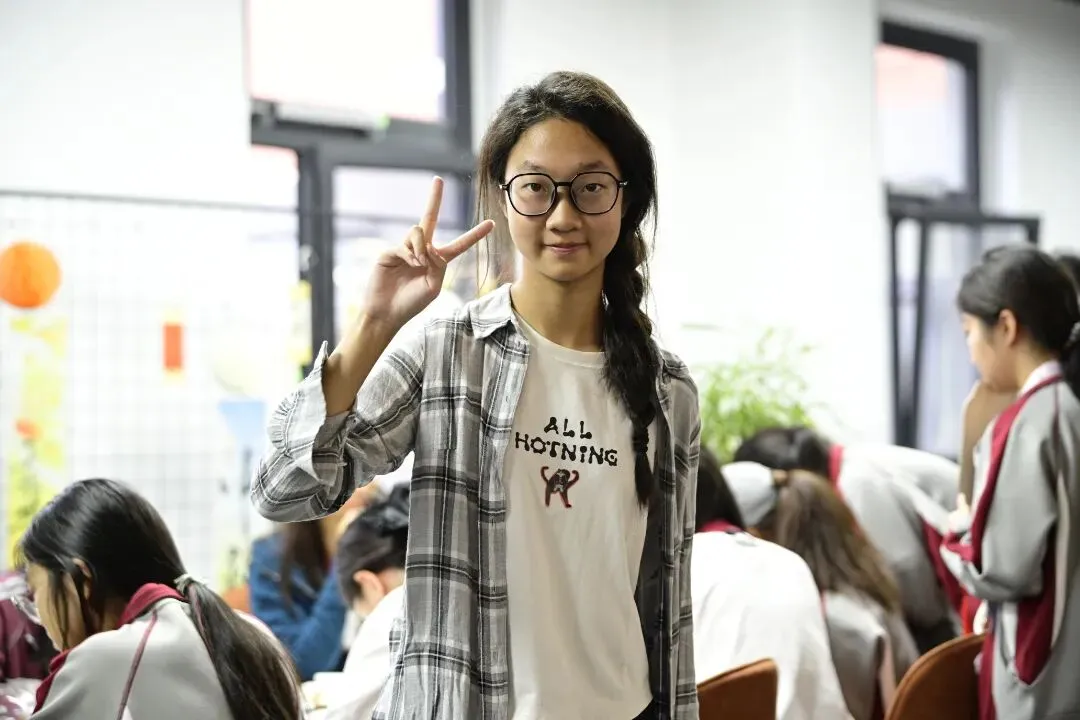
In the early phase, we designed an open-format party around the theme of "Zhongqiu Reunion," weaving together five zones: lantern riddles, pitch-pot, mooncake tasting, calligraphy, wish cards, and a photo spot. During coordination, I truly grasped for the first time that even a seemingly simple event demands careful attention to venue, crowd flow, materials, task assignments, and the overall attendee experience. Fortunately, I had an outstanding team of volunteers by my side every step of the way.
On the day of the event, lanterns, riddles, calligraphy tables, and mooncakes came to life right there in the ground-floor lobby of Desheng Building. Students wandered freely through the five zones, laughing and joining in. Seeing the words in our proposal turn into real memories that people could participate in and carry with them — that, to me, is the true meaning of planning.
This experience taught me that good planning requires not just creativity, but also attention to detail, persistent communication, and disciplined execution. I want to extend a special thank-you to the school for offering us this grand stage, to the support staff and mentor teachers for their unwavering support, to the parent association for their generous help, to all the volunteers for their dedication, and to every single person who showed up!
From a proposal on paper to a real party, what I gained was not just planning experience, but the courage and the ability to turn ideas into reality.
As the moon waxed full, the memories we created together became the most meaningful gift of this Zhongqiu season.
The moon keeps its promise, and autumn marks the time. This year, under the full moon, we met at Beijing Academy. Next Zhongqiu, may we gather again for another season of simple joys beneath the moonlit sky!