Outstanding BAID Teachers Share Their Teaching Experiences
Every semester, Beijing Academy undergoes a special "educational check-up" — the Education and Teaching Diagnostic. The diagnostic tool, custom-designed by a professional team at Beijing Normal University, conducts a systematic, scientific assessment of the school's teaching and learning practices. Through diagnostic feedback, teachers gain clarity about their strengths and areas for growth, sharpening their focus for improvement. The school, in turn, uses the diagnostic results as a springboard to organize targeted training and experience-sharing sessions — ensuring that effective practices are recognized, shared, and scaled, in keeping with the goal of building a school where students grow happily and learn effectively, and where teachers find fulfillment in their work.
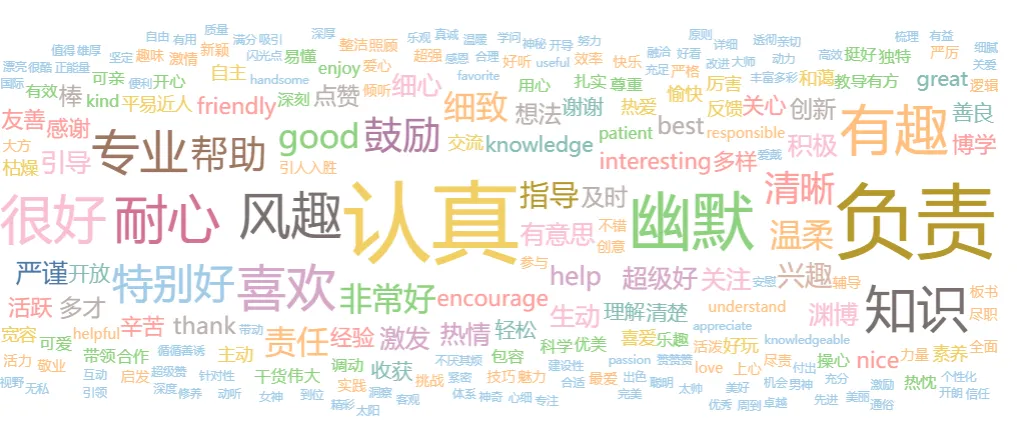
At the start of the new semester, building on the previous semester's diagnostic results, BAID hosted an Outstanding Teacher Experience-Sharing Session. Four teachers, each serving in a different role, drew on their own practice and reflection to share the insights and growth they have gained in their educational work.
Gao Mengchan
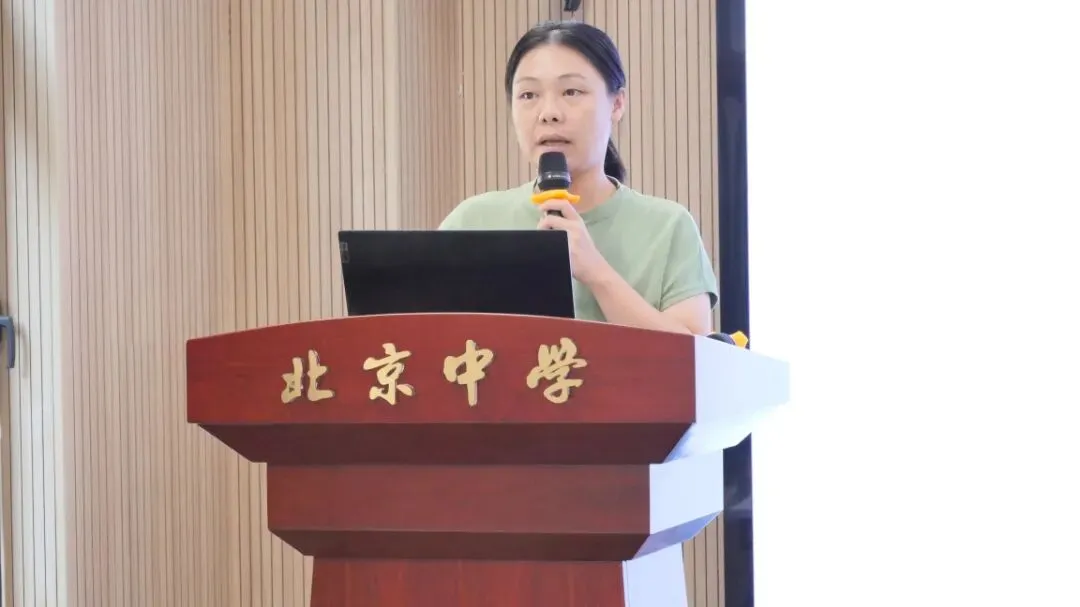
Gao Mengchan, Head of the English Department, distilled her presentation into a single word: "concrete." "Education doesn't need theatrics," she said. "What students truly need are the tangible, visible gains they make every day, in every class, at every step of the process."
Vocabulary learning must be concrete. When the textbook word lists fell short, she and her colleagues built their own vocabulary resource from scratch, iterating repeatedly until they produced a 180-page word notebook. Words are organized by tier, so students know exactly what to memorize first and what comes next. Each page includes a Notes section, encouraging students to jot down the memorization techniques that work best for them. The notebook also doubles as a checklist — every assignment, from the first to the last, is tracked with dates, content, and scores at a glance.
Testing must be concrete. Vocabulary quizzes, unit tests, and mock exams build on one another in layers, with every score clearly communicated to students. After each mock exam, she analyzes each student's data individually and reviews their strengths and weaknesses face to face — not with vague feedback like "your reading needs work," but with specific, actionable observations such as "you're doing well on factual information questions, but inference questions still need attention — focus your effort there."
Resources must be concrete. She designed her own study materials modeled on TOEFL question types, adding inference questions after two rounds of iteration so that students practice both reading and speaking — forming a five-in-one reading training system that integrates text, vocabulary, analysis, testing, and practice. For listening, she developed a six-step learning cycle: take notes, tackle questions, listen, check, review vocabulary, and read. In her writing classes, she preps the essay structure, guiding questions, and model answers ahead of time, freeing up class time for students to do the real thinking.
Feedback must be concrete — and so must emotional support. She annotates every piece of student writing line by line, and sends reading-aloud feedback to students via WeChat. Their effort is seen and recognized — last year, many students in her classes climbed from scores in the 40s and 50s at the start of the year to 90-plus by the end. "There are no shortcuts in teaching," she said. "You just have to make every link in the chain detailed, solid, and thorough."
Lyu Yuan
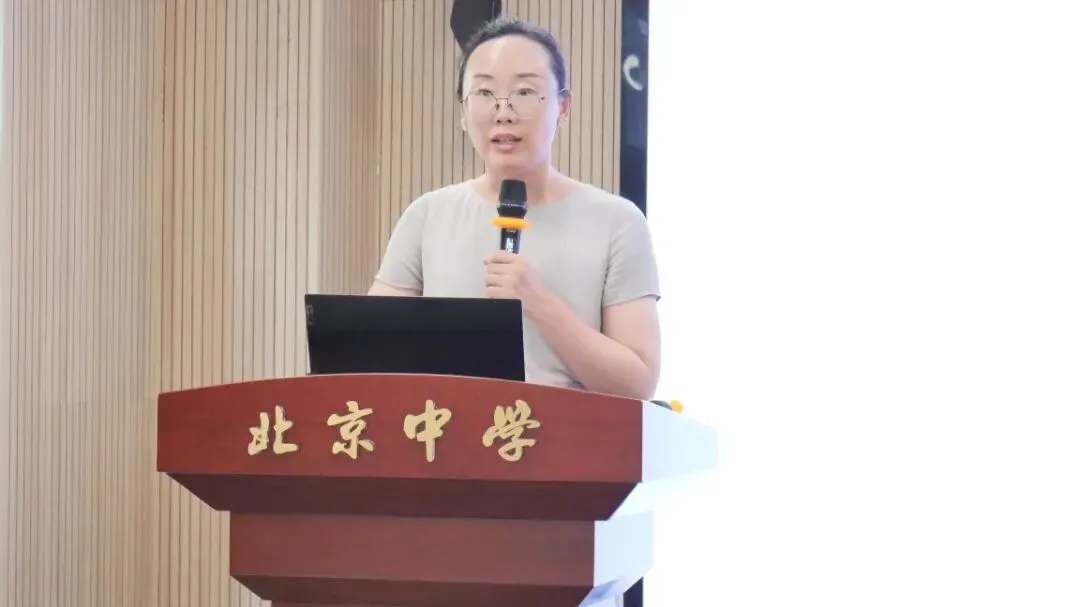
Lyu Yuan teaches AP 2D Art & Design while also managing class-level student affairs, and she believes deeply in the power of "educating through beauty" — using visible beauty to convey truths that are hard to put into words.
In her classroom, a reproduction of Peaceful Spring Message carries the blessing of "bamboo heralds peace." On a wall titled "Reaching for the Stars," students have pinned their goals, each written on a star-shaped note. On the "Compliment Wall," classmates discover and celebrate each other's strengths. Overhead, pennants of their dream colleges hang from the ceiling, keeping their aspirations literally within sight.
In her management approach, she balances "visibility" with "warmth." The "Homework Energy Chart" tracks daily persistence with graphs, while the "Ten-Star All-Rounder" awards ensure that effort in every direction gets recognized — roughly 15 award rounds per semester, with nearly 60 student recognitions. She has built a three-in-one mentorship model that combines one-on-one meetings, Homeroom sessions, and psychological talks. Her class earned the "Star Class of the Week" title 11 times in the second semester of grade 7 and was named an Outstanding Class at the school level.
She also puts the spotlight back on the students: class committee positions are filled through election, with public reports and rotating terms. Every student gets a personalized campaign poster and a certificate of appointment with a ceremonial flourish. "Excellence doesn't come in just one form," she said. "If you put in effort in any area, it will be seen and recognized."
Shen Tianrong
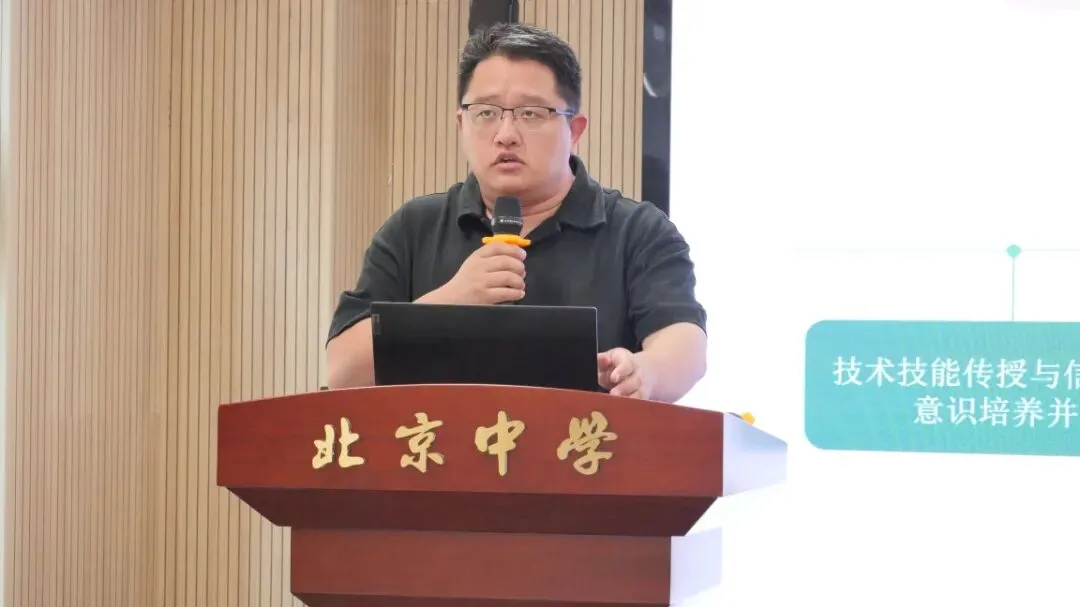
In his AP Computer Science class, Shen Tianrong structures his teaching around three core pillars: integrating moral education, providing individualized guidance, and building instructional resources. In his view, teaching technical skills is only the foundation — cultivating students' awareness of information security and professional discipline is just as important.
Bringing moral education into the classroom starts with small details. Reminding students to keep their workstations tidy, correcting their posture while using computers — these seemingly minor habits are the very building blocks of professional integrity.
Faced with a student body of widely varying abilities, he categorizes students into three groups — "extension," "exploration," and "support" — and offers tailored guidance. Simple questions get text replies; program errors come with voice explanations; more complex doubts merit recorded tutorial videos or one-on-one online coaching. Differentiated instruction ensures that every student receives the support that fits their needs.
He sees curriculum resource development as the lifeblood of the discipline. Over the course of a single academic year, using evenings and winter break, he recorded a total of 6.86 GB of video resources, produced walkthroughs for 682 multiple-choice questions and nearly 60 free-response questions, and built a 143 MB screenshot repository. He also collects students' typical questions and standout code snippets, turning them into formative teaching resources that will power future rounds of instruction.
Looking ahead, he plans to record the final class of each weekly parallel session in full, laying the groundwork for a school-based textbook. He intends to update the resource library to provide data for an online Q&A teaching assistant, and to propose new course offerings so the discipline can go even further. "Education is a quiet journey of dedication," he said. "Every ounce of care leaves its mark on the students."
Tian Xiaoke
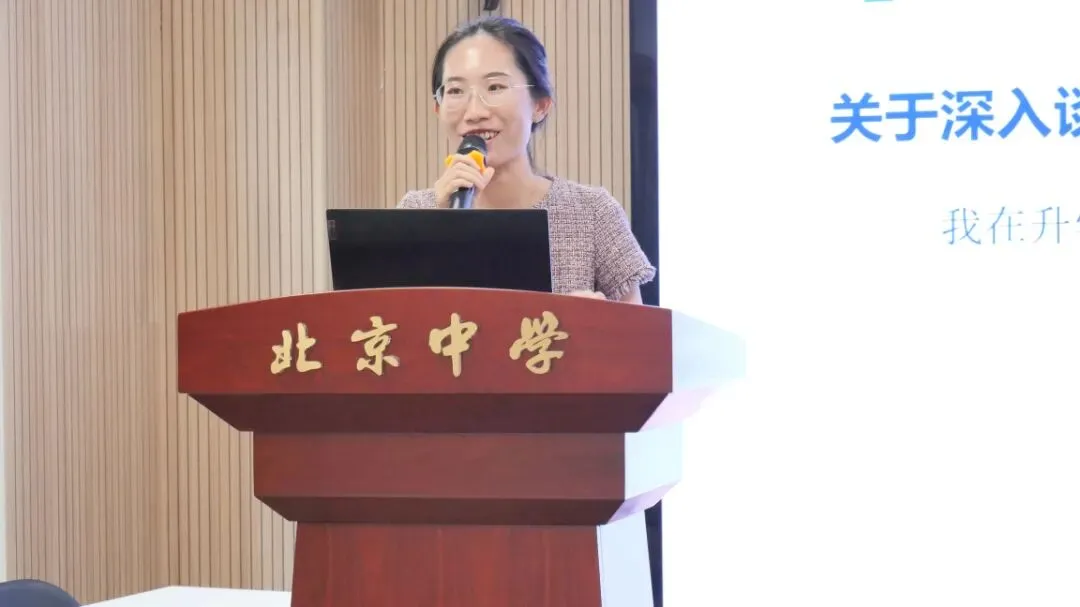
What exactly does a college counselor do? For Tian Xiaoke, the professional value of this role lies not in the logistical busywork of application season, but in the deep understanding of students, the informed judgment about external changes, and the steady accumulation of practical experience.
All guidance begins with understanding the student. Before every one-on-one session, Ms. Tian uses structured questionnaires to learn about the student's academic performance, course selection, and interests and experiences in advance. During the conversation, she uses follow-up questions and careful listening to help students first clarify the nature of their problem before offering professional advice. In her view, good support means being present at the pivotal moments — helping students analyze problems, find pathways, and gradually learn to face challenges and make decisions on their own. The end of one conversation often marks the start of a new inquiry: she leaves students with questions to explore further, so they walk into the next meeting with fresh thinking.
In the face of shifting macro-level policies and admissions trends, Ms. Tian insists on tracing the reasoning and logic behind each change. Does a rise in standardized test submissions signal a wholesale return to the importance of test scores? Does it corroborate signals such as universities reinstating testing requirements? Only by synthesizing data trends, university policies, and the broader application landscape can she help students and families form judgments grounded in facts and logic.
She also documents the insights from countless counseling sessions, debriefs, and lectures, organizing and sharing them through cloud documents so that individual practice becomes a shared team resource. "When experience can be recorded and shared, professional capacity can keep growing."
Every act of sharing is a step upward. Every piece of experience is a foundation for the road ahead. With the new semester as a fresh starting point, let experience gain value through circulation, let growth unfold through sharing, and may every teacher find their own light and growth this semester — and may every student be better seen, and better supported.