BA Lectures | The One-Person Company Era? — Judgment, Entrepreneurship, and Organization in the AI Age
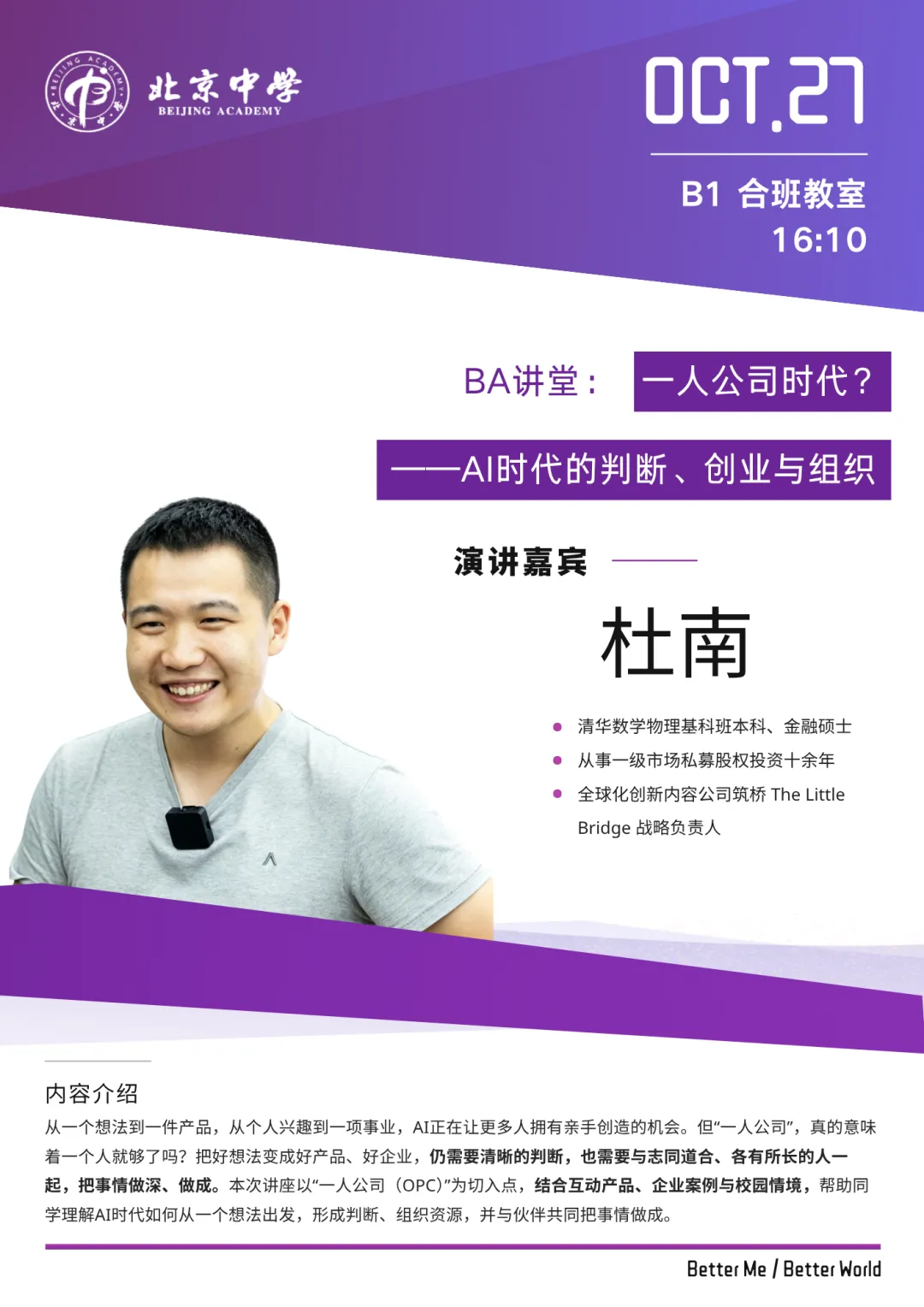
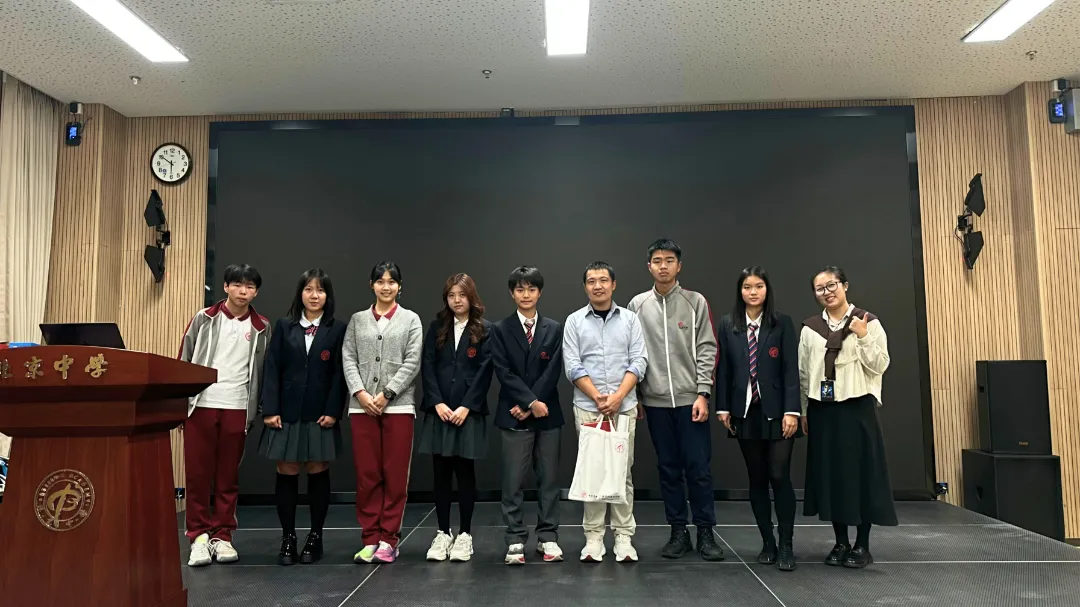
On October 27, 2026, the BA Lecture series at BAID hosted a session titled "The One-Person Company Era? — Judgment, Entrepreneurship, and Organization in the AI Age," featuring Mr. Du Nan as the guest speaker. Mr. Du holds a bachelor's degree from Tsinghua University's Fundamental Science Program and a master's from the Shanghai Advanced Institute of Finance. With over a decade of experience in primary-market equity investment, he also serves as Head of Strategy at The Little Bridge, a global innovative content company, bringing extensive hands-on expertise in both investment and business.
The session opened with Mr. Du walking the audience through the structure and operational logic of traditional companies. Starting from hierarchical divisions, departmental coordination, and resource allocation, he helped students grasp how organizations sustain a venture through structure and collaboration. From there, the lecture pivoted to the new landscape shaped by AI. Mr. Du noted that the explosion of AI technologies is reshaping traditional models that once relied on high costs and heavy staffing, unleashing individual creativity on an unprecedented scale. This has given rise to the concept of the "One-Person Company (OPC)" — a new organizational form well worth paying attention to.
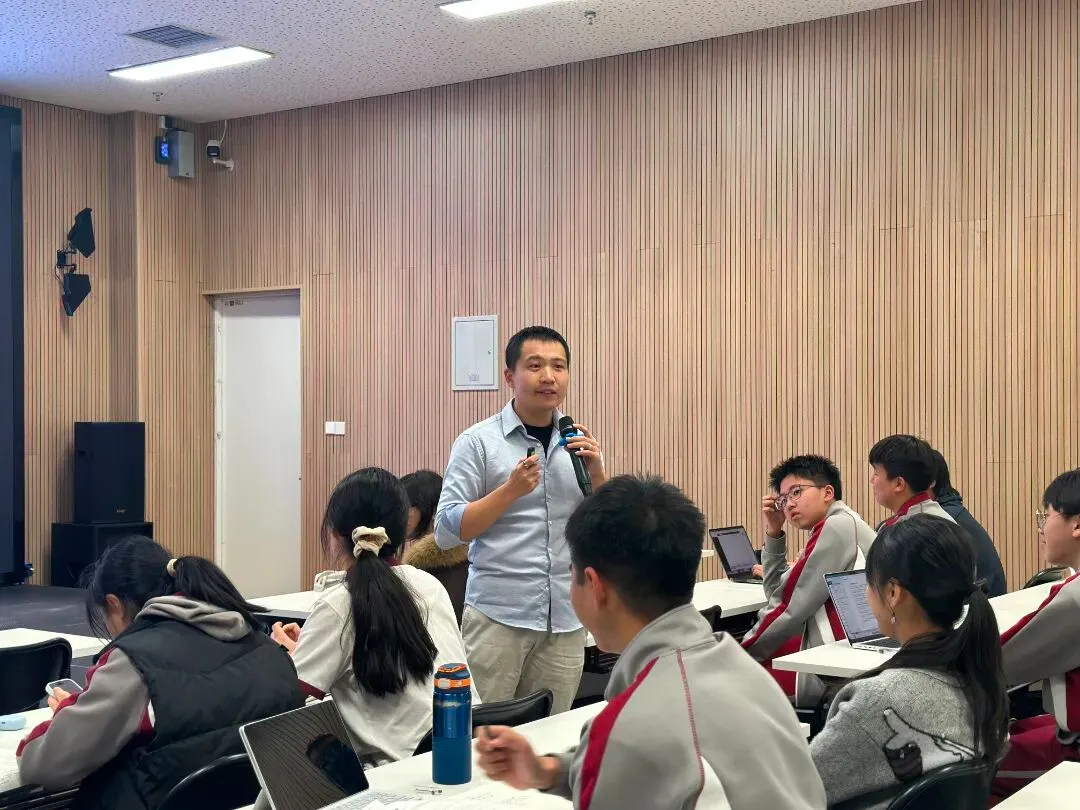
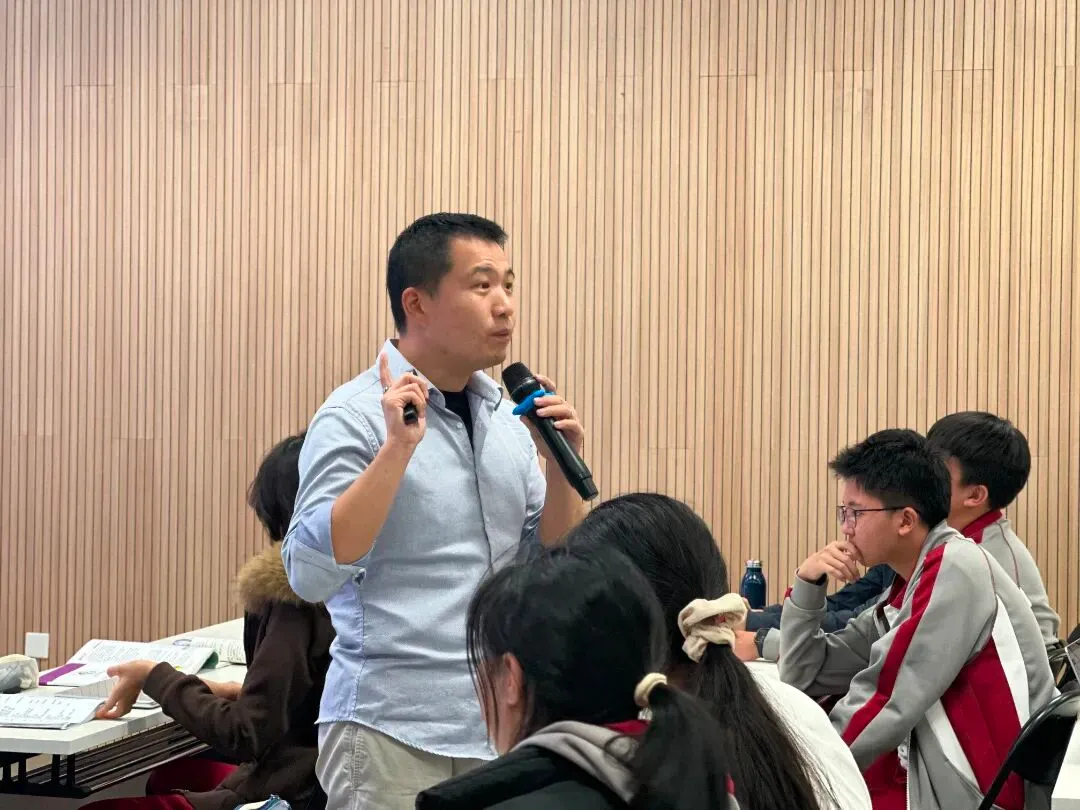
But does "one-person company" truly mean one person is enough? Mr. Du prompted students to think more deeply about "judgment" and "organization" in the AI era. He pointed out that while AI can boost execution efficiency, transforming an idea into a product — and further into a venture that can truly grow and endure — still hinges on sound judgment about direction, the integration of resources, and collaboration with people who bring different skills and strengths to the table.
In the discussion that followed, Mr. Du wove together real-world venture capital and startup cases with campus-relevant scenarios, vividly illustrating the importance of bringing together diverse resources. He emphasized that even in an AI-empowered landscape, finding like-minded partners to move forward with, and having fresh, compelling product ideas, remain the keys to sustainable, long-term success.
This lecture bridged business fundamentals with the real-world shifts unfolding in the AI era, offering students a fresh lens through which to understand both "individual creation" and "team collaboration." Those who attended walked away with substantial insights — the session not only helped them distinguish between traditional enterprises and emerging AI-era organizations, but also deepened their appreciation of how to leverage AI skillfully and maximize its impact. The event provided valuable intellectual inspiration for students as they prepare to meet the challenges of an intelligent era and explore their own independent projects.
Student Reflections
Dong Yiwen
After attending Mr. Du's lecture, I came away with a great deal. What struck me most was the contrast between the organizational structure of traditional enterprises and the "One-Person Company (OPC)" model of the AI era. Mr. Du began by unpacking hierarchical divisions, departmental coordination, and resource allocation, rendering the basic operating logic of the business world clear and accessible, before pivoting to how the AI technology boom is reshaping models that once depended on high costs and heavy staffing. This upended my old assumption that launching a business requires a large team, and made me realize that even as individual creativity is unleashed, independent judgment and the wisdom of teamwork remain indispensable.
Mr. Du also drew on real venture capital and startup cases, blending business practice with campus scenarios to vividly convey the importance of integrating diverse resources and finding like-minded partners to journey with. In an AI-empowered context, strong product intuition and the ability to collaborate remain the cornerstones of sustainable success. This helped me see that, in facing the intelligent era, learning to use AI skillfully and maximize its potential matters far more than merely mastering the tools themselves.
As the host of this BA Lecture — from the opening introduction through the entire session — this talk pushed me beyond the narrow confines of textbook knowledge and standardized test scores. It made me realize that cutting-edge technology and business thinking are equally essential lessons in our growth. My thanks to Mr. Du for his wonderful presentation, and to my fellow students for their active participation. I will turn today's inspiration into action, applying AI proactively in my future studies and independent projects, sharpening my judgment, and meeting the challenges of the intelligent era with confidence.
Guan Yinan
Mr. Du not only brought us a forward-looking perspective on technology, but also, from an investor's vantage point, delivered a vivid lesson in life planning.
The lecture's theme was deeply compelling. With the explosion of AI tools like ChatGPT, we have come under something of an illusion: as long as AI assists us, one person can handle everything, and the era of the "One-Person Company (OPC)" seems to have arrived. Mr. Du's talk, however, shattered that assumption. He pointed out that while AI has indeed dramatically lowered the barrier to creating products — turning an idea into a product has never been easier — transforming an idea into a venture requires far more than AI alone.
What left the deepest impression on me was Mr. Du's discussion of judgment and organization. Amid an ocean of AI-generated content, clear judgment is the ultimate human moat — we need to know what to do and why we are doing it. And the essence of the "one-person company" is not really about one person working in isolation; it is about punching above your weight while actively seeking out like-minded people with complementary strengths to build something substantial together. This made me realize that, in the AI era, far from abandoning social connection and collaboration, we need to strengthen our teamwork skills even more — learning how to marshal resources and communicate effectively with others.
This insight is especially relevant to our campus life. Whether conducting research for an inquiry-based project or planning an event with a student club, we can use AI tools to improve efficiency — but what ultimately determines a project's caliber is our judgment in tackling the problem and our ability to bring classmates together, each contributing their unique strengths.
"Better Me, Better World." AI is a tool; becoming a better version of ourselves is the purpose. I am grateful for this lecture, which has freed me from the vague anxiety that AI will replace humans. Instead, I am now more determined to hone my judgment and seek out fellow travelers who can "get things done" together — so that the world becomes a better place because of us.