#Congrats | BAID Student Han Yunxi Named Among National Top 10 in Alibaba AI for Good Innovation Challenge
Recently, Han Yunxi, a student at BAID, was named among the national TOP 10 in the Disability-Inclusive Innovation track at the second Alibaba "Small Yet Mighty" AI for Good Innovation Challenge in 2026. Her independently designed and developed project, "StainSight" — an AI-powered assistive tool that helps individuals with visual impairments identify clothing stains — stood out from over 500 entries nationwide. She was the only high school student to advance to the national final in this track.
Competing alongside university students, professional R&D engineers, and social innovation teams from across the country, Han Yunxi demonstrated the innovative capacity of young learners to apply artificial intelligence in solving real-world social problems, underpinned by her solid technical practice, in-depth user research, and a human-centered design philosophy.
Addressing Real Needs: Empowering Accessible Living with AI
The Alibaba AI for Good Innovation Challenge is designed to encourage innovators to harness AI technology in tackling real-world social challenges and to promote AI applications in public welfare and social innovation. This year's competition featured four tracks, with 40 teams advancing to the national final out of over 500 entries nationwide.
Han Yunxi's project, "StainSight," grew out of her concern for the everyday needs of the blind and low vision community. Through the Future Stars Program for Accessibility and Innovation — a collaborative initiative between BAID and the Institute for Accessibility Development at Tsinghua University — she conducted multiple rounds of user interviews and discovered that identifying and locating stains on clothing is a practical difficulty often overlooked in the daily lives of individuals with visual impairments.

Addressing this need, she independently carried out AI model training, hardware design, and software development. Her work progressed through multiple iterations: a smart glove prototype equipped with a camera and buzzer-based alerts, a web application integrated with the Tongyi Qianwen Qwen-VL vision-language model API, and a WeChat mini-program offering real-time stain localization with voice and vibration feedback. Together, these components form a cloud-edge collaborative assistive solution.
The project has now been formally submitted as an invention patent application to the China National Intellectual Property Administration (CNIPA).
Recognized by Alibaba: Invited for an In-Depth Interview
The innovative value and social significance of Han Yunxi's project attracted attention across multiple Alibaba platforms. Her participation was featured in a competition report on Alibaba's official WeChat public account, and the official event recap video included footage of her project presentation and interview.
What is especially noteworthy is that among the 40 teams that advanced to the national final, "StainSight" was one of only three invited to participate in an in-depth interview on Alibaba's official podcast.
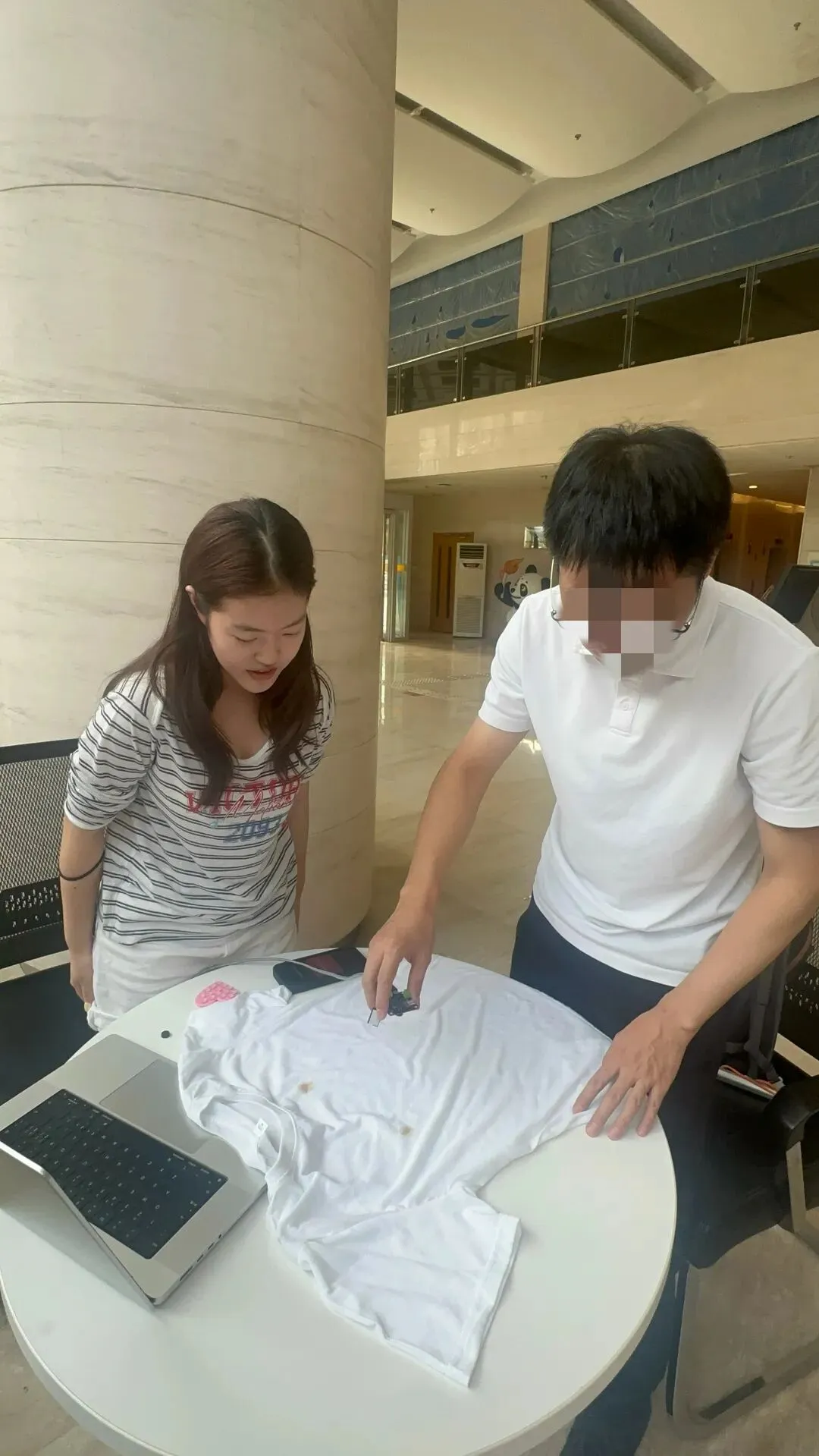
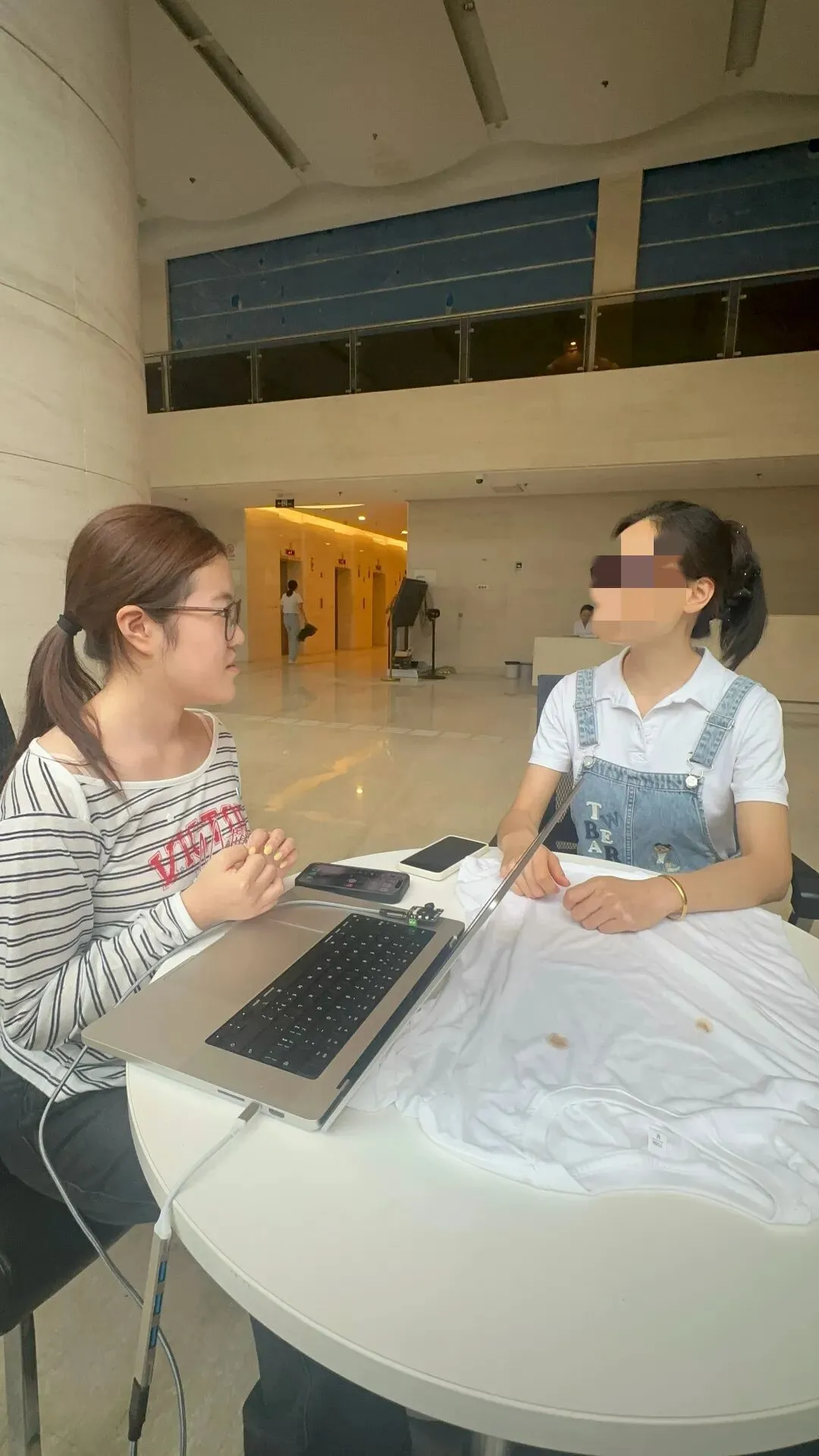
As the only high school student in the national final of the Disability-Inclusive Innovation track, Han Yunxi was invited to Tech for Thought, Alibaba's official podcast, for a one-on-one in-depth interview lasting approximately 23 minutes. Aired on the Xiaoyuzhou app, the conversation explored her project's development journey, user needs research, AI-assisted development, and the social value of artificial intelligence.
During the interview, she reflected on her shift in perspective from initially asking "What can AI do?" to gradually focusing on "What do users really need?" Her original idea was to develop an AI-powered outfit-matching mirror, but through real conversations with individuals with visual impairments, she realized that detecting and locating clothing stains was a far more pressing need — and reoriented her product accordingly.
On innovation in the age of AI, she shared her belief that artificial intelligence is lowering the barriers to technological development, giving previously overlooked niche communities — whose needs were once too costly to address — a greater chance to receive attention and responsive solutions. Drawing from her own experience, she also discussed how to use AI as a tool for learning and development, highlighting the growing importance of problem-finding ability, aesthetic judgment, and tool literacy in the future.
Han Yunxi's Reflection on the Competition
This competition gave me the opportunity to engage with university students, researchers, and industry practitioners from across the country, and it opened my eyes to the potential of AI across a wide range of social domains.
First, I am deeply grateful to my school and the Future Stars Program for Accessibility and Innovation, co-organized with the Institute for Accessibility Development at Tsinghua University. It was this platform that allowed me to truly connect with and understand the blind and low vision community, to listen to the challenges they face in their daily lives, and to try to apply what I have learned in technology to solve real problems. I would also like to extend my sincere thanks to Dean Shao Lei and Dr. Gao Mengzhao for their dedicated mentorship, and to my teachers at school for the support and encouragement they gave me throughout the project.
Looking back on the entire journey, my biggest takeaway has been a shift in how I think. Early on, I kept asking "What can AI do?" — I wanted to use new technologies to build interesting features. But through rounds of user interviews and product testing, I gradually came to realize that understanding what users truly need matters far more than the technology itself.
I have also come to deeply appreciate that AI is lowering the threshold for innovation. Even as a high school student, I can use AI tools to turn an idea, step by step, into a product that people can actually use. I hope to continue exploring the intersection of AI and accessible design in the future, so that more needs that tend to be overlooked can receive the attention they deserve.
To me, the value of this competition goes far beyond the final result — it lies in the people I met, the problems I discovered, and the experience of iterating and refining over and over again. I also hope to encourage more of my peers not to hold back because of their age or perceived lack of technical experience. As long as you have found a problem worth solving, take that first step with courage.
Media Coverage and Podcast Feature
Competition report on Alibaba's official WeChat public account

In-depth interview on Alibaba's Tech for Thought podcast