#Congrats | BAID Students Excel at the 2026 WSC Regional Round
In the just-concluded 2026 World Scholar's Cup (WSC) Regional Round, the BAID team — composed of Ye Jingzhou, Mao Shuhan, and Deng Zihan — delivered an outstanding performance. With their solid academic foundation, sharp critical thinking skills, and seamless teamwork, the trio not only brought home dozens of gold and silver medals, but also secured their ticket to the 2026 WSC Global Round.
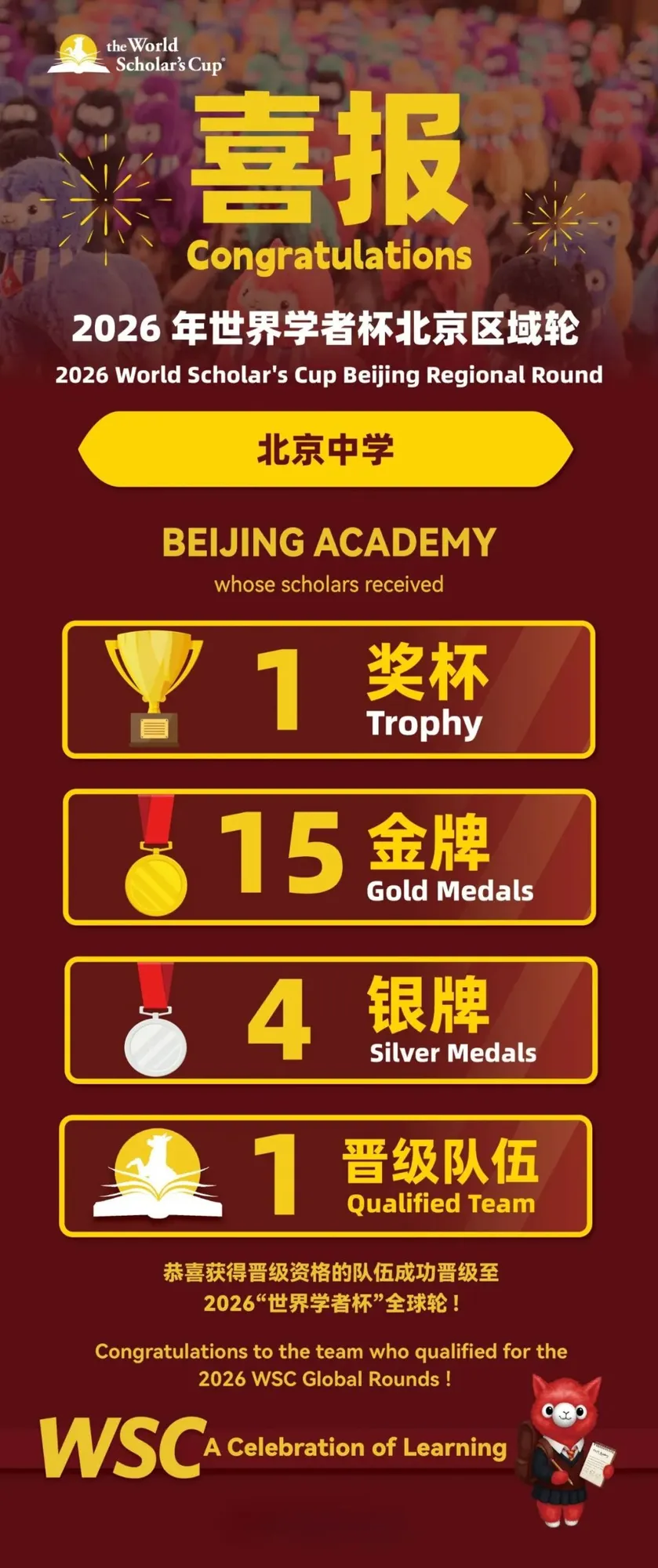
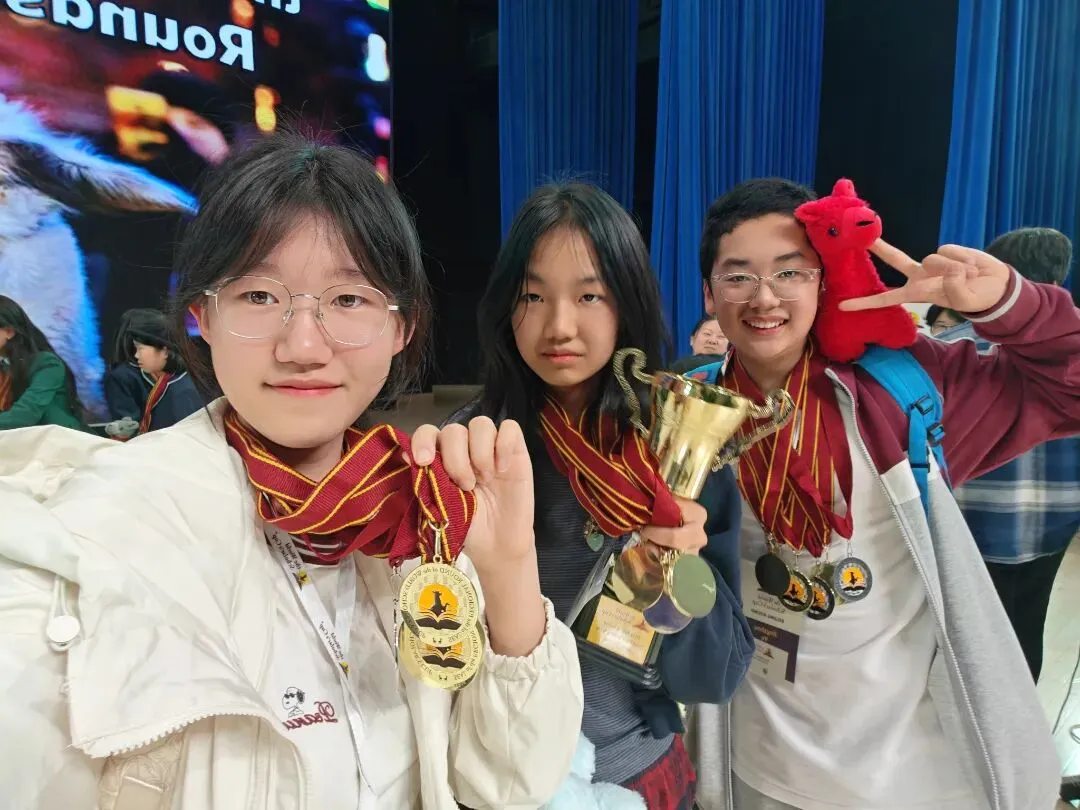
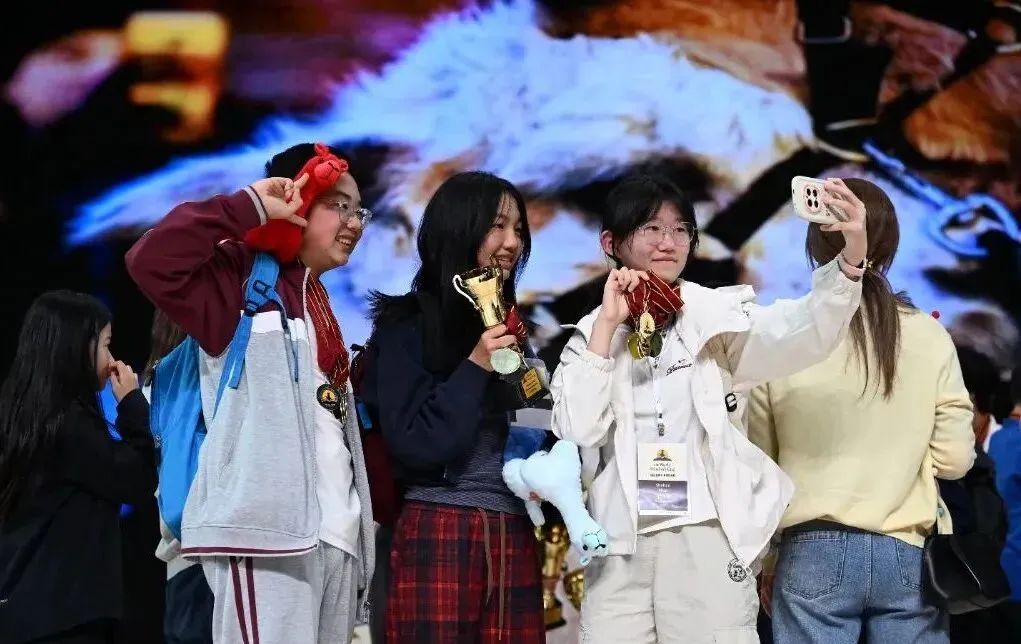
The team of Ye Jingzhou, Mao Shuhan, and Deng Zihan delivered a standout performance at the Beijing Regional Round, earning the following honors:
- Best Debater Individual Award: Ye Jingzhou, Mao Shuhan, Deng Zihan
- Writing Champion Individual Award: Ye Jingzhou, Mao Shuhan, Deng Zihan
- Overall High Score Individual Award: Deng Zihan
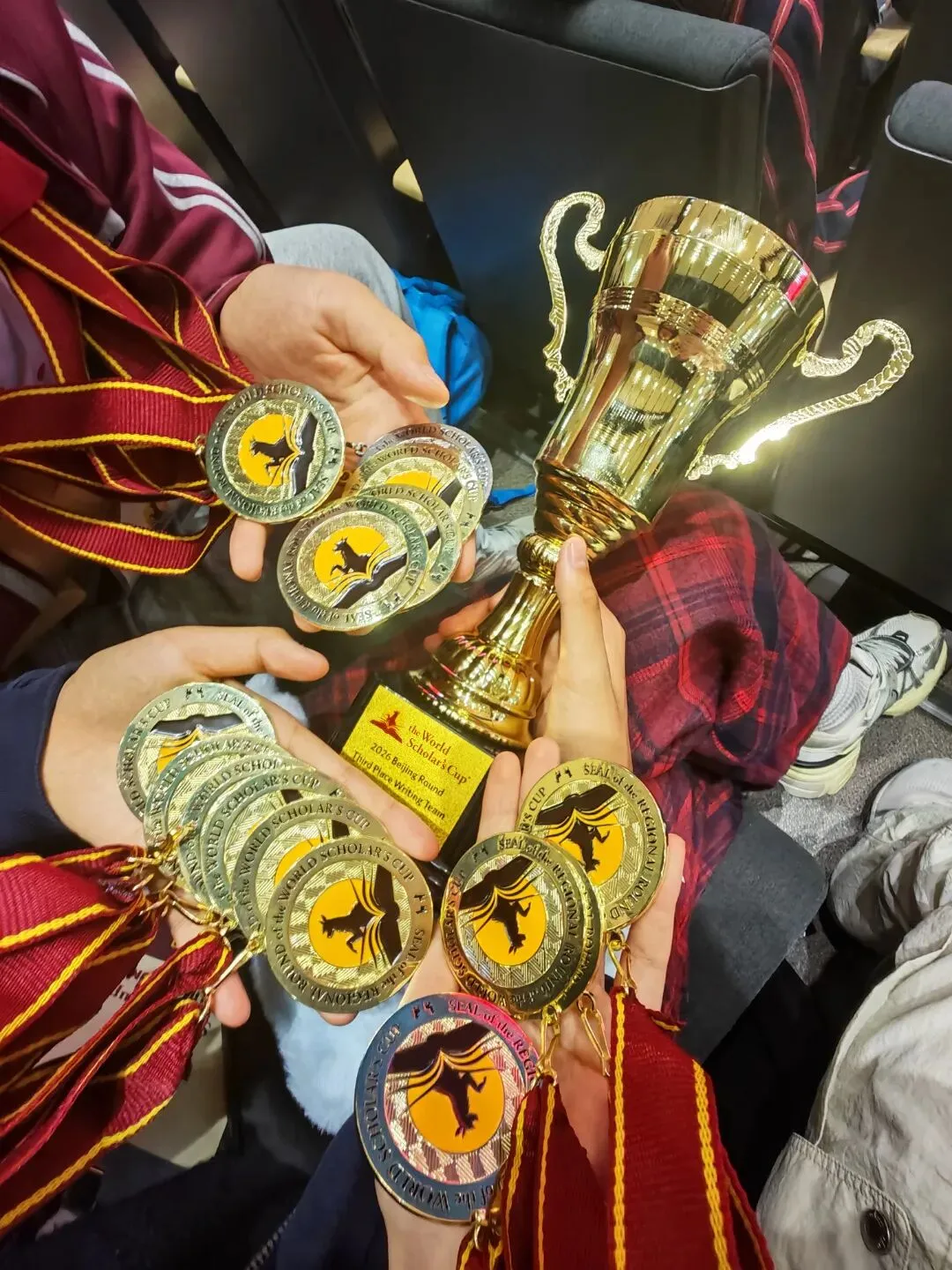
- Collaborative Writing Outstanding Team Award (1 trophy, 3rd place)
- Team Bowl/Debate Outstanding Team Award
- Team Champion Award
The World Scholar's Cup (WSC) is an academic competition that has swept across more than 70 countries around the globe. The annual theme for 2026 is "Are We There Yet?"
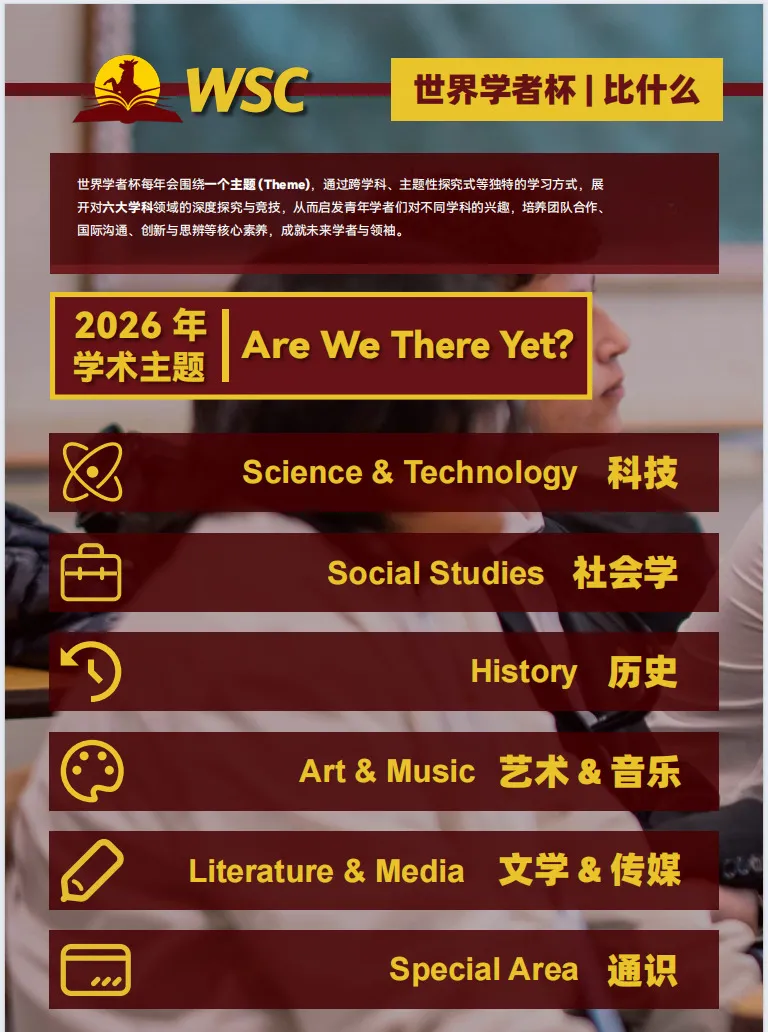
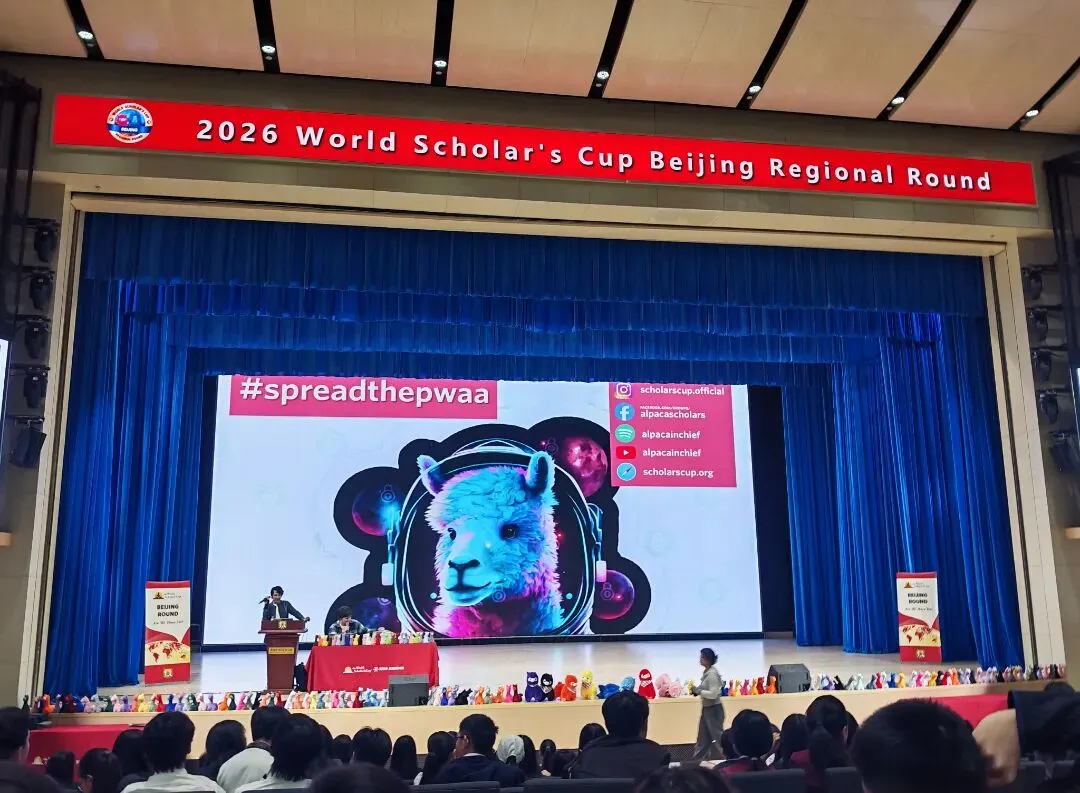
More than a rigorous challenge spanning six subject areas — Science & Technology, Sociology, History, Art & Music, Literature & Media, and General Knowledge — WSC is a cross-disciplinary collision of ideas. Over the course of two days, students went through all four main events: Team Debate, Collaborative Writing, Scholar's Challenge, and Scholar's Bowl, immersing themselves in an academic celebration held in a welcoming and supportive atmosphere.
Student Reflections
Ye Jingzhou
I took part in the WSC, and the event lasted two really full, exciting days. We started off with English debate, and I quickly realized how good all the other teams were. Every speaker could lay out their points clearly, and their arguments were well thought out. In our final debate, we went against a really talented debater. We tried our best and gave it everything we had, but we still lost that round. It was a little disappointing at first, but I didn't mind it too much afterwards. Going head-to-head with someone that strong let me see different ways to build arguments and present ideas, and I learned a ton just from watching and listening.
After the debate, we moved on to other activities: academic Q&A, team trivia challenges, and academic writing. From what I've experienced in other contests, this one didn't feel super rigid or purely academic. The prompts weren't just from textbooks at all. They were creative, weird in the best way, and made you think from totally new angles. It wasn't about reciting facts you'd memorized. Instead, we got to brainstorm freely and link different ideas together.
Thinking back on it now, this competition changed my idea of what academic events can be like. Of course winning would feel great, but it's definitely not the whole point. I loved getting to chat and share ideas with so many other curious students around me. WSC showed me that critical thinking and exploring new topics don't have to be serious or scary. You can push yourself intellectually and still enjoy the whole journey.
Mao Shuhan
Taking part in the WSC Beijing Regional Round this time meant far more to me than the medals we brought home. Over the two-day competition, my two teammates and I tackled all four events — Team Debate, Scholar's Challenge, Collaborative Writing, and Scholar's Bowl — together. We earned a total of 15 gold medals, 4 silver medals, and one trophy, placed 12th overall, and secured our spot in the global round.
This was my first bold leap, just one semester into BAID. During the preparation phase, I was deeply anxious. I had not yet fully adjusted to an all-English communication environment, and I kept worrying that my English skills wouldn't be strong enough to compete on the competition floor. Still, we poured everything we had into getting ready. On countless nights, we jumped on voice calls to run mock debates, exchanged and revised each other's drafts, and pored over the official syllabus. The rhythm and chemistry we built through round after round of collaboration became our greatest source of confidence in facing every challenge.
What this experience gave me goes far beyond the practical skills of debate and writing. It taught me that expressing myself boldly in English is not nearly as hard as I once imagined. I used to obsess over whether my grammar was flawless and whether my word choices were perfect, trapping English within the narrow confines of exam preparation. English is not just a subject on a test paper — it is a bridge for conveying emotions, sharing ideas, and connecting different perspectives. More than the pursuit of spotless language, the courage to speak up and the joy of sharing are what language is truly about.
Deng Zihan
The World Scholar's Cup was my very first competition after joining BAID, and it brought me a cascade of firsts: my first time debating in English at a formal event against students from other schools, my first time laughing with sheer joy during the Scholar's Bowl because I was on a team with my friends, my first time meeting so many kind and warm-hearted competitors, my first time stepping onto the stage to receive so many medals and trophies, and my first time receiving so much recognition. For me, even if the World Scholar's Cup never becomes a bold line on my future application, the meaning it holds for me has already, without a doubt, far surpassed that of a simple "medal-winning" competition.
I think that meaning is woven into countless little moments. I can still vividly recall the three of us making it our daily ritual to hop on Tencent Meeting the moment school ended, practicing how to better structure our arguments to convince the judges. I still remember squeezing in every spare moment at school to read through the theme guides. I still remember the thunderous applause and the heat welling up behind my eyes at the awards ceremony.
I used to be someone who agonized over speaking up in class and shrank from stepping onto the stage. But the World Scholar's Cup transformed me into a braver, more confident version of myself. I am deeply grateful for this competition — for the friendship, the experience, the confidence, and everything else it brought me. These are gifts I will carry with pride long into the future.
I also want to thank every teacher, classmate, and parent who supported me throughout this journey. Your help is the reason I had such a wonderful experience.
The competition may have drawn to a close, but the journey of exploring the world never stops. Thank you to all the teachers who guided us with such dedication, and congratulations to every BAer who shone brightly on the competition floor!